• Home
  • Latest
  • Fortune 500
  • Finance
  • Tech
  • Leadership
  • Lifestyle
  • Rankings
  • Multimedia

Trendingnow

1

Jeff Bezos wants the bottom half of earners to pay zero income tax—he says nurses making just $75K should save $12K a year

2

Indeed chief economist says we’re entering an era of ‘great mismatch’ thanks to a generational imbalance of workers

3

Apple’s Steve Wozniak says he cofounded the tech giant after 5 rejections from HP—not to ‘make money.’ For years, his paycheck was just $50

1

Jeff Bezos wants the bottom half of earners to pay zero income tax—he says nurses making just $75K should save $12K a year

2

Indeed chief economist says we’re entering an era of ‘great mismatch’ thanks to a generational imbalance of workers

3

Apple’s Steve Wozniak says he cofounded the tech giant after 5 rejections from HP—not to ‘make money.’ For years, his paycheck was just $50
FinanceIntel

How once-iconic Intel fell into a 20-year decline

Geoff Colvin
By
Geoff Colvin
Geoff Colvin
Senior Editor-at-Large
Down Arrow Button Icon
Geoff Colvin
By
Geoff Colvin
Geoff Colvin
Senior Editor-at-Large
Down Arrow Button Icon
August 10, 2025, 5:00 AM ET
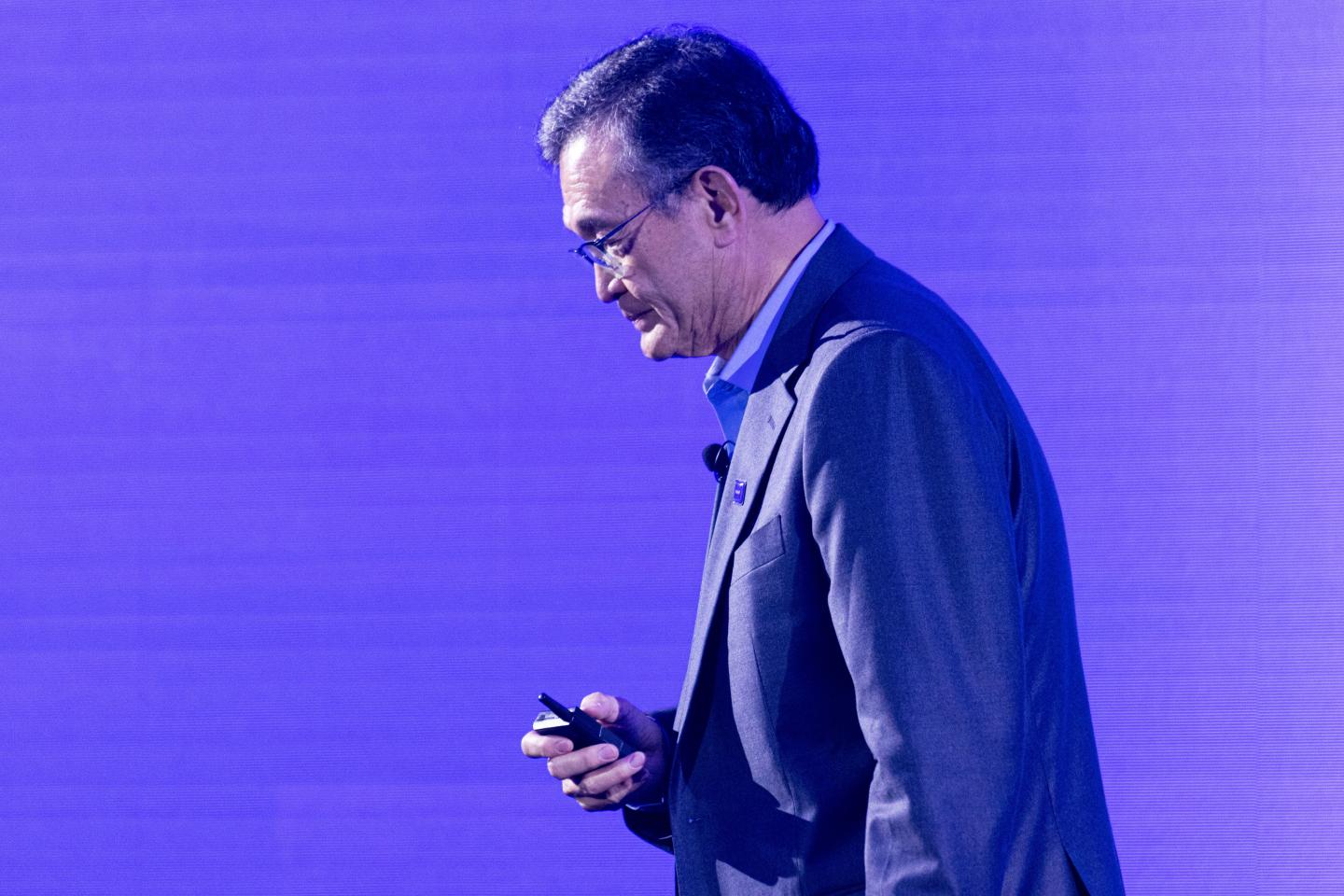
Lip-Bu Tan, CEO of Intel, during a news conference in Taipei, Taiwan, on May 19, 2025.
Lip-Bu Tan, CEO of Intel, during a news conference in Taipei, Taiwan, on May 19, 2025. Annabelle Chih—Bloomberg/Getty Images

What happens when a U.S. president tries to take down the CEO of a publicly traded company?

Recommended Video

We’re about to find out in a bizarre case that could alter not just the career of a CEO but also a onetime corporate jewel of American enterprise, a global industry, and what a previous commerce secretary has called “the most important piece of hardware in the 21st century.”

The drama began on the morning of Aug. 7, when President Trump posted a short statement on Truth Social: “The CEO of INTEL is highly CONFLICTED and must resign, immediately. There is no other solution to this problem. Thank you for your attention to this problem!” The post suddenly directed attention to a letter Sen. Tom Cotton (R.-Ark.) had sent to Intel’s board chairman two days earlier. It said Intel CEO Lip-Bu Tan “reportedly controls dozens of Chinese companies,” and a multinational company had recently pleaded guilty to violating U.S. export controls “under Mr. Tan’s tenure,” among other accusations. By day’s end, Tan had sent a letter to Intel employees saying, “There has been a lot of misinformation circulating about my past roles … I have always operated within the highest legal and ethical standards,” and Intel had told the media, “We look forward to our continued engagement with the administration.” The stock fell 5% on an up day for the market, another blow to Intel shareholders who had hoped—finally—that things might have hit bottom.

How Intel lost its edge

It would have been a one-day story if it weren’t about Intel, once the world’s biggest, most advanced maker of computer chips.

Its decline began some 20 years ago, when the company made multiple acquisitions, many of which were in telecommunications and wireless technology. In concept, that made great sense. But acquiring businesses is a skill of its own, and David Yoffie, a Harvard Business School professor who was on Intel’s board of directors at the time, told Fortune: “100% of those acquisitions failed. We spent $12 billion, and the return was zero or negative.”

Intel also tried unsuccessfully to grasp the mammoth cell phone opportunity. The company understood the opportunity and was supplying chips for the highly popular BlackBerry phone. The chips were designed by Arm, a British firm that designs chips but doesn’t manufacture them. Intel understandably preferred to make phone chips with its own architecture, known as x86. The company decided to stop making Arm chips and to create an x86 chip for cell phones—in retrospect, “a major strategic error,” says Yoffie. “The plan was that we would have a competitive product within a year, and we ended up not having a competitive product within a decade,” he recalls. “It wasn’t that we missed it. It was that we screwed it up.”

As years went by, simple poor management crept in. Intel kept missing new-chip deadlines and lost market share. The company gave up on smartphone chips. CEOs were replaced, but the production troubles continued until, by 2021, for the first time in Intel’s existence, its chips were two generations behind competitors’. Those competitors were Taiwan’s TSMC and South Korea’s Samsung.

In crisis mode, Intel’s board brought back Pat Gelsinger, an engineer who had spent 30 years at Intel before leaving for 11 years to be a high-level executive at EMC and then CEO of VMware. As Intel’s CEO he announced an extraordinarily ambitious and expensive plan to reclaim the company’s stature as the world leader in chip technology. In February of this year, as the stock price fell, the board fired him and brought in Tan.

Despite it all, Intel is still crucially important because it’s the only U.S. company with the technology and know-how to make leading-edge chips in America—though it hasn’t actually done that in eight years. At the highest level of geopolitics, primacy in chips is central to power, and for the past eight years the world’s fastest, most valuable chips have been made only in Taiwan and South Korea. That’s why Congress passed the CHIPS and Science Act with bipartisan majorities. It became law in 2022 and starting last year has sent billions of dollars to chipmakers, American and foreign, building new factories and other chip infrastructure in the U.S. Intel was allotted the most subsidies, about $8 billion plus loans, though the company hasn’t received most of the money, which is disbursed based on reaching project milestones.    

It’s as if the money came just a little too late. “Intel had a great opportunity,” says Gaurav Gupta, an analyst at the Gartner research firm. “They were getting all these subsidies from the government. But I think they just could not execute.” At that critical moment, poor performance was costly. “A year and a half ago there was still positivity with Intel,” says Alvin Nguyen, an analyst at the Forrester research firm. “Now, not as much. The negativity that’s hit them, it’s just snowballed.” 

Now suppose Tan were to step down as CEO. “Who wants that job?” asks Stacy Rasgon, a longtime tech analyst at Bernstein. He observes in a recent note that Tan “doesn’t ‘need’ to run Intel (he’s very wealthy and has a lot of other things to occupy his time) … He clearly wants to do what is best for Intel.” But it’s unclear if resigning would be good or bad for the company, “especially with Trump’s crosshairs on his back.” Rasgon, speaking to Fortune, asks, “How do you attract somebody else into that spot?”

Getting Tan wasn’t easy. “The board took a while in finding the new CEO when [previous boss] Pat Gelsinger left,” says Gupta. “It took a long time to find a candidate willing to take control and lead the company in a direction.”

Nonetheless, Yoffie and three other former Intel directors argued in a statement to Fortune for a new company, a new board, and a new CEO, spinning off Intel’s manufacturing arm into an independent company to secure America’s chipmaking dominance.

Trump’s post puts himself at the center of a crucial conundrum for national security. Global dominance requires a reliable source of leading-edge chips. That’s why Commerce Secretary Gina Raimondo in 2024 said they’re “the most important piece of hardware.” The world’s largest producer of leading-edge chips by far, Taiwan’s TSMC, is building two fabs in Arizona, subsidized by the CHIPS Act, with more planned. “You can make the argument that the more capacity builds in Arizona, maybe the less we need Intel,” says Rasgon. But TSMC isn’t an American firm, and Nguyen says, “The best technology from TSMC is definitely not coming to the U.S. at this time.”

Which leaves Intel. “They’re the only American company that can do it,” says Rasgon. “But Intel still has to prove they could deliver. They haven’t proven that.” Trump has shone a spotlight on the once-iconic company. But identifying problems and solving them are two very different matters, something Intel-watchers have known for going on two decades.

About the Author
Geoff Colvin
By Geoff ColvinSenior Editor-at-Large
LinkedIn iconTwitter icon

Geoff Colvin is a senior editor-at-large at Fortune, covering leadership, globalization, wealth creation, the infotech revolution, and related issues.

See full bioRight Arrow Button Icon

Latest in Finance

Finance
Lorem ipsum dolor sit amet, consectetur adipiscing elit, sed do eiusmod tempor incididunt ut labore et dolore magna aliqua. Ut enim ad minim veniam
By Fortune Editors
October 20, 2025
Finance
Lorem ipsum dolor sit amet, consectetur adipiscing elit, sed do eiusmod tempor incididunt ut labore et dolore magna aliqua. Ut enim ad minim veniam
By Fortune Editors
October 20, 2025
Finance
Lorem ipsum dolor sit amet, consectetur adipiscing elit, sed do eiusmod tempor incididunt ut labore et dolore magna aliqua. Ut enim ad minim veniam
By Fortune Editors
October 20, 2025
Finance
Lorem ipsum dolor sit amet, consectetur adipiscing elit, sed do eiusmod tempor incididunt ut labore et dolore magna aliqua. Ut enim ad minim veniam
By Fortune Editors
October 20, 2025
Finance
Lorem ipsum dolor sit amet, consectetur adipiscing elit, sed do eiusmod tempor incididunt ut labore et dolore magna aliqua. Ut enim ad minim veniam
By Fortune Editors
October 20, 2025
Finance
Lorem ipsum dolor sit amet, consectetur adipiscing elit, sed do eiusmod tempor incididunt ut labore et dolore magna aliqua. Ut enim ad minim veniam
By Fortune Editors
October 20, 2025

Most Popular

Finance
Lorem ipsum dolor sit amet, consectetur adipiscing elit, sed do eiusmod tempor incididunt ut labore et dolore magna aliqua. Ut enim ad minim veniam
By Fortune Editors
October 20, 2025
Finance
Lorem ipsum dolor sit amet, consectetur adipiscing elit, sed do eiusmod tempor incididunt ut labore et dolore magna aliqua. Ut enim ad minim veniam
By Fortune Editors
October 20, 2025
Finance
Lorem ipsum dolor sit amet, consectetur adipiscing elit, sed do eiusmod tempor incididunt ut labore et dolore magna aliqua. Ut enim ad minim veniam
By Fortune Editors
October 20, 2025
Finance
Lorem ipsum dolor sit amet, consectetur adipiscing elit, sed do eiusmod tempor incididunt ut labore et dolore magna aliqua. Ut enim ad minim veniam
By Fortune Editors
October 20, 2025
Finance
Lorem ipsum dolor sit amet, consectetur adipiscing elit, sed do eiusmod tempor incididunt ut labore et dolore magna aliqua. Ut enim ad minim veniam
By Fortune Editors
October 20, 2025
Finance
Lorem ipsum dolor sit amet, consectetur adipiscing elit, sed do eiusmod tempor incididunt ut labore et dolore magna aliqua. Ut enim ad minim veniam
By Fortune Editors
October 20, 2025
Fortune Secondary Logo
Rankings
  • 100 Best Companies
  • Fortune 500
  • Global 500
  • Fortune 500 Europe
  • Most Powerful Women
  • World's Most Admired Companies
  • See All Rankings
  • Lists Calendar
Sections
  • Finance
  • Fortune Crypto
  • Features
  • Leadership
  • Health
  • Commentary
  • Success
  • Retail
  • Mpw
  • Tech
  • Lifestyle
  • CEO Initiative
  • Asia
  • Politics
  • Conferences
  • Europe
  • Newsletters
  • Personal Finance
  • Environment
  • Magazine
  • Education
Customer Support
  • Frequently Asked Questions
  • Customer Service Portal
  • Privacy Policy
  • Terms Of Use
  • Single Issues For Purchase
  • International Print
Commercial Services
  • Advertising
  • Fortune Brand Studio
  • Fortune Analytics
  • Fortune Conferences
  • Business Development
  • Group Subscriptions
About Us
  • About Us
  • Press Center
  • Work At Fortune
  • Terms And Conditions
  • Site Map
  • About Us
  • Press Center
  • Work At Fortune
  • Terms And Conditions
  • Site Map
  • Facebook icon
  • Twitter icon
  • LinkedIn icon
  • Instagram icon
  • Pinterest icon

Latest in Finance

Alaska’s oil revival sparks a new energy rush Into the Arctic
EnergyOil
Alaska’s oil revival sparks a new energy rush Into the Arctic
By Jennifer A. Dlouhy and BloombergMay 24, 2026
1 hour ago
SpaceX stock is about to join this growing constellation of public companies building a space-based economy
Investingspace
SpaceX stock is about to join this growing constellation of public companies building a space-based economy
By Jason MaMay 24, 2026
2 hours ago
f
Energyfraud
Nonprofit fraud isn’t surging. Enforcement is
By Sarah Webber and The ConversationMay 24, 2026
6 hours ago
w
Personal FinanceWhite House
From Hobbes to the 14th amendment: the ancient and modern cases against Trump’s $1.8 billion fund
By Austin Sarat and The ConversationMay 24, 2026
7 hours ago
m
Real EstateSpain
‘We want neighbors, not tourists.’ Madrid’s renters march with message for the boom economy
By Alicia Leon and The Associated PressMay 24, 2026
7 hours ago
SpaceX’s next-gen rocket is the key to its sky-high valuation, early investor says: ‘Starship also enables all kinds of frontier markets’
Startups & VentureElon Musk
SpaceX’s next-gen rocket is the key to its sky-high valuation, early investor says: ‘Starship also enables all kinds of frontier markets’
By Marco Quiroz-GutierrezMay 24, 2026
9 hours ago

Most Popular

Jeff Bezos wants the bottom half of earners to pay zero income tax—he says nurses making just $75K should save $12K a year
Success
Jeff Bezos wants the bottom half of earners to pay zero income tax—he says nurses making just $75K should save $12K a year
By Preston ForeMay 21, 2026
3 days ago
Indeed chief economist says we’re entering an era of ‘great mismatch’ thanks to a generational imbalance of workers
Success
Indeed chief economist says we’re entering an era of ‘great mismatch’ thanks to a generational imbalance of workers
By Emma BurleighMay 22, 2026
2 days ago
Apple’s Steve Wozniak says he cofounded the tech giant after 5 rejections from HP—not to ‘make money.’ For years, his paycheck was just $50
Success
Apple’s Steve Wozniak says he cofounded the tech giant after 5 rejections from HP—not to ‘make money.’ For years, his paycheck was just $50
By Preston ForeMay 22, 2026
2 days ago
Uber CEO says rideshare 'freed up' his son from having to get a driver’s license—and he's one of many Gen Zers who aren’t willing to drive
Lifestyle
Uber CEO says rideshare 'freed up' his son from having to get a driver’s license—and he's one of many Gen Zers who aren’t willing to drive
By Sasha RogelbergMay 24, 2026
10 hours ago
Bolt CEO says he let go of his entire HR team for creating problems that didn’t exist: ‘Those problems disappeared when I let them go’ 
Workplace Culture
Bolt CEO says he let go of his entire HR team for creating problems that didn’t exist: ‘Those problems disappeared when I let them go’ 
By Preston ForeMay 19, 2026
5 days ago
Microsoft reports are exposing AI's real cost problem: Using the tech is more expensive than paying human employees
AI
Microsoft reports are exposing AI's real cost problem: Using the tech is more expensive than paying human employees
By Jake AngeloMay 22, 2026
2 days ago

© 2026 Fortune Media IP Limited. All Rights Reserved. Use of this site constitutes acceptance of our Terms of Use and Privacy Policy | CA Notice at Collection and Privacy Notice | Do Not Sell/Share My Personal Information
FORTUNE is a trademark of Fortune Media IP Limited, registered in the U.S. and other countries. FORTUNE may receive compensation for some links to products and services on this website. Offers may be subject to change without notice.