• Home
  • Latest
  • Fortune 500
  • Finance
  • Tech
  • Leadership
  • Lifestyle
  • Rankings
  • Multimedia
EconomyFederal Reserve

Top economist says Trump’s Fed pressure may not be felt for years: ‘You can appear to get away with a lot while you’re actually doing a lot of damage’

By
Eva Roytburg
Eva Roytburg
Fellow, News
Down Arrow Button Icon
By
Eva Roytburg
Eva Roytburg
Fellow, News
Down Arrow Button Icon
August 7, 2025, 7:05 AM ET
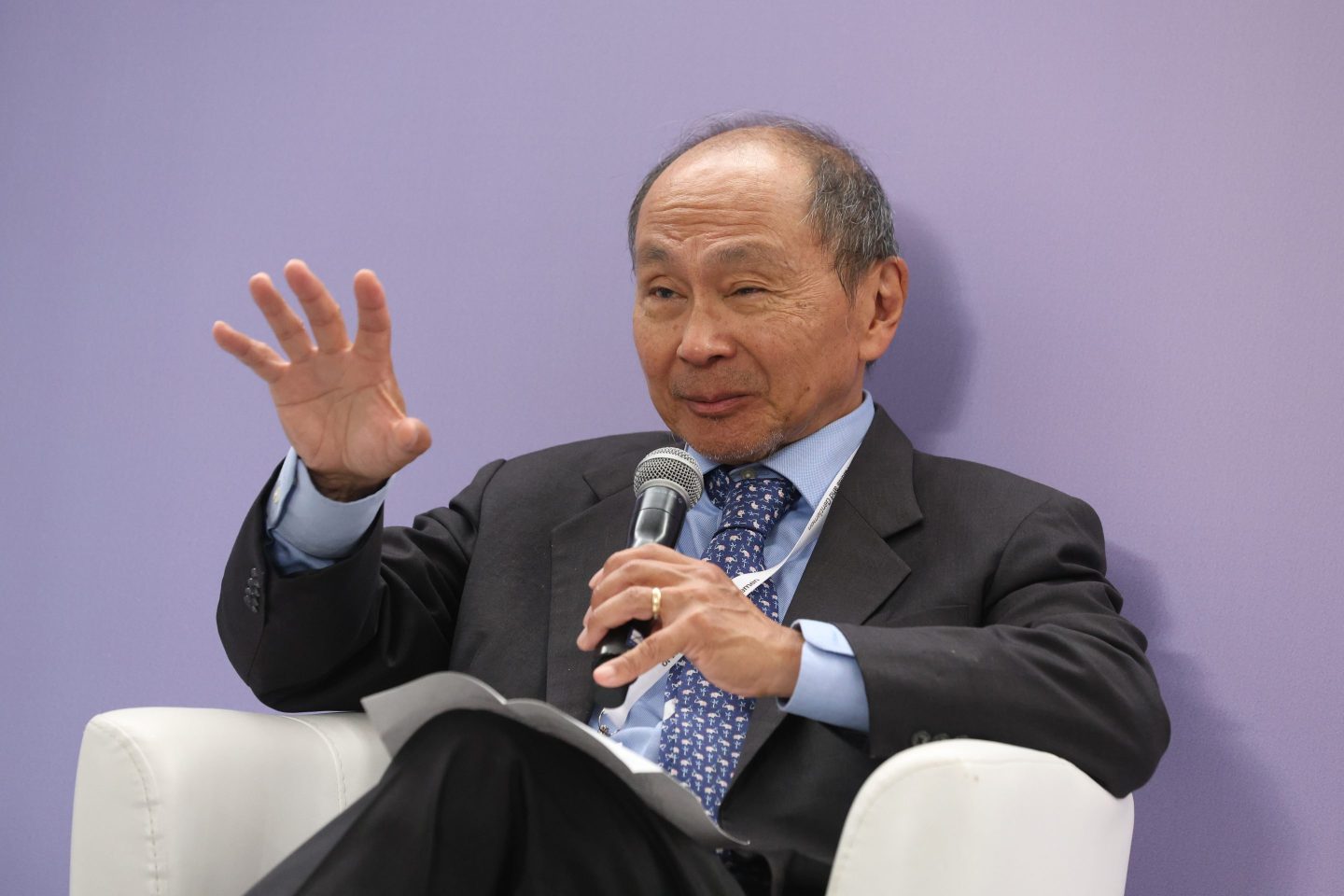
Francis Fukuyama speaks into a microphone
American political scientist Francis Fukuyama at the Summit of Ladies and Gentlemen on September 12, 2024 in Kyiv, Ukraine.Viktor Kovalchuk / Global Images Ukraine—Getty Images

President Donald Trump is rapidly tightening his grip on institutions that have long been thought to operate independently of the White House.

Last week, he fired Bureau of Labor Statistics Commissioner Erika McEntarfer, just hours after the agency released a dismal July jobs report. He plans to appoint someone in her place that he deems “more competent.” Days earlier, Trump announced plans to name the next Federal Reserve chair “very soon,” months before current Fed Chair Jerome Powell’s term is set to expire. The move gives Trump an unusual opportunity to shape the direction of the central bank well ahead of schedule.

Some critics have warned the back-to-back shakeups represent a broader trend of the second Trump presidency, one of weakened political independence of key financial bodies—an essential feature of U.S. liberal democracy. 

To explore what this shift means for business leaders, Fortune spoke with Francis Fukuyama, one of the world’s leading scholars on democratic institutions.

A familiar warning from the 1970s

“Trump’s philosophy is that everything is political,” Fukuyama said. “Either you’re with him or against him—and if you’re against him, you shouldn’t be in government.”

That approach, he said, directly conflicts with the liberal model of governance: one built on an “impersonal, nonpartisan bureaucracy” that is managed by technical experts. In ultra-complex, wealthy economies like the United States, Fukuyama argues, that model is essential for long-term stability.

Trump appears to be disinterested in that vision, Fukuyama said. He has floated the idea of appointing himself as Fed chair and continuously threatens Powell in a bid to challenge his authority. Rather than deferring to experts, Trump has signaled a desire to steer economic decisions from the executive branch. 

Yet, institutions like the Fed are designed to resist this kind of interference. Their role is to be insulated from the drama of political cycles, particularly when it comes to interest rates, where short-term cuts could help a president win reelection but drive long-term inflation.

While Fukuyama said past presidents have respected those guardrails, Trump’s direct and hostile pressure on the central bank is “unprecedented.”

He compared the moment to the early 1970s, when President Richard Nixon repeatedly pushed the Fed to slash interest rates ahead of his reelection campaign. The Fed Chair at the time capitulated, a move that helped trigger the decade’s hyperinflation.

“That era is very comparable to what’s happening now,” Fukuyama said. “We have so many examples of what happens to countries without independent central banks.”

He cited cases from Latin America and sub-Saharan Africa in the 1980s, where politically captured central banks helped skyrocket prices. 

The problem for CEOs and investors, Fukuyama warned, is that if the next Fed chair is more willing to follow Trump’s preferences, the effects may not be felt right away.

“If Trump were to fire Powell tomorrow, people wouldn’t feel the impact for two, maybe three years,” he said. “People may not connect that political act to the economic pain they’re feeling.”

That delay, he added, creates fragility. “You can appear to get away with a lot while you’re actually doing a lot of damage.”

The risks of politicizing data

Fukuyama said Trump’s firing of McEntarfer carries a different, but equally serious risk: the politicization of official statistics. He pointed to Argentina in 2007, when then-President Néstor Kirchner dismissed a government statistician whose inflation reports clashed with the government’s narrative.

“Magically, inflation went down,” Fukuyama said. “Everybody knew that this was just completely politically based and not credible.” 

He warned that once credibility is lost, it’s hard to get it back. “That’s the risk we face when we start chipping away at the independence of these neutral experts.”

Why CEOs should keep their distance

For business leaders, the incentive to stay neutral may not be clear. Fukyuama noted how some executives have attended exclusive Trump fundraising dinners, including events where investors in Trump’s cryptocurrency were offered personal access to the president.

But Fukuyama warned that getting too close to political figures often backfires. 

“It’s hard to run a predictable, modern business when politics gets too involved,” he said. “In the old days, if you had to bribe a politician to get your way, that was a very inefficient system.”

He also cited Elon Musk as an example of how overt politicization complicates a company’s public image. By politicizing his brand, Musk alienated the exact market he hoped to sell cars to. 

The lesson, Fukuyama added, is that CEOs are better off operating within a stable, depoliticized system. “The more predictable the rules, the easier it is to do business.”

Join us at the Fortune Workplace Innovation Summit May 19–20, 2026, in Atlanta. The next era of workplace innovation is here—and the old playbook is being rewritten. At this exclusive, high-energy event, the world’s most innovative leaders will convene to explore how AI, humanity, and strategy converge to redefine, again, the future of work. Register now.
About the Author
By Eva RoytburgFellow, News

Eva is a fellow on Fortune's news desk.

See full bioRight Arrow Button Icon

Latest in Economy

Spanish Prime Minister Pedro Sánchez often praises the financial and social benefits that immigrants bring to the country.
EuropeSpain
In a continent cracking down on immigration and berated by Trump’s warnings of ‘civilizational erasure,’ Spain embraces migrants
By Suman Naishadham and The Associated PressDecember 13, 2025
19 hours ago
EconomyAgriculture
More financially distressed farmers are expected to lose their property soon as loan repayments and incomes continue to falter
By Jason MaDecember 13, 2025
20 hours ago
PoliticsAffordable Care Act (ACA)
With just days to go before ACA subsidies expire, Congress is about to wrap up its work with no consensus solution in sight
By Kevin Freking, Lisa Mascaro and The Associated PressDecember 13, 2025
1 day ago
HealthAffordable Care Act (ACA)
A Wisconsin couple was paying $2 a month for an ACA health plan. But as subsidies expire, it’s soaring to $1,600, forcing them to downgrade
By Ali Swenson and The Associated PressDecember 13, 2025
1 day ago
Julian Braithwaite is the Director General of the International Alliance for Responsible Drinking
CommentaryProductivity
Gen Z is drinking 20% less than Millennials. Productivity is rising. Coincidence? Not quite
By Julian BraithwaiteDecember 13, 2025
1 day ago
EconomyFederal Reserve
Trump names Warsh, Hassett as top Fed contenders, WSJ says
By Jennifer A. Dlouhy and BloombergDecember 12, 2025
2 days ago

Most Popular

placeholder alt text
Economy
Tariffs are taxes and they were used to finance the federal government until the 1913 income tax. A top economist breaks it down
By Kent JonesDecember 12, 2025
2 days ago
placeholder alt text
Success
Apple cofounder Ronald Wayne sold his 10% stake for $800 in 1976—today it’d be worth up to $400 billion
By Preston ForeDecember 12, 2025
2 days ago
placeholder alt text
Success
40% of Stanford undergrads receive disability accommodations—but it’s become a college-wide phenomenon as Gen Z try to succeed in the current climate
By Preston ForeDecember 12, 2025
2 days ago
placeholder alt text
Economy
The Fed just ‘Trump-proofed’ itself with a unanimous move to preempt a potential leadership shake-up
By Jason MaDecember 12, 2025
2 days ago
placeholder alt text
Success
Apple CEO Tim Cook out-earns the average American’s salary in just 7 hours—to put that into context, he could buy a new $439,000 home in just 2 days
By Emma BurleighDecember 12, 2025
2 days ago
placeholder alt text
Uncategorized
Transforming customer support through intelligent AI operations
By Lauren ChomiukNovember 26, 2025
18 days ago
Rankings
  • 100 Best Companies
  • Fortune 500
  • Global 500
  • Fortune 500 Europe
  • Most Powerful Women
  • Future 50
  • World’s Most Admired Companies
  • See All Rankings
Sections
  • Finance
  • Leadership
  • Success
  • Tech
  • Asia
  • Europe
  • Environment
  • Fortune Crypto
  • Health
  • Retail
  • Lifestyle
  • Politics
  • Newsletters
  • Magazine
  • Features
  • Commentary
  • Mpw
  • CEO Initiative
  • Conferences
  • Personal Finance
  • Education
Customer Support
  • Frequently Asked Questions
  • Customer Service Portal
  • Privacy Policy
  • Terms Of Use
  • Single Issues For Purchase
  • International Print
Commercial Services
  • Advertising
  • Fortune Brand Studio
  • Fortune Analytics
  • Fortune Conferences
  • Business Development
About Us
  • About Us
  • Editorial Calendar
  • Press Center
  • Work At Fortune
  • Diversity And Inclusion
  • Terms And Conditions
  • Site Map

© 2025 Fortune Media IP Limited. All Rights Reserved. Use of this site constitutes acceptance of our Terms of Use and Privacy Policy | CA Notice at Collection and Privacy Notice | Do Not Sell/Share My Personal Information
FORTUNE is a trademark of Fortune Media IP Limited, registered in the U.S. and other countries. FORTUNE may receive compensation for some links to products and services on this website. Offers may be subject to change without notice.