
• Home
  • Latest
  • Fortune 500
  • Finance
  • Tech
  • Leadership
  • Lifestyle
  • Rankings
  • Multimedia
Economy

U.S.-Japan trade deal gives Trump control over $550 billion in investments. It could be ‘vaporware’—and a model for other countries

Jason Ma
By
Jason Ma
Jason Ma
Weekend Editor
Down Arrow Button Icon
Jason Ma
By
Jason Ma
Jason Ma
Weekend Editor
Down Arrow Button Icon
July 26, 2025, 2:27 PM ET
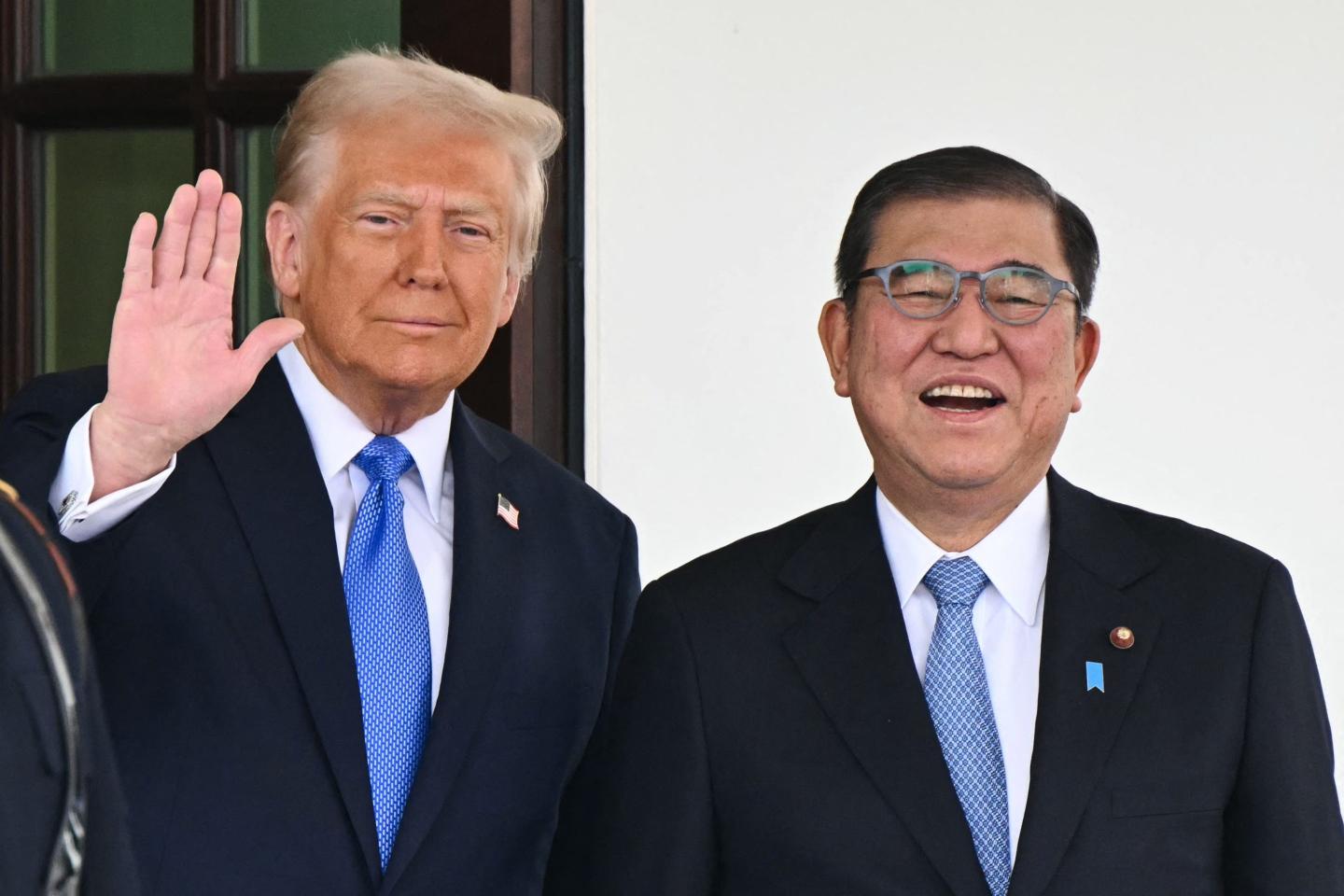
President Donald Trump and Japanese Prime Minister Shigeru Ishiba outside the West Wing of the White House on Feb. 7.
President Donald Trump and Japanese Prime Minister Shigeru Ishiba outside the West Wing of the White House on Feb. 7.Mandel Ngan—AFP/Getty Images
  • One of the provisions of the trade deal that set a 15% tariff on Japan is a pledge from Tokyo to invest $550 billion in key American sectors. The White House said the money will be deployed “at President Trump’s direction,” potentially giving him a bigger say in U.S. industrial policy. But details remain thin, and analysts are skeptical.

The pledge from Japan to invest $550 billion in key U.S. industries could show other countries how to clinch a trade deal with the U.S., even as analysts question how real that money is.

Recommended Video

As part of the agreement that set a 15% tariff rate on Japan, the White House said, a “Japanese/USA investment vehicle” will be deployed “at President Trump’s direction“ into strategic sectors.

They include energy infrastructure and production, semiconductors, critical minerals, pharmaceuticals, and shipbuilding, according to a fact sheet from the administration. The U.S. would retain 90% of the profits, though the Japanese government believes profits will be split based on “the degree of contribution and risk taken by each party,” according to the Financial Times.

Still, Treasury Secretary Scott Bessent highlighted the fund as a key reason the U.S. and Japan were able to settle on a levy that was lower than the 25% rate Trump had threatened earlier.

“They got the 15% rate because they were willing to provide this innovative financing mechanism,” he told Bloomberg TV on Wednesday, when asked if other countries could get a similar rate.

Indeed, analysts at Bank of America said that the Japan deal “looks like a reasonable blueprint” for other auto-exporting countries like South Korea.

Both countries have similar trade characteristics with the U.S., such as high current account surpluses, high U.S.-bound exports, and less open domestic markets via non-tariff measures, the bank said in a note on Friday.

At the same time, the U.S. is also negotiating deals with the European Union and other trading partners ahead of an Aug .1 deadline, when Trump’s pause on his reciprocal tariffs will expire.

But Wall Street has serious doubts that the $550 billion will actually materialize. Takahide Kiuchi, executive economist at Nomura Research Institute and a former Bank of Japan policymaker, said in a note Wednesday that the investment pledge is merely a target and not a binding promise.

“In reality, under the Trump administration, many Japanese companies likely view the business environment in the U.S. as deteriorating due to tariffs and other factors,” he explained. “Furthermore, at current exchange rates, labor costs in the U.S. are extremely high, providing little incentive for Japanese firms to expand investment there. If anything, we may see a stronger trend toward diversifying investments away from the U.S.”

Meanwhile, Council on Foreign Relations senior fellow Brad Setser, a former U.S. Trade Representative advisor and Treasury Department official, similarly expressed skepticism about the money.

“Odds are it is vaporware, beyond the known deals (Alaska LNG),” he posted on X on Wednesday, likening it to a highly touted product that may never become available, “but it would be strange (and would potentially set up future problems) if the U.S. relied almost entirely on other people’s money to fund its own industrial strategies.”

He later added: “There is a lot less here than meets the eye,” and pointed out that the industrial sectors highlighted as areas for investment are already logical ones for Japan, given current supply-chain concerns.

A source familiar with the matter acknowledged to Fortune that a lot of details of the $550 billion investment have yet to be ironed out. That includes the time frame of the investment as well as an advisory board and guardrails against potential conflicts of interest.

But the source added that the investment would be funded by the Japanese government and is not a just pledge from Tokyo to buy commodities or for Japanese companies to steer investments into the U.S.

It also means Japan is fronting the cash to finance projects that are likely to be in the private sector, the source said, offering a hypothetical example of a chip company looking to build a U.S. plant.

Under this scenario, the investment vehicle could finance construction of the factory and lease it out at favorable terms to the chip company, with 90% of the rent revenue going to the U.S. government.

The $550 billion pledge also comes as Trump’s tariffs face legal challenges, with a court hearing scheduled Thursday on whether the president has authority under the International Emergency Economic Powers Act to impose wide-ranging duties.

That could make it attractive for countries to promise a lot of money sometime in the future to obtain immediate tariff relief, while running out the clock as legal battles play out.

Analysts at Piper Sandler have concluded that Trump’s tariffs are illegal and noted that the $550 billion Japanese investment comes with few concrete specifics.

“Our trading partners and major multinationals know Trump’s tariffs are on shaky legal ground,” they wrote. “Therefore, we find it hard to believe many of them are going to make massive investments in the U.S. they would not have otherwise made in response to tariffs that may not last.”

The Fortune 500 Innovation Forum will convene Fortune 500 executives, U.S. policy officials, top founders, and thought leaders to help define what’s next for the American economy, Nov. 16-17 in Detroit. Apply here.
About the Author
Jason Ma
By Jason MaWeekend Editor

Jason Ma is the weekend editor at Fortune, where he covers markets, the economy, finance, and housing.

See full bioRight Arrow Button Icon

Latest in Economy

Finance
Lorem ipsum dolor sit amet, consectetur adipiscing elit, sed do eiusmod tempor incididunt ut labore et dolore magna aliqua. Ut enim ad minim veniam
By Fortune Editors
October 20, 2025
Finance
Lorem ipsum dolor sit amet, consectetur adipiscing elit, sed do eiusmod tempor incididunt ut labore et dolore magna aliqua. Ut enim ad minim veniam
By Fortune Editors
October 20, 2025
Finance
Lorem ipsum dolor sit amet, consectetur adipiscing elit, sed do eiusmod tempor incididunt ut labore et dolore magna aliqua. Ut enim ad minim veniam
By Fortune Editors
October 20, 2025
Finance
Lorem ipsum dolor sit amet, consectetur adipiscing elit, sed do eiusmod tempor incididunt ut labore et dolore magna aliqua. Ut enim ad minim veniam
By Fortune Editors
October 20, 2025
Finance
Lorem ipsum dolor sit amet, consectetur adipiscing elit, sed do eiusmod tempor incididunt ut labore et dolore magna aliqua. Ut enim ad minim veniam
By Fortune Editors
October 20, 2025
Finance
Lorem ipsum dolor sit amet, consectetur adipiscing elit, sed do eiusmod tempor incididunt ut labore et dolore magna aliqua. Ut enim ad minim veniam
By Fortune Editors
October 20, 2025

Most Popular

Finance
Lorem ipsum dolor sit amet, consectetur adipiscing elit, sed do eiusmod tempor incididunt ut labore et dolore magna aliqua. Ut enim ad minim veniam
By Fortune Editors
October 20, 2025
Finance
Lorem ipsum dolor sit amet, consectetur adipiscing elit, sed do eiusmod tempor incididunt ut labore et dolore magna aliqua. Ut enim ad minim veniam
By Fortune Editors
October 20, 2025
Finance
Lorem ipsum dolor sit amet, consectetur adipiscing elit, sed do eiusmod tempor incididunt ut labore et dolore magna aliqua. Ut enim ad minim veniam
By Fortune Editors
October 20, 2025
Finance
Lorem ipsum dolor sit amet, consectetur adipiscing elit, sed do eiusmod tempor incididunt ut labore et dolore magna aliqua. Ut enim ad minim veniam
By Fortune Editors
October 20, 2025
Finance
Lorem ipsum dolor sit amet, consectetur adipiscing elit, sed do eiusmod tempor incididunt ut labore et dolore magna aliqua. Ut enim ad minim veniam
By Fortune Editors
October 20, 2025
Finance
Lorem ipsum dolor sit amet, consectetur adipiscing elit, sed do eiusmod tempor incididunt ut labore et dolore magna aliqua. Ut enim ad minim veniam
By Fortune Editors
October 20, 2025
Fortune Secondary Logo
Rankings
  • 100 Best Companies
  • Fortune 500
  • Global 500
  • Fortune 500 Europe
  • Most Powerful Women
  • Future 50
  • World’s Most Admired Companies
  • See All Rankings
Sections
  • Finance
  • Fortune Crypto
  • Features
  • Leadership
  • Health
  • Commentary
  • Success
  • Retail
  • Mpw
  • Tech
  • Lifestyle
  • CEO Initiative
  • Asia
  • Politics
  • Conferences
  • Europe
  • Newsletters
  • Personal Finance
  • Environment
  • Magazine
  • Education
Customer Support
  • Frequently Asked Questions
  • Customer Service Portal
  • Privacy Policy
  • Terms Of Use
  • Single Issues For Purchase
  • International Print
Commercial Services
  • Advertising
  • Fortune Brand Studio
  • Fortune Analytics
  • Fortune Conferences
  • Business Development
  • Group Subscriptions
About Us
  • About Us
  • Editorial Calendar
  • Press Center
  • Work At Fortune
  • Diversity And Inclusion
  • Terms And Conditions
  • Site Map
  • About Us
  • Editorial Calendar
  • Press Center
  • Work At Fortune
  • Diversity And Inclusion
  • Terms And Conditions
  • Site Map
  • Facebook icon
  • Twitter icon
  • LinkedIn icon
  • Instagram icon
  • Pinterest icon

Latest in Economy

broker
EnergyMarkets
Oil is back to early war days, S&P 500 jumps to all-time high
By Stan Choe and The Associated PressApril 17, 2026
7 hours ago
Photo of Donald Trump (left) and Pete Hegseth (right)
Economynational debt
Something is different about Trump’s $1 trillion war on Iran and its stress on the national debt, Harvard Kennedy scholar says
By Sasha RogelbergApril 17, 2026
7 hours ago
Half of Iran’s workforce faces unemployment risk as the U.S.-Israel war’s ‘hidden target’ was the labor market, economist says
EconomyIran
Half of Iran’s workforce faces unemployment risk as the U.S.-Israel war’s ‘hidden target’ was the labor market, economist says
By Jason MaApril 17, 2026
8 hours ago
The $39 trillion national debt could break the all-important U.S. bond market, sparking a ‘vicious’ emergency, former Treasury secretary warns 
EconomyDebt
The $39 trillion national debt could break the all-important U.S. bond market, sparking a ‘vicious’ emergency, former Treasury secretary warns 
By Tristan BoveApril 17, 2026
9 hours ago
trump
EnergyIran
Iran and White House say the Strait of Hormuz is ‘completely open.’ But it definitely isn’t—at least for now
By Jordan BlumApril 17, 2026
9 hours ago
chris lehane
AIOpenAI
OpenAI policy chief says AI companies ‘need to do a much better job’ talking about AI as industry leaders face personal attacks
By Jake AngeloApril 17, 2026
10 hours ago

Most Popular

Pope Leo warned the world is in ‘big trouble’ if Elon Musk becomes the first trillionaire
Success
Pope Leo warned the world is in ‘big trouble’ if Elon Musk becomes the first trillionaire
By Preston ForeApril 17, 2026
18 hours ago
A world going broke: IMF says America's $39 trillion national debt is actually a global problem—and AI may be the only rescue
Economy
A world going broke: IMF says America's $39 trillion national debt is actually a global problem—and AI may be the only rescue
By Nick LichtenbergApril 16, 2026
1 day ago
Jeff Bezos pledged $10 billion for climate change. With the 2030 clock ticking, his wife, Lauren Sánchez Bezos, is leading the charge to spend it
Environment
Jeff Bezos pledged $10 billion for climate change. With the 2030 clock ticking, his wife, Lauren Sánchez Bezos, is leading the charge to spend it
By Sydney LakeApril 15, 2026
3 days ago
Germany already told its workers to ditch four-day weeks and work-life balance. Now the government wants to cut their pay for calling in sick, too
Success
Germany already told its workers to ditch four-day weeks and work-life balance. Now the government wants to cut their pay for calling in sick, too
By Orianna Rosa RoyleApril 16, 2026
2 days ago
MacKenzie Scott is bypassing the Ivy League and rewriting the $79 billion higher ed playbook by giving to HBCUs and community colleges
Politics
MacKenzie Scott is bypassing the Ivy League and rewriting the $79 billion higher ed playbook by giving to HBCUs and community colleges
By Sydney LakeApril 16, 2026
1 day ago
Iran has reopened the Strait of Hormuz—but experts say it now holds a card that works ‘almost like a nuclear deterrent’
Energy
Iran has reopened the Strait of Hormuz—but experts say it now holds a card that works ‘almost like a nuclear deterrent’
By Eva RoytburgApril 17, 2026
11 hours ago

© 2026 Fortune Media IP Limited. All Rights Reserved. Use of this site constitutes acceptance of our Terms of Use and Privacy Policy | CA Notice at Collection and Privacy Notice | Do Not Sell/Share My Personal Information
FORTUNE is a trademark of Fortune Media IP Limited, registered in the U.S. and other countries. FORTUNE may receive compensation for some links to products and services on this website. Offers may be subject to change without notice.