• Home
  • Latest
  • Fortune 500
  • Finance
  • Tech
  • Leadership
  • Lifestyle
  • Rankings
  • Multimedia
CommentaryEnvironment

A new way to eat: Fixing a food system that leaves us vulnerable and hurts the environment

By
Ellen MacArthur
Ellen MacArthur
and
Wendy Schmidt
Wendy Schmidt
Down Arrow Button Icon
By
Ellen MacArthur
Ellen MacArthur
and
Wendy Schmidt
Wendy Schmidt
Down Arrow Button Icon
July 14, 2025, 9:14 AM ET

After a professional sailing career, Dame Ellen MacArthur launched her namesake global NGO in 2010 to accelerate the transition to a circular economy. Wendy Schmidt is a philanthropist and investor. MacArthur and Schmidt have partnered together on circular economy initiatives since 2013.

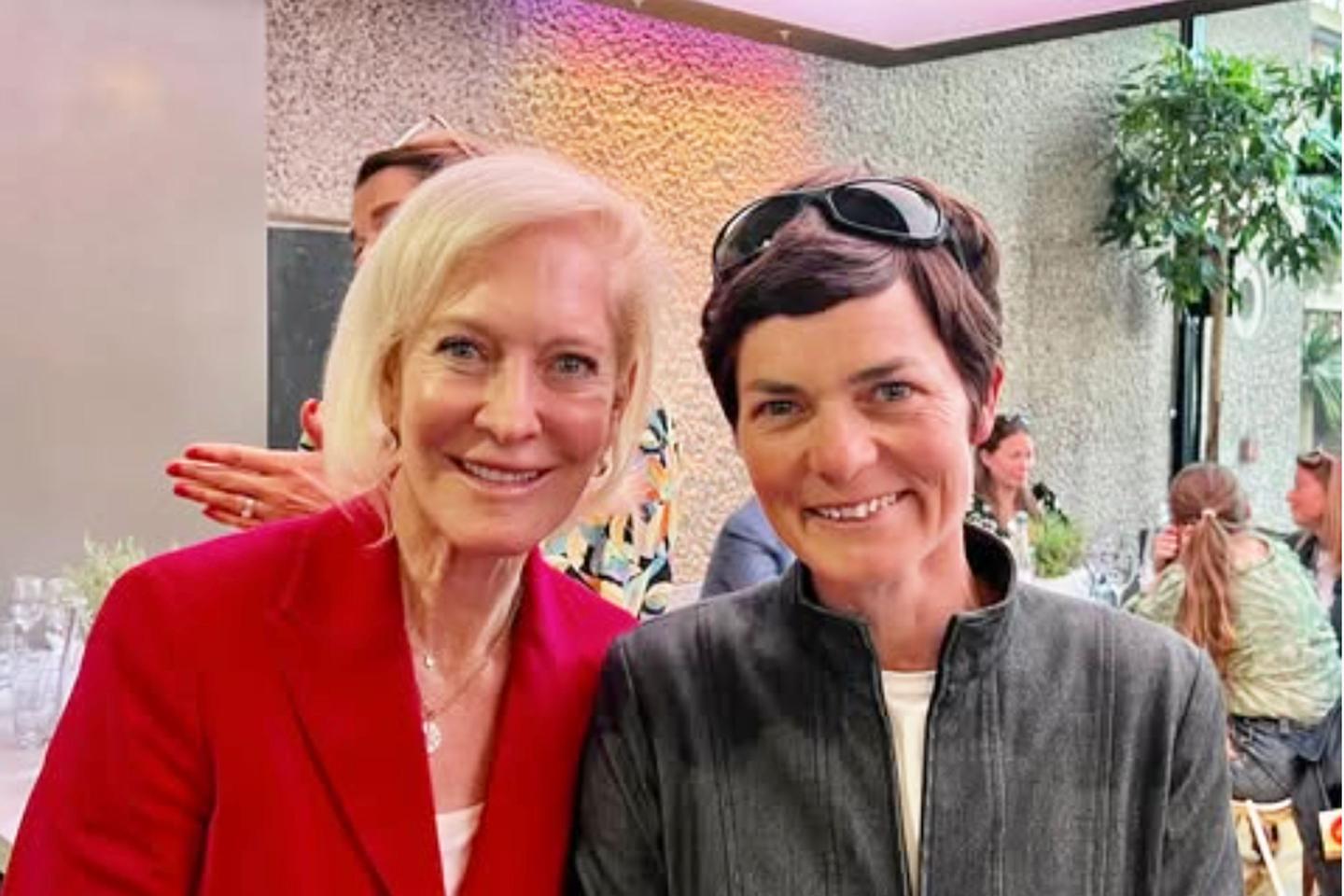
Wendy Schmidt and Dame Ellen MacArthur.
Wendy Schmidt and Dame Ellen MacArthur.office of Eric and Wendy Schmidt

Everything about the way we make and consume food—from the food packaging, to the placement of products in the grocery store aisles, to the background music that plays as you browse—is the result of a carefully designed system. 

Once we see the food system through this design lens, it appears ripe for innovation. Sixty percent of calories consumed globally derive from just four crops—wheat, rice, corn and potatoes—a shocking level of uniformity that makes our food system susceptible to crises like pandemics and extreme weather. We’ve already seen how swiftly store shelves can empty, how prices of staples can skyrocket, because of the tenuous, fragile links in the food supply chain. 

But what if grocery stores carried truly sustainable food products designed to regenerate nature and build a more resilient food system? Products like pastas made with diverse ancient grains, plant-based alternatives to packaged snack foods, beer made from surplus bread, and juices from plants like foraged cactus—foods that are less resource-intensive, more resistant to shocks, and still delicious. What if consumers could make choices like they do now, based on taste, preference, and price, but trust that their choices had positive and sustainable impacts?

Over the past two years, through the global Big Food Redesign Challenge, we’ve worked with more than 100 food makers across three continents, from small startups to major industry leaders, to create or revamp products so that they are sustainable from seed to shelf. These innovative products demonstrate that—with partnerships that reach across sectors and industries, and with philanthropy willing to make early, leading-edge investments—food can be produced sustainably, in a way that benefits people, the planet, and the bottom line. 

The concept of sustainability is familiar and indeed appreciated by consumers and businesses. Of the $2.6 trillion that American consumers spend on food each year, about 20% goes to sustainable products. But rather than focusing on making one element more sustainable, like plastic-free packaging, we need to account for the environmental impact of the full food system—from which ingredients are used, to how they are grown and sourced, to how they are shipped and made, to what materials are used for their packaging. Without a system-wide approach, the food sector will continue to be a significant contributor to global carbon emissions—today it accounts for a staggering one-third of the global total. 

The Schmidt Family Foundation and the Ellen MacArthur Foundation have previously collaborated with businesses to bring circularity to consumer goods, from drinkware to fashion. Each of these efforts required thinking about the full system and how to improve it. To bring sustainability to every part of the food journey, the businesses participating in the challenge prioritized ingredients that were diverse, low-impact, and upcycled. 

Diversifying ingredients, from a broad range of plant and animal species, benefits soil health, builds food supply resilience, and makes food businesses less reliant on single inputs. A company that created a shelf-stable smoothie powder, for example, sought out organic farms and worked with them to use the little-known Indian apple banana, which is more disease resistant than comparable ingredients. Grains offer many opportunities to diversify: One company’s prepared pilaf uses fonio, a drought-tolerant, gluten-free West African staple that boasts a carbon footprint nearly 80% smaller than rice and a 99% lower water footprint.

Low-impact ingredients, like fonio, have fewer negative effects on nature, or even positively “regenerate” nature. These ingredients can reduce greenhouse gas emissions, biodiversity loss, and deforestation and protect the long-term resilience of the natural systems we rely on for food in the first place. Meat options in the challenge were sometimes enhanced with underutilized seaweed or alternate plant products, reducing the carbon footprint of meat. For other products, manufacturers worked closely with farmers to guarantee that products were regenerative. 

Finally, upcycled ingredients are derived from food that would otherwise be wasted or lost, which reduces pressure on land and maximizes return on the inputs used to grow food. Products created through the challenge included those that rescued and reused everything from oat harvest leftovers to banana peels. Bread destined for the trash ended up contributing to a tasty beer, and wrinkled peas, which otherwise wouldn’t make it to market, were dried and ground with whole meal flour to create pasta. 

While circular products are important, we need circularity built into the system itself. When you eliminate waste, you increase productivity and options. Healthy food choices, sources, and markets expand. Farmers have a new way to make money: Perhaps most importantly, when you put nature first, you increase long-term health of the soil, improving fertility and yield (which also drives higher profits). Plants, animals, and humans all benefit from a new kind of regenerative efficiency that plans for the future and protects planetary resources in a way conventional industrial food systems do not. 

Systemic transformation requires all of us. We need bold leadership from business, policymakers, and the finance sector. Policy levers, including legislation and regulation, can provide the economic incentives food businesses need to invest in transforming the system. Small amounts of targeted capital can accelerate innovation and product development. Strategic philanthropy can bring great ideas from pilot to scale. And ultimately, manufacturers, retailers and consumers need to embrace and demand better options.

We have the resources for an abundant and resilient food system. Let’s use them.

The opinions expressed in Fortune.com commentary pieces are solely the views of their authors and do not necessarily reflect the opinions and beliefs of Fortune.

Read more:

  • Despite Europe’s economic woes, consumers are sticking to their guns on sustainability
  • Governments have just 5 weeks to end plastic pollution. A global, binding treaty is the only solution
  • A handful of companies have the power to save the oceans. Here’s why we’re urging them to reinvent our land-based food systems
Join us at the Fortune Workplace Innovation Summit May 19–20, 2026, in Atlanta. The next era of workplace innovation is here—and the old playbook is being rewritten. At this exclusive, high-energy event, the world’s most innovative leaders will convene to explore how AI, humanity, and strategy converge to redefine, again, the future of work. Register now.
About the Authors
By Ellen MacArthur
See full bioRight Arrow Button Icon
By Wendy Schmidt
See full bioRight Arrow Button Icon

Latest in Commentary

Finance
Lorem ipsum dolor sit amet, consectetur adipiscing elit, sed do eiusmod tempor incididunt ut labore et dolore magna aliqua. Ut enim ad minim veniam
By Fortune Editors
October 20, 2025
Finance
Lorem ipsum dolor sit amet, consectetur adipiscing elit, sed do eiusmod tempor incididunt ut labore et dolore magna aliqua. Ut enim ad minim veniam
By Fortune Editors
October 20, 2025
Finance
Lorem ipsum dolor sit amet, consectetur adipiscing elit, sed do eiusmod tempor incididunt ut labore et dolore magna aliqua. Ut enim ad minim veniam
By Fortune Editors
October 20, 2025
Finance
Lorem ipsum dolor sit amet, consectetur adipiscing elit, sed do eiusmod tempor incididunt ut labore et dolore magna aliqua. Ut enim ad minim veniam
By Fortune Editors
October 20, 2025
Finance
Lorem ipsum dolor sit amet, consectetur adipiscing elit, sed do eiusmod tempor incididunt ut labore et dolore magna aliqua. Ut enim ad minim veniam
By Fortune Editors
October 20, 2025
Finance
Lorem ipsum dolor sit amet, consectetur adipiscing elit, sed do eiusmod tempor incididunt ut labore et dolore magna aliqua. Ut enim ad minim veniam
By Fortune Editors
October 20, 2025

Most Popular

Finance
Lorem ipsum dolor sit amet, consectetur adipiscing elit, sed do eiusmod tempor incididunt ut labore et dolore magna aliqua. Ut enim ad minim veniam
By Fortune Editors
October 20, 2025
Finance
Lorem ipsum dolor sit amet, consectetur adipiscing elit, sed do eiusmod tempor incididunt ut labore et dolore magna aliqua. Ut enim ad minim veniam
By Fortune Editors
October 20, 2025
Finance
Lorem ipsum dolor sit amet, consectetur adipiscing elit, sed do eiusmod tempor incididunt ut labore et dolore magna aliqua. Ut enim ad minim veniam
By Fortune Editors
October 20, 2025
Finance
Lorem ipsum dolor sit amet, consectetur adipiscing elit, sed do eiusmod tempor incididunt ut labore et dolore magna aliqua. Ut enim ad minim veniam
By Fortune Editors
October 20, 2025
Finance
Lorem ipsum dolor sit amet, consectetur adipiscing elit, sed do eiusmod tempor incididunt ut labore et dolore magna aliqua. Ut enim ad minim veniam
By Fortune Editors
October 20, 2025
Finance
Lorem ipsum dolor sit amet, consectetur adipiscing elit, sed do eiusmod tempor incididunt ut labore et dolore magna aliqua. Ut enim ad minim veniam
By Fortune Editors
October 20, 2025
Fortune Secondary Logo
Rankings
  • 100 Best Companies
  • Fortune 500
  • Global 500
  • Fortune 500 Europe
  • Most Powerful Women
  • Future 50
  • World’s Most Admired Companies
  • See All Rankings
Sections
  • Finance
  • Fortune Crypto
  • Features
  • Leadership
  • Health
  • Commentary
  • Success
  • Retail
  • Mpw
  • Tech
  • Lifestyle
  • CEO Initiative
  • Asia
  • Politics
  • Conferences
  • Europe
  • Newsletters
  • Personal Finance
  • Environment
  • Magazine
  • Education
Customer Support
  • Frequently Asked Questions
  • Customer Service Portal
  • Privacy Policy
  • Terms Of Use
  • Single Issues For Purchase
  • International Print
Commercial Services
  • Advertising
  • Fortune Brand Studio
  • Fortune Analytics
  • Fortune Conferences
  • Business Development
  • Group Subscriptions
About Us
  • About Us
  • Editorial Calendar
  • Press Center
  • Work At Fortune
  • Diversity And Inclusion
  • Terms And Conditions
  • Site Map
  • About Us
  • Editorial Calendar
  • Press Center
  • Work At Fortune
  • Diversity And Inclusion
  • Terms And Conditions
  • Site Map
  • Facebook icon
  • Twitter icon
  • LinkedIn icon
  • Instagram icon
  • Pinterest icon

Latest in Commentary

hormuz
CommentaryIran
With Hormuz under strain, a trade corridor built for resilience faces a real-world test
By Angela Chitkara and Samantha SuttonApril 17, 2026
6 hours ago
broker
CommentarySoftware
The 3 forces quietly dismantling the business model that made enterprise software fabulously profitable
By Michael Jacobides and Stefano PuntoniApril 17, 2026
7 hours ago
welti
CommentaryIran
Switzerland’s former ambassador to Iran: here’s how to end this war — and why Pakistan isn’t enough
By Philippe WeltiApril 17, 2026
13 hours ago
Anita Beveridge-Raffo is Head of Retail and Consumer Goods at Palantir Technologies
CommentaryAI agents
Palantir exec: the biggest mistake retailers are making with AI? Trying to do it all with one agent
By Anita Beveridge-RaffoApril 16, 2026
1 day ago
wyle
CommentaryHealth
‘The Pitt’ reveals why healthcare desperately needs a new front door
By Jeremy MorganApril 16, 2026
1 day ago
health
CommentaryHealth Care Service
Two physicians on ending the waiting-room era: bring care home
By Benjamin Kornitzer and Bill FristApril 16, 2026
1 day ago

Most Popular

A world going broke: IMF says America's $39 trillion national debt is actually a global problem—and AI may be the only rescue
Economy
A world going broke: IMF says America's $39 trillion national debt is actually a global problem—and AI may be the only rescue
By Nick LichtenbergApril 16, 2026
24 hours ago
Pope Leo warned the world is in ‘big trouble’ if Elon Musk becomes the first trillionaire
Success
Pope Leo warned the world is in ‘big trouble’ if Elon Musk becomes the first trillionaire
By Preston ForeApril 17, 2026
10 hours ago
Jeff Bezos pledged $10 billion for climate change. With the 2030 clock ticking, his wife, Lauren Sánchez Bezos, is leading the charge to spend it
Environment
Jeff Bezos pledged $10 billion for climate change. With the 2030 clock ticking, his wife, Lauren Sánchez Bezos, is leading the charge to spend it
By Sydney LakeApril 15, 2026
2 days ago
MacKenzie Scott is bypassing the Ivy League and rewriting the $79 billion higher ed playbook by giving to HBCUs and community colleges
Politics
MacKenzie Scott is bypassing the Ivy League and rewriting the $79 billion higher ed playbook by giving to HBCUs and community colleges
By Sydney LakeApril 16, 2026
1 day ago
Germany already told its workers to ditch four-day weeks and work-life balance. Now the government wants to cut their pay for calling in sick, too
Success
Germany already told its workers to ditch four-day weeks and work-life balance. Now the government wants to cut their pay for calling in sick, too
By Orianna Rosa RoyleApril 16, 2026
2 days ago
Current price of oil as of April 16, 2026
Personal Finance
Current price of oil as of April 16, 2026
By Joseph HostetlerApril 16, 2026
1 day ago

© 2026 Fortune Media IP Limited. All Rights Reserved. Use of this site constitutes acceptance of our Terms of Use and Privacy Policy | CA Notice at Collection and Privacy Notice | Do Not Sell/Share My Personal Information
FORTUNE is a trademark of Fortune Media IP Limited, registered in the U.S. and other countries. FORTUNE may receive compensation for some links to products and services on this website. Offers may be subject to change without notice.