• Home
  • Latest
  • Fortune 500
  • Finance
  • Tech
  • Leadership
  • Lifestyle
  • Rankings
  • Multimedia

Trendingnow

1

'Dr. Doom' Nouriel Roubini says we're headed for universal basic income or 'some form of socialism' as AI revolutionizes work—He calls that optimistic

2

‘I want to die broke’: Billionaire philanthropist Denny Sanford dies after giving away $4 billion

3

Power companies are using eminent domain to seize land for data centers as 70% of Americans say not in my backyard

1

'Dr. Doom' Nouriel Roubini says we're headed for universal basic income or 'some form of socialism' as AI revolutionizes work—He calls that optimistic

2

‘I want to die broke’: Billionaire philanthropist Denny Sanford dies after giving away $4 billion

3

Power companies are using eminent domain to seize land for data centers as 70% of Americans say not in my backyard
HealthLongevity

CEO of Oura has 4 predictions for the $80 billion wearable tech industry—including growing his customer base by millions of people

By
Alexa Mikhail
Alexa Mikhail
Senior Reporter, Fortune Well
Down Arrow Button Icon
By
Alexa Mikhail
Alexa Mikhail
Senior Reporter, Fortune Well
Down Arrow Button Icon
June 27, 2025, 1:03 PM ET
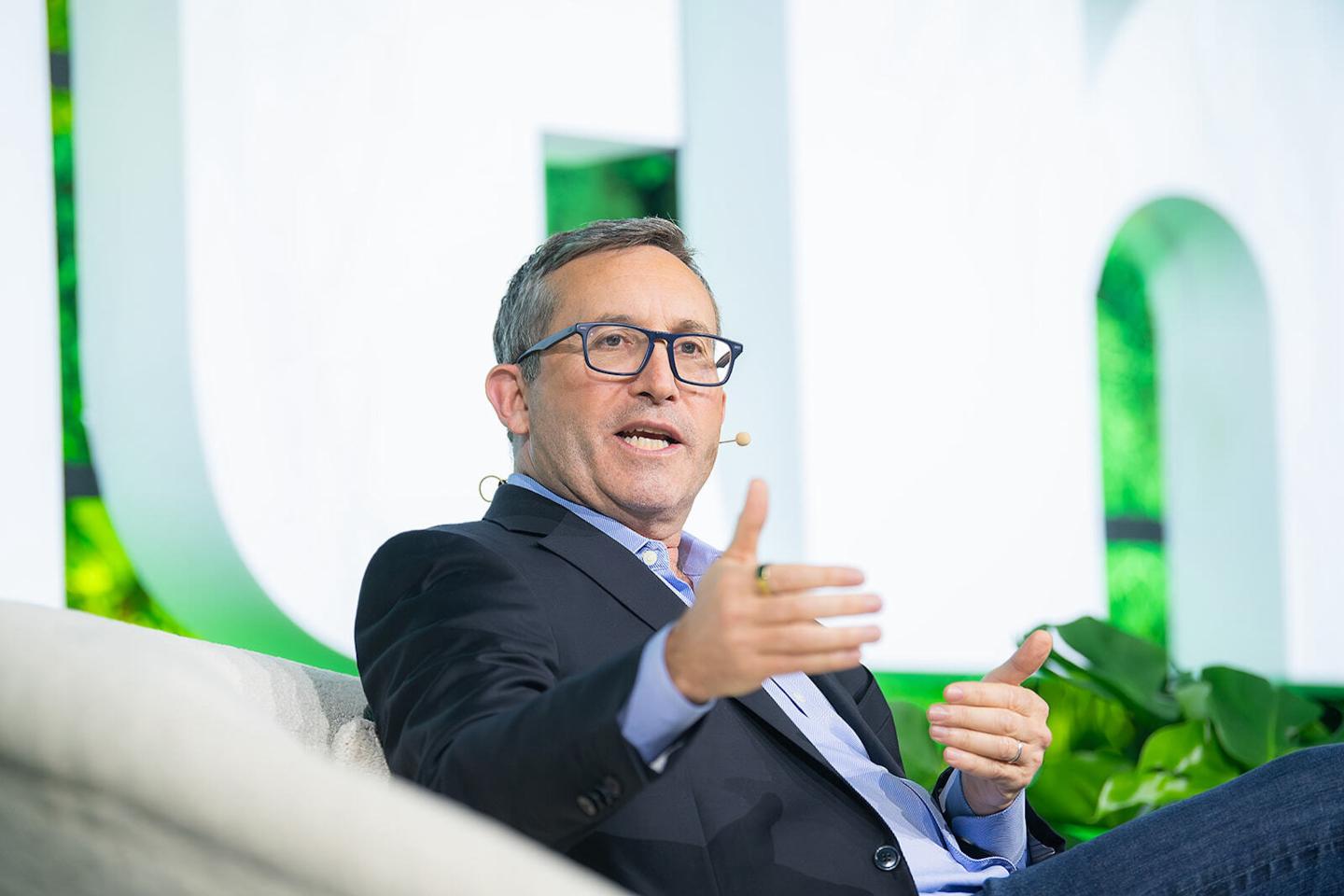
“We've always believed that there's a transformation afoot in the way people address their health," says Oura CEO Tom Hale.
“We've always believed that there's a transformation afoot in the way people address their health," says Oura CEO Tom Hale. Courtesy of Benjamin Arthur—HLTH Europe
Add Fortune on Google for similar content.

The wearable tech industry is booming. Last year, the market was valued at over $80 billion and is expected to reach an estimated $180 billion by 2030, with the most significant growth across North America. 

Recommended Video

As more people opt for personalized health data, the once-futuristic idea of wearing health tech daily has become so mainstream that donning an Oura ring or glucose monitor at a party is no longer a rarity. 

“We’ve always believed that there’s a transformation afoot in the way people address their health, meaning that they’re going to be in charge of it,” Tom Hale, CEO of Oura, tells Fortune on-site at HLTH Europe earlier this month, the continent’s health tech innovation summit. 

Oura—which produces rings starting at $300 to track sleep, heart rate variability, resilience, and more—has sold over 2.5 million devices. The wearable company has been at the forefront of consumer interest in personal health data. It recently expanded its features to provide data on women’s hormonal and metabolic health. 

For Hale, the industry is ripe for innovation, and the element of control is enticing consumers. Hale predicts a growing number of people will wear a health tech device daily, and maybe even more than one. Hale says he wouldn’t be surprised if people, one day, wear a health tech earring in addition to a ring. 

“The amount of data is getting bigger and broader, and the ability for machine intelligence to look over that data and make sense of it is just getting better and better,” he says. “People [are] taking control of their health rather than waiting to see a doctor.”

Here are the CEO’s top predictions for the future of the wearable health tech industry: 

Wearable tech will be the first step to the doctor 

With doctor shortages and long waits, Hale sees more people turning to wearable tech first to enter a doctor’s office armed with their own data and questions. “We end up being the front door for you,” Hale says of Oura. 

“Maybe you want to preserve the doctors for the most important things, but [a wearable device] can provide advice. It can educate you. It can inform you. It can warn you,” he says. “I think care is gonna shift to this hybrid mode, where the device is providing some form of care for you. And that care could be, ‘Hey, you should really see a doctor.’” 

Preventive health has become a buzz phrase in the health world, and it will only become more dominant using wearable tech, Hale predicts. Last year, 70% of people in the U.S. and UK and 85% in China reported purchasing items within the preventive health category, like a digital health tool or anti-aging product, according to a report from McKinsey & Company. 

AI advisors will give concrete, personalized advice 

While devices like Oura provide real-time insights, recommendations for precisely how to improve a sleep or stress score are less clear on the platform (beyond supportive gestures like “your resting heart rate lowered late last night, could it be that you ate too close to bedtime?”). In the next five to 10 years, Hale predicts that the models will better predict risk and offer more concrete advice.

“We’re not a doctor …  but we could get better and better at giving you those warnings and saying, ‘Hey, by the way, here’s a great partner you might want to talk to.’ ‘Here’s a great clinic,’” he says. 

In a first step, Oura announced the AI-powered Personal Health Companion earlier this year. It offers advice for ways to take action and speaks directly to the user about their health metrics. Women make up the bulk of Oura consumers who have opted in to talk with the health companion. The demographic uses it nearly twice as much and twice as long as men, Hale shares. 

“It remembers that my dog’s name is Jackson, and it’s always telling me to take a walk with Jackson,” Hale says of one user, noting that people increasingly gravitate toward personalized advice that makes them feel seen.

“It’s infinitely patient. It’s infinitely empathic, and it knows a lot about me,” Hale says of some of his users’ takeaways and why women may be more drawn to the platform, given their underrepresentation in medical research and higher likelihood of experiencing medical gaslighting.

More all-in-one devices 

Expect more partnerships within the wearable tech industry to put all data in one place. 

Oura recently partnered with a company that provides a glucose monitoring device to add metabolic health to their platform. Customers had said that beyond sleep, exercise, heart health, and stress, they wanted to measure something related to their nutrition and have it all in one place. 

“Medicine wants to diagnose you with something, so you can get a pharmaceutical to treat you. I think what we’re saying is that you want to feel better, you want to look better, and you want to have energy. How do you look across all the potential ways and the things that you’re doing?” Hale says. 

Devices that support, not scare

To succeed in the market, more health tech and wearable providers must understand their responsibility for curbing health anxiety and making user interfaces that support rather than scare. 

Hale advocates for what he calls “calm tech” (think calming colors, supportive language, and muted tones) to encourage people and support them on their health journey rather than berate them with big red doomsday alerts. 

When asked if there is such a thing as too much data and tracking, Hale says there can be. Because for many, more information isn’t always a good thing. While he notes that the platform tries to synthesize data before it gets to you and deliver only “bite-sized” insights, customers have come to his desk with concerns of being stressed about being stressed or stressed about not getting enough sleep. 

There is even a term for not sleeping well because of a sleep tracker called orthosomnia. For someone who is prone to health anxiety and developing an unhealthy relationship with their trackers—perhaps compulsively beating themselves up for a score—Hale has some simple advice. “Take it off,” he says. 

“It’s obviously stressing you out … like, don’t do it,” he says. “That’s more or less the response that we have.” 

But for now, Hale sees more optimism in the sector than worry. 

“We’re helping your body say things to you that you can’t hear unless you have the support in this tool. You get a sixth sense,” he says. “I think we could benefit tens of millions of people in five years. I don’t think we need to do anything radically different.” 

The Fortune 500 Innovation Forum will convene Fortune 500 executives, U.S. policy officials, top founders, and thought leaders to help define what’s next for the American economy, Nov. 16-17 in Detroit. Apply here.
About the Author
By Alexa MikhailSenior Reporter, Fortune Well
LinkedIn iconTwitter icon

Alexa Mikhail is a former senior health and wellness reporter for Fortune Well, covering longevity, aging, caregiving, workplace wellness, and mental health.

See full bioRight Arrow Button Icon
Add Fortune on Google for similar content.

Latest in Health

Finance
Lorem ipsum dolor sit amet, consectetur adipiscing elit, sed do eiusmod tempor incididunt ut labore et dolore magna aliqua. Ut enim ad minim veniam
By Fortune Editors
October 20, 2025
Finance
Lorem ipsum dolor sit amet, consectetur adipiscing elit, sed do eiusmod tempor incididunt ut labore et dolore magna aliqua. Ut enim ad minim veniam
By Fortune Editors
October 20, 2025
Finance
Lorem ipsum dolor sit amet, consectetur adipiscing elit, sed do eiusmod tempor incididunt ut labore et dolore magna aliqua. Ut enim ad minim veniam
By Fortune Editors
October 20, 2025
Finance
Lorem ipsum dolor sit amet, consectetur adipiscing elit, sed do eiusmod tempor incididunt ut labore et dolore magna aliqua. Ut enim ad minim veniam
By Fortune Editors
October 20, 2025
Finance
Lorem ipsum dolor sit amet, consectetur adipiscing elit, sed do eiusmod tempor incididunt ut labore et dolore magna aliqua. Ut enim ad minim veniam
By Fortune Editors
October 20, 2025
Finance
Lorem ipsum dolor sit amet, consectetur adipiscing elit, sed do eiusmod tempor incididunt ut labore et dolore magna aliqua. Ut enim ad minim veniam
By Fortune Editors
October 20, 2025

Most Popular

Finance
Lorem ipsum dolor sit amet, consectetur adipiscing elit, sed do eiusmod tempor incididunt ut labore et dolore magna aliqua. Ut enim ad minim veniam
By Fortune Editors
October 20, 2025
Finance
Lorem ipsum dolor sit amet, consectetur adipiscing elit, sed do eiusmod tempor incididunt ut labore et dolore magna aliqua. Ut enim ad minim veniam
By Fortune Editors
October 20, 2025
Finance
Lorem ipsum dolor sit amet, consectetur adipiscing elit, sed do eiusmod tempor incididunt ut labore et dolore magna aliqua. Ut enim ad minim veniam
By Fortune Editors
October 20, 2025
Finance
Lorem ipsum dolor sit amet, consectetur adipiscing elit, sed do eiusmod tempor incididunt ut labore et dolore magna aliqua. Ut enim ad minim veniam
By Fortune Editors
October 20, 2025
Finance
Lorem ipsum dolor sit amet, consectetur adipiscing elit, sed do eiusmod tempor incididunt ut labore et dolore magna aliqua. Ut enim ad minim veniam
By Fortune Editors
October 20, 2025
Finance
Lorem ipsum dolor sit amet, consectetur adipiscing elit, sed do eiusmod tempor incididunt ut labore et dolore magna aliqua. Ut enim ad minim veniam
By Fortune Editors
October 20, 2025
Fortune Secondary Logo
Rankings
  • 100 Best Companies
  • Fortune 500
  • Global 500
  • Fortune 500 Europe
  • Most Powerful Women
  • World's Most Admired Companies
  • See All Rankings
  • Lists Calendar
Sections
  • Finance
  • Fortune Crypto
  • Features
  • Leadership
  • Health
  • Commentary
  • Success
  • Retail
  • Mpw
  • Tech
  • Lifestyle
  • CEO Initiative
  • Asia
  • Politics
  • Conferences
  • Europe
  • Newsletters
  • Personal Finance
  • Environment
  • Magazine
  • Education
Customer Support
  • Frequently Asked Questions
  • Customer Service Portal
  • Privacy Policy
  • Terms Of Use
  • Single Issues For Purchase
  • International Print
Commercial Services
  • Advertising
  • Fortune Brand Studio
  • Fortune Analytics
  • Fortune Conferences
  • Business Development
  • Group Subscriptions
About Us
  • About Us
  • Press Center
  • Work At Fortune
  • Terms And Conditions
  • Site Map
  • About Us
  • Press Center
  • Work At Fortune
  • Terms And Conditions
  • Site Map
  • Facebook icon
  • Twitter icon
  • LinkedIn icon
  • Instagram icon
  • Pinterest icon

Latest in Health

Ferran Torres
SuccessWorld Cup
Spain’s Ferran Torres scored the winning goal in the World Cup—but just four years ago, he was in therapy and stuck in a ‘bottomless pit’
By Emma BurleighJuly 20, 2026
7 hours ago
FDA walks back positive lab test while lettuce recall continues
HealthFood and drink
FDA walks back positive lab test while lettuce recall continues
By Bloomberg, Kristina Peterson, Jessica Nix and Daniela SirtoriJuly 20, 2026
8 hours ago
Pharmacy technician Brandy Leroy fills a TPN bag using the ExactaMix Pro Automated Compounding System
Startups & VentureTerm Sheet
The FDA’s peptide vote could create telehealth’s next multibillion-dollar market
By Lily Mae LazarusJuly 20, 2026
11 hours ago
A decade after the ‘Godfather of AI’ said radiologists were obsolete, their salaries are up to $571K and demand is growing fast
AIthe future of work
A decade after the ‘Godfather of AI’ said radiologists were obsolete, their salaries are up to $571K and demand is growing fast
By Marco Quiroz-GutierrezJuly 19, 2026
1 day ago
How United’s ‘premiumization’ strategy got passengers to swallow higher airfares without a fight
HealthAirline industry
How United’s ‘premiumization’ strategy got passengers to swallow higher airfares without a fight
By Phil WahbaJuly 19, 2026
2 days ago
Diarrhea-causing lettuce may have spread as wide as 27 states, Taylor Farms recall suggests
HealthFood and drink
Diarrhea-causing lettuce may have spread as wide as 27 states, Taylor Farms recall suggests
By Savannah Peters and The Associated PressJuly 18, 2026
2 days ago

Most Popular

'Dr. Doom' Nouriel Roubini says we're headed for universal basic income or 'some form of socialism' as AI revolutionizes work—He calls that optimistic
AI
'Dr. Doom' Nouriel Roubini says we're headed for universal basic income or 'some form of socialism' as AI revolutionizes work—He calls that optimistic
By Jason MaJuly 18, 2026
2 days ago
‘I want to die broke’: Billionaire philanthropist Denny Sanford dies after giving away $4 billion
Success
‘I want to die broke’: Billionaire philanthropist Denny Sanford dies after giving away $4 billion
By Sydney LakeJuly 20, 2026
9 hours ago
Power companies are using eminent domain to seize land for data centers as 70% of Americans say not in my backyard
AI
Power companies are using eminent domain to seize land for data centers as 70% of Americans say not in my backyard
By Aaron Walayat and The ConversationJuly 19, 2026
2 days ago
Mark Cuban says he has the solution to growing income inequality, and it's to reward every employee—from CEO to janitor—with company stock
Success
Mark Cuban says he has the solution to growing income inequality, and it's to reward every employee—from CEO to janitor—with company stock
By Sasha RogelbergJuly 20, 2026
5 hours ago
Red Lobster’s 37-year-old CEO waited tables before joining the C-suite—he says it was a crash course in managing ‘difficult people and situations’
Success
Red Lobster’s 37-year-old CEO waited tables before joining the C-suite—he says it was a crash course in managing ‘difficult people and situations’
By Preston ForeJuly 19, 2026
2 days ago
Warren Buffett says his $147 billion investing career was an accident: ‘I may be one of the 10 luckiest in the world’
Future of Work
Warren Buffett says his $147 billion investing career was an accident: ‘I may be one of the 10 luckiest in the world’
By Sarah GlodekJuly 20, 2026
16 hours ago

© 2026 Fortune Media IP Limited. All Rights Reserved. Use of this site constitutes acceptance of our Terms of Use and Privacy Policy | CA Notice at Collection and Privacy Notice | Do Not Sell/Share My Personal Information
FORTUNE is a trademark of Fortune Media IP Limited, registered in the U.S. and other countries. FORTUNE may receive compensation for some links to products and services on this website. Offers may be subject to change without notice.