- President Donald Trump has long wanted to reprivatize Fannie Mae and Freddie Mac, which have been under government control ever since they needed a $191 billion bailout during the Global Financial Crisis. For Wharton finance and real estate professor Susan Wachter, heavy regulation of utilities and insurance carriers is the best model for the mortgage giants.
No members of the Fortune 500 saw their shares surge last year like Fannie Mae and Freddie Mac did. Hedge funds who bought nearly worthless stakes in the mortgage giants after the Global Financial Crisis could stand to make billions if President Donald Trump fulfills his goal to take both firms public.
Several experts, meanwhile, remain focused on how to free Fannie and Freddie from government control without repeating the mistakes that helped lead to the 2008 meltdown.
Uncle Sam bailed out both government-sponsored enterprises, which provide crucial liquidity to housing markets, when both teetered on the brink of insolvency. After being delisted from the New York Stock Exchange in 2010, their shares continued to trade over the counter.
Billionaire hedge fund owners Bill Ackman and John Paulson are among those who snapped them up, betting the U.S. government would eventually make good on its pledge to reprivatize both agencies. With Trump raising the issue on his social media platform last month, it hasn’t gone unnoticed that both men have backed the president.
“The subtext of the media stories is that [Fannie and Freddie] shareholders, which include many supporters of [Trump], are looking for a gift from the President,” Ackman wrote in a lengthy post on X last week. “Nothing could be further from the truth.”
Paulson did not respond to a request for comment.
A ‘utility model’ for Fannie and Freddie
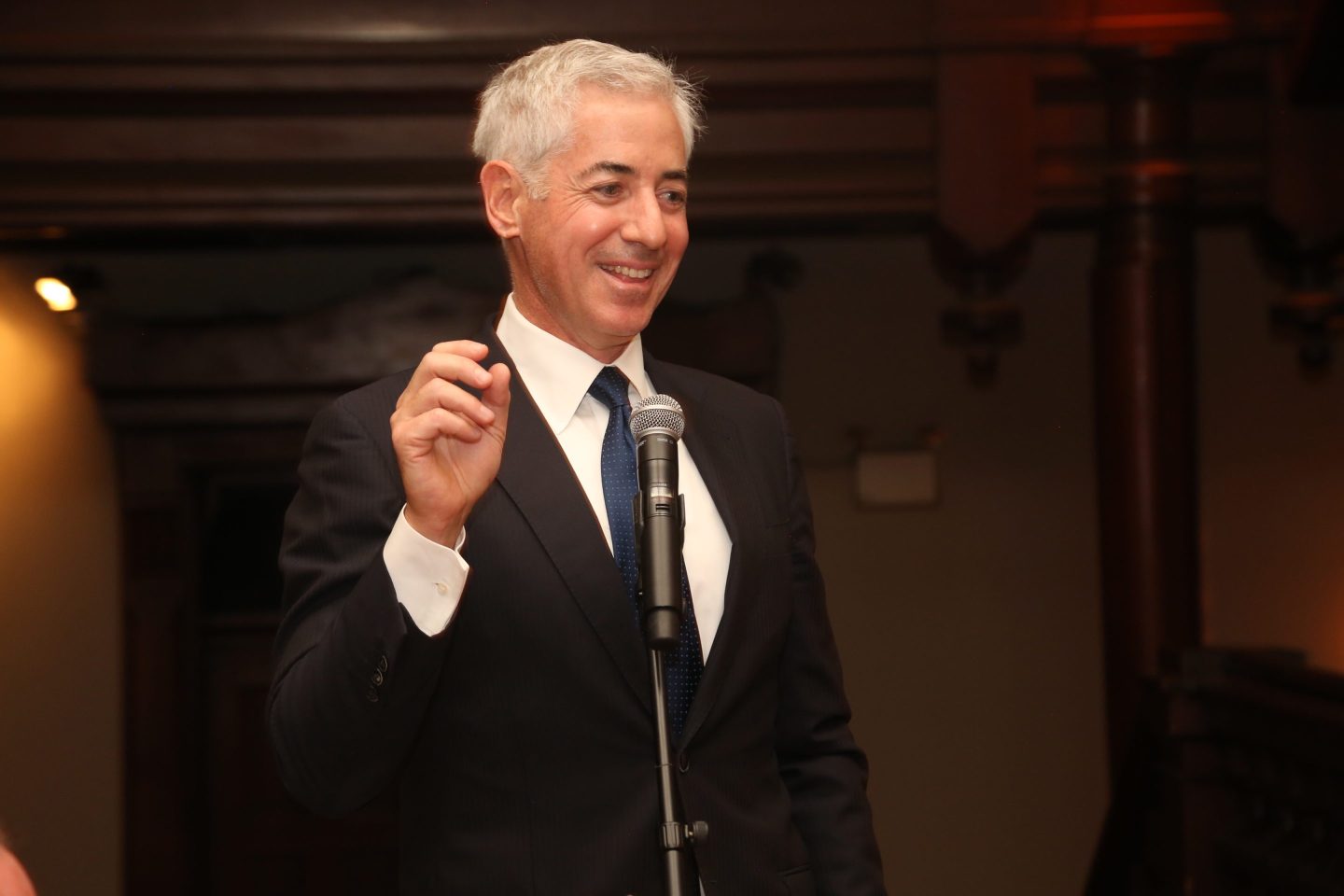
Ackman, the CEO of hedge fund Pershing Square, has said ending government conservatorship could reward taxpayers while maintaining widespread home availability and affordability.
A host of thorny issues need to be sorted out before executing what would be the largest public offerings in history, many experts warn. Those debates aside, however, there’s an even weightier question about how the biggest players in American mortgage markets should operate as private companies.
For Susan Wachter, a professor of real estate and finance at the University of Pennsylvania’s Wharton School, the heavily regulated model for utilities—where state agencies decide how much companies can charge consumers—has proved its worth. She also sees parallels to the insurance industry, where regulators oversee rates to protect customers while also preventing risk from being underpriced.
“It helps insure against another bailout,” she told Fortune, “and it helps maintain profits in the long run.”
Fannie and Freddie support 70% of America’s mortgage market, according to the National Association of Realtors, by purchasing mortgages from lenders and packaging them into mortgage-backed securities, freeing up originators to make more loans. They also guarantee payment on those securities if borrowers default, charging a premium for providing that insurance.
There are many explanations floated for why the housing bubble spelled doom for Fannie’s and Freddie’s balance sheets. The main problem, Wachter said, is that when housing prices tanked by about 20% in 2008, many of the loans Fannie and Freddie insured were “underwater,” meaning the value of the homes securing those packaged loans had fallen below the amount borrowers owed.
As they competed for business, Fannie and Freddie had not collected adequate fees to compensate for taking on this risk, Wachter said.
“If these entities go private without oversight, there is a risk of a race to the bottom,” she said.
Both institutions also got into trouble by buying large amounts of riskier, private-label mortgage-backed securities to hold as investments. They financed these purchases with cheap debt accessible thanks to the so-called implicit guarantee, or the belief among investors—which ultimately proved correct—that the government wouldn’t let the enterprises fail.
In short, Fannie and Freddie both juiced profits by “chasing yield,” becoming what many commentators called the world’s largest hedge funds helped by what was, in effect, a government subsidy. Taxpayers paid the price when these bets on risky assets collapsed.
A path forward
Wachter believes reforms instituted under conservatorship have made Fannie and Freddie much more resilient while remaining relatively effective at encouraging middle-class homeownership.
The early days of the COVID-19 pandemic provided a major test, she said, when a massive spike in unemployment briefly sparked fears of another mortgage market collapse.
“Fannie and Freddie could go on, continue to lend,” said Wachter, codirector of the Penn Institute for Urban Research, “even as it offered forbearance to borrowers.”
Both enterprises remain central to a fixture of the American Dream: the 30-year, fixed-rate, pre-payable mortgage. Of course, some question whether continuing to favor that New Deal–era invention is still worth the cost.
Last month, Trump said the U.S. government “will keep its implicit GUARANTEES,” though what he meant exactly remains unclear. Continuing to federally back Fannie and Freddie as private firms would spark fears about a repeat of 2008. Put them completely on their own, however, and mortgage rates likely go higher as investors demand compensation for taking on more risk when buying both enterprises’ packaged loans.
“But I think what that debate misses is that if you keep the government backing to these giants, you are going to restrict [the] private market and private competition,” Amit Seru, a professor of finance at the Stanford Graduate School of Business, told Fortune. “And that means giving up on lots of innovative products.”
For example, the U.S. housing market’s pandemic boom eventually stalled, partially owing to what has been dubbed the “lock-in effect.” Existing homeowners who bought before mortgage rates skyrocketed in 2022, when the Federal Reserve dramatically hiked borrowing costs to fight inflation, have been reluctant to sell and take out a new mortgage at a higher rate.
In many European countries, Seru noted, that’s less of a problem thanks to products that allow people to sell their house, buy a new one, and take their existing mortgage with them. That’s typically not possible in the U.S., he said, because Fannie’s and Freddie’s dominance means originators can’t stray too far from the industry standard.
“No one can compete with the government,” said Seru, a senior fellow at the Hoover Institution, a conservative-leaning think tank.
Ackman, meanwhile, sees Fannie and Freddie remaining at the core of the American mortgage market. To facilitate a public offering, Ackman has suggested the Treasury cancel its roughly $350 billion worth of senior preferred shares, meaning it would forgive its right to repayment and dividends. That would remove a massive liability from the enterprises’ balance sheets, making them much more attractive to private investors.
But the government wouldn’t get wiped out. Separate from the preferred shares, it also has warrants that give it the right to buy nearly four-fifths of Fannie’s and Freddie’s common stock at one-thousandth of a cent, or $0.00001, per share. Fannie stock currently trades at about $9, and Freddie is around $7.
If Washington canceled its entire senior preferred stake, the value of the warrants would increase by roughly $280 billion.
That would be the most lucrative outcome for Ackman, who alternatively could see the value of his common stock diluted to almost zero if Fannie and Freddie go public without the Treasury canceling most of its senior stake.
“[Fannie and Freddie] shareholders don’t have their hands out,” Ackman wrote in his social media post last week. “The opposite is the case. Hundreds of billions of dollars of funds that belonged to [Fannie and Freddie] were unilaterally taken by the government years ago, and the companies never received credit for these payments.”
The U.S. government has collected at least $301 billion in profits from Fannie and Freddie, earning nearly 60% on the $191 billion it paid to bail the mortgage giants out in 2008. Ackman says his plan could pave the way for a similarly sized payday for Uncle Sam in a much shorter window.
Wachter and Seru don’t necessarily disagree. Still, they ultimately see the government’s senior preferred shares as a sideshow compared with bigger questions about what Fannie and Freddie should look like as private enterprises.
“There is a lot at stake here,” Seru said, “which I think goes well beyond Ackman’s investments.”