• Home
  • Latest
  • Fortune 500
  • Finance
  • Tech
  • Leadership
  • Lifestyle
  • Rankings
  • Multimedia

Trendingnow

1

Philanthropy leader at Warren Buffett and Bill Gates’ Giving Pledge says children of billionaires are pushing them to give their wealth away faster

2

MacKenzie Scott alone accounted for one-third of America's $19.2 billion in megagifts last year

3

Ex-Google engineer says Larry Page, Sergey Brin and Sundar Pichai share the same trait—it's the lesson he swears by as a $7.2 billion AI CEO

1

Philanthropy leader at Warren Buffett and Bill Gates’ Giving Pledge says children of billionaires are pushing them to give their wealth away faster

2

MacKenzie Scott alone accounted for one-third of America's $19.2 billion in megagifts last year

3

Ex-Google engineer says Larry Page, Sergey Brin and Sundar Pichai share the same trait—it's the lesson he swears by as a $7.2 billion AI CEO
TechAI

OpenAI updated its safety framework—but no longer sees mass manipulation and disinformation as a critical risk

By
Sharon Goldman
Sharon Goldman
and
Jeremy Kahn
Jeremy Kahn
Down Arrow Button Icon
By
Sharon Goldman
Sharon Goldman
and
Jeremy Kahn
Jeremy Kahn
Down Arrow Button Icon
April 16, 2025, 3:09 PM ET
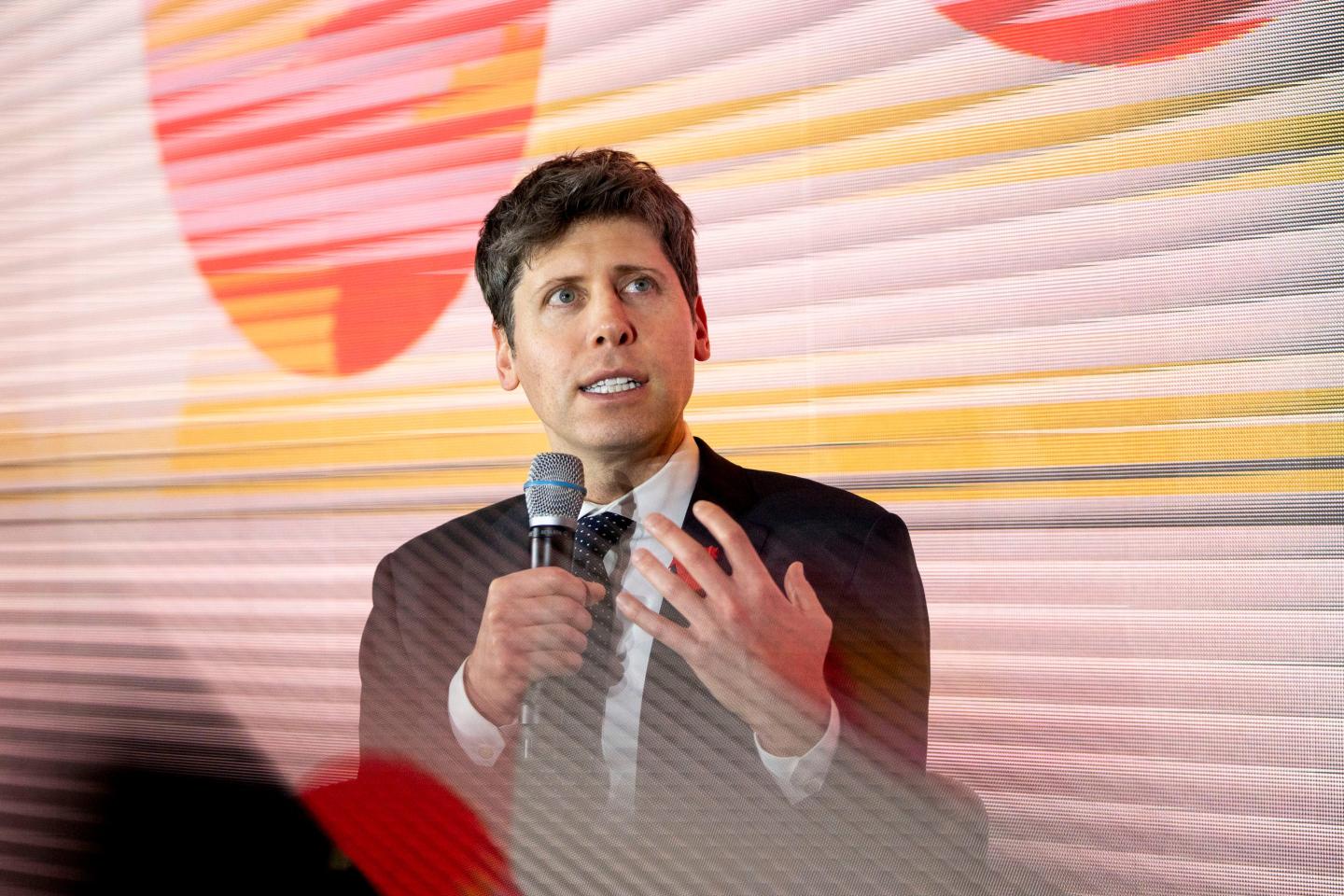
Sam Altman holds a microphone and speaks amid a bright multicolor backdrop.
Sam Altman, CEO of OpenAI, whose AI agent has set a new standard of performance on Humanity’s Last Exam.Nathan Laine—Bloomberg/Getty Images
Add Fortune on Google for similar content.

OpenAI said it will stop assessing its AI models prior to releasing them for the risk that they could persuade or manipulate people, possibly helping to swing elections or create highly effective propaganda campaigns.

The company said it would now address those risks through its terms of service, restricting the use of its AI models in political campaigns and lobbying, and monitoring how people are using the models once they are released for signs of violations.

Recommended Video

OpenAI also said it would consider releasing AI models that it judged to be “high risk” as long as it has taken appropriate steps to reduce those dangers—and would even consider releasing a model that presented what it called “critical risk” if a rival AI lab had already released a similar model. Previously, OpenAI had said it would not release any AI model that presented more than a “medium risk.”

The changes in policy were laid out in an update to OpenAI’s “Preparedness Framework” yesterday. That framework details how the company monitors the AI models it is building for potentially catastrophic  dangers—everything from the possibility the models will help someone create a biological weapon to  their ability to assist hackers to the possibility that the models will self-improve and escape human control. 

The policy changes split AI safety and security experts. Several took to social media to commend OpenAI for voluntarily releasing the updated framework, noting improvements such as clearer risk categories and a stronger emphasis on emerging threats like autonomous replication and safeguard evasion. 

However, others voiced concerns, including Steven Adler, a former OpenAI safety researcher who criticized the fact that the updated framework no longer requires safety tests of fine-tuned models. ”OpenAI is quietly reducing its safety commitments,” he wrote on X. Still, he emphasized that he appreciated OpenAI’s efforts:  “I’m overall happy to see the Preparedness Framework updated,” he said. “This was likely a lot of work, and wasn’t strictly required.” 

Some critics highlighted the removal of persuasion from the dangers the Preparedness Framework addresses. 

“OpenAI appears to be shifting its approach,” said Shyam Krishna, a research leader in AI policy and governance at RAND Europe. “Instead of treating persuasion as a core risk category, it may now be addressed either as a higher-level societal and regulatory issue or integrated into OpenAI’s existing guidelines on model development and usage restrictions.” It remains to be seen how this will play out in areas like politics, he added, where AI’s persuasive capabilities are “still a contested issue.”

Courtney Radsch, a senior fellow at Brookings, the Center for International Governance Innovation, and the Center for Democracy and Technology working on AI ethics went further, calling the framework in a message to Fortune “another example of the technology sector’s hubris.” She emphasized that the decision to downgrade ‘persuasion’ “ignores context – for example, persuasion may be existentially dangerous to individuals such as children or those with low AI literacy or in authoritarian states and societies.”

Oren Etzioni, former CEO of the Allen Institute for AI and founder of TrueMedia, which offers tools to fight AI-manipulated content, also expressed concern. “Downgrading deception strikes me as a mistake given the increasing persuasive power of LLMs,” he said in an email. “One has to wonder whether OpenAI is simply focused on chasing revenues with minimal regard for societal impact.”

However, one AI safety researcher not affiliated with OpenAI told Fortune that it seems reasonable to simply address any risks from disinformation or other malicious persuasion uses through OpenAI’s terms of service. The researcher, who asked to remain anonymous because he is not permitted to speak publicly without authorization from his current employer, added that persuasion/manipulation risk is difficult to evaluate in pre-deployment testing. In addition, he pointed out that this category of risk is more amorphous and ambivalent compared to other critical risks, such as the risk AI will help someone perpetrate a chemical or biological weapons attack or will help someone in a cyberattack.

It is notable that some Members of the European Parliament have also voiced concern that the latest draft of the proposed code of practice for complying with the EU AI Act also downgraded mandatory testing of AI models for the possibility that they could spread disinformation and undermine democracy to a voluntary consideration.

Studies have found AI chatbots to be highly persuasive, although this capability itself is not necessarily dangerous. Researchers at Cornell University and MIT, for instance, found that dialogues with chatbots were effective at getting people question conspiracy theories.

Another criticism of OpenAI’s updated framework centered on a line where OpenAI states: “If another frontier AI developer releases a high-risk system without comparable safeguards, we may adjust our requirements.”

Max Tegmark, the president of the Future of Life Institute, a non-profit that seeks to address existential risks, including threats from advanced AI systems, said in a statement to Fortune that “the race to the bottom is speeding up. These companies are openly racing to build uncontrollable artificial general intelligence—smarter-than-human AI systems designed to replace humans—despite admitting the massive risks this poses to our workers, our families, our national security, even our continued existence.”

“They’re basically signaling that none of what they say about AI safety is carved in stone,” said longtime OpenAI critic Gary Marcus in a LinkedIn message, who said the line forewarns a race to the bottom. “What really governs their decisions is competitive pressure—not safety. Little by little, they’ve been eroding everything they once promised. And with their proposed new social media platform, they’re signaling a shift toward becoming a for-profit surveillance company selling private data—rather than a nonprofit focused on benefiting humanity.” 

Overall, it is useful that companies like OpenAI are sharing their thinking around their risk management practices openly, Miranda Bogen, director of the AI governance lab at the Center for Democracy & Technology, told Fortune in an email. 

That said, she added she is concerned about moving the goalposts. “It would be a troubling trend if, just as AI systems seem to be inching up on particular risks, those risks themselves get deprioritized within the guidelines companies are setting for themselves,” she said. 

She also criticized the framework’s focus on ‘frontier’ models when OpenAI and other companies have used technical definitions of that term as an excuse to not publish safety evaluations of recent, powerful models.(For example, OpenAI released its 4.1 model yesterday without a safety report, saying that it was not a frontier model). In other cases, companies have either failed to publish safety reports or been slow to do so, publishing them months after the model has been released.

“Between these sorts of issues and an emerging pattern among AI developers where new models are being launched well before or entirely without the documentation that companies themselves promised to release, it’s clear that voluntary commitments only go so far,” she said.

Update, April 16: This story has been updated to include a comments from Future of Life Institute President Max Tegmark.

About the Authors
Sharon Goldman
By Sharon GoldmanAI Reporter
LinkedIn icon

Sharon Goldman is an AI reporter at Fortune and co-authors Eye on AI, Fortune’s flagship AI newsletter. She has written about digital and enterprise tech for over a decade.

See full bioRight Arrow Button Icon
Jeremy Kahn
By Jeremy KahnEditor, AI
LinkedIn iconTwitter icon

Jeremy Kahn is the AI editor at Fortune, spearheading the publication's coverage of artificial intelligence. He also co-authors Eye on AI, Fortune’s flagship AI newsletter.

See full bioRight Arrow Button Icon
Add Fortune on Google for similar content.

Latest in Tech

Finance
Lorem ipsum dolor sit amet, consectetur adipiscing elit, sed do eiusmod tempor incididunt ut labore et dolore magna aliqua. Ut enim ad minim veniam
By Fortune Editors
October 20, 2025
Finance
Lorem ipsum dolor sit amet, consectetur adipiscing elit, sed do eiusmod tempor incididunt ut labore et dolore magna aliqua. Ut enim ad minim veniam
By Fortune Editors
October 20, 2025
Finance
Lorem ipsum dolor sit amet, consectetur adipiscing elit, sed do eiusmod tempor incididunt ut labore et dolore magna aliqua. Ut enim ad minim veniam
By Fortune Editors
October 20, 2025
Finance
Lorem ipsum dolor sit amet, consectetur adipiscing elit, sed do eiusmod tempor incididunt ut labore et dolore magna aliqua. Ut enim ad minim veniam
By Fortune Editors
October 20, 2025
Finance
Lorem ipsum dolor sit amet, consectetur adipiscing elit, sed do eiusmod tempor incididunt ut labore et dolore magna aliqua. Ut enim ad minim veniam
By Fortune Editors
October 20, 2025
Finance
Lorem ipsum dolor sit amet, consectetur adipiscing elit, sed do eiusmod tempor incididunt ut labore et dolore magna aliqua. Ut enim ad minim veniam
By Fortune Editors
October 20, 2025

Most Popular

Finance
Lorem ipsum dolor sit amet, consectetur adipiscing elit, sed do eiusmod tempor incididunt ut labore et dolore magna aliqua. Ut enim ad minim veniam
By Fortune Editors
October 20, 2025
Finance
Lorem ipsum dolor sit amet, consectetur adipiscing elit, sed do eiusmod tempor incididunt ut labore et dolore magna aliqua. Ut enim ad minim veniam
By Fortune Editors
October 20, 2025
Finance
Lorem ipsum dolor sit amet, consectetur adipiscing elit, sed do eiusmod tempor incididunt ut labore et dolore magna aliqua. Ut enim ad minim veniam
By Fortune Editors
October 20, 2025
Finance
Lorem ipsum dolor sit amet, consectetur adipiscing elit, sed do eiusmod tempor incididunt ut labore et dolore magna aliqua. Ut enim ad minim veniam
By Fortune Editors
October 20, 2025
Finance
Lorem ipsum dolor sit amet, consectetur adipiscing elit, sed do eiusmod tempor incididunt ut labore et dolore magna aliqua. Ut enim ad minim veniam
By Fortune Editors
October 20, 2025
Finance
Lorem ipsum dolor sit amet, consectetur adipiscing elit, sed do eiusmod tempor incididunt ut labore et dolore magna aliqua. Ut enim ad minim veniam
By Fortune Editors
October 20, 2025
Fortune Secondary Logo
Rankings
  • 100 Best Companies
  • Fortune 500
  • Global 500
  • Fortune 500 Europe
  • Most Powerful Women
  • World's Most Admired Companies
  • See All Rankings
  • Lists Calendar
Sections
  • Finance
  • Fortune Crypto
  • Features
  • Leadership
  • Health
  • Commentary
  • Success
  • Retail
  • Mpw
  • Tech
  • Lifestyle
  • CEO Initiative
  • Asia
  • Politics
  • Conferences
  • Europe
  • Newsletters
  • Personal Finance
  • Environment
  • Magazine
  • Education
Customer Support
  • Frequently Asked Questions
  • Customer Service Portal
  • Privacy Policy
  • Terms Of Use
  • Single Issues For Purchase
  • International Print
Commercial Services
  • Advertising
  • Fortune Brand Studio
  • Fortune Analytics
  • Fortune Conferences
  • Business Development
  • Group Subscriptions
About Us
  • About Us
  • Press Center
  • Work At Fortune
  • Terms And Conditions
  • Site Map
  • About Us
  • Press Center
  • Work At Fortune
  • Terms And Conditions
  • Site Map
  • Facebook icon
  • Twitter icon
  • LinkedIn icon
  • Instagram icon
  • Pinterest icon

Latest in Tech

Samsung, SK reportedly to invest $1.3 trillion over 10 years
AIChips
Samsung, SK reportedly to invest $1.3 trillion over 10 years
By Shinhye Kang, Seyoon Kim and BloombergJune 28, 2026
11 hours ago
Big-budget ‘Supergirl’ is among DC Studios’ worst flops for an opening weekend and was reportedly trimmed significantly after test screenings
Arts & EntertainmentMovies
Big-budget ‘Supergirl’ is among DC Studios’ worst flops for an opening weekend and was reportedly trimmed significantly after test screenings
By Jake Coyle and The Associated PressJune 28, 2026
13 hours ago
green
RetailWorld Cup
France wearing green for the Statue of Liberty: inside the unusual interpretation of ‘national pride’ that makes World Cup jerseys
By Claire Rush and The Associated PressJune 28, 2026
17 hours ago
One in three Gen Zers is letting AI do their homebuying homework, but they still trust realtors with the closing process
AIhomebuying
One in three Gen Zers is letting AI do their homebuying homework, but they still trust realtors with the closing process
By Marco Quiroz-GutierrezJune 28, 2026
18 hours ago
NASA plans daring robotic rescue mission to prevent an aging space telescope from falling back to Earth, and the legendary Hubble could be next
InnovationNASA
NASA plans daring robotic rescue mission to prevent an aging space telescope from falling back to Earth, and the legendary Hubble could be next
By Marcia Dunn and The Associated PressJune 28, 2026
20 hours ago
Sofia
CommentaryLeadership
This CEO became 3x more productive with AI. Then she read what her daughter wrote about it at Dartmouth
By Maria Colacurcio and Sofia FreiJune 28, 2026
22 hours ago

Most Popular

Philanthropy leader at Warren Buffett and Bill Gates’ Giving Pledge says children of billionaires are pushing them to give their wealth away faster
Success
Philanthropy leader at Warren Buffett and Bill Gates’ Giving Pledge says children of billionaires are pushing them to give their wealth away faster
By Preston ForeJune 27, 2026
2 days ago
MacKenzie Scott alone accounted for one-third of America's $19.2 billion in megagifts last year
Success
MacKenzie Scott alone accounted for one-third of America's $19.2 billion in megagifts last year
By Sydney LakeJune 25, 2026
4 days ago
Ex-Google engineer says Larry Page, Sergey Brin and Sundar Pichai share the same trait—it's the lesson he swears by as a $7.2 billion AI CEO
Success
Ex-Google engineer says Larry Page, Sergey Brin and Sundar Pichai share the same trait—it's the lesson he swears by as a $7.2 billion AI CEO
By Orianna Rosa RoyleJune 28, 2026
23 hours ago
Cristiano Ronaldo is soccer's first-ever billionaire: He went from begging for burgers outside McDonald's to landing a $400 million contract
Success
Cristiano Ronaldo is soccer's first-ever billionaire: He went from begging for burgers outside McDonald's to landing a $400 million contract
By Preston ForeJune 28, 2026
23 hours ago
The retired college professor fighting a $313 trespassing ticket in Wisconsin thinks he's part of a national struggle
Environment
The retired college professor fighting a $313 trespassing ticket in Wisconsin thinks he's part of a national struggle
By Catherina GioinoJune 28, 2026
1 day ago
Iran is forcing the U.S. into an escalation trap as a 'shadow war' over the Strait of Hormuz heats up that could kill the tenuous ceasefire
Politics
Iran is forcing the U.S. into an escalation trap as a 'shadow war' over the Strait of Hormuz heats up that could kill the tenuous ceasefire
By Jason MaJune 28, 2026
16 hours ago

© 2026 Fortune Media IP Limited. All Rights Reserved. Use of this site constitutes acceptance of our Terms of Use and Privacy Policy | CA Notice at Collection and Privacy Notice | Do Not Sell/Share My Personal Information
FORTUNE is a trademark of Fortune Media IP Limited, registered in the U.S. and other countries. FORTUNE may receive compensation for some links to products and services on this website. Offers may be subject to change without notice.