
• Home
  • Latest
  • Fortune 500
  • Finance
  • Tech
  • Leadership
  • Lifestyle
  • Rankings
  • Multimedia
Personal FinanceTariffs

Americans want more U.S. factory jobs—as long as they don’t have to work them

Alicia Adamczyk
By
Alicia Adamczyk
Alicia Adamczyk
Senior Writer
Down Arrow Button Icon
Alicia Adamczyk
By
Alicia Adamczyk
Alicia Adamczyk
Senior Writer
Down Arrow Button Icon
April 15, 2025, 4:00 AM ET
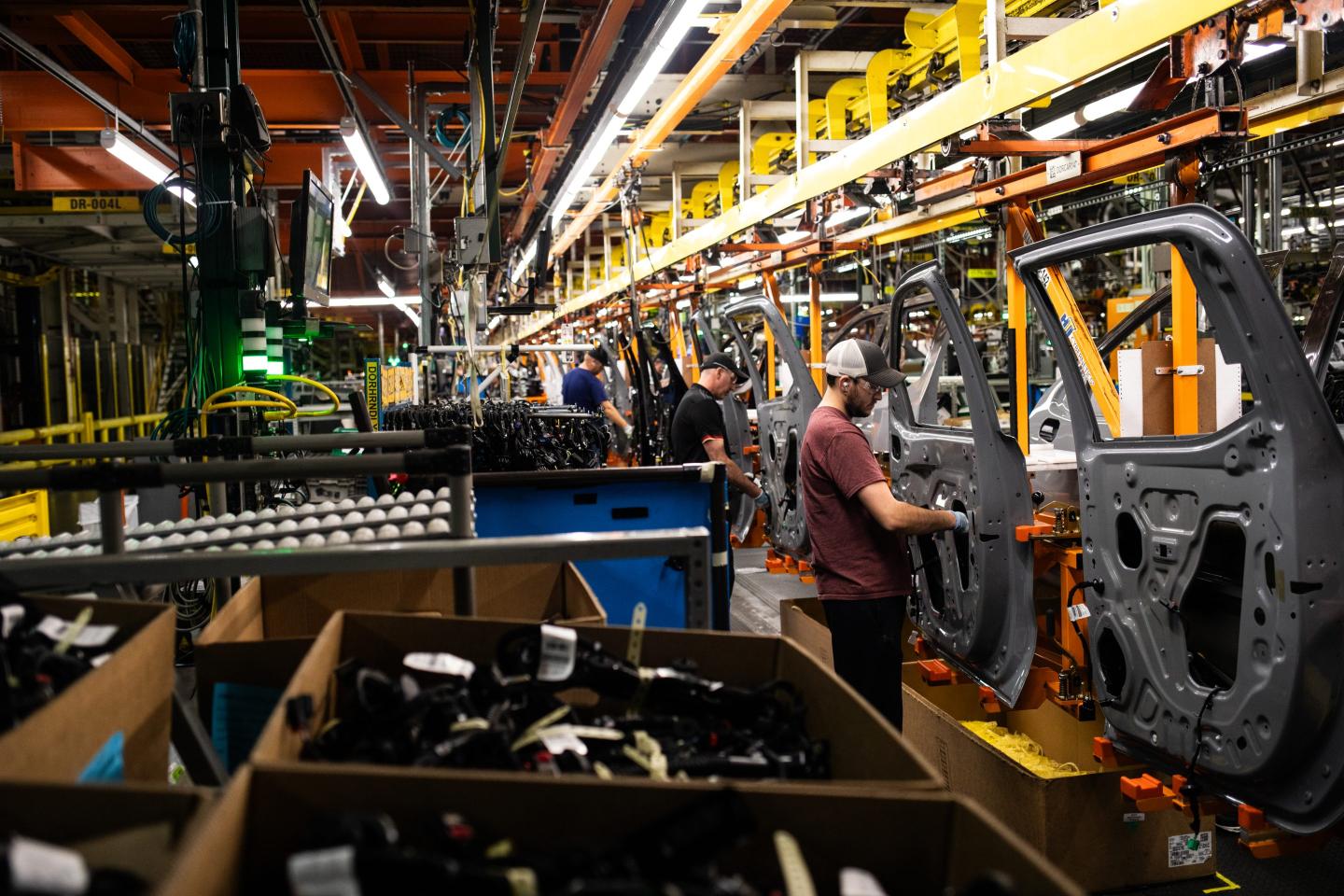
Workers assemble vehicle doors at the General Motors assembly plant in Fort Wayne, Ind., in 2024.
Workers assemble vehicle doors at the General Motors assembly plant in Fort Wayne, Ind., in 2024. Emily Elconin/Bloomberg—Getty Images

President Donald Trump is pushing full-steam ahead on tariff measures he says will fix trade imbalances with other countries, and at the same time bring manufacturing jobs back to U.S. shores. The second of these goals enjoys broad support among his fellow Americans, who overwhelmingly say the U.S. would be better off with more manufacturing jobs. But only if they’re not the one stuck in the factory.

Recommended Video

A chart that went viral on multiple social media platforms over the weekend highlights this major tension when it comes to reshoring factory jobs: While Americans say they want more manufacturing back in the U.S., they do not personally believe they’d be better off working one of them.

“America would be better off if more people worked in manufacturing.”

• 80% of Americans agree
• 20% disagree

“I would be better off if I worked in a factory.”

• 25% of Americans agree
• 73% disagree
• 2% currently work in a factory

👉🏻 https://t.co/ycnHVZ1gT1 pic.twitter.com/4NXb0GLK5L

— Frank Luntz (@FrankLuntz) April 13, 2025

The graphic, made by the Financial Times and based on a 2024 survey from the Cato Institute, shows that while 80% of Americans believe the country would be better off with more manufacturing jobs, just 25% believe they would individually be better off working in a factory.

“It’s a result that holds across class, education, and racial lines,” wrote Colin Grabow, associate director at Cato’s Herbert A. Stiefel Center for Trade Policy Studies, when the survey came out. “The most enthusiastic group, those aged 18–29, still registered just 36% interest in manufacturing employment.”

Grabow went on to note that as of May 2024, there were around 600,000 open positions in manufacturing (there’s almost 500,000 open today, according to the St. Louis Federal Reserve), so there isn’t exactly a shortage of roles out there. Instead, there is a disconnect between how Americans in general think of manufacturing and how they view it for themselves. This is one reason why the National Association of Manufacturers and the former Secretary of the Navy under President Joe Biden both called for increased immigration, Grabow notes.

“Such jobs can’t find enough interested Americans to fill them,” he wrote.

Manufacturing workers themselves report “markedly” lower personal satisfaction with their jobs than other workers, according to the Pew Research Center. They also report less satisfaction with their pay, health insurance, and other benefits, and flexibility of their work hours.

“Perhaps the better question, however, is not why Americans believe the country needs more manufacturing employment but why politicians regularly emphasize the importance of jobs in which Americans—both in word and deed—continue to show little interest,” he wrote.

America’s manufacturing decline

In the Cato survey, published last August, Americans expressed more favorable opinions on “globalization,” “international trade,” “free trade,” and “trade deals” than unfavorable. Over 60% of respondents favored “increasing trade with other nations,” compared to just 10% who said they opposed it. Two-thirds, 66%, of respondents said international trade had a mostly good effect on the U.S. economy.

Tariffs have become the centerpiece of Trump’s economic and foreign policy agendas at the start of his second term as president. While economists and the public seem wary of the effects tariffs will have on the U.S. and world economies—as evidenced by the multiple fissures running through the financial sector and markets over the past two weeks—Trump has staked his economic legacy on the policies.

“Jobs and factories will come roaring back into our country,” Trump said last week. “And ultimately, more production at home will mean stronger competition and lower prices for consumers.”

America was once a world leader in automotive and steel manufacturing, but has been losing those jobs since at least the 1980s. In subsequent decades, the U.S. has shifted to a more knowledge-based economy. That’s left many Americans in the cold, as once-thriving industrial hubs have stagnated and wealth inequality has soared.

The Trump administration’s big pitch is that reworking the world order will help the middle class that was left behind. Commerce Secretary Howard Lutnick promised Americans will be the ones “screwing in little screws to make iPhones,” while Treasury Secretary Scott Bessent said fired federal workers will “give us the labor that we need for the new manufacturing.”

Economists and international trade experts are not convinced it will work. One big reason why: Even if factories are reopened in the U.S.—a process that could take years and hundreds of millions of dollars and is hindered by Trump’s constantly changing policies—America relies on imports from other countries, especially China, to a much larger degree than other countries rely on the U.S., according to Goldman Sachs. Goods cannot be made in the U.S. without importing the raw materials from elsewhere first.

Trump implemented some tariffs during his first term in office. Research on those found that they didn’t bring back jobs in protected sectors.

“The high costs of new tariffs threaten investment, jobs, supply chains, and, in turn, America’s ability to outcompete other nations and lead as the preeminent manufacturing superpower,” Jay Timmons, the president of the National Association of Manufacturers, wrote after Trump announced his plans.

And Americans, for their part, are also anxious. Some 62% of middle-income Americans report stressing over their finances last quarter, according to Primerica’s latest Financial Security Monitor. That’s up from 57% during the fourth quarter of 2024. And 46% now expect to be worse off financially in the next year, compared to 27% who reported the same thing at the end of last year.

This story has been updated to clarify it was the former Secretary of the Navy who called for increased immigration.

The Fortune 500 Innovation Forum will convene Fortune 500 executives, U.S. policy officials, top founders, and thought leaders to help define what’s next for the American economy, Nov. 16-17 in Detroit. Apply here.
About the Author
Alicia Adamczyk
By Alicia AdamczykSenior Writer
LinkedIn iconTwitter icon

Alicia Adamczyk is a former New York City-based senior writer at Fortune, covering personal finance, investing, and retirement.

See full bioRight Arrow Button Icon

Latest in Personal Finance

Finance
Lorem ipsum dolor sit amet, consectetur adipiscing elit, sed do eiusmod tempor incididunt ut labore et dolore magna aliqua. Ut enim ad minim veniam
By Fortune Editors
October 20, 2025
Finance
Lorem ipsum dolor sit amet, consectetur adipiscing elit, sed do eiusmod tempor incididunt ut labore et dolore magna aliqua. Ut enim ad minim veniam
By Fortune Editors
October 20, 2025
Finance
Lorem ipsum dolor sit amet, consectetur adipiscing elit, sed do eiusmod tempor incididunt ut labore et dolore magna aliqua. Ut enim ad minim veniam
By Fortune Editors
October 20, 2025
Finance
Lorem ipsum dolor sit amet, consectetur adipiscing elit, sed do eiusmod tempor incididunt ut labore et dolore magna aliqua. Ut enim ad minim veniam
By Fortune Editors
October 20, 2025
Finance
Lorem ipsum dolor sit amet, consectetur adipiscing elit, sed do eiusmod tempor incididunt ut labore et dolore magna aliqua. Ut enim ad minim veniam
By Fortune Editors
October 20, 2025
Finance
Lorem ipsum dolor sit amet, consectetur adipiscing elit, sed do eiusmod tempor incididunt ut labore et dolore magna aliqua. Ut enim ad minim veniam
By Fortune Editors
October 20, 2025

Most Popular

Finance
Lorem ipsum dolor sit amet, consectetur adipiscing elit, sed do eiusmod tempor incididunt ut labore et dolore magna aliqua. Ut enim ad minim veniam
By Fortune Editors
October 20, 2025
Finance
Lorem ipsum dolor sit amet, consectetur adipiscing elit, sed do eiusmod tempor incididunt ut labore et dolore magna aliqua. Ut enim ad minim veniam
By Fortune Editors
October 20, 2025
Finance
Lorem ipsum dolor sit amet, consectetur adipiscing elit, sed do eiusmod tempor incididunt ut labore et dolore magna aliqua. Ut enim ad minim veniam
By Fortune Editors
October 20, 2025
Finance
Lorem ipsum dolor sit amet, consectetur adipiscing elit, sed do eiusmod tempor incididunt ut labore et dolore magna aliqua. Ut enim ad minim veniam
By Fortune Editors
October 20, 2025
Finance
Lorem ipsum dolor sit amet, consectetur adipiscing elit, sed do eiusmod tempor incididunt ut labore et dolore magna aliqua. Ut enim ad minim veniam
By Fortune Editors
October 20, 2025
Finance
Lorem ipsum dolor sit amet, consectetur adipiscing elit, sed do eiusmod tempor incididunt ut labore et dolore magna aliqua. Ut enim ad minim veniam
By Fortune Editors
October 20, 2025
Fortune Secondary Logo
Rankings
  • 100 Best Companies
  • Fortune 500
  • Global 500
  • Fortune 500 Europe
  • Most Powerful Women
  • World's Most Admired Companies
  • See All Rankings
  • Lists Calendar
Sections
  • Finance
  • Fortune Crypto
  • Features
  • Leadership
  • Health
  • Commentary
  • Success
  • Retail
  • Mpw
  • Tech
  • Lifestyle
  • CEO Initiative
  • Asia
  • Politics
  • Conferences
  • Europe
  • Newsletters
  • Personal Finance
  • Environment
  • Magazine
  • Education
Customer Support
  • Frequently Asked Questions
  • Customer Service Portal
  • Privacy Policy
  • Terms Of Use
  • Single Issues For Purchase
  • International Print
Commercial Services
  • Advertising
  • Fortune Brand Studio
  • Fortune Analytics
  • Fortune Conferences
  • Business Development
  • Group Subscriptions
About Us
  • About Us
  • Press Center
  • Work At Fortune
  • Terms And Conditions
  • Site Map
  • About Us
  • Press Center
  • Work At Fortune
  • Terms And Conditions
  • Site Map
  • Facebook icon
  • Twitter icon
  • LinkedIn icon
  • Instagram icon
  • Pinterest icon

Latest in Personal Finance

Financial analyst working at a computer
Personal FinancePersonal Finance Evergreen
AI’s entry-level hiring nightmare is another gift to boomers’ retirement plans
By Catherina GioinoApril 30, 2026
8 hours ago
Photo of two friends in bathrobes enjoying tea
Personal FinancePersonal Finance Evergreen
High earners are feeling the pain of wealth creep—and it’s leading to a new tradeoff in their spending
By Catherina GioinoApril 30, 2026
9 hours ago
Premium card perks are ‘designed to create a win-win-win for everyone’ but customers are paying with heavy annual fees and data
Personal FinancePersonal Finance Evergreen
Premium card perks are ‘designed to create a win-win-win for everyone’ but customers are paying with heavy annual fees and data
By Catherina GioinoApril 30, 2026
9 hours ago
Bill Perkins, founder of Skylar Capital
SuccessWealth
Multimillionaire hedge fund manager Bill Perkins says money should ‘drive your fulfillment while you’re alive’—so he’s spending it all before he dies
By Emma BurleighApril 30, 2026
9 hours ago
Current price of gold as of April 30, 2026
Personal Financegold prices
Current price of gold as of April 30, 2026
By Danny BakstApril 30, 2026
13 hours ago
April 30, 2026
Personal FinanceCertificates of Deposit (CDs)
Top CD rates from major banks on April 30, 2026: Chase CDs, Bank of America CDs, Citibank CDs, and more
By Joseph HostetlerApril 30, 2026
13 hours ago

Most Popular

Apple cofounder Ronald Wayne—whose stake would be worth up to $400 billion had he not sold it in 1976—says that at 91, he has no regrets
Success
Apple cofounder Ronald Wayne—whose stake would be worth up to $400 billion had he not sold it in 1976—says that at 91, he has no regrets
By Preston ForeApril 27, 2026
3 days ago
Google Cloud revenue is now 18% of Alphabet's business. Is this the beginning of the end of Google's search identity?
Big Tech
Google Cloud revenue is now 18% of Alphabet's business. Is this the beginning of the end of Google's search identity?
By Alexei OreskovicApril 29, 2026
24 hours ago
‘The cost of compute is far beyond the costs of the employees’: Nvidia executive says right now AI is more expensive than paying human workers
AI
‘The cost of compute is far beyond the costs of the employees’: Nvidia executive says right now AI is more expensive than paying human workers
By Sasha RogelbergApril 28, 2026
3 days ago
Jamie Dimon gets candid about national debt: ‘There will be a bond crisis, and then we’ll have to deal with it’
Economy
Jamie Dimon gets candid about national debt: ‘There will be a bond crisis, and then we’ll have to deal with it’
By Eleanor PringleApril 29, 2026
2 days ago
‘They left me no choice’: Powell isn’t going anywhere—blocking Trump from another Fed appointee
Banking
‘They left me no choice’: Powell isn’t going anywhere—blocking Trump from another Fed appointee
By Eva RoytburgApril 29, 2026
1 day ago
With no end in sight, Trump considers new options in Iran war—including the ‘Dark Eagle’ hypersonic missile
Big Tech
With no end in sight, Trump considers new options in Iran war—including the ‘Dark Eagle’ hypersonic missile
By Jim EdwardsApril 30, 2026
15 hours ago

© 2026 Fortune Media IP Limited. All Rights Reserved. Use of this site constitutes acceptance of our Terms of Use and Privacy Policy | CA Notice at Collection and Privacy Notice | Do Not Sell/Share My Personal Information
FORTUNE is a trademark of Fortune Media IP Limited, registered in the U.S. and other countries. FORTUNE may receive compensation for some links to products and services on this website. Offers may be subject to change without notice.