One of us, Angela, grew up hearing stories of Saudi Arabia from her father, an electrical engineer who helped set up telecommunications in the desert in the 1970s. For Curtis, the connection came in the 1980s at the start of his career when he was assigned to a team supporting a long-standing client, Saudi Arabia Basic Industries Corporation (SABIC).
We have both seen how perceptions of the kingdom have long been shaped by its past. But today, Saudi Arabia is no longer the country our fathers knew. It is not the Saudi Arabia of yesterday.
To me, my dad was a fearless hero—like Indiana Jones, but in the Saudi desert. He met the king, dined in lavish settings, worked tirelessly—only to later discover that one of his colleagues was an undercover CIA agent—flew in private jets, traveled in recreational vehicles, and told stories of driving through the desert with nothing around him but endless sand.
One time, while driving to pick up my mom at Jeddah airport, he suddenly realized that the road ahead was ending abruptly. With no speed limits and only instinct to rely on, he slammed on his brakes in the nick of time. He survived, but the experience shook him to his core.
These were the stories that shaped our early understanding of Saudi Arabia—a land of vast deserts, untapped potential, and rigid limitations. But that image no longer reflects reality.
Outdated perception
For decades, Saudi Arabia has been viewed through an increasingly outdated lens—an oil-rich kingdom dependent on energy exports and held back by regional politics and what some describe as a fundamentalist Islamist past. That perception is so 20th century. Saudi Arabia is not the next China or the next India. With a population of just more than 33 million, this kingdom on the move is evolving into something entirely its own.
In an era of globalization, China became an industrial powerhouse through manufacturing beginning in large part in the 1990s and accelerating and moving up the value chain since then, and India built influence through its specialized tech talent during the Y2K era. Today, Saudi Arabia is forging a new path—one built on strategic investment, diplomatic engagement, and cultural soft power.
You have to see it to believe it.
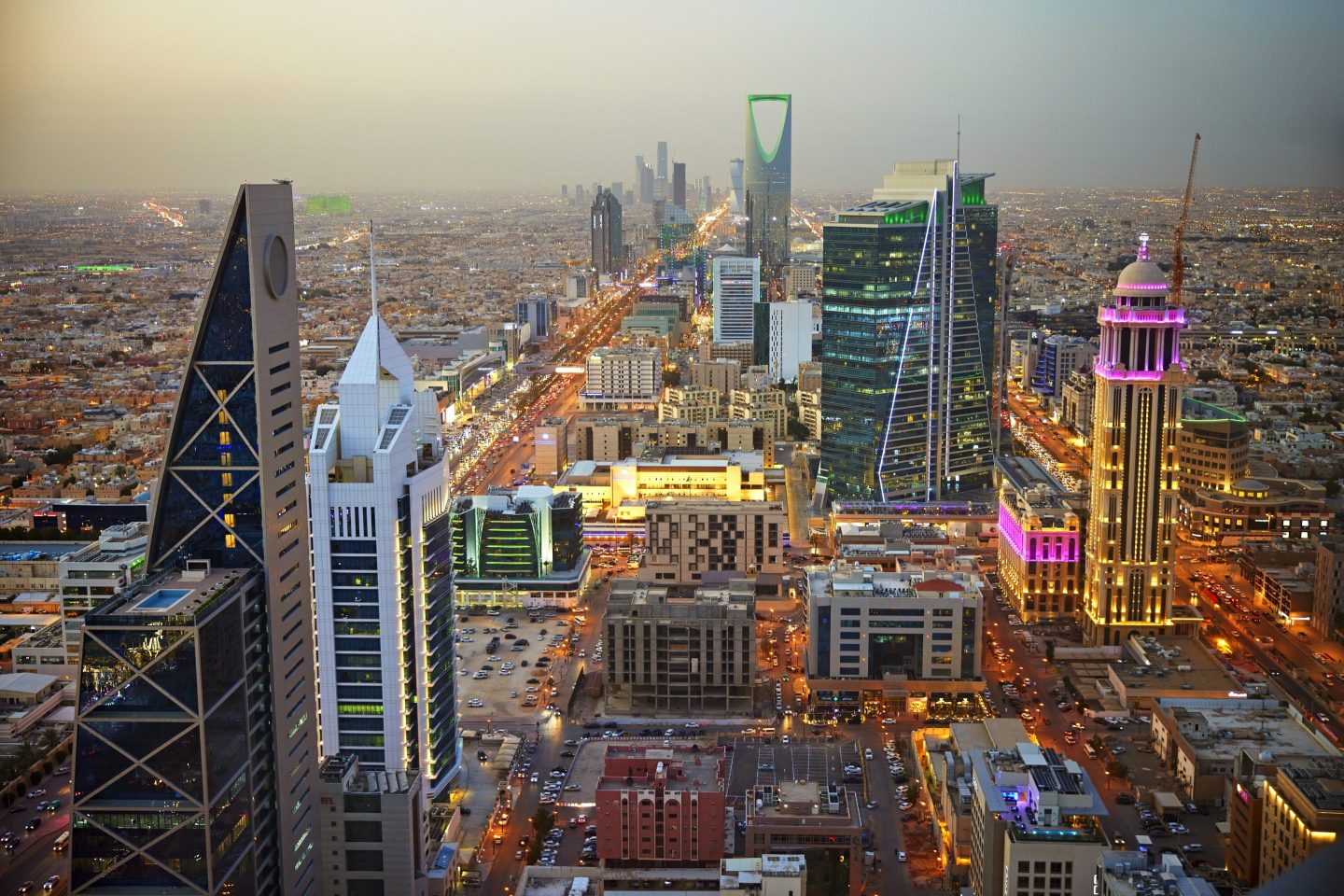
That is something we recently experienced firsthand on a trip to the Saudi capital city of Riyadh. It was bustling with the kind of energy found in emerging markets that are on the move, similar to Mumbai, Jakarta, Bangkok, and Shanghai. As in many other countries, a significant portion of the population lives in the main cities, and outside of the cities, people may maintain a more traditional lifestyle.
We were there to participate in the fourth Saudi Media Forum, a three-day event focused on the nation’s evolving media sector, attracting professionals and creators around a theme of shaping a media future based on innovation. The event remains the largest media gathering in the region, a global platform uniting top decision-makers, industry experts, and innovators in the media sector.
The international speakers ranged from former U.K. Prime Minister Boris Johnson to Evan Vucci, the veteran Associated Press photographer who took the now-iconic photograph of a fist-raised Donald Trump reacting to an assassination attempt in Pennsylvania during his presidential campaign. Images can indeed both capture and shape history.
Our visit also coincided with Saudi Arabia hosting top American and Russian officials, including U.S. Secretary of State Marco Rubio and Russian Foreign Minister Sergey Lavrov, for a high-stakes meeting over Ukraine. Saudi Arabia is no longer just a participant in global affairs. The kingdom, in both hosting and shaping the U.S.-Russia talks, underscored its aspirations to be a global actor, with an eye toward successfully mediating international conflicts.
During our time in Riyadh, one of us attended a football match featuring Cristiano Ronaldo, forward for Al-Nassr. The atmosphere felt global, with fans traveling from around the world and from across the country, including small towns. Just six years ago, an event like this—where men and women sat side by side—would likely not have been possible.
Beyond the events and modern infrastructure, what stood out most was the generous hospitality of the Saudi people. From the moment we arrived, we were met with warmth, generosity, and an eagerness to share stories, traditions, and perspectives. Whether over cups of traditional Arabic coffee (gahwa) and sweet dates or through lively conversations about the country’s transformation, the openness and pride of the people were undeniable.
We also had the chance to experience Saudi Arabia’s newly launched Riyadh Metro—the longest driverless metro in the world, featuring six lines connecting 85 stations, including a landmark station designed by Zaha Hadid Architects. The King Abdullah Financial District—a world-class business, retail, and residential center of skyscrapers shaped by renowned architects and designers—and the National Museum were an efficient, easy metro ride away.
Women, once restricted from driving, are now increasingly visible in finance, technology, and media. Riyadh is fast becoming a destination for exhibitions, conventions, and conferences, welcoming visitors from abroad. These rapid changes are tangible proof of an unprecedented transformation—perhaps too fast for some, not fast enough for others.
Saudi Arabia will grow at 4.4% this year, outpacing the Gulf Cooperation Council (GCC) states’ 4.1% average. However, the International Monetary Fund has lowered its GDP growth forecast for Saudi Arabia to 3.3% due to oil production cuts.
Ranked as the world’s 19th-largest economy and the seventh largest in Asia, according to International Monetary Fund (IMF) data, with a GDP of approximately $1.14 trillion, Saudi Arabia is leveraging its oil wealth to transition beyond dependence on fossil fuels.
The kingdom’s Public Investment Fund (PIF) is at the center of this transformation, channeling more than $1 trillion into infrastructure and targeting $2.4 trillion in private sector investment by 2030. Saudi Arabia is also emerging as a leading Middle East hub for technology, artificial intelligence, and digital transformation, driven by its ambitious Vision 2030 strategy under the leadership of Crown Prince Mohammed bin Salman, and PIF’s investments.
Saudi partnerships
Saudi Arabia is also redefining its role in global diplomacy, focusing on geopolitical mediation and trade integration. It is a partner in China’s Belt and Road Initiative (BRI) while simultaneously cofounding the U.S.-backed India-Middle East-Europe Economic Corridor (IMEC)—a planned economic corridor to bolster economic development by fostering connectivity between Asia, the Gulf region, and Europe.
Just as many Southeast Asian nations seek to do, Saudi Arabia is positioning itself not to “choose sides” but to be an indispensable partner to both China and the United States.
In viewing Saudi Arabia today, we must remove our 20th-century lenses, just as we must set aside any rose-colored glasses. Saudi Arabia is not a democracy; it is an absolute monarchy. Research, partnership, engagement, and an understanding of history and risk are all critical. The PIF Private Sector Forum last month at the King Abdul Aziz International Conference Center reportedly saw more than 100 PIF-backed companies sign $3.7 billion in deals, underscoring the role of private capital in shaping the kingdom’s future.
Saudi Arabia is not modeling itself after China or India. It is forging a path entirely its own, built on its unique history and ambitions. The question is no longer whether Saudi Arabia is changing—it is whether the world is ready to recognize and embrace it.
For investors, businesses, global leaders, and, yes, tourists, the time to take a closer look is now.
Angela Chitkara is founder and CEO of advisory firm US-India Corridor and served as an advisor to the Saudi Media Forum. Curtis S. Chin is Chair of Senior Fellows and a senior advisor at Milken Institute International, as well as the former U.S. ambassador to the Asian Development Bank.
The opinions expressed in Fortune.com commentary pieces are solely the views of their authors and do not necessarily reflect the opinions and beliefs of Fortune.