• Home
  • Latest
  • Fortune 500
  • Finance
  • Tech
  • Leadership
  • Lifestyle
  • Rankings
  • Multimedia

Trendingnow

1

The U.S. and Iran can't agree on fully reopening the Strait of Hormuz. The solution could be straight out of the Old Testament

2

The U.S. spent $30 billion to ditch textbooks for laptops and tablets: The result is the first generation less cognitively capable than their parents

3

A Trump Account could make your kid a millionaire by 45—but financial experts say the app's projections come with a catch

1

The U.S. and Iran can't agree on fully reopening the Strait of Hormuz. The solution could be straight out of the Old Testament

2

The U.S. spent $30 billion to ditch textbooks for laptops and tablets: The result is the first generation less cognitively capable than their parents

3

A Trump Account could make your kid a millionaire by 45—but financial experts say the app's projections come with a catch
Commentarygeopolitics
Europe

The cost of strength: Why trust is America’s greatest asset

By
Alan Fleischmann
Alan Fleischmann
Down Arrow Button Icon
By
Alan Fleischmann
Alan Fleischmann
Down Arrow Button Icon
March 4, 2025, 6:13 AM ET

Alan H.H. Fleischmann is the founder, chairman, and CEO of the global CEO advisory firm Laurel Strategies, a speaker and writer about CEO statesmanship, and the host of Leadership Matters, a radio show on SiriusXM. He is a member of Fortune's CEO Initiative.

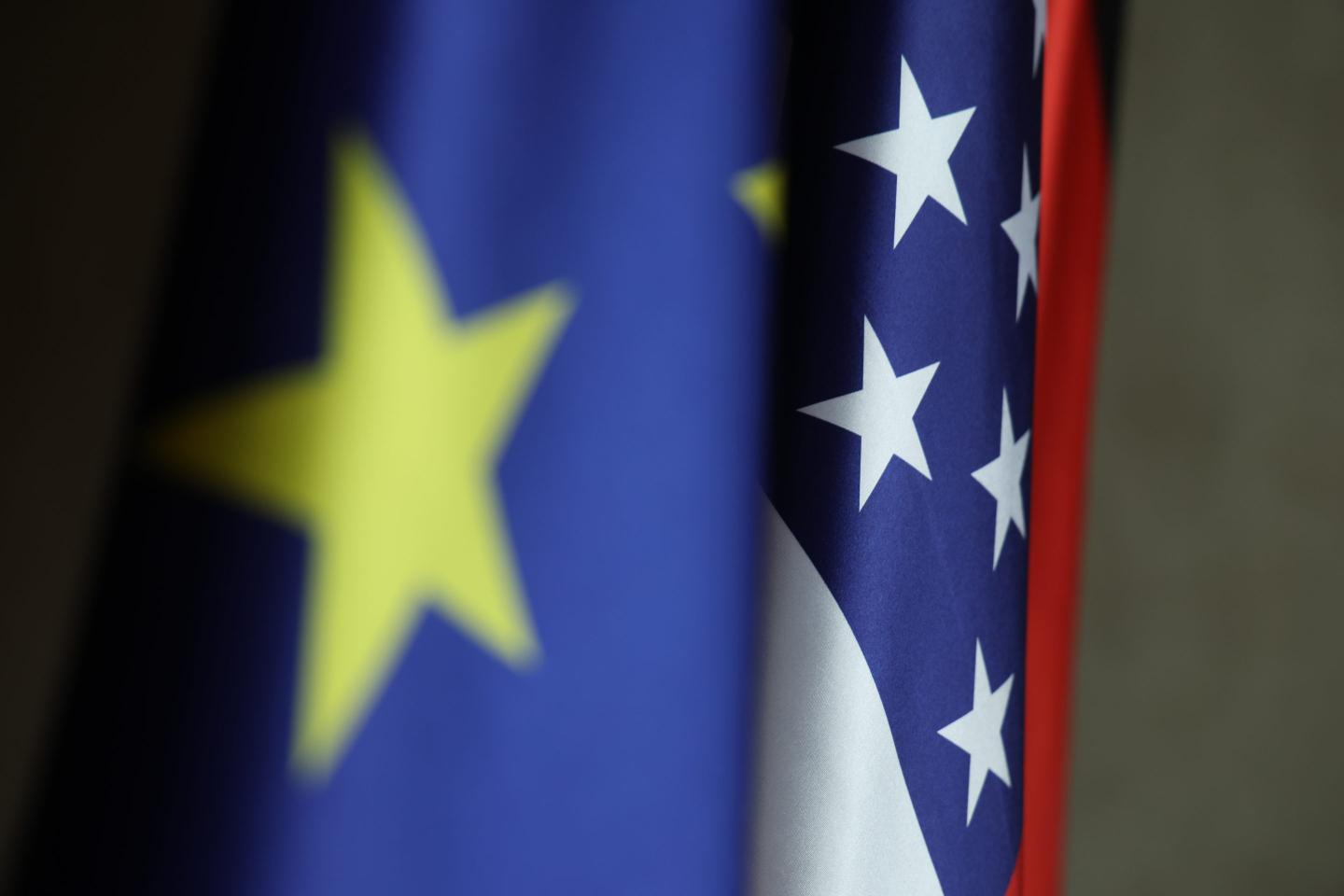
Flags of the European Union and the United States hang at the 61st Munich Security Conference in Munich, Germany.
Flags of the European Union and the United States hang at the 61st Munich Security Conference in Munich, Germany. Sean Gallup/Getty Images
Add Fortune on Google for similar content.

For decades, the international order and our relationships with allies have been built on trust—a trust forged through adversity, from conflicts to economic crises. In an era of escalating geopolitical competition, economic fragmentation, and emerging security threats, trust has only become more important. Without trust, cooperation falters, alliances weaken, and global challenges become insurmountable. Strength alone is not enough; trust must be the foundation of a durable and effective foreign policy.

Throughout history, trust has served as the backbone of global stability. The formation of NATO in 1949 exemplifies how trust between allied nations ensured collective security and deterrence against external threats. Similarly, the Marshall Plan, which provided aid to rebuild Europe after World War II, was a significant trust-building initiative that cemented the transatlantic alliance. Conversely, when trust eroded—such as during the Cold War or the breakdown of U.S.-Iran relations—it led to prolonged tensions, avoidable loss, and instability.

During the recent Munich Security Conference, it was evident that many statespersons and CEOs were marred by uncertainty in a moment of distrust. The conference has long been a destination where what’s around the corner appears up close, and this year’s event was no exception. Whether in discussions on the next phase of Russia’s war in Ukraine, Vice President JD Vance’s speech on European expression and immigration, Europe’s posture toward China, or the potential of American tariffs on Europe, Canada, and Mexico, a new order is taking shape. It is up to us to shape it wisely.

Sustaining trust

The current global order is shifting not only as the U.S., a long-standing hegemon, faces a rising geopolitical competitor in China, but also as emerging powers like Saudi Arabia, the UAE, and India grow in influence while traditional competitors like Russia face relative decline. This shift is occurring alongside a Europe in crisis, grappling with the ongoing war in Ukraine and the necessity of collective action among its allies.

The Ukraine conflict highlights the importance of trust in modern warfare alliances. The U.S. and NATO partners have provided significant military aid, but sustaining that trust is crucial as political dynamics change. Any perceived wavering in U.S. support could weaken allied confidence and embolden adversaries. Similarly, trust issues between the U.S. and China are affecting global supply chains, cybersecurity, and diplomatic efforts on Taiwan. A recalibration of trust between global powers will determine the trajectory of the next decade.

Beyond security, trust plays a pivotal role in global economics. Trade agreements, foreign direct investment, and market stability all rely on the predictability and reliability of diplomatic relations. The U.S.-Mexico-Canada Agreement (USMCA) and the European Union’s internal economic cohesion demonstrate how economic partnerships thrive when trust is maintained. Conversely, Brexit showcased the economic turbulence that results from a breakdown in trust between partners.

Trust is critical in both business and diplomacy, but it is paramount when considering long-term geopolitical realities. As the intensity of global competition rises, today’s actions will define tomorrow’s strategy. 

Reinforcing alliances

Geopolitics is a game of chess, not checkers, with trust serving as the north star guiding each move.

For the Trump administration, my advice is that holding adversaries close can serve a strategic role, but holding allies even closer is a long-term necessity. Strategic engagement with adversaries is essential to gather intelligence, avoid misunderstandings, and maintain open channels for diplomacy. However, reinforcing alliances must take priority, as these relationships are the key to navigating the coming decade.

While trust with allies may be cultivated privately, the U.S. must also be more overt about its commitments. Optics matter. If America wants peace through strength, it must also demonstrate strength in numbers. As we approach some of the most complex power struggles of our time, fostering strong alliances that extend beyond election cycles is essential. This does not mean deals should not be renegotiated as economic realities and needs shift, but rather that such negotiations should be conducted with an understanding that every ally plays a strategic role in a broader mission. Projecting unity is vital, as adversaries will seek to exploit any signs of isolation or discord among allies.

Europe’s balancing act

For Europe, the key is approaching negotiations with the U.S. from a position of shared long-term objectives. European leaders should be clear about their priorities and open to compromises that result in mutual gains. Additionally, Europe must strike a balance in shaping modern policies, particularly on issues like artificial intelligence, without alienating allies and global businesses.

As geopolitical divisions deepen, Europe must reinforce its strength through unity. This will be especially crucial as internal political shifts, such as the potential continued rise of the AfD in Germany, threaten to reframe the continent’s relationship with the EU. Additionally, Europe’s response to China’s Belt and Road Initiative (BRI) will determine how effectively it balances economic interests with security concerns.

One underexplored aspect of trust is the role of AI and emerging technologies in diplomacy. AI-driven security measures, blockchain-based diplomatic agreements, and cybersecurity cooperation could help nations verify commitments and prevent diplomatic deception. The U.S. and its allies should explore how technology can enhance transparency in trade agreements, international treaties, and security partnerships.

Chess requires two players, and in an era of uncertainty, risk, and great power competition, both allies and adversaries must be maneuvered carefully. The strategic moves made today will define the world order for decades to come. Trust is not a passive asset; it is an active strategy that must be cultivated, reinforced, and projected to ensure stability and strength in an unpredictable future.

By doubling down on historical lessons, economic interdependence, and technological advancements, global leaders can solidify trust as the foundation for lasting peace and prosperity.

The opinions expressed in Fortune.com commentary pieces are solely the views of their authors and do not necessarily reflect the opinions and beliefs of Fortune.

About the Author
By Alan Fleischmann
See full bioRight Arrow Button Icon
Add Fortune on Google for similar content.

Latest in Commentary

Finance
Lorem ipsum dolor sit amet, consectetur adipiscing elit, sed do eiusmod tempor incididunt ut labore et dolore magna aliqua. Ut enim ad minim veniam
By Fortune Editors
October 20, 2025
Finance
Lorem ipsum dolor sit amet, consectetur adipiscing elit, sed do eiusmod tempor incididunt ut labore et dolore magna aliqua. Ut enim ad minim veniam
By Fortune Editors
October 20, 2025
Finance
Lorem ipsum dolor sit amet, consectetur adipiscing elit, sed do eiusmod tempor incididunt ut labore et dolore magna aliqua. Ut enim ad minim veniam
By Fortune Editors
October 20, 2025
Finance
Lorem ipsum dolor sit amet, consectetur adipiscing elit, sed do eiusmod tempor incididunt ut labore et dolore magna aliqua. Ut enim ad minim veniam
By Fortune Editors
October 20, 2025
Finance
Lorem ipsum dolor sit amet, consectetur adipiscing elit, sed do eiusmod tempor incididunt ut labore et dolore magna aliqua. Ut enim ad minim veniam
By Fortune Editors
October 20, 2025
Finance
Lorem ipsum dolor sit amet, consectetur adipiscing elit, sed do eiusmod tempor incididunt ut labore et dolore magna aliqua. Ut enim ad minim veniam
By Fortune Editors
October 20, 2025

Most Popular

Finance
Lorem ipsum dolor sit amet, consectetur adipiscing elit, sed do eiusmod tempor incididunt ut labore et dolore magna aliqua. Ut enim ad minim veniam
By Fortune Editors
October 20, 2025
Finance
Lorem ipsum dolor sit amet, consectetur adipiscing elit, sed do eiusmod tempor incididunt ut labore et dolore magna aliqua. Ut enim ad minim veniam
By Fortune Editors
October 20, 2025
Finance
Lorem ipsum dolor sit amet, consectetur adipiscing elit, sed do eiusmod tempor incididunt ut labore et dolore magna aliqua. Ut enim ad minim veniam
By Fortune Editors
October 20, 2025
Finance
Lorem ipsum dolor sit amet, consectetur adipiscing elit, sed do eiusmod tempor incididunt ut labore et dolore magna aliqua. Ut enim ad minim veniam
By Fortune Editors
October 20, 2025
Finance
Lorem ipsum dolor sit amet, consectetur adipiscing elit, sed do eiusmod tempor incididunt ut labore et dolore magna aliqua. Ut enim ad minim veniam
By Fortune Editors
October 20, 2025
Finance
Lorem ipsum dolor sit amet, consectetur adipiscing elit, sed do eiusmod tempor incididunt ut labore et dolore magna aliqua. Ut enim ad minim veniam
By Fortune Editors
October 20, 2025
Fortune Secondary Logo
Rankings
  • 100 Best Companies
  • Fortune 500
  • Global 500
  • Fortune 500 Europe
  • Most Powerful Women
  • World's Most Admired Companies
  • See All Rankings
  • Lists Calendar
Sections
  • Finance
  • Fortune Crypto
  • Features
  • Leadership
  • Health
  • Commentary
  • Success
  • Retail
  • Mpw
  • Tech
  • Lifestyle
  • CEO Initiative
  • Asia
  • Politics
  • Conferences
  • Europe
  • Newsletters
  • Personal Finance
  • Environment
  • Magazine
  • Education
Customer Support
  • Frequently Asked Questions
  • Customer Service Portal
  • Privacy Policy
  • Terms Of Use
  • Single Issues For Purchase
  • International Print
Commercial Services
  • Advertising
  • Fortune Brand Studio
  • Fortune Analytics
  • Fortune Conferences
  • Business Development
  • Group Subscriptions
About Us
  • About Us
  • Press Center
  • Work At Fortune
  • Terms And Conditions
  • Site Map
  • About Us
  • Press Center
  • Work At Fortune
  • Terms And Conditions
  • Site Map
  • Facebook icon
  • Twitter icon
  • LinkedIn icon
  • Instagram icon
  • Pinterest icon

Latest in Commentary

usa
Commentary250 Years of Innovation
For 250 years, work defined American identity. That era Is ending
By Keith Ferrazzi and Wendy SmithJuly 11, 2026
2 days ago
m
Commentarymedicine
America’s bone health is quietly headed for a $19 billion crisis
By Matthew T. DrakeJuly 9, 2026
4 days ago
t
CommentaryEducation
AI is about to disrupt millions of jobs. A century ago, America’s answer was to build a new high school
By Tim KnowlesJuly 8, 2026
5 days ago
amit
CommentaryVenture Capital
Physical AI’s $50 trillion opportunity requires long-term conviction, but the payoff is huge 
By Amit ChaturvedyJuly 8, 2026
5 days ago
heat
Commentaryclimate change
McKinsey Global Institute: Climate planning has prioritized floods. Heat demands equal attention
By Sylvain Johansson, Mekala Krishnan, Kanmani Chockalingam and Annabel FarrJuly 7, 2026
6 days ago
j
CommentaryEducation
AI didn’t break higher education—It exposed the credential trap
By Jason BenedictJuly 7, 2026
6 days ago

Most Popular

The U.S. and Iran can't agree on fully reopening the Strait of Hormuz. The solution could be straight out of the Old Testament
Middle East
The U.S. and Iran can't agree on fully reopening the Strait of Hormuz. The solution could be straight out of the Old Testament
By Jason MaJuly 11, 2026
1 day ago
The U.S. spent $30 billion to ditch textbooks for laptops and tablets: The result is the first generation less cognitively capable than their parents
Innovation
The U.S. spent $30 billion to ditch textbooks for laptops and tablets: The result is the first generation less cognitively capable than their parents
By Sasha RogelbergJuly 12, 2026
13 hours ago
A Trump Account could make your kid a millionaire by 45—but financial experts say the app's projections come with a catch
Personal Finance
A Trump Account could make your kid a millionaire by 45—but financial experts say the app's projections come with a catch
By Sydney LakeJuly 12, 2026
14 hours ago
Wyoming officials say Meta’s 715,000-square-foot data center is responsible for contaminating its water system with a rare bacterium
Environment
Wyoming officials say Meta’s 715,000-square-foot data center is responsible for contaminating its water system with a rare bacterium
By Sasha RogelbergJuly 10, 2026
2 days ago
Global oil demand is falling, and crude prices are down. But here's why gasoline, diesel and other refined products are still costly
Energy
Global oil demand is falling, and crude prices are down. But here's why gasoline, diesel and other refined products are still costly
By Cathy Bussewitz and The Associated PressJuly 11, 2026
1 day ago
Peter Thiel and other tech billionaires are publicly shielding their children from the products that made them rich
Big Tech
Peter Thiel and other tech billionaires are publicly shielding their children from the products that made them rich
By Marco Quiroz-GutierrezJuly 12, 2026
13 hours ago

© 2026 Fortune Media IP Limited. All Rights Reserved. Use of this site constitutes acceptance of our Terms of Use and Privacy Policy | CA Notice at Collection and Privacy Notice | Do Not Sell/Share My Personal Information
FORTUNE is a trademark of Fortune Media IP Limited, registered in the U.S. and other countries. FORTUNE may receive compensation for some links to products and services on this website. Offers may be subject to change without notice.