• Home
  • Latest
  • Fortune 500
  • Finance
  • Tech
  • Leadership
  • Lifestyle
  • Rankings
  • Multimedia
Commentarygeopolitics

The cost of strength: Why trust is America’s greatest asset

By
Alan Fleischmann
Alan Fleischmann
Down Arrow Button Icon
By
Alan Fleischmann
Alan Fleischmann
Down Arrow Button Icon
March 4, 2025, 6:13 AM ET

Alan H.H. Fleischmann is the founder, chairman, and CEO of the global CEO advisory firm Laurel Strategies, a speaker and writer about CEO statesmanship, and the host of Leadership Matters, a radio show on SiriusXM. He is a member of Fortune's CEO Initiative.

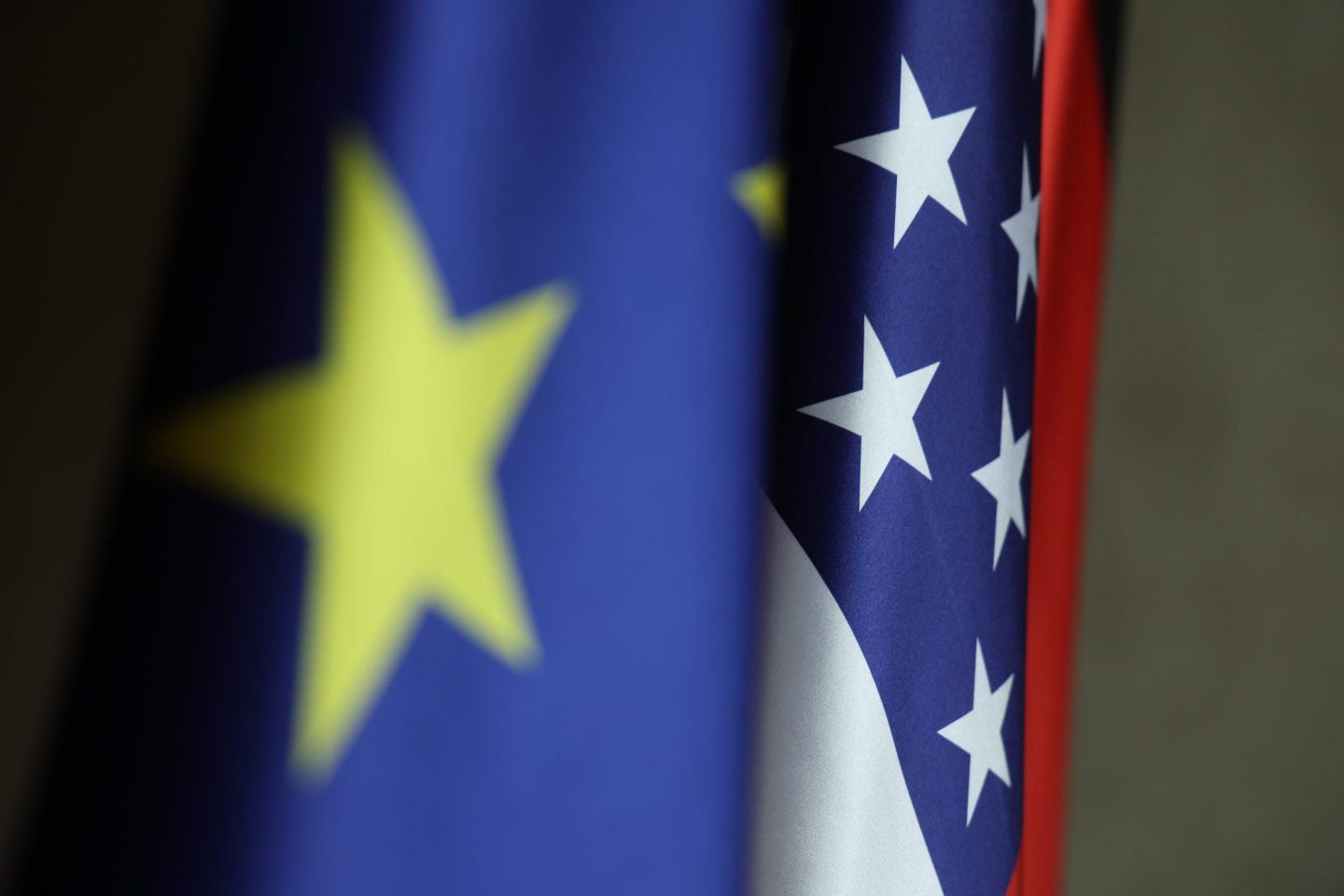
Flags of the European Union and the United States hang at the 61st Munich Security Conference in Munich, Germany.
Flags of the European Union and the United States hang at the 61st Munich Security Conference in Munich, Germany. Sean Gallup/Getty Images

For decades, the international order and our relationships with allies have been built on trust—a trust forged through adversity, from conflicts to economic crises. In an era of escalating geopolitical competition, economic fragmentation, and emerging security threats, trust has only become more important. Without trust, cooperation falters, alliances weaken, and global challenges become insurmountable. Strength alone is not enough; trust must be the foundation of a durable and effective foreign policy.

Throughout history, trust has served as the backbone of global stability. The formation of NATO in 1949 exemplifies how trust between allied nations ensured collective security and deterrence against external threats. Similarly, the Marshall Plan, which provided aid to rebuild Europe after World War II, was a significant trust-building initiative that cemented the transatlantic alliance. Conversely, when trust eroded—such as during the Cold War or the breakdown of U.S.-Iran relations—it led to prolonged tensions, avoidable loss, and instability.

During the recent Munich Security Conference, it was evident that many statespersons and CEOs were marred by uncertainty in a moment of distrust. The conference has long been a destination where what’s around the corner appears up close, and this year’s event was no exception. Whether in discussions on the next phase of Russia’s war in Ukraine, Vice President JD Vance’s speech on European expression and immigration, Europe’s posture toward China, or the potential of American tariffs on Europe, Canada, and Mexico, a new order is taking shape. It is up to us to shape it wisely.

Sustaining trust

The current global order is shifting not only as the U.S., a long-standing hegemon, faces a rising geopolitical competitor in China, but also as emerging powers like Saudi Arabia, the UAE, and India grow in influence while traditional competitors like Russia face relative decline. This shift is occurring alongside a Europe in crisis, grappling with the ongoing war in Ukraine and the necessity of collective action among its allies.

The Ukraine conflict highlights the importance of trust in modern warfare alliances. The U.S. and NATO partners have provided significant military aid, but sustaining that trust is crucial as political dynamics change. Any perceived wavering in U.S. support could weaken allied confidence and embolden adversaries. Similarly, trust issues between the U.S. and China are affecting global supply chains, cybersecurity, and diplomatic efforts on Taiwan. A recalibration of trust between global powers will determine the trajectory of the next decade.

Beyond security, trust plays a pivotal role in global economics. Trade agreements, foreign direct investment, and market stability all rely on the predictability and reliability of diplomatic relations. The U.S.-Mexico-Canada Agreement (USMCA) and the European Union’s internal economic cohesion demonstrate how economic partnerships thrive when trust is maintained. Conversely, Brexit showcased the economic turbulence that results from a breakdown in trust between partners.

Trust is critical in both business and diplomacy, but it is paramount when considering long-term geopolitical realities. As the intensity of global competition rises, today’s actions will define tomorrow’s strategy. 

Reinforcing alliances

Geopolitics is a game of chess, not checkers, with trust serving as the north star guiding each move.

For the Trump administration, my advice is that holding adversaries close can serve a strategic role, but holding allies even closer is a long-term necessity. Strategic engagement with adversaries is essential to gather intelligence, avoid misunderstandings, and maintain open channels for diplomacy. However, reinforcing alliances must take priority, as these relationships are the key to navigating the coming decade.

While trust with allies may be cultivated privately, the U.S. must also be more overt about its commitments. Optics matter. If America wants peace through strength, it must also demonstrate strength in numbers. As we approach some of the most complex power struggles of our time, fostering strong alliances that extend beyond election cycles is essential. This does not mean deals should not be renegotiated as economic realities and needs shift, but rather that such negotiations should be conducted with an understanding that every ally plays a strategic role in a broader mission. Projecting unity is vital, as adversaries will seek to exploit any signs of isolation or discord among allies.

Europe’s balancing act

For Europe, the key is approaching negotiations with the U.S. from a position of shared long-term objectives. European leaders should be clear about their priorities and open to compromises that result in mutual gains. Additionally, Europe must strike a balance in shaping modern policies, particularly on issues like artificial intelligence, without alienating allies and global businesses.

As geopolitical divisions deepen, Europe must reinforce its strength through unity. This will be especially crucial as internal political shifts, such as the potential continued rise of the AfD in Germany, threaten to reframe the continent’s relationship with the EU. Additionally, Europe’s response to China’s Belt and Road Initiative (BRI) will determine how effectively it balances economic interests with security concerns.

One underexplored aspect of trust is the role of AI and emerging technologies in diplomacy. AI-driven security measures, blockchain-based diplomatic agreements, and cybersecurity cooperation could help nations verify commitments and prevent diplomatic deception. The U.S. and its allies should explore how technology can enhance transparency in trade agreements, international treaties, and security partnerships.

Chess requires two players, and in an era of uncertainty, risk, and great power competition, both allies and adversaries must be maneuvered carefully. The strategic moves made today will define the world order for decades to come. Trust is not a passive asset; it is an active strategy that must be cultivated, reinforced, and projected to ensure stability and strength in an unpredictable future.

By doubling down on historical lessons, economic interdependence, and technological advancements, global leaders can solidify trust as the foundation for lasting peace and prosperity.

The opinions expressed in Fortune.com commentary pieces are solely the views of their authors and do not necessarily reflect the opinions and beliefs of Fortune.

Join us at the Fortune Workplace Innovation Summit May 19–20, 2026, in Atlanta. The next era of workplace innovation is here—and the old playbook is being rewritten. At this exclusive, high-energy event, the world’s most innovative leaders will convene to explore how AI, humanity, and strategy converge to redefine, again, the future of work. Register now.
About the Author
By Alan Fleischmann
See full bioRight Arrow Button Icon

Latest in Commentary

Finance
Lorem ipsum dolor sit amet, consectetur adipiscing elit, sed do eiusmod tempor incididunt ut labore et dolore magna aliqua. Ut enim ad minim veniam
By Fortune Editors
October 20, 2025
Finance
Lorem ipsum dolor sit amet, consectetur adipiscing elit, sed do eiusmod tempor incididunt ut labore et dolore magna aliqua. Ut enim ad minim veniam
By Fortune Editors
October 20, 2025
Finance
Lorem ipsum dolor sit amet, consectetur adipiscing elit, sed do eiusmod tempor incididunt ut labore et dolore magna aliqua. Ut enim ad minim veniam
By Fortune Editors
October 20, 2025
Finance
Lorem ipsum dolor sit amet, consectetur adipiscing elit, sed do eiusmod tempor incididunt ut labore et dolore magna aliqua. Ut enim ad minim veniam
By Fortune Editors
October 20, 2025
Finance
Lorem ipsum dolor sit amet, consectetur adipiscing elit, sed do eiusmod tempor incididunt ut labore et dolore magna aliqua. Ut enim ad minim veniam
By Fortune Editors
October 20, 2025
Finance
Lorem ipsum dolor sit amet, consectetur adipiscing elit, sed do eiusmod tempor incididunt ut labore et dolore magna aliqua. Ut enim ad minim veniam
By Fortune Editors
October 20, 2025

Most Popular

Finance
Lorem ipsum dolor sit amet, consectetur adipiscing elit, sed do eiusmod tempor incididunt ut labore et dolore magna aliqua. Ut enim ad minim veniam
By Fortune Editors
October 20, 2025
Finance
Lorem ipsum dolor sit amet, consectetur adipiscing elit, sed do eiusmod tempor incididunt ut labore et dolore magna aliqua. Ut enim ad minim veniam
By Fortune Editors
October 20, 2025
Finance
Lorem ipsum dolor sit amet, consectetur adipiscing elit, sed do eiusmod tempor incididunt ut labore et dolore magna aliqua. Ut enim ad minim veniam
By Fortune Editors
October 20, 2025
Finance
Lorem ipsum dolor sit amet, consectetur adipiscing elit, sed do eiusmod tempor incididunt ut labore et dolore magna aliqua. Ut enim ad minim veniam
By Fortune Editors
October 20, 2025
Finance
Lorem ipsum dolor sit amet, consectetur adipiscing elit, sed do eiusmod tempor incididunt ut labore et dolore magna aliqua. Ut enim ad minim veniam
By Fortune Editors
October 20, 2025
Finance
Lorem ipsum dolor sit amet, consectetur adipiscing elit, sed do eiusmod tempor incididunt ut labore et dolore magna aliqua. Ut enim ad minim veniam
By Fortune Editors
October 20, 2025
Fortune Secondary Logo
Rankings
  • 100 Best Companies
  • Fortune 500
  • Global 500
  • Fortune 500 Europe
  • Most Powerful Women
  • Future 50
  • World’s Most Admired Companies
  • See All Rankings
Sections
  • Finance
  • Fortune Crypto
  • Features
  • Leadership
  • Health
  • Commentary
  • Success
  • Retail
  • Mpw
  • Tech
  • Lifestyle
  • CEO Initiative
  • Asia
  • Politics
  • Conferences
  • Europe
  • Newsletters
  • Personal Finance
  • Environment
  • Magazine
  • Education
Customer Support
  • Frequently Asked Questions
  • Customer Service Portal
  • Privacy Policy
  • Terms Of Use
  • Single Issues For Purchase
  • International Print
Commercial Services
  • Advertising
  • Fortune Brand Studio
  • Fortune Analytics
  • Fortune Conferences
  • Business Development
About Us
  • About Us
  • Editorial Calendar
  • Press Center
  • Work At Fortune
  • Diversity And Inclusion
  • Terms And Conditions
  • Site Map
Fortune Secondary Logo
  • About Us
  • Editorial Calendar
  • Press Center
  • Work At Fortune
  • Diversity And Inclusion
  • Terms And Conditions
  • Site Map
  • Facebook icon
  • Twitter icon
  • LinkedIn icon
  • Instagram icon
  • Pinterest icon

Latest in Commentary

heitmann
CommentaryEntrepreneurship
Here’s how to build something that lasts, from the founder of a $300 million bootstrapped company that’s been growing for 28 years straight
By Tim HeitmannMarch 1, 2026
18 hours ago
world's fair
CommentaryRobots
Something big is happening in AI, but panic is the wrong reaction
By Peter CappelliFebruary 28, 2026
2 days ago
putin
CommentaryRussia
Exclusive analysis: we looked at the 400 western firms still in Russia. Their paltry size strips Putin’s bluff bare naked
By Jeffrey Sonnenfeld, Stephen Henriques, Jake Waldinger and Giuseppe ScottoFebruary 27, 2026
3 days ago
roth
CommentaryLeadership
The AI resource reallocation challenge: How can companies capture the value of time?
By Erik RothFebruary 27, 2026
3 days ago
will
CommentaryAdvertising
I’m one of America’s top pollsters and I’ve got a warning for the AI companies: customers aren’t sold on ads
By Will JohnsonFebruary 27, 2026
3 days ago
the pitt
CommentaryDEI
‘The Pitt’: a masterclass display of DEI in action 
By Robert RabenFebruary 26, 2026
4 days ago

Most Popular

placeholder alt text
Economy
Your grandparents are the reason the U.S. isn't in a recession right now. That won't last forever
By Eleanor PringleMarch 1, 2026
18 hours ago
placeholder alt text
Success
MacKenzie Scott's close relationship with Toni Morrison long before Amazon put her on the path give more than $1 billion to HBCUs
By Sasha RogelbergMarch 1, 2026
11 hours ago
placeholder alt text
Personal Finance
Trump's universal 401(k) architect on why lower-income people distrust retirement accounts: 'they want to know what the catch is'
By Jacqueline MunisFebruary 28, 2026
2 days ago
placeholder alt text
Middle East
As Iran attacks Dubai, the tax-free haven for the global elite could see 'catastrophic' fallout — 'this can also send shockwaves globally'
By Jason MaMarch 1, 2026
9 hours ago
placeholder alt text
AI
The week the AI scare turned real and America realized maybe it isn't ready for what's coming
By Nick LichtenbergFebruary 28, 2026
2 days ago
placeholder alt text
Success
Japanese companies are paying older workers to sit by a window and do nothing—while Western CEOs demand super-AI productivity just to keep your job
By Orianna Rosa RoyleFebruary 27, 2026
3 days ago

© 2026 Fortune Media IP Limited. All Rights Reserved. Use of this site constitutes acceptance of our Terms of Use and Privacy Policy | CA Notice at Collection and Privacy Notice | Do Not Sell/Share My Personal Information
FORTUNE is a trademark of Fortune Media IP Limited, registered in the U.S. and other countries. FORTUNE may receive compensation for some links to products and services on this website. Offers may be subject to change without notice.