
Many of the world’s largest software companies can’t stop talking about AI agents. Salesforce CEO Marc Benioff is so enthusiastic about the advent of these AI assistants—which can, in theory, automate everything from handling customer service inquiries to ordering inventory—that he’s said he considered renaming his entire company Agentforce. Microsoft is touting the idea of AI agents as the future of computing. Both Amazon’s AWS cloud platform and Google’s Vertex cloud service are pitching the ability of customers to build agents too.
But one tiny U.K. startup founded by a team of former Palantir engineers thinks it can beat these behemoths to become the platform for companies that want to coordinate large teams of these AI agents.
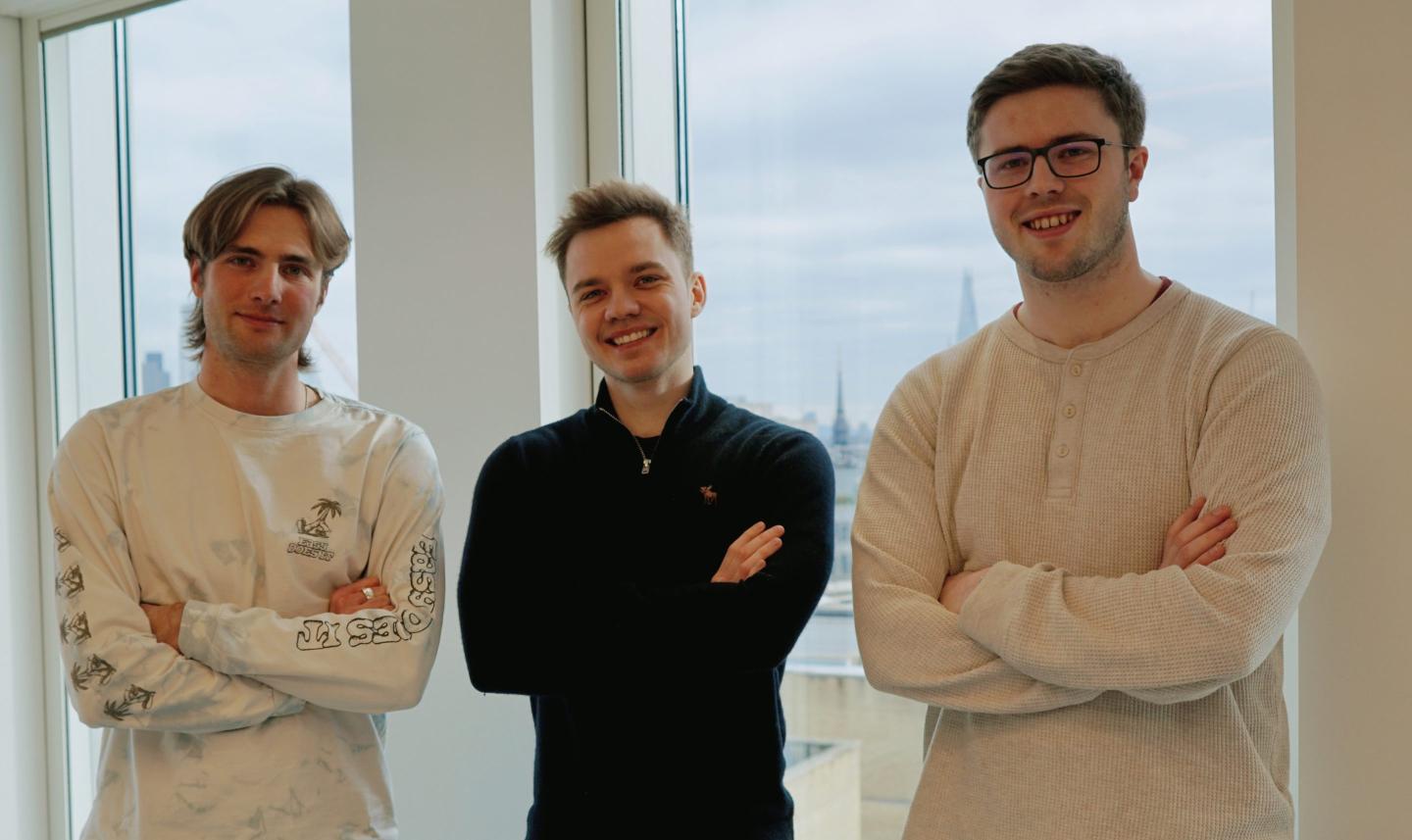
The company is called Fern Labs, and today it emerged from operating in stealth with its first product and the announcement of a pre-seed funding round of $3 million. The funding is led by London-based Air Street Capital, which invests only in AI-related companies.
Ash Edwards, who cofounded the company and is its CEO, spent three years as a technical lead at Palantir—the software company best known for helping intelligence agencies analyze vast quantities of data—where he worked initially on conventional machine learning applications and later on research into AI agents. Fern’s other two cofounders are Taylor Young, who was also a technical lead at Palantir, and Alex Goddijn, who was an engineer at the company.
Edwards said that his experience at Palantir convinced him of the need for a research lab solely focused on the issue of building and coordinating teams of AI agents across a company.
“Building networks of agents and coordinating across networks of agents is an unsolved problem,” he said.
Fern Lab’s vision, Edwards said, is “to build the machine that builds the company that builds the product.”
It wants to see just how much of the process of running a company can be automated with AI agents. At some point in the future, Edwards said, it might be possible to imagine large companies run with very few—or even perhaps no—people. But before that happens, he said, AI agents will empower people, allowing them to be far more productive and saving them from aspects of their work they find tedious.
Rather than building its own AI models or agents, Fern Labs is focused more on how best to coordinate networks of agents, figuring out how they will hand off tasks to one another, use one another’s outputs, and supervise one another’s work. Edwards said the company’s platform would integrate with agents from any vendor, be that OpenAI or Salesforce.
Nathan Benaich, the solo general partner at Air Street Capital, said he has been interested in the potential of agentic AI for a few years but has been underwhelmed by the results in real-world settings so far. He said he decided to invest in Fern Labs because Edwards “combines the two qualities I look for in founders—technical brilliance and pragmatism.” Benaich said he liked that because Edwards and his cofounders worked at Palantir, they are approaching agents as an engineering challenge, not a science problem. “They know what it takes to handle the messiness of adoption and implementation,” he said.
Fern Labs is taking a page out of Palantir’s go-to-market strategy in that it wants to work closely with customers—to be “forward deployed” in the lingo both Palantir and Edwards use—to essentially hold their hands as they implement AI agents and make sure they can get these AI assistants working well.
“It’s hard to build agents in a vacuum,” he said. “We apply a forward-deployed approach, embedding with a company to solve a particular problem.” What works for one company and one kind of problem may not be ideal for others, he said.
He said Fern Labs is currently working with two early partners on designing its platform, one of which is a cancer research organization and the other is an unnamed private equity firm. He declined to name either customer, citing confidentiality agreements. With its official launch today, though, Fern Labs is opening applications for a wait list of other potential test customers.
While Fern Labs says it will be compatible with agents built by other vendors, such as Salesforce and Microsoft, those other companies, as well as tech giants such as Google, also want to be the platform on which the workflows for agents are designed and supervised. So the little company is going to have to outcompete these giants.
One of the best ways to use today’s relatively primitive AI agents effectively is to use many agents in a workflow, with each agent handling just a small part of the task. But the more agents added to a workflow, the more likely that workflow is to fail, as errors get compounded throughout the chain. “An agent that takes the right step 95% of the time is not sufficient,” Edwards said.
One way to avoid this is to assign multiple agents the same task and then only take steps on which the team of agents agree—or use some sort of voting mechanism to decide which action will be implemented in the workflow. This turns out to be pretty effective, Edwards said. Another method involves asking agents to check their own work—but some AI models are better at this than others, and even the same model may not perform this checking task reliably all the time. Using one set of agents to verify the work of others is yet another possible tactic, Edwards said. The idea of Fern Labs is to experiment with these different techniques in different settings to find the most effective solutions.
But, he noted, what is best practice for coordinating agents today might not remain so in the future, as more capable models, such as OpenAI’s o3, or maybe open-source competitors, such as DeepSeek’s R1, and their successors are able to more reliably plan a workflow and orchestrate it. That’s why he says Fern Labs wants to make sure its platform is designed to be able to handle rapidly improving model capabilities, so different components can easily be swapped into the workflow design, and the entire design itself easily rejiggered, to take advantage of these improved abilities, he said.
Edwards also said Fern Labs is working on benchmarks that can better assess how well different AI models perform as agents and test different ways of having agents work together to crack hard problems. He showed off one of Fern Labs current favorite benchmark tests—which is asking its platform to build from scratch project management software that mimics the functionality of a popular existing off-the-shelf software solution, such as Asana. (Fern Labs’ agents can get close to doing this currently, but still make plenty of mistakes.)
Results like this have led some people to speculate that companies might cease to use existing software-as-a-service (SaaS) enterprise companies, such as Asana or Salesforce, replacing their products with bespoke software built by generative AI. Sebastian Siemiatkowski, the CEO of Swedish fintech company Klarna, has said his company is canceling its licenses for tools like Salesforce in favor of software built on the fly by generative AI models and new AI-run agents.
“I don’t think SaaS is dead,” Edwards said. But he does think the economics are changing. “Open-source software is improving at an unbelievable rate. Prices will crash, and smaller teams will be able to compete with today’s giants,” he said.
Now Fern Labs is about to put that proposition to the test itself.