• Home
  • Latest
  • Fortune 500
  • Finance
  • Tech
  • Leadership
  • Lifestyle
  • Rankings
  • Multimedia

Trendingnow

1

'The demographic dividend of the last 40 years is ending': J.P. Morgan says the world is running out of the two things that kept interest rates down

2

Jensen Huang made his $172 billion fortune on AI chips. His family's $75 million gift to Vanderbilt argues art decides what technology is for

3

The $39 trillion U.S. national debt isn’t as high as Japan’s and Singapore’s relative to economy size—and yet it's still worse somehow

1

'The demographic dividend of the last 40 years is ending': J.P. Morgan says the world is running out of the two things that kept interest rates down

2

Jensen Huang made his $172 billion fortune on AI chips. His family's $75 million gift to Vanderbilt argues art decides what technology is for

3

The $39 trillion U.S. national debt isn’t as high as Japan’s and Singapore’s relative to economy size—and yet it's still worse somehow
CommentaryTech

Trump 2.0: Clash of the tech bros

By
Susan Ariel Aaronson
Down Arrow Button Icon
By
Susan Ariel Aaronson
Down Arrow Button Icon
November 26, 2024, 6:20 AM ET

Susan Ariel Aaronson is a senior fellow at the Centre for International Governance Innovation, research professor of international affairs at George Washington University (GWU), and co-principal investigator with the NSF-NIST Institute for Trustworthy AI in Law & Society, where she leads research on data and AI governance.

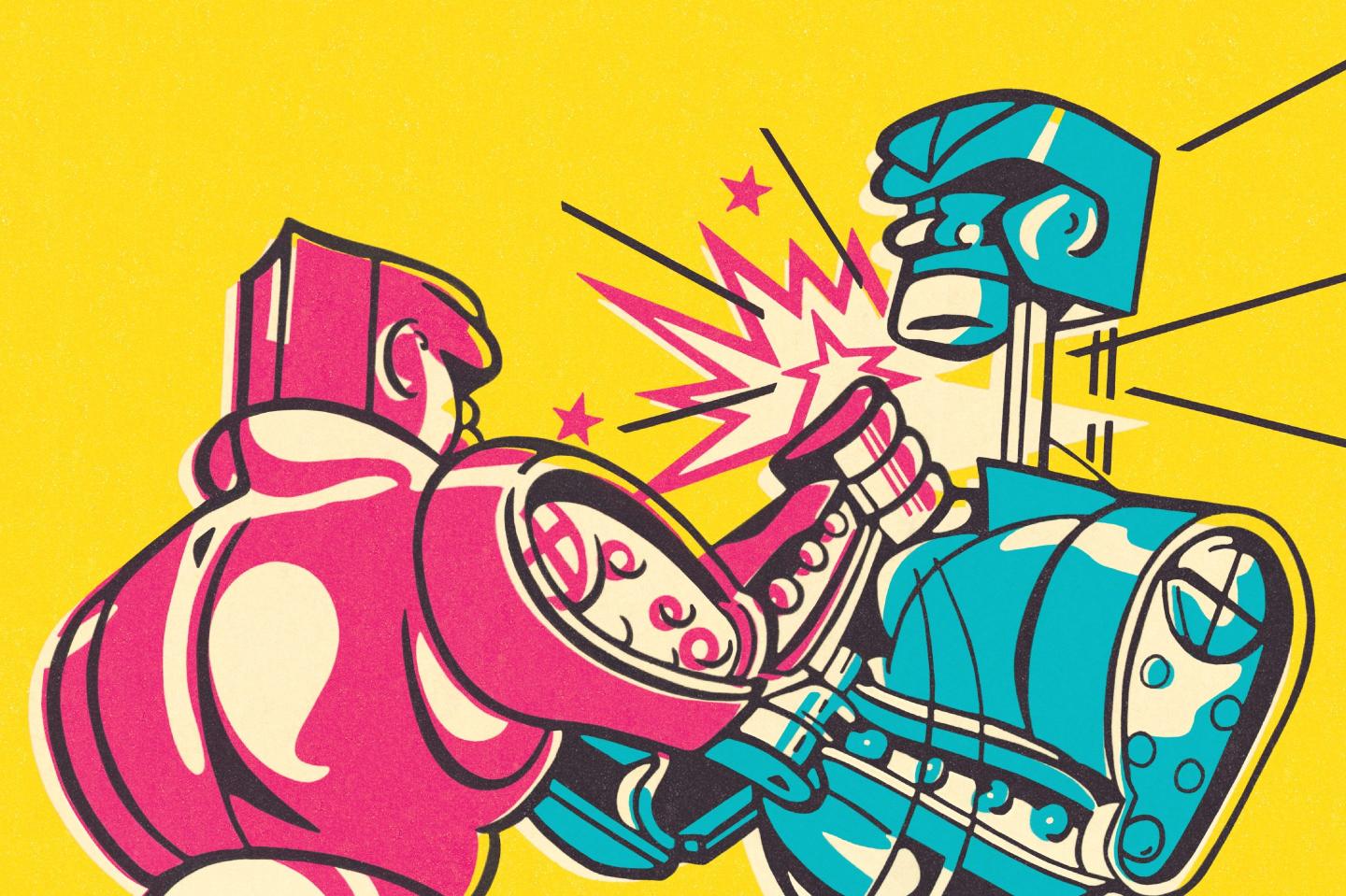
Illustration of a red robot and a green robot fighting
The tech giants courting Trump administration officials have conflicting interests.Getty Images
Add Fortune on Google for similar content.

In 2016, tariff man couldn’t care less about tech. Newly elected U.S. President Donald J. Trump knew that the people who created and ran America’s tech giants were richer and smarter than him. Moreover, they had different values. They embraced openness, accountability, and the rule of law in international affairs. Moreover, they generally advocated for increased immigration of skilled workers, open markets, and relatively unfettered cross-border data flows. Unsurprisingly, his first term was characterized by disputes with many tech giants, including Facebook and Amazon.   

However, tech leaders and government officials had a common concern: China’s innovative tech firms. They saw Chinese companies’ growing prowess in data-driven technologies as a threat to America’s economic progress and national security. As Chinese companies (most visibly TikTok) gained market share, the Trump administration came to understand that protecting the competitiveness of data-driven sectors was imperative if America were to become “great again.” And in February 2019, Trump signed Executive Order (EO) 13859 on Maintaining American Leadership in Artificial Intelligence. The executive order created the American AI Initiative to “focus the resources of the Federal government to develop AI in order to increase our Nation’s prosperity, enhance our national and economic security, and improve quality of life for the American people.” Moreover, his administration set the initial rules for U.S. government use and governance of AI. Finally, the Trump administration thought that the U.S. government could best counter China’s growing competitiveness in key technologies such as AI by limiting access to the essential components of the AI supply chain. Many of these policies were quietly lauded by America’s diverse tech sector.

U.S. President Joe Biden really brought this vision of limiting access to the AI supply chain to life by issuing the AI Bill of Rights, two executive Orders on AI,  and working with other countries to reduce AI risks and govern AI collectively. He took many steps to secure American AI leadership, investing in chip factories, STEM education, and research. Yet simultaneously, his administration challenged the market power and business practices of the tech giants. Such actions alienated many in the venture capital and tech sectors. Although many tech leaders were quiet and several other prominent CEOs actively supported VP Kamala Harris, a significant number of tech leaders and venture capitalists supported Trump in the 2024 election. Under Trump 2.0, I foresee deep divisions among the tech companies that are courting the new administration’s officials. Trump 2.0 might:

End efforts to advance trustworthy AI

Trustworthy AI refers to the design, development, acquisition, and use of AI in a manner that fosters public trust and confidence while protecting privacy, civil rights, civil liberties, and American values, consistent with applicable laws.

During his first term, Donald Trump signed an executive order that defined the building blocks of trustworthy AI as efforts to ensure the validity and reliability of AI models, their security and resilience, model accountability and transparency, model explainability and Interpretability, privacy, and fairness by developing strategies to mitigate bias. Many of these building blocks cannot be achieved without some form of AI or business regulation. 

However,  Elon Musk, Trump’s second biggest donor, and head tech bro, is determined to limit AI regulation. Moreover, the Republican platform promised to repeal Biden’s executive orders that attempted to further trustworthy AI at home and abroad. The party sees these EOs as undermining innovation. Leaders of other tech companies may disagree as the EOs have provided clarity on the use of AI and AI development and governance.

Maintain international efforts to ensure that AI is trustworthy, safe, and resilient 

Earlier in his career, tech bro Musk expressed support for preventing many AI risks, including the establishment of the AI Safety Institute, located at the Department of Commerce. Musk’s main concern is existential risk, whereas the leaders of many other companies are concerned about more immediate risks such as discrimination or hallucinations.  

However, the AI Safety Institute was established in 2023 by Biden’s executive order. It may not survive without Congress approving legislation to create such a body. My gut is most tech CEOs like the AI Safety approach because it is built on testing and standards, rather than mandates.

End efforts to challenge the business practices of data giants

Under Trump, companies may be given freer rein to merge and invest in smaller more innovative companies at home and abroad.  Here the tech bros may be in consensus and grateful.

Expand efforts to limit the ability of adversaries to acquire U.S. data

Trump signed the first EO on a key element of the AI supply chain related to data flows. In October 2024 alone, the U.S. issued several rules or asked for public comment on restrictions on data broker sales of U.S. datasets to U.S. adversaries, as well as restrictions on investment and expertise.

Under Trump 2.0, restrictions on data flows are likely to increase. However, the leaders of the giant tech companies are divided as to the short- and long-term implications of these supply-chain restrictions. While the U.S. has so far limited these EOs to adversaries, this also means reduced access to data and less accurate, complete, and representative datasets. Moreover, they undermine America’s commitment to digital solidarity, which the U.S. Department of State defines as “a willingness to work together on shared goals, to stand together, to help partners build capacity, and to provide mutual support.” It seems unlikely that Trump 2.0 will maintain efforts to foster digital solidarity.

Update the language of America’s digital trade agreements and draft and sign new ones

The signatories of the United States-Mexico-Canada Agreement (USMCA) agreed to review and decide whether to extend the agreement another 16 years. The review will take place in 2026, and the Trump administration may view bolstering it as a useful demonstration that the U.S. is not always protectionist or isolationist.

USMCA included a digital trade chapter that is out-of-date and, if renegotiated, could be used as a model for future trade agreements with other partners. Should the Trump administration decide to do so, it could engender significant support not only among the tech giants but also among the many American farmers and small and medium enterprises that benefit from cross-border data flows. The Biden administration’s unwillingness to negotiate was widely criticized by business, as well as Republican and Democratic members of Congress.

Rethink America’s commitment to open as well as proprietary foundation models 

In 2023, USG agencies investigated the risks of open vs. closed models. Both the U.S. Federal Trade Commission and the U.S. Department of Commerce found these risks to be manageable and also asserted that openness provided great benefits to society and companies.

However, firms such as OpenAI that rely on proprietary models may challenge these findings, presenting another possible divide within America’s tech sector. 

Further divide the tech community on data and AI sovereignty 

The USG has quarreled with countries and trade blocs such as India and the EU that insist that data must be sovereign and analyzed only on trusted domestic cloud platforms. Now, the U.S. is becoming more like these nations when it asserts sovereignty over data and restricts its flows. Some American companies are even marketing AI and data sovereignty to policymakers in many nations to capture market share. For example, executives at high-speed chipmaker Nvidia, have encouraged governmental clients to adopt sovereign AI through its “AI nations” initiative. Microsoft and Amazon Web Services, which provide cloud services as well as AI foundation models, also benefit from domestic efforts to promote AI. Meanwhile, other companies see the danger (and protectionism) in such approaches. Taken in sum, these policies may lead to a clash among the tech bros.  

These predictions may or may not come true—but one thing is for certain: Whatever the Trump administration does to nurture and govern the tech sectors, its actions will likely divide tech companies, Americans, and the world.

More must-read commentary published by Fortune:

  • Shell’s Pyrrhic victory may well set the stage for more corporate climate accountability
  • Demis Hassabis-James Manyika: AI will help us understand the very fabric of reality
  • I worked with Steve Jobs. Here’s what he’d say about today’s leadership style
  • The next wave of AI won’t be driven by LLMs. Here’s what investors should focus on instead

The opinions expressed in Fortune.com commentary pieces are solely the views of their authors and do not necessarily reflect the opinions and beliefs of Fortune.

About the Author
By Susan Ariel Aaronson
See full bioRight Arrow Button Icon
Add Fortune on Google for similar content.

Latest in Commentary

Finance
Lorem ipsum dolor sit amet, consectetur adipiscing elit, sed do eiusmod tempor incididunt ut labore et dolore magna aliqua. Ut enim ad minim veniam
By Fortune Editors
October 20, 2025
Finance
Lorem ipsum dolor sit amet, consectetur adipiscing elit, sed do eiusmod tempor incididunt ut labore et dolore magna aliqua. Ut enim ad minim veniam
By Fortune Editors
October 20, 2025
Finance
Lorem ipsum dolor sit amet, consectetur adipiscing elit, sed do eiusmod tempor incididunt ut labore et dolore magna aliqua. Ut enim ad minim veniam
By Fortune Editors
October 20, 2025
Finance
Lorem ipsum dolor sit amet, consectetur adipiscing elit, sed do eiusmod tempor incididunt ut labore et dolore magna aliqua. Ut enim ad minim veniam
By Fortune Editors
October 20, 2025
Finance
Lorem ipsum dolor sit amet, consectetur adipiscing elit, sed do eiusmod tempor incididunt ut labore et dolore magna aliqua. Ut enim ad minim veniam
By Fortune Editors
October 20, 2025
Finance
Lorem ipsum dolor sit amet, consectetur adipiscing elit, sed do eiusmod tempor incididunt ut labore et dolore magna aliqua. Ut enim ad minim veniam
By Fortune Editors
October 20, 2025

Most Popular

Finance
Lorem ipsum dolor sit amet, consectetur adipiscing elit, sed do eiusmod tempor incididunt ut labore et dolore magna aliqua. Ut enim ad minim veniam
By Fortune Editors
October 20, 2025
Finance
Lorem ipsum dolor sit amet, consectetur adipiscing elit, sed do eiusmod tempor incididunt ut labore et dolore magna aliqua. Ut enim ad minim veniam
By Fortune Editors
October 20, 2025
Finance
Lorem ipsum dolor sit amet, consectetur adipiscing elit, sed do eiusmod tempor incididunt ut labore et dolore magna aliqua. Ut enim ad minim veniam
By Fortune Editors
October 20, 2025
Finance
Lorem ipsum dolor sit amet, consectetur adipiscing elit, sed do eiusmod tempor incididunt ut labore et dolore magna aliqua. Ut enim ad minim veniam
By Fortune Editors
October 20, 2025
Finance
Lorem ipsum dolor sit amet, consectetur adipiscing elit, sed do eiusmod tempor incididunt ut labore et dolore magna aliqua. Ut enim ad minim veniam
By Fortune Editors
October 20, 2025
Finance
Lorem ipsum dolor sit amet, consectetur adipiscing elit, sed do eiusmod tempor incididunt ut labore et dolore magna aliqua. Ut enim ad minim veniam
By Fortune Editors
October 20, 2025
Fortune Secondary Logo
Rankings
  • 100 Best Companies
  • Fortune 500
  • Global 500
  • Fortune 500 Europe
  • Most Powerful Women
  • World's Most Admired Companies
  • See All Rankings
  • Lists Calendar
Sections
  • Finance
  • Fortune Crypto
  • Features
  • Leadership
  • Health
  • Commentary
  • Success
  • Retail
  • Mpw
  • Tech
  • Lifestyle
  • CEO Initiative
  • Asia
  • Politics
  • Conferences
  • Europe
  • Newsletters
  • Personal Finance
  • Environment
  • Magazine
  • Education
Customer Support
  • Frequently Asked Questions
  • Customer Service Portal
  • Privacy Policy
  • Terms Of Use
  • Single Issues For Purchase
  • International Print
Commercial Services
  • Advertising
  • Fortune Brand Studio
  • Fortune Analytics
  • Fortune Conferences
  • Business Development
  • Group Subscriptions
About Us
  • About Us
  • Press Center
  • Work At Fortune
  • Terms And Conditions
  • Site Map
  • About Us
  • Press Center
  • Work At Fortune
  • Terms And Conditions
  • Site Map
  • Facebook icon
  • Twitter icon
  • LinkedIn icon
  • Instagram icon
  • TikTok icon
  • YouTube icon

Latest in Commentary

craig
CommentaryPharmaceutical Industry
Big pharma’s patent cliff meets a new biotech Cold War: We need to outrun China, not outlaw it
By Craig GarthwaiteJuly 24, 2026
19 hours ago
tim
Commentarysmartphones and mobile devices
NYU Stern pricing expert: There’s a hidden ‘AI tax’ hitting Apple, Dell — and your next phone
By Srikanth JagabathulaJuly 24, 2026
19 hours ago
nyse
CommentaryEconomics
AI doesn’t end scarcity. It relocates it
By François Candelon, Paul-Louis Andres and Augustin ManchonJuly 24, 2026
21 hours ago
Can Bangkok future-proof itself against the heat?
CommentaryThailand
Can Bangkok future-proof itself against the heat?
By Curtis S. Chin and Ella TanJuly 23, 2026
1 day ago
mm
CommentaryLeadership
Michael Muthukrishna: The ‘lone genius’ myth is wrong and it’s holding back your business
By Michael MuthukrishnaJuly 23, 2026
2 days ago
Paul Keary (L) and Mike Sutcliff (R).
CommentaryAI agents
Teneo & Thoughtworks CEOs: the AI race will be won with governance, not speed 
By Paul Keary and Mike SutcliffJuly 23, 2026
2 days ago

Most Popular

'The demographic dividend of the last 40 years is ending': J.P. Morgan says the world is running out of the two things that kept interest rates down
Economy
'The demographic dividend of the last 40 years is ending': J.P. Morgan says the world is running out of the two things that kept interest rates down
By Eleanor PringleJuly 24, 2026
23 hours ago
Jensen Huang made his $172 billion fortune on AI chips. His family's $75 million gift to Vanderbilt argues art decides what technology is for
Big Tech
Jensen Huang made his $172 billion fortune on AI chips. His family's $75 million gift to Vanderbilt argues art decides what technology is for
By Sydney LakeJuly 23, 2026
2 days ago
The $39 trillion U.S. national debt isn’t as high as Japan’s and Singapore’s relative to economy size—and yet it's still worse somehow
Economy
The $39 trillion U.S. national debt isn’t as high as Japan’s and Singapore’s relative to economy size—and yet it's still worse somehow
By Sasha RogelbergJuly 23, 2026
2 days ago
Current price of oil as of July 24, 2026
Personal Finance
Current price of oil as of July 24, 2026
By Joseph HostetlerJuly 24, 2026
21 hours ago
The millennial generation has split, new Fed research shows: Those over 35 are edging toward boomer-style wealth, while everyone else falls behind
Real Estate
The millennial generation has split, new Fed research shows: Those over 35 are edging toward boomer-style wealth, while everyone else falls behind
By Nick LichtenbergJuly 22, 2026
3 days ago
Turns out Dead Internet Theory was right: AI agents are eating the Web, growing by nearly 8,000% and rewiring the Internet's business model
AI
Turns out Dead Internet Theory was right: AI agents are eating the Web, growing by nearly 8,000% and rewiring the Internet's business model
By Mia OsmonbekovJuly 23, 2026
1 day ago

© 2026 Fortune Media IP Limited. All Rights Reserved. Use of this site constitutes acceptance of our Terms of Use and Privacy Policy | CA Notice at Collection and Privacy Notice | Do Not Sell/Share My Personal Information
FORTUNE is a trademark of Fortune Media IP Limited, registered in the U.S. and other countries. FORTUNE may receive compensation for some links to products and services on this website. Offers may be subject to change without notice.