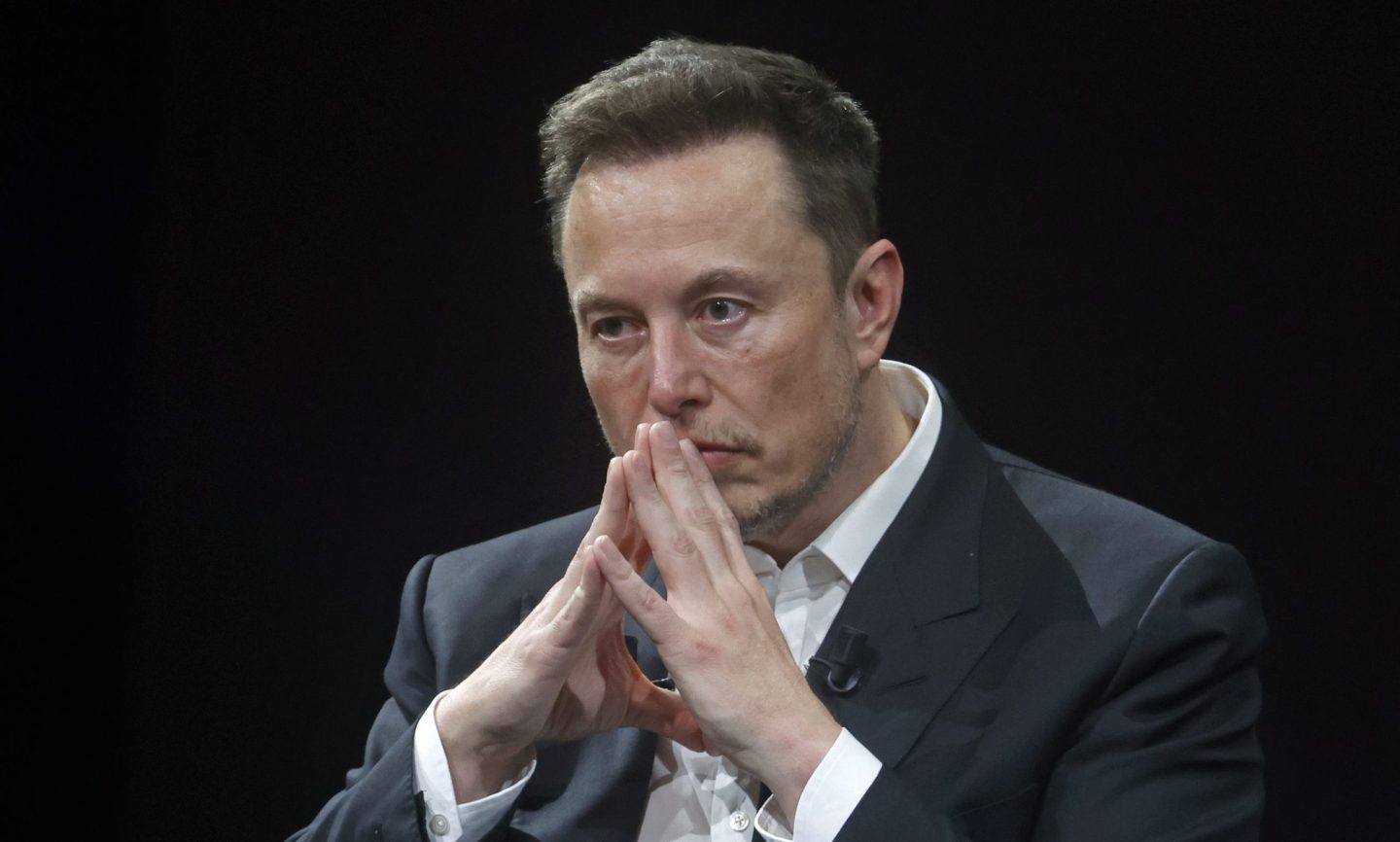
Elon Musk’s go-to legal strategy for the many lawsuits he and his sprawling business empire have filed over the years can be summed up in a few words: Spend and intimidate opponents into submission.
The billionaire uses his deep pockets to drag out cases until his adversaries run low on money, legal experts say. Or he uses the courts to punish critics and instill fear in anyone merely considering speaking out against him.
In the past month alone, Musk’s companies have filed two new lawsuits against California state officials. One, by SpaceX, alleges the state’s coastal commission retaliated against Musk for his support of Donald Trump by blocking the space cargo company from launching more of its rockets. Another lawsuit by his social media service X, formerly Twitter, takes aim at a new state law that requires it to police its service for election-related deepfake videos, or videos created with the help of artificial intelligence.
Meanwhile, Musk also filed his third in a succession of complaints against OpenAI, the buzzy company behind the ChatGPT chatbot that he cofounded but with which he later had a falling-out. In this updated version, he roped OpenAI investor Microsoft into the case, accusing the tech giant of violating antitrust law with its multibillion-dollar investment in the AI startup.
Most of the suits Musk files target threats to his companies. In his eyes, litigation is just a cost of doing business that’s built into what he charges customers, says Joan MacLeod Heminway, a University of Tennessee law professor who in August published a paper about Musk’s litigiousness, titled Representing Elon Musk.
“He really just sees litigation as part of his business model in some ways,” Heminway says.
Musk’s legal tactics are similar to those of some other wealthy and litigious plaintiffs, notes Paul Barrett, deputy director of the New York University Stern Center for Business and Human Rights. They put high-priced law firms on speed dial, deliberately file cases in friendly courts, and are more than happy to attack small defendants like nonprofits, even if they may not win.
“The point is to pressure people to do what you want them to do,” says Barrett, adding that the tactic requires a “certain shamelessness.”
Musk and several of his outside attorneys did not respond to requests for comment nor did representatives from X and SpaceX.
Musk’s new best friend, President-elect Trump, is also known for starting aggressive and lengthy legal battles. Recently, Trump’s lawyer sent letters to publishers about unflattering reporting, demanding $10 billion in damages from the New York Times and Penguin Random House for “false and defamatory statements.” Leading up to the election, Trump threatened government force and legal action against a variety of enemies, from critical journalists to former Rep. Liz Cheney (R-Wyo.). But as is typical with his threats, Trump didn’t carry through.
In Musk’s case, part of his legal strategy is to move his businesses from California to places like Texas, which have lighter regulations and more sympathetic judges. Earlier this year, he announced that X and SpaceX would move their headquarters from California to near Austin, citing his opposition to a California law supporting LGBTQ+ youth in schools. He’s also changed X’s terms of service in a way that may help protect it from lawsuits. As of Nov. 15, any X users who want to file their own lawsuits against the social media company must do so in Texas, either in federal court or state court, where judges are considered to be more pro-business.
Another big part of Musk’s modus operandi is to hire expensive lawyers who aren’t afraid to take on more “creative” cases, as Heminway put it. Some of his lawsuits involve legal gymnastics that are untested in court, but he can easily afford to plow ahead anyway when others would think twice about spending the money, she said.
“He’s not afraid to hire people who will reach into areas of law to try and find things that he needs, to either defend against or to bring cases against others,” Heminway notes.
In one case targeting the Center for Countering Digital Hate (CCDH), for example, X accused the nonprofit of illegally scraping user data from X to inform its report that criticized Musk’s decision to reinstate users who had previously been banned for misbehavior on the service. A federal judge rejected X’s claim and dismissed the case, saying it was merely an effort to silence critics, known in legal circles as a SLAPP.
“X Corp. has brought this case in order to punish CCDH for CCDH publications that criticized X Corp.—and perhaps in order to dissuade others who might wish to engage in such criticism,” Federal Judge Charles Breyer wrote in his ruling. X has appealed the case.
X filed a similar lawsuit in Texas against Media Matters for America over its report that the platform displayed hateful content alongside digital ads from major companies, including Disney. While similar to the CCDH fight, Federal Judge Reed O’Connor didn’t dismiss the case in an August order, finding instead that X “has properly pled its claims.”
Musk also likes to drag out litigation. Like many moneyed plaintiffs, he’s willing to outspend his opponents and squeeze them into settling. As one lawyer who is currently litigating against Musk puts it, “By definition, he has the deepest pockets that any litigant will ever have.”
Using the grind to his advantage
The legal experts suggest that the tech billionaire’s goal isn’t necessarily to win in court: Instead, as the attorney put it, “He wants people to be afraid to criticize him.”
The attorney, who asked not to be named in order to protect client identities amid ongoing litigation, summed up Musk’s strategy as, “‘I have more resources than you do, so I’m going to use those resources to make everything into a grind.’”
The tactic has yielded results: After an appeal, X blocked at least part of a California law that required companies to police content on their services. Musk himself in August ended his lengthy custody battle against Grimes, his former partner with whom he has three children and who has previously said she was “going bankrupt” amid the ongoing litigation.
Taking on regulation
Musk’s latest litigation challenges a new California law, AB 2655, that targets AI-generated deepfakes in deceptive election content. California Gov. Gavin Newsom promised to take action in July in response to Musk retweeting a post that used a deepfake of Vice President Kamala Harris talking about how she’s unqualified to be president.
In its filings, X argued the new law is overly broad and chills political speech. The law requires social media platforms to remove and block “materially deceptive” content related to elections and candidates during campaigning, and to set up ways for users to label and report deepfakes.
“It is difficult to imagine a statute more in conflict with core First Amendment principles,” lawyers for X wrote in its complaint.
This year, X scored a partial win by blocking a different California measure that would have required social media companies to disclose their policies about hate speech and content moderation. The social media company’s effort, based on a First Amendment argument, was initially denied by a federal judge. But an appeals court later sided with X, ruling that requiring social media companies to report their enforcement efforts to the government was likely unconstitutional. The lower court will decide whether other facets of the law can still be enforced.
SpaceX also in October took on the California Coastal Commission, accusing it of political discrimination after it blocked Musk’s company from continuing to launch rockets from a military base on the state’s central coast. The company’s complaint alleges that the vote “was not based on concerns about impacts to coastal resources, but instead on the political views held by SpaceX’s largest shareholder and CEO, Elon Musk.”
Unfriendly competition
Musk, a cofounder and now competitor of OpenAI, with his xAI startup, has also gone to court to accuse ChatGPT company’s CEO Sam Altman and president Greg Brockman of prioritizing profits over its purported interest in benefiting humanity.
Musk’s claims against OpenAI have grown over the past year; the first iteration of the lawsuit was filed in California state court in February. He dropped the lawsuit in June then refiled in federal court in August.
Microsoft was added to a third version of the lawsuit, with Musk now leveling antitrust claims related to the tech giant’s multibillion-dollar investment in OpenAI. More broadly, the Federal Trade Commission and other regulators are examining the outsize role of Big Tech firms in AI investment and innovation.
According to Musk’s latest complaint: “OpenAI, Inc., co-founded by Musk as an independent charity committed to safety and transparency—and nurtured in its infancy by Musk’s money, advice, recruiting efforts and connections—is, at the direction of Altman, Brockman, and Microsoft, fast becoming a fully for-profit subsidiary of Microsoft.”
Musk’s X also brought antitrust claims in August against the Global Alliance for Responsible Media (GARM), member companies, and its backer, the World Federation of Advertisers (WFA), an ad industry trade group. X argued the defendants acted as a cartel by discouraging members from advertising on its service over concerns about brand safety standards. Three days after the lawsuit was filed, WFA shut down GARM, citing the litigation’s strain on resources. The case is still ongoing, however. And on Thursday, the Texas Attorney General Ken Paxton launched an investigation into WFA citing similar antitrust claims.
Of course, Musk and his companies also must fend off a torrent of lawsuits from others. He’s had mixed results there.
Tesla settled a discrimination lawsuit over how the business treats Black employees, for example. And earlier this year, just before going to trial, the company settled a five-year-old wrongful death lawsuit over a fatal crash involving its car’s Autopilot technology. Still, the EV company faces at least half-a-dozen more, on top of federal traffic safety investigations.
In other cases, Musk’s lawyers have prevailed. Musk’s tweets, alone, are a huge source of litigation based on his controversial statements online. They include cases brought by the National Labor Relations Board over anti-union comments, crypto investors accusing Musk of insider trading, and a British caver Musk described as a “pedo guy.”
No matter who initiates the litigation, Musk is for certain one thing: a gold mine to the legal industry. His lengthy track record of suing and being sued, along with his companies, is keeping armies of attorneys employed across the country.