• Home
  • Latest
  • Fortune 500
  • Finance
  • Tech
  • Leadership
  • Lifestyle
  • Rankings
  • Multimedia

Trendingnow

1

Jensen Huang made his $172 billion fortune on AI chips. His family's $75 million gift to Vanderbilt argues art decides what technology is for

2

'The demographic dividend of the last 40 years is ending': J.P. Morgan says the world is running out of the two things that kept interest rates down

3

The $39 trillion U.S. national debt isn’t as high as Japan’s and Singapore’s relative to economy size—and yet it's still worse somehow

1

Jensen Huang made his $172 billion fortune on AI chips. His family's $75 million gift to Vanderbilt argues art decides what technology is for

2

'The demographic dividend of the last 40 years is ending': J.P. Morgan says the world is running out of the two things that kept interest rates down

3

The $39 trillion U.S. national debt isn’t as high as Japan’s and Singapore’s relative to economy size—and yet it's still worse somehow
CommentaryEnvironment

Food waste is full of surprisingly low-hanging fruits to help tackle climate change, a growing body of evidence shows

By
Lisa Moon
Lisa Moon
Down Arrow Button Icon
By
Lisa Moon
Lisa Moon
Down Arrow Button Icon
November 19, 2024, 10:19 AM ET
Lisa Moon is the president and CEO of The Global FoodBanking Network.
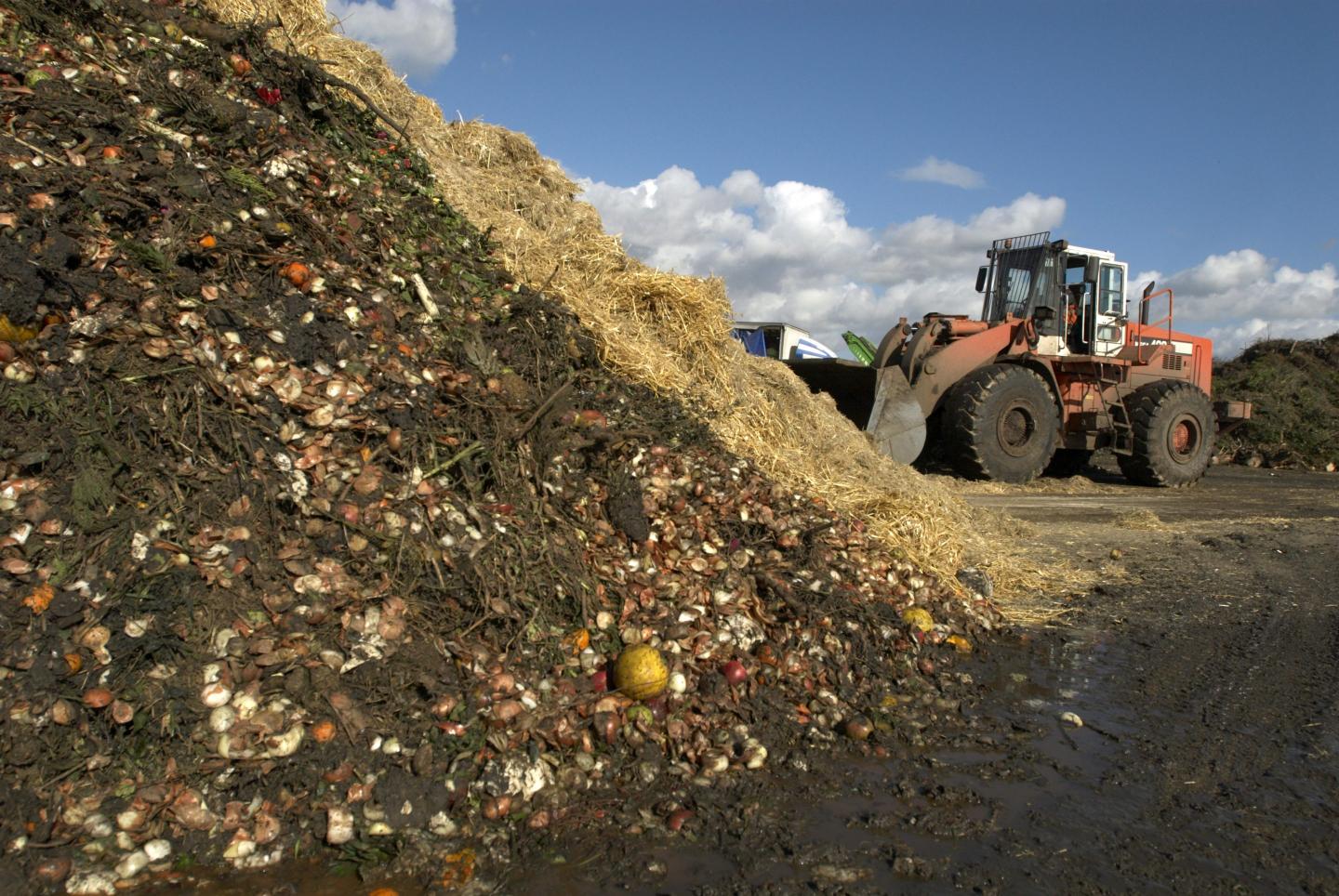
When left to rot, food produces methane, a major contributor to global warming.
When left to rot, food produces methane, a major contributor to global warming.BuildPix/Construction Photography/Avalon/Getty Images
Add Fortune on Google for similar content.

The premise of food banking is deceptively simple: identify and collect surplus food along the supply chain and then redistribute good food to people facing hunger. Food banks are rooted in their communities, serving as a lifeline for those suffering from chronic need as well as during times of crisis. They play an important role in feeding people displaced by disasters, conflicts, and economic shocks, as the world witnessed during the COVID-19 pandemic.

But there’s something happening at food banks that you can’t see at all—they’re helping protect our planet while feeding people facing hunger. Today, we have a growing body of evidence to show it.

Every year, at least 1.3 billion tons of food are lost or wasted across the supply chain, from the farm to the retailer to the home kitchen. When discarded, food decomposes, producing methane, a potent climate pollutant that traps 80 times more heat than carbon dioxide in the first 20 years after it’s released. The vast volumes of food we send to landfill account for an estimated 20% of current methane emissions.

Because of methane’s short life cycle, if the world were able to slow the current rate of emissions, atmospheric methane could be significantly reduced in only 10 years, making a significant dent in global warming. This is why almost 160 countries have committed to reducing methane emissions by 30% by 2030 under the Global Methane Pledge.

The newly released Food Recovery to Avoid Methane Emissions (FRAME) methodology, developed by The Global FoodBanking Network and our partners, shows that food banks can play an important role in achieving this goal. The methodology provides the most comprehensive and accurate tool to date to measure emissions reductions from redistributing surplus food and the social benefits of doing so.

In a pilot project of six food banks in Mexico and Ecuador, we found that through food recovery and redistribution, each local food bank reduced emissions equivalent to removing 900 gasoline-powered cars from the road for a year. Rolling this up to the hundreds of food banks operating in more than 80 countries across the globe, this represents an enormous potential to reduce emissions. And food banks deliver the additional benefits of providing critical food to people, reducing hunger, and strengthening local communities. Last year, food banks in GFN’s network reached 40 million people.

Despite the clear benefits of reducing food waste, the reality is that almost everywhere in the world, most companies still opt to send wholesome food to a landfill, rather than donate to a food bank. That’s why we need additional policies and incentives to encourage countries, businesses, and others to support this time-tested approach.

The first step is simple and free for governments: provide liability protection to companies—similar to the Good Samaritan Law in the United States—to encourage more to donate food. The Food Bank Singapore just ushered through a similar law there, as have Argentina, Brazil, and Ecuador.

Tax incentives for companies that give to food banks and other organizations can also spur more donations and less waste, like the new law in Colombia supported by the Colombian Association of Food Banks (ABACO).

Policymakers can also improve confusing date labels on food packaging as they have done in the U.K., such as those that do not distinguish between quality (Best before) and safety (Consume by), leading consumers and grocers to throw out food that is still safe for consumption.

While only five countries currently factor food loss and waste into their national climate commitments at the U.N. (known as NDCs), the dual impact of food banks on hunger and the climate is increasingly being recognized. Ecuador’s Banco de Alimentos Quito—the capital-based food bank and participant in this pilot research—has been brought into discussions with the government on its ambitious climate policy. This is because the FRAME methodology allows lawmakers to factor emissions reductions from food redistribution into their national climate strategies, as they also set national food loss and waste targets. And food redistribution as a climate solution is gaining traction in international forums, including the COP climate talks.

Armed with better data and a stronger evidence base, governments and the private sector can join with non-governmental organizations to unlock the potential of food recovery and redistribution, including food banks. In the short term, food banks can help tackle the pressing global challenges of hunger and methane emissions, while spurring our food systems to transition to a more sustainable and equitable future.

More must-read commentary published by Fortune:

  • Shell’s Pyrrhic victory may well set the stage for more corporate climate accountability
  • Demis Hassabis-James Manyika: AI will help us understand the very fabric of reality
  • British fintech founder who moved to U.S.: U.K. tech’s problem isn’t taxes—it’s ambition
  • The next wave of AI won’t be driven by LLMs. Here’s what investors should focus on instead

The opinions expressed in Fortune.com commentary pieces are solely the views of their authors and do not necessarily reflect the opinions and beliefs of Fortune.

About the Author
By Lisa Moon
See full bioRight Arrow Button Icon
Add Fortune on Google for similar content.

Latest in Commentary

Finance
Lorem ipsum dolor sit amet, consectetur adipiscing elit, sed do eiusmod tempor incididunt ut labore et dolore magna aliqua. Ut enim ad minim veniam
By Fortune Editors
October 20, 2025
Finance
Lorem ipsum dolor sit amet, consectetur adipiscing elit, sed do eiusmod tempor incididunt ut labore et dolore magna aliqua. Ut enim ad minim veniam
By Fortune Editors
October 20, 2025
Finance
Lorem ipsum dolor sit amet, consectetur adipiscing elit, sed do eiusmod tempor incididunt ut labore et dolore magna aliqua. Ut enim ad minim veniam
By Fortune Editors
October 20, 2025
Finance
Lorem ipsum dolor sit amet, consectetur adipiscing elit, sed do eiusmod tempor incididunt ut labore et dolore magna aliqua. Ut enim ad minim veniam
By Fortune Editors
October 20, 2025
Finance
Lorem ipsum dolor sit amet, consectetur adipiscing elit, sed do eiusmod tempor incididunt ut labore et dolore magna aliqua. Ut enim ad minim veniam
By Fortune Editors
October 20, 2025
Finance
Lorem ipsum dolor sit amet, consectetur adipiscing elit, sed do eiusmod tempor incididunt ut labore et dolore magna aliqua. Ut enim ad minim veniam
By Fortune Editors
October 20, 2025

Most Popular

Finance
Lorem ipsum dolor sit amet, consectetur adipiscing elit, sed do eiusmod tempor incididunt ut labore et dolore magna aliqua. Ut enim ad minim veniam
By Fortune Editors
October 20, 2025
Finance
Lorem ipsum dolor sit amet, consectetur adipiscing elit, sed do eiusmod tempor incididunt ut labore et dolore magna aliqua. Ut enim ad minim veniam
By Fortune Editors
October 20, 2025
Finance
Lorem ipsum dolor sit amet, consectetur adipiscing elit, sed do eiusmod tempor incididunt ut labore et dolore magna aliqua. Ut enim ad minim veniam
By Fortune Editors
October 20, 2025
Finance
Lorem ipsum dolor sit amet, consectetur adipiscing elit, sed do eiusmod tempor incididunt ut labore et dolore magna aliqua. Ut enim ad minim veniam
By Fortune Editors
October 20, 2025
Finance
Lorem ipsum dolor sit amet, consectetur adipiscing elit, sed do eiusmod tempor incididunt ut labore et dolore magna aliqua. Ut enim ad minim veniam
By Fortune Editors
October 20, 2025
Finance
Lorem ipsum dolor sit amet, consectetur adipiscing elit, sed do eiusmod tempor incididunt ut labore et dolore magna aliqua. Ut enim ad minim veniam
By Fortune Editors
October 20, 2025
Fortune Secondary Logo
Rankings
  • 100 Best Companies
  • Fortune 500
  • Global 500
  • Fortune 500 Europe
  • Most Powerful Women
  • World's Most Admired Companies
  • See All Rankings
  • Lists Calendar
Sections
  • Finance
  • Fortune Crypto
  • Features
  • Leadership
  • Health
  • Commentary
  • Success
  • Retail
  • Mpw
  • Tech
  • Lifestyle
  • CEO Initiative
  • Asia
  • Politics
  • Conferences
  • Europe
  • Newsletters
  • Personal Finance
  • Environment
  • Magazine
  • Education
Customer Support
  • Frequently Asked Questions
  • Customer Service Portal
  • Privacy Policy
  • Terms Of Use
  • Single Issues For Purchase
  • International Print
Commercial Services
  • Advertising
  • Fortune Brand Studio
  • Fortune Analytics
  • Fortune Conferences
  • Business Development
  • Group Subscriptions
About Us
  • About Us
  • Press Center
  • Work At Fortune
  • Terms And Conditions
  • Site Map
  • About Us
  • Press Center
  • Work At Fortune
  • Terms And Conditions
  • Site Map
  • Facebook icon
  • Twitter icon
  • LinkedIn icon
  • Instagram icon
  • TikTok icon
  • YouTube icon

Latest in Commentary

craig
CommentaryPharmaceutical Industry
Big pharma’s patent cliff meets a new biotech Cold War: We need to outrun China, not outlaw it
By Craig GarthwaiteJuly 24, 2026
13 hours ago
tim
Commentarysmartphones and mobile devices
NYU Stern pricing expert: There’s a hidden ‘AI tax’ hitting Apple, Dell — and your next phone
By Srikanth JagabathulaJuly 24, 2026
14 hours ago
nyse
CommentaryEconomics
AI doesn’t end scarcity. It relocates it
By François Candelon, Paul-Louis Andres and Augustin ManchonJuly 24, 2026
15 hours ago
Can Bangkok future-proof itself against the heat?
CommentaryThailand
Can Bangkok future-proof itself against the heat?
By Curtis S. Chin and Ella TanJuly 23, 2026
1 day ago
mm
CommentaryLeadership
Michael Muthukrishna: The ‘lone genius’ myth is wrong and it’s holding back your business
By Michael MuthukrishnaJuly 23, 2026
2 days ago
Paul Keary (L) and Mike Sutcliff (R).
CommentaryAI agents
Teneo & Thoughtworks CEOs: the AI race will be won with governance, not speed 
By Paul Keary and Mike SutcliffJuly 23, 2026
2 days ago

Most Popular

Jensen Huang made his $172 billion fortune on AI chips. His family's $75 million gift to Vanderbilt argues art decides what technology is for
Big Tech
Jensen Huang made his $172 billion fortune on AI chips. His family's $75 million gift to Vanderbilt argues art decides what technology is for
By Sydney LakeJuly 23, 2026
2 days ago
'The demographic dividend of the last 40 years is ending': J.P. Morgan says the world is running out of the two things that kept interest rates down
Economy
'The demographic dividend of the last 40 years is ending': J.P. Morgan says the world is running out of the two things that kept interest rates down
By Eleanor PringleJuly 24, 2026
18 hours ago
The $39 trillion U.S. national debt isn’t as high as Japan’s and Singapore’s relative to economy size—and yet it's still worse somehow
Economy
The $39 trillion U.S. national debt isn’t as high as Japan’s and Singapore’s relative to economy size—and yet it's still worse somehow
By Sasha RogelbergJuly 23, 2026
1 day ago
The millennial generation has split, new Fed research shows: Those over 35 are edging toward boomer-style wealth, while everyone else falls behind
Real Estate
The millennial generation has split, new Fed research shows: Those over 35 are edging toward boomer-style wealth, while everyone else falls behind
By Nick LichtenbergJuly 22, 2026
2 days ago
Current price of oil as of July 24, 2026
Personal Finance
Current price of oil as of July 24, 2026
By Joseph HostetlerJuly 24, 2026
15 hours ago
Turns out Dead Internet Theory was right: AI agents are eating the Web, growing by nearly 8,000% and rewiring the Internet's business model
AI
Turns out Dead Internet Theory was right: AI agents are eating the Web, growing by nearly 8,000% and rewiring the Internet's business model
By Mia OsmonbekovJuly 23, 2026
1 day ago

© 2026 Fortune Media IP Limited. All Rights Reserved. Use of this site constitutes acceptance of our Terms of Use and Privacy Policy | CA Notice at Collection and Privacy Notice | Do Not Sell/Share My Personal Information
FORTUNE is a trademark of Fortune Media IP Limited, registered in the U.S. and other countries. FORTUNE may receive compensation for some links to products and services on this website. Offers may be subject to change without notice.