(The Conversation is an independent and nonprofit source of news, analysis and commentary from academic experts.)
Why do I feel better rested when I wake myself up than I do if my alarm or another person wakes me up? – Calleigh H., age 11, Oklahoma
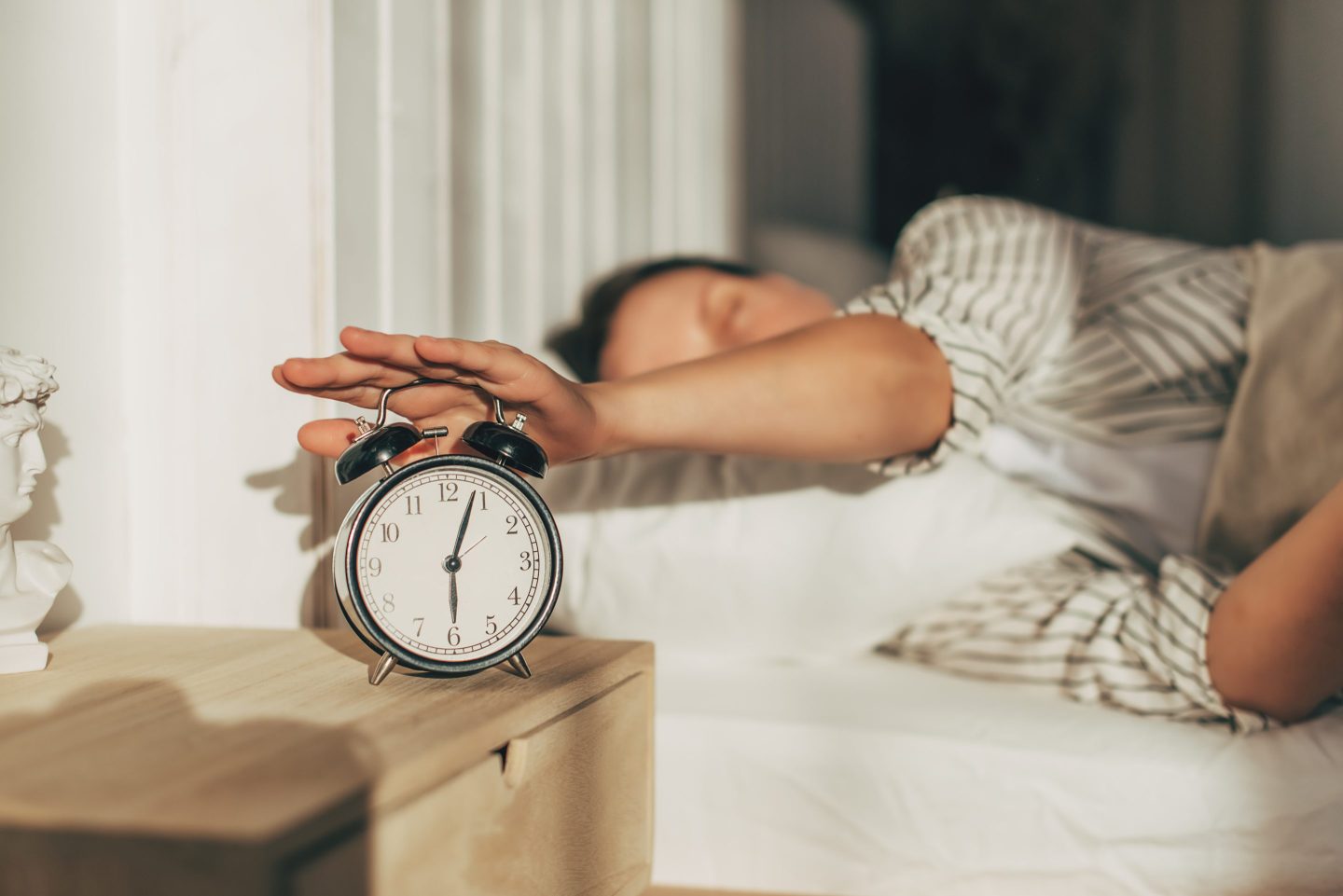
We’ve all experienced this: You’re in the middle of a lovely dream. Perhaps you’re flying. As you’re soaring through the air, you meet an eagle. The eagle looks at you, opens its beak and – BEEP! BEEP! BEEP!
Your alarm goes off. Dream over, time to get up.
Many people – kids and adults alike – notice that when they wake up naturally from sleep, they feel more alert than if an alarm or another person, like a parent, wakes them up. Why is that?
I’m a neurologist who studies the brain, specifically what happens in the brain when you’re asleep. I also take care of children and adults who don’t sleep well and want to sleep better. My research involves working with parents to help them teach their children good sleep habits.
To understand how to sleep better, and why waking up naturally from sleep helps you feel more alert, you need to start by understanding sleep cycles.
The sleep cycle
The sleep cycle consists of four stages. One of these is REM, which stands for rapid eye movements. The other three are non-REM stages. When you fall asleep, you first go into a state of drowsiness called non-REM Stage 1.
This is followed by deeper stages of sleep, called non-REM stages 2 and 3. Each stage of non-REM is deeper than the one before. Then, about 90 minutes after you first fall asleep, you enter the fourth stage, which is REM sleep. This is a stage of lighter sleep where you do much of your dreaming. After a few minutes, you return to non-REM sleep again.
These cycles repeat themselves throughout the night, with most people having four to six cycles of non-REM sleep alternating with REM sleep each night. As the night goes on, the cycles contain less non-REM sleep and more REM sleep. This is why it’s important to get enough sleep, so that the body can get enough of both REM sleep and non-REM sleep.
REM vs. non-REM sleep
How do researchers like me know that a person is in non-REM vs. REM sleep? In the sleep lab, we can tell from their brain waves, eye movements and the tension in their muscles, like in the chin. These are measured by putting sensors called electrodes on the scalp, around the eyes and on the chin.
These electrodes pick up brain activity, which varies from waves that are low in amplitude (the height of the wave) and relatively fast to waves that are high in amplitude (a taller wave) and relatively slow. When we are awake, the height of the waves is low and the waves are relatively fast. In contrast, during sleep, the waves get higher and slower.
Non-REM Stage 3 has the tallest and slowest waves of all the sleep stages. In REM sleep, brain waves are low in amplitude and relatively fast, and the eye movements are rapid, too. People need both non-REM and REM stages for a healthy brain, so they can learn and remember.
Waking up naturally
When you wake up in the morning on your own, it’s usually as you come to the end of whatever stage of sleep you were in. Think of it like getting off the train when it comes to a stop at the station. But when an alarm or someone else wakes you up, it’s like jumping off the train between stops, which can feel jolting. That’s why it’s good to wake up naturally whenever possible.
People can actually train their brains to wake up at a consistent time each day that is a natural stopping point. Brains have an internal 24-hour clock that dictates when you first start to feel sleepy and when you wake up. This is related to our circadian rhythms.
Training the brain to wake up at a consistent time
First, it’s important to go to bed at a consistent time that allows you to get enough sleep. If you stay up too late doing homework or looking at your phone, that can interfere with getting enough sleep and make you dependent on an alarm – or your parents – to wake you up.
Other things that can help you fall asleep at a healthy time include getting physical activity during the day and avoiding coffee, soda or other drinks or foods that contain caffeine. Physical activity increases brain chemicals that make it easier to fall asleep, while caffeine does the opposite and keeps you awake.
Second, you need to be aware of light in your environment. Light too late in the evening, including from screens, can interfere with your brain’s production of a chemical called melatonin that promotes sleep. But in the morning when you wake up, you need to be exposed to light.
Morning light helps you synchronize, or align, your circadian rhythms with the outside world and makes it easier to fall asleep at night. The easiest way to do this is to open up your shades or curtains in your room. In the winter, some people use light boxes to simulate sunlight, which helps them align their rhythms.
Benefits of a good night’s sleep
A good sleep routine entails both a consistent bedtime and wake time and regularly getting enough sleep. That usually means 9-11 hours for school-age kids who are not yet teens, and 8-10 hours for teens.
This will help you be at your best to learn at school, boost your mood, help you maintain a healthy weight and promote many other aspects of health.
This article is republished from The Conversation under a Creative Commons license. Read the original article here: https://theconversation.com/why-do-i-feel-better-when-i-wake-myself-up-instead-of-relying-on-an-alarm-a-neurologist-explains-the-science-of-a-restful-nights-sleep-193992.