• Home
  • Latest
  • Fortune 500
  • Finance
  • Tech
  • Leadership
  • Lifestyle
  • Rankings
  • Multimedia
CommentaryHealth

Ozempic and Wegovy are trimming waistlines—and showing how quickly U.S. health care can turn into a gold rush

By
Owen Tripp
Owen Tripp
Down Arrow Button Icon
By
Owen Tripp
Owen Tripp
Down Arrow Button Icon
October 23, 2024, 3:50 PM ET

Owen Tripp is co-founder and CEO at Included Health.

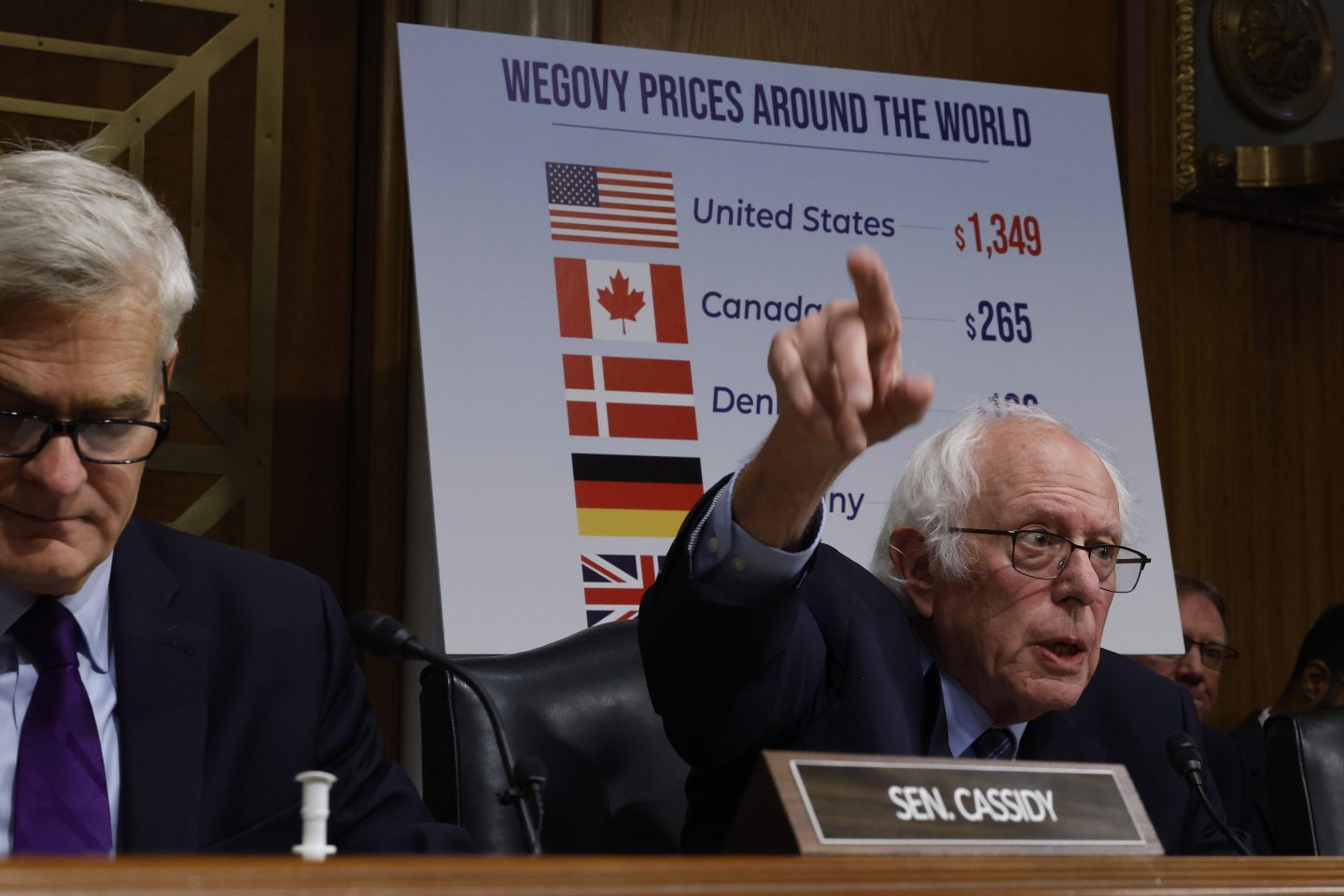
Senate Health, Education, Labor, and Pensions Committee Chairman Bernie Sanders (I-VT) delivers opening remarks during a hearing about drug pricing on Sep. 24.
Senate Health, Education, Labor, and Pensions Committee Chairman Bernie Sanders (I-VT) delivers opening remarks during a hearing about drug pricing on Sep. 24.Chip Somodevilla - Getty Images

Is there anything GLP-1s can’t do? Diabetes and obesity are increasingly looking like the tip of the semaglutide iceberg. The Food and Drug Administration (FDA) has approved Wegovy for cardiovascular disease, and researchers are now exploring the potential of GLP-1s for a host of conditions, including asthma, arthritis and psoriasis, certain liver diseases, depression, eye disorders, Alzheimer’s, and substance use disorders. A recent study even found GLP-1s may reduce the risk of 10 different cancers.

The growing list of potential GLP-1 indications suggests the drugs may target the root cause (inflammation, probably) of the most prevalent and costly conditions in the U.S. If even a fraction of the trials now underway pan out, GLP-1s have the potential to reshape health care as we know it.

But they can’t solve everything. In fact, the GLP-1 phenomenon is making the fragmentation and dysfunction of our health care system even more apparent. Just as GLP-1s may help us discover the common denominator in seemingly disparate diseases, they are shining a bright light on the root causes of the health care system’s ills.

Drugs are too expensive

The price tag of GLP-1s in the U.S.—up to $15,000 per year, far higher than in other affluent countries—has become one of the single biggest drivers of rising health care costs. Private employers, already facing an unsustainable cost trend, are feeling the pressure from their workforce to cover the drugs, yet they quite literally may not be able to afford it. Some studies suggest widespread GLP-1 adoption, absent cost controls, could bankrupt Medicare and the health care system as a whole.

GLP-1s are also shining a harsh light on the inefficiency and inequity in health care. Those who can afford to pay out of pocket are gobbling up the supply of GLP-1s (in some cases for vanity use), while access remains limited for people on Medicare or Medicaid who are disproportionately burdened by obesity and diabetes. For example, Eli Lilly’s recent move to slash the price of Zepbound only applies to patients paying out of pocket; and at several hundred dollars per month, even the markdown price is out of reach for many.

GLP-1s shows how quickly health care can turn into a gold rush

Pharmaceutical companies, telehealth providers, and even supplement sellers are marketing GLP-1s directly to consumers to meet the runaway demand. Exploiting a loophole resulting from the GLP-1 shortage, some providers are prescribing compounded generic versions of the drugs that the FDA has warned may be unsafe.

This is a prime example of the limitations of the transactional Telehealth 1.0 model and the dangers of consumerism running amok. Patients can easily get compounded GLP-1s, even when lifestyle changes or other approaches are more clinically appropriate. But who is looking after their health once the transaction is complete? Who is helping them manage side effects, as well as their overall physical and mental health?

If patients get sick from compounded GLP-1s, they could end up in the ER—and their employer and insurer foot the bill. In this scenario, no one wins.

Fragmented care delivery

The type of clinicians prescribing GLP-1s has expanded rapidly. In their first act as a diabetes drug, GLP-1s were prescribed almost exclusively by endocrinologists. Now cardiologists, orthopedists, internal medicine physicians, and even psychiatrists are prescribing them—presumably with a different lens than an endocrinologist would, and sometimes without full visibility into the patient’s overall health. Different specialties are starting to establish their own clinical guidelines for GLP-1s.

Given how siloed specialty care is, it’s increasingly likely that a primary care physician (PCP) might prescribe GLP-1s for weight management without the patient’s cardiologist knowing about it—and vice versa. Who’s looking out for the whole person? Who’s looking at clinical outcomes and costs in a holistic way—for that patient, and for the system as a whole?

The prescription we really need

I’m rooting for GLP-1s to be a miracle drug. But the jury is still out, and in the meantime, the GLP-1 frenzy is exposing healthcare stakeholders across the system—patients, employers, insurers, providers—to unsustainable clinical and financial risks.

On the plus side, these mounting risks—and the unprecedented attention from consumers and the industry alike—may finally be what it takes to fix broken health care models. And the solutions to the problems surrounding GLP-1s are the same ones we’ve needed all along:

  • Prevention. The U.S. invests far less in preventive and primary care than other affluent nations. Increasing access to primary care and mental health services—including through virtual care—is essential to sustainably address the upstream causes of the conditions we’re now treating with GLP-1s.
  • Integrated care. This includes longitudinal care coordination between PCPs and specialists, as well as navigators and patient advocates. The wrap-around financial and administrative support these care team members provide is especially important given the high cost of the drugs and the challenges of managing chronic conditions like diabetes.
  • Outcomes-based payment. The recent push to include GLP-1s in Medicare negotiations is a good start, but it’s not a silver bullet for the healthcare cost trend. Despite the consumer demand for GLP-1s, studies have shown that as many as two-thirds of patients don’t stick with the drugs long enough to achieve or sustain the clinical benefits, which means substantial upfront costs with little to no payoff for patients and healthcare purchasers. Business and payment models tied to clinical and financial outcomes that matter—and that incentivize judicious prescribing and the integrated care needed to boost adherence and long-term results—are a critical step toward minimizing waste and realizing the full value of GLP-1s.

GLP-1s have the potential to transform medicine. But if we continue shoehorning them into our siloed and fragmented health care system, their potential will be stunted. It’s yet another indication that we need to reimagine the health care system from the ground up.

Read more:

  • Misaligned incentives plague our health-care system. Here’s how to make America healthy again
  • My son’s rare disease diagnosis spurred me to ditch Big Pharma for a biotech startup
  • I cared for my dad under ‘hospital at home’ in his final weeks. The program is missing one big piece
  • Cancer made me a patient. Health care’s blind spots made me a CEO
  • Americans finally got a rule protecting their credit scores from unexpected medical debt. Now Trump is attacking the agency behind it

The opinions expressed in Fortune.com commentary pieces are solely the views of their authors and do not necessarily reflect the opinions and beliefs of Fortune.

Join us at the Fortune Workplace Innovation Summit May 19–20, 2026, in Atlanta. The next era of workplace innovation is here—and the old playbook is being rewritten. At this exclusive, high-energy event, the world’s most innovative leaders will convene to explore how AI, humanity, and strategy converge to redefine, again, the future of work. Register now.
About the Author
By Owen Tripp
See full bioRight Arrow Button Icon

Latest in Commentary

Finance
Lorem ipsum dolor sit amet, consectetur adipiscing elit, sed do eiusmod tempor incididunt ut labore et dolore magna aliqua. Ut enim ad minim veniam
By Fortune Editors
October 20, 2025
Finance
Lorem ipsum dolor sit amet, consectetur adipiscing elit, sed do eiusmod tempor incididunt ut labore et dolore magna aliqua. Ut enim ad minim veniam
By Fortune Editors
October 20, 2025
Finance
Lorem ipsum dolor sit amet, consectetur adipiscing elit, sed do eiusmod tempor incididunt ut labore et dolore magna aliqua. Ut enim ad minim veniam
By Fortune Editors
October 20, 2025
Finance
Lorem ipsum dolor sit amet, consectetur adipiscing elit, sed do eiusmod tempor incididunt ut labore et dolore magna aliqua. Ut enim ad minim veniam
By Fortune Editors
October 20, 2025
Finance
Lorem ipsum dolor sit amet, consectetur adipiscing elit, sed do eiusmod tempor incididunt ut labore et dolore magna aliqua. Ut enim ad minim veniam
By Fortune Editors
October 20, 2025
Finance
Lorem ipsum dolor sit amet, consectetur adipiscing elit, sed do eiusmod tempor incididunt ut labore et dolore magna aliqua. Ut enim ad minim veniam
By Fortune Editors
October 20, 2025

Most Popular

Finance
Lorem ipsum dolor sit amet, consectetur adipiscing elit, sed do eiusmod tempor incididunt ut labore et dolore magna aliqua. Ut enim ad minim veniam
By Fortune Editors
October 20, 2025
Finance
Lorem ipsum dolor sit amet, consectetur adipiscing elit, sed do eiusmod tempor incididunt ut labore et dolore magna aliqua. Ut enim ad minim veniam
By Fortune Editors
October 20, 2025
Finance
Lorem ipsum dolor sit amet, consectetur adipiscing elit, sed do eiusmod tempor incididunt ut labore et dolore magna aliqua. Ut enim ad minim veniam
By Fortune Editors
October 20, 2025
Finance
Lorem ipsum dolor sit amet, consectetur adipiscing elit, sed do eiusmod tempor incididunt ut labore et dolore magna aliqua. Ut enim ad minim veniam
By Fortune Editors
October 20, 2025
Finance
Lorem ipsum dolor sit amet, consectetur adipiscing elit, sed do eiusmod tempor incididunt ut labore et dolore magna aliqua. Ut enim ad minim veniam
By Fortune Editors
October 20, 2025
Finance
Lorem ipsum dolor sit amet, consectetur adipiscing elit, sed do eiusmod tempor incididunt ut labore et dolore magna aliqua. Ut enim ad minim veniam
By Fortune Editors
October 20, 2025
Rankings
  • 100 Best Companies
  • Fortune 500
  • Global 500
  • Fortune 500 Europe
  • Most Powerful Women
  • Future 50
  • World’s Most Admired Companies
  • See All Rankings
Sections
  • Finance
  • Leadership
  • Success
  • Tech
  • Asia
  • Europe
  • Environment
  • Fortune Crypto
  • Health
  • Retail
  • Lifestyle
  • Politics
  • Newsletters
  • Magazine
  • Features
  • Commentary
  • Mpw
  • CEO Initiative
  • Conferences
  • Personal Finance
  • Education
Customer Support
  • Frequently Asked Questions
  • Customer Service Portal
  • Privacy Policy
  • Terms Of Use
  • Single Issues For Purchase
  • International Print
Commercial Services
  • Advertising
  • Fortune Brand Studio
  • Fortune Analytics
  • Fortune Conferences
  • Business Development
About Us
  • About Us
  • Editorial Calendar
  • Press Center
  • Work At Fortune
  • Diversity And Inclusion
  • Terms And Conditions
  • Site Map
  • Facebook icon
  • Twitter icon
  • LinkedIn icon
  • Instagram icon
  • Pinterest icon

Most Popular

placeholder alt text
Economy
An unusual Fed ‘rate check’ triggered a free fall in the U.S. dollar and investors are fleeing into gold
By Jim EdwardsJanuary 26, 2026
10 hours ago
placeholder alt text
North America
Gates Foundation plans to give away $9 billion in 2026 to prepare for the 2045 closure while slashing hundreds of jobs
By Sydney LakeJanuary 23, 2026
3 days ago
placeholder alt text
Politics
Trump was surging after the Venezuela raid—then came Jerome Powell, Greenland, and Minnesota. Now it feels like a ‘historic hinge moment’
By Jason MaJanuary 25, 2026
21 hours ago
placeholder alt text
Personal Finance
Sweden abolished its wealth tax 20 years ago. Then it became a 'paradise for the super-rich'
By Miranda Sheild Johansson and The ConversationJanuary 22, 2026
4 days ago
placeholder alt text
Politics
Minnesota-based CEOs, including Fortune 500 bosses, call for ‘immediate de-escalation of tensions’ after fatal shooting
By Jason MaJanuary 25, 2026
1 day ago
placeholder alt text
Success
Apple cofounder Ronald Wayne sold his 10% stake for $800 in 1976—today it’d be worth up to $400 billion
By Preston ForeJanuary 23, 2026
3 days ago

© 2026 Fortune Media IP Limited. All Rights Reserved. Use of this site constitutes acceptance of our Terms of Use and Privacy Policy | CA Notice at Collection and Privacy Notice | Do Not Sell/Share My Personal Information
FORTUNE is a trademark of Fortune Media IP Limited, registered in the U.S. and other countries. FORTUNE may receive compensation for some links to products and services on this website. Offers may be subject to change without notice.


Latest in Commentary

taxes
CommentaryTaxes
Yes, you’re getting a bigger tax refund. Your kids won’t thank you for the $3 trillion it’s adding to the deficit
By Daniel BunnJanuary 26, 2026
8 hours ago
dewar
CommentaryLeadership
When companies take off like a rocket, how can founders steer the ship?
By Carolyn DewarJanuary 24, 2026
2 days ago
shubham
CommentaryConsulting
When AI meets healthcare, how should payers react? 
By Shubham SinghalJanuary 23, 2026
3 days ago
sternfels
CommentaryConsulting
AI makes human intelligence more important, not less 
By Bob Sternfels and Lucy PerezJanuary 22, 2026
4 days ago
wendy
CommentarySmall Business
Built to last: governance for multigenerational family businesses 
By Wendy StewartJanuary 22, 2026
4 days ago
acunto
CommentaryLeadership
I’m the Napster CEO and I agree with Pinterest: the Napster phase of AI needs to end
By John AcuntoJanuary 22, 2026
4 days ago