• Home
  • Latest
  • Fortune 500
  • Finance
  • Tech
  • Leadership
  • Lifestyle
  • Rankings
  • Multimedia

Trendingnow

1

Jeff Bezos wants the bottom half of earners to pay zero income tax—he says nurses making just $75K should save $12K a year

2

Despite a $500 million net worth, Shaq just finished his fourth degree. He warns graduates: 'Your character will take you further than your resume'

3

Bolt CEO says he let go of his entire HR team for creating problems that didn’t exist: ‘Those problems disappeared when I let them go’ 

1

Jeff Bezos wants the bottom half of earners to pay zero income tax—he says nurses making just $75K should save $12K a year

2

Despite a $500 million net worth, Shaq just finished his fourth degree. He warns graduates: 'Your character will take you further than your resume'

3

Bolt CEO says he let go of his entire HR team for creating problems that didn’t exist: ‘Those problems disappeared when I let them go’ 
HealthAfrica

A new superfood from Africa’s ‘tree of life’ is exploding in popularity—and fetching for high prices

By
Farai Mutsaka
Farai Mutsaka
and
The Associated Press
Down Arrow Button Icon
By
Farai Mutsaka
Farai Mutsaka
and
The Associated Press
Down Arrow Button Icon
September 18, 2024, 10:55 AM ET
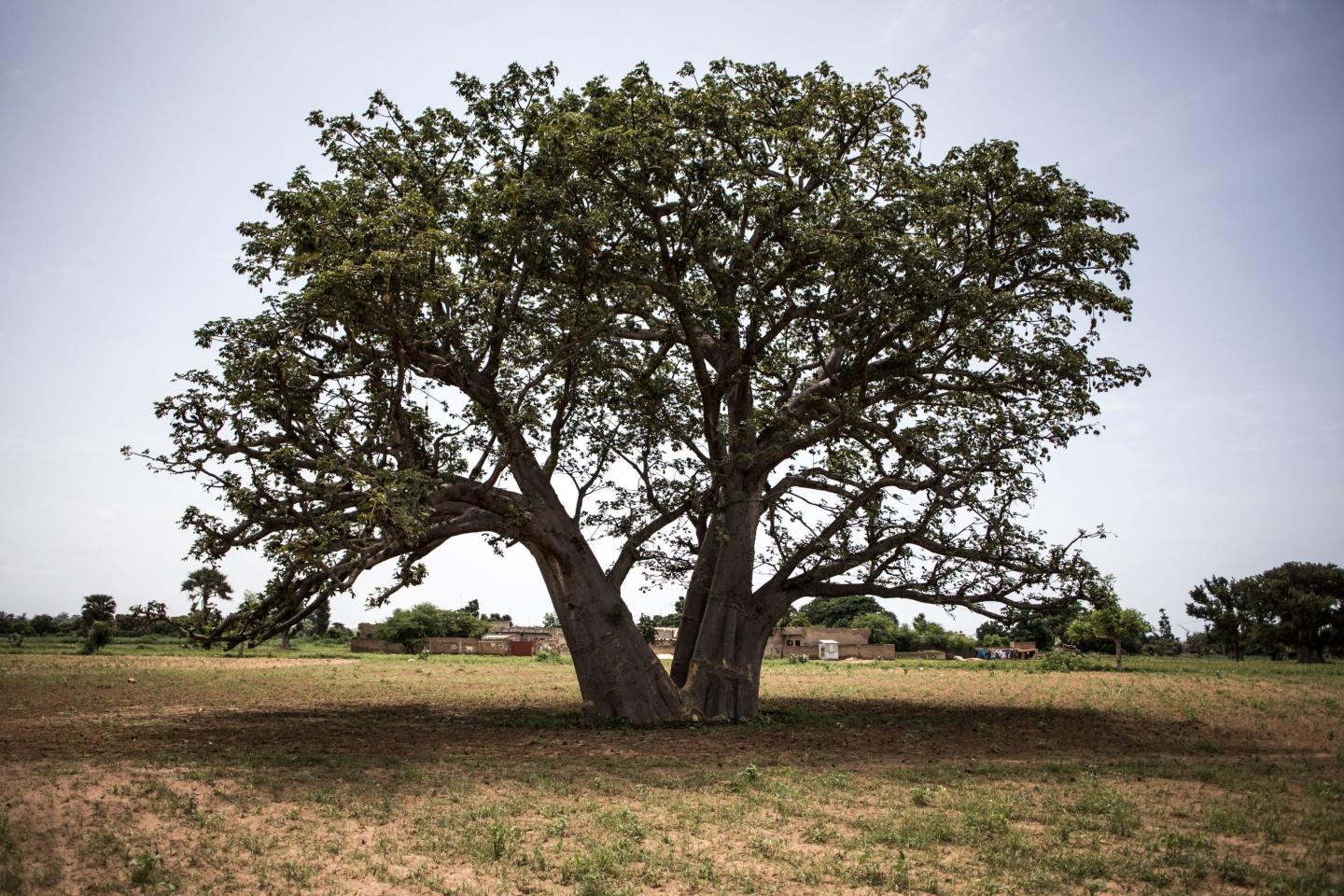
A baobab tree in Africa, known as the "tree of life'
A baobab tree is seen in agricultural fields on the outskirts of Bandia forest on September 25, 2019.John Wessels / AFP—Getty Images

Since childhood, Loveness Bhitoni has collected fruit from the gigantic baobab trees surrounding her homestead in Zimbabwe to add variety to the family’s staple corn and millet diet. The 50-year-old Bhitoni never saw them as a source of cash, until now.

Recommended Video

Climate change-induced droughts have decimated her crops. Meanwhile, the world has a growing appetite for the fruit of the drought-resistant baobab as a natural health food.

Bhitoni wakes before dawn to go foraging for baobab fruit, sometimes walking barefoot though hot, thorny landscapes with the risk of wildlife attacks. She gathers sacks of the hard-shelled fruit from the ancient trees and sells them on to industrial food processors or individual buyers from the city.

The baobab trade, which took root in her area in 2018, would previously supplement things like children’s school fees and clothing for locals of the small town of Kotwa in northeastern Zimbabwe. Now, it’s a matter of survival following the latest devastating drought in southern Africa, worsened by the El Niño weather phenomenon.

“We are only able to buy corn and salt,” Bhitoni said after a long day’s harvest. “Cooking oil is a luxury because the money is simply not enough. Sometimes I spend a month without buying a bar of soap. I can’t even talk of school fees or children’s clothes.”

The global market for baobab products has spiked, turning rural African areas with an abundance of the trees into source markets. The trees, known for surviving even under severe conditions like drought or fire, need more than 20 years to start producing fruit and aren’t cultivated but foraged.

Tens of thousands of rural people like Bhitoni have emerged to feed the need. The African Baobab Alliance, with members across the continent’s baobab producing countries, projects that more than 1 million rural African women could reap economic benefits from the fruit, which remains fresh for long periods because of its thick shell.

The alliance’s members train locals on food safety. They also encourage people to collect the fruit, which can grow to 8 inches (20 centimeters) wide and 21 inches (53 centimeters) long, from the ground rather than the hazardous work of climbing the enormous, thick-trunked trees. Many, especially men, still do, however.

Native to the African continent, the baobab is known as the “tree of life” for its resilience and is found from South Africa to Kenya to Sudan and Senegal. Zimbabwe has about 5 million of the trees, according to Zimtrade, a government export agency.

But the baobab’s health benefits long went unnoticed elsewhere.

Gus Le Breton, a pioneer of the industry, remembers the early days.

“Baobab did not develop into a globally traded and known superfood by accident,” said Le Breton, recalling years of regulatory, safety and toxicology testing to convince authorities in the European Union and United States to approve it.

“It was ridiculous because the baobab fruit has been consumed in Africa safely for thousands and thousands of years,” said Le Breton, an ethnobotanist specializing in African plants used for food and medicine.

Studies have shown that the baobab fruit has several health benefits as an antioxidant, and a source of vitamin C and essential minerals such as zinc, potassium and magnesium.

The U.S. legalized the import of baobab powder as a food and beverage ingredient in 2009, a year after the EU. But getting foreign taste buds to accept the sharp, tart-like taste took repeated trips to Western and Asian countries.

“No one had ever heard of it, they didn’t know how to pronounce its name. It took us a long time,” Le Breton said. The tree is pronounced BAY-uh-bab.

Together with China, the U.S. and Europe now account for baobab powder’s biggest markets. The Dutch government’s Center for the Promotion of Imports says the global market could reach $10 billion by 2027. Le Breton says his association projects a 200% growth in global demand between 2025 and 2030, and is also looking at increasing consumption among Africa’s increasingly health-conscious urbanites.

Companies such as Coca-Cola and Pepsi have opened product lines promoting baobab ingredients. In Europe, the powder is hyped by some as having “real star qualities” and is used to flavor beverages, cereals, yogurt, snack bars and other items.

A packet of a kilogram (2.2 pound) of baobab powder sells for around 27 euros (about $30) in Germany. In the United Kingdom, a 100-milliliter (3.38-ounce) bottle of baobab beauty oil can fetch 25 pounds (about $33).

The growing industry is on display at a processing plant in Zimbabwe, where baobab pulp is bagged separately from the seeds. Each bag has a tag tracing it to the harvester who sold it. Outside the factory, the hard shells are turned into biochar, an ash given to farmers for free to make organic compost.

Harvesters like Bhitoni say they can only dream of affording the commercial products the fruit becomes. She earns 17 cents for every kilogram of the fruit and she can spend up to eight hours a day walking through the sunbaked savanna. She has exhausted the trees nearby.

“The fruit is in demand, but the trees did not produce much this year, so sometimes I return without filling up a single sack,” Bhitoni said. “I need five sacks to get enough money to buy a 10-kilogram (22-pound) packet of cornmeal.”

Some individual buyers who feed a growing market for the powder in Zimbabwe’s urban areas prey on residents’ drought-induced hunger, offering cornmeal in exchange for seven 20-liter (around 4-gallon) buckets of cracked fruit, she said.

“People have no choice because they have nothing,” said Kingstone Shero, the local councilor. “The buyers are imposing prices on us and we don’t have the capacity to resist because of hunger.”

Le Breton sees better prices ahead as the market expands.

“I think that the market has grown significantly, (but) I don’t think it has grown exponentially. It’s been fairly steady growth,” he said. “I believe at some point that it will increase in value as well. And at that point, then I think that the harvesters will really start to be earning some serious income from the harvesting and sale of this really truly remarkable fruit.”.

Zimtrade, the government export agency, has lamented the low prices paid to baobab pickers and says it’s looking at partnering with rural women to set up processing plants.

The difficult situation is likely to continue due to a lack of negotiating power by fruit pickers, some of them children, said Prosper Chitambara, a development economist based in Zimbabwe’s capital, Harare.

On a recent day, Bhitoni walked from one baobab tree to the next. She carefully examined each fruit before leaving the smaller ones for wild animals such as baboons and elephants to eat — an age-old tradition.

“It is tough work, but the buyers don’t even understand this when we ask them to increase prices,” she said.

The Fortune 500 Innovation Forum will convene Fortune 500 executives, U.S. policy officials, top founders, and thought leaders to help define what’s next for the American economy, Nov. 16-17 in Detroit. Apply here.
About the Authors
By Farai Mutsaka
See full bioRight Arrow Button Icon
By The Associated Press
See full bioRight Arrow Button Icon

Latest in Health

Finance
Lorem ipsum dolor sit amet, consectetur adipiscing elit, sed do eiusmod tempor incididunt ut labore et dolore magna aliqua. Ut enim ad minim veniam
By Fortune Editors
October 20, 2025
Finance
Lorem ipsum dolor sit amet, consectetur adipiscing elit, sed do eiusmod tempor incididunt ut labore et dolore magna aliqua. Ut enim ad minim veniam
By Fortune Editors
October 20, 2025
Finance
Lorem ipsum dolor sit amet, consectetur adipiscing elit, sed do eiusmod tempor incididunt ut labore et dolore magna aliqua. Ut enim ad minim veniam
By Fortune Editors
October 20, 2025
Finance
Lorem ipsum dolor sit amet, consectetur adipiscing elit, sed do eiusmod tempor incididunt ut labore et dolore magna aliqua. Ut enim ad minim veniam
By Fortune Editors
October 20, 2025
Finance
Lorem ipsum dolor sit amet, consectetur adipiscing elit, sed do eiusmod tempor incididunt ut labore et dolore magna aliqua. Ut enim ad minim veniam
By Fortune Editors
October 20, 2025
Finance
Lorem ipsum dolor sit amet, consectetur adipiscing elit, sed do eiusmod tempor incididunt ut labore et dolore magna aliqua. Ut enim ad minim veniam
By Fortune Editors
October 20, 2025

Most Popular

Finance
Lorem ipsum dolor sit amet, consectetur adipiscing elit, sed do eiusmod tempor incididunt ut labore et dolore magna aliqua. Ut enim ad minim veniam
By Fortune Editors
October 20, 2025
Finance
Lorem ipsum dolor sit amet, consectetur adipiscing elit, sed do eiusmod tempor incididunt ut labore et dolore magna aliqua. Ut enim ad minim veniam
By Fortune Editors
October 20, 2025
Finance
Lorem ipsum dolor sit amet, consectetur adipiscing elit, sed do eiusmod tempor incididunt ut labore et dolore magna aliqua. Ut enim ad minim veniam
By Fortune Editors
October 20, 2025
Finance
Lorem ipsum dolor sit amet, consectetur adipiscing elit, sed do eiusmod tempor incididunt ut labore et dolore magna aliqua. Ut enim ad minim veniam
By Fortune Editors
October 20, 2025
Finance
Lorem ipsum dolor sit amet, consectetur adipiscing elit, sed do eiusmod tempor incididunt ut labore et dolore magna aliqua. Ut enim ad minim veniam
By Fortune Editors
October 20, 2025
Finance
Lorem ipsum dolor sit amet, consectetur adipiscing elit, sed do eiusmod tempor incididunt ut labore et dolore magna aliqua. Ut enim ad minim veniam
By Fortune Editors
October 20, 2025
Fortune Secondary Logo
Rankings
  • 100 Best Companies
  • Fortune 500
  • Global 500
  • Fortune 500 Europe
  • Most Powerful Women
  • World's Most Admired Companies
  • See All Rankings
  • Lists Calendar
Sections
  • Finance
  • Fortune Crypto
  • Features
  • Leadership
  • Health
  • Commentary
  • Success
  • Retail
  • Mpw
  • Tech
  • Lifestyle
  • CEO Initiative
  • Asia
  • Politics
  • Conferences
  • Europe
  • Newsletters
  • Personal Finance
  • Environment
  • Magazine
  • Education
Customer Support
  • Frequently Asked Questions
  • Customer Service Portal
  • Privacy Policy
  • Terms Of Use
  • Single Issues For Purchase
  • International Print
Commercial Services
  • Advertising
  • Fortune Brand Studio
  • Fortune Analytics
  • Fortune Conferences
  • Business Development
  • Group Subscriptions
About Us
  • About Us
  • Press Center
  • Work At Fortune
  • Terms And Conditions
  • Site Map
  • About Us
  • Press Center
  • Work At Fortune
  • Terms And Conditions
  • Site Map
  • Facebook icon
  • Twitter icon
  • LinkedIn icon
  • Instagram icon
  • Pinterest icon

Latest in Health

The health benefits of saunas: backed by research and experts 
HealthHealth
The health benefits of saunas: backed by research and experts 
By Katie MooreMay 22, 2026
9 hours ago
Kaged Whey Protein Isolate Review (2026): Our Honest Opinions
HealthDietary Supplements
Kaged Whey Protein Isolate Review (2026): Our Honest Opinions
By Emily PharesMay 22, 2026
10 hours ago
Gabrielle Judge, a content creator known as “Ms. Anti Work"
SuccessWorkplace Innovation Summit
Founder of Ms. Anti Work says her ‘lazy girl job’ allowed her to only work a few hours a day—and she built her media company on the side
By Emma BurleighMay 22, 2026
18 hours ago
What is red light therapy?: Our experts break down the new wellness trend
HealthHealth
What is red light therapy?: Our experts break down the new wellness trend
By Katie MooreMay 21, 2026
1 day ago
Legion Recharge Creatine Review (2026): Expert Tested
HealthDietary Supplements
Legion Recharge Creatine Review (2026): Expert Tested
By Christina SnyderMay 21, 2026
1 day ago
Clinical Psychologist Daniel Wendler
ConferencesWorkplace Innovation Summit
A ‘proudly autistic’ workplace expert says putting neurodivergent employees in a typical office is like dropping a polar bear in Austin, Texas
By Tristan BoveMay 20, 2026
2 days ago

Most Popular

Jeff Bezos wants the bottom half of earners to pay zero income tax—he says nurses making just $75K should save $12K a year
Success
Jeff Bezos wants the bottom half of earners to pay zero income tax—he says nurses making just $75K should save $12K a year
By Preston ForeMay 21, 2026
1 day ago
Despite a $500 million net worth, Shaq just finished his fourth degree. He warns graduates: 'Your character will take you further than your resume'
Success
Despite a $500 million net worth, Shaq just finished his fourth degree. He warns graduates: 'Your character will take you further than your resume'
By Preston ForeMay 20, 2026
2 days ago
Bolt CEO says he let go of his entire HR team for creating problems that didn’t exist: ‘Those problems disappeared when I let them go’ 
Workplace Culture
Bolt CEO says he let go of his entire HR team for creating problems that didn’t exist: ‘Those problems disappeared when I let them go’ 
By Preston ForeMay 19, 2026
3 days ago
Pay transparency is exposing a bigger problem: Most companies can't explain why they pay what they pay
Workplace Culture
Pay transparency is exposing a bigger problem: Most companies can't explain why they pay what they pay
By Sydney LakeMay 20, 2026
2 days ago
McKinsey partner says up to 50% of work hours could be transformed within the next 5 years
AI
McKinsey partner says up to 50% of work hours could be transformed within the next 5 years
By Emma BurleighMay 21, 2026
1 day ago
A 'proudly autistic' workplace expert says putting neurodivergent employees in a typical office is like dropping a polar bear in Austin, Texas
Conferences
A 'proudly autistic' workplace expert says putting neurodivergent employees in a typical office is like dropping a polar bear in Austin, Texas
By Tristan BoveMay 20, 2026
2 days ago

© 2026 Fortune Media IP Limited. All Rights Reserved. Use of this site constitutes acceptance of our Terms of Use and Privacy Policy | CA Notice at Collection and Privacy Notice | Do Not Sell/Share My Personal Information
FORTUNE is a trademark of Fortune Media IP Limited, registered in the U.S. and other countries. FORTUNE may receive compensation for some links to products and services on this website. Offers may be subject to change without notice.