• Home
  • Latest
  • Fortune 500
  • Finance
  • Tech
  • Leadership
  • Lifestyle
  • Rankings
  • Multimedia
CommentaryFinance

I lead a major bank in Kenya. Here’s why we invest in Africa’s women entrepreneurs

By
Annastacia Kimtai
Annastacia Kimtai
Down Arrow Button Icon
By
Annastacia Kimtai
Annastacia Kimtai
Down Arrow Button Icon
August 22, 2024, 3:22 PM ET

Annastacia Kimtai serves as the managing director of KCB Bank Kenya Limited, the Kenyan subsidiary of KCB Group PLC.

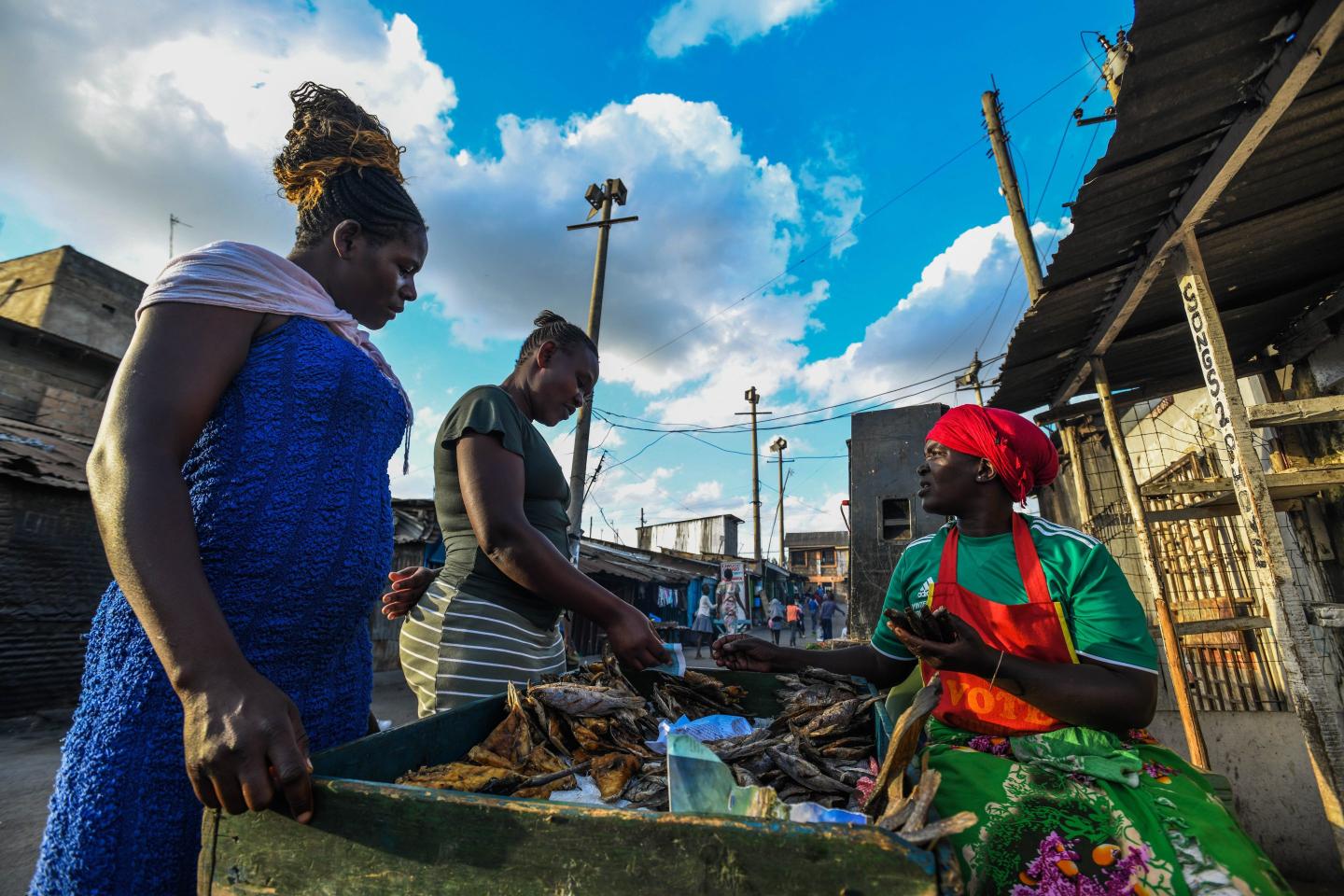
Investing in women and their businesses in Africa provides a widespread boost to families, communities, and the economy. Above, peddlers selling local delicacies in Nairobi, Kenya.
Investing in women and their businesses in Africa provides a widespread boost to families, communities, and the economy. Above, peddlers selling local delicacies in Nairobi, Kenya.Gerald Anderson/Anadolu via Getty Images

I recently returned to my village in Bungoma County, Western Kenya. I had come to speak with the community—especially its women and girls—about how they could succeed as entrepreneurs and start or grow small businesses. I remember having similar aspirations earlier in my own life. It was only with my father’s support (and thanks to his work as a government-sponsored news reporter for the Kenya Broadcasting Corporation) that I was able to afford tuition for high school and eventually pursue my dream of a career in finance.

My experience, however, was the exception.

That day, as I looked into a crowd of hopeful faces filled with expectations amidst trying times, I saw former classmates who were striving to overcome daunting economic circumstances without access to financial resources. Some of them had been forced into marriage at as young as nine years old. For these women, economic survival is a daily challenge and the only way to remain valued and relevant within society.

Barriers to entrepreneurship

Within my community and across the African continent, entrepreneurship offers most women the greatest hope for opportunity and stability given the lack of employment options, particularly for their gender. One quarter of African women today are entrepreneurs, making them a powerful force for economic growth and social change. Yet, these women face significant barriers in accessing the capital needed to start and scale their businesses: Just a fraction of the continent’s available capital is granted to women.

At a time when Africa’s economic growth has not kept up with its population growth, improving women’s access to capital has the potential to enable women to pursue their dreams and drive incredible benefits for families, communities, and the economy as a whole.

We all benefit from investing in women and their businesses, but a range of barriers currently prevent African women from unlocking broader economic gains. Women entrepreneurs are savvy and resourceful, but many have never had access to education in financial literacy, preventing them from formalizing their business plans and record-keeping. In Kenya and throughout the continent, women entrepreneurs typically lack a book of accounts, or collateral such as land or other property that banks require to take out a loan or access credit. Compounding these challenges, there are currently no policies in place to differentiate how small, informal microfinance institutions should be treated compared to large banks. These small lenders are categorized as high risk due to their lack of formal structure, leading to significantly higher costs to serve them. This, in turn, disincentivizes loans to individuals with lower incomes or less available capital—predominantly affecting women.

There is currently a $1.7 trillion gap between the amount of capital women around the world want and the amount they receive. Closing this gap could ultimately add as much as $6 trillion to the global GDP, resulting in benefits at every level of society. Women are more likely than men to reinvest earnings into their families, building pathways for improved education and health care for generations to come. The growth of their businesses can uplift local economies by driving demand for goods and services, creating employment opportunities for other women and men. And successful women entrepreneurs set the stage for a more resilient landscape by bringing diverse perspectives to historically male-dominated industries.

Small loans, big impact

Business, government, and philanthropic leaders are increasingly focused on developing new tools and resources to increase women’s access to capital, with exciting early results. Take for example the story of Mary, an entrepreneur from Mombasa, who owns a secondhand clothing and bags business.

Mary requested a loan for 20,000 Kenyan shillings (KSh), or approximately $150, from KCB Bank Kenya, where I served as a branch manager at the time. Despite the small loan request, which most major financial institutions would have declined, we ultimately agreed that our bank had an important role to play in supporting small-scale entrepreneurs without collateral. Mary and other entrepreneurs like her inspired us to introduce a new proposition specifically for female-led and made enterprises (FLMEs). Today we offer flexible credit solutions and provide loans to over 600,000 of these clients, many of whom lack collateral and have previously struggled to access traditional banking services.

In the months after receiving her loan, Mary was able to purchase bales of secondhand clothes in larger quantities, giving her access to better quality bales from Kenya, Tanzania, and Uganda that could be resold at a higher margin. This brought in 30,000 KSh, or $225, profit more than her initial loan, allowing her to set up a shop and employ three permanent staff and two casual workers. Bringing on those new team members enabled her to run daily operations while continuing to drive her business growth.

Unlocking access to capital

To date, KCB Bank has committed the equivalent of $1.9 billion to support FLME clients like Mary. With funding from the Bill & Melinda Gates Foundation and the European Investment Bank, our FLME practice now also manages a €30 million program in Kenya to improve access to microfinance, with a requirement that 80% of the final beneficiaries will be women. Programs like these underscore the massive opportunity for different types of organizations to work together to help unlock access to capital.

To maximize the economic benefits of these programs, we also need to expand educational resources for women entrepreneurs in Africa, to help them build critical skills in financial literacy and navigate interactions with financial institutions. In 2009, our bank began hosting financial literacy workshops with this goal in mind. I’ve had the privilege of sitting in on some of these workshops and seeing firsthand how quickly women take to these skills and gain new confidence.

That excitement is contagious. The workshops have grown exponentially in size as women entrepreneurs invite each other—even their competitors—to join them. We could all learn something from these women, who understand implicitly that investing in each other is the best pathway to shared success.

As a businesswoman in Kenya, I know that making a success out of any business venture requires taking some smart risks. The entrepreneurs from my home village know the same. Failing to invest in the economic potential of these women is a far greater risk to our economy than the alternative.

Read more:

  • Healthy women help everyone rise—I’ve seen it in Kenya
  • The $1.5 trillion opportunity: Closing the credit gap for women entrepreneurs
  • I grew up in Kenya’s biggest slum and know from experience: International aid must shift toward community-based organizations
  • Only 1 in 3 African women have access to the internet—compared with half of men. The cost to the continent’s economy could be in the billions

The opinions expressed in Fortune.com commentary pieces are solely the views of their authors and do not necessarily reflect the opinions and beliefs of Fortune.

Join us at the Fortune Workplace Innovation Summit May 19–20, 2026, in Atlanta. The next era of workplace innovation is here—and the old playbook is being rewritten. At this exclusive, high-energy event, the world’s most innovative leaders will convene to explore how AI, humanity, and strategy converge to redefine, again, the future of work. Register now.
About the Author
By Annastacia Kimtai
See full bioRight Arrow Button Icon

Latest in Commentary

Finance
Lorem ipsum dolor sit amet, consectetur adipiscing elit, sed do eiusmod tempor incididunt ut labore et dolore magna aliqua. Ut enim ad minim veniam
By Fortune Editors
October 20, 2025
Finance
Lorem ipsum dolor sit amet, consectetur adipiscing elit, sed do eiusmod tempor incididunt ut labore et dolore magna aliqua. Ut enim ad minim veniam
By Fortune Editors
October 20, 2025
Finance
Lorem ipsum dolor sit amet, consectetur adipiscing elit, sed do eiusmod tempor incididunt ut labore et dolore magna aliqua. Ut enim ad minim veniam
By Fortune Editors
October 20, 2025
Finance
Lorem ipsum dolor sit amet, consectetur adipiscing elit, sed do eiusmod tempor incididunt ut labore et dolore magna aliqua. Ut enim ad minim veniam
By Fortune Editors
October 20, 2025
Finance
Lorem ipsum dolor sit amet, consectetur adipiscing elit, sed do eiusmod tempor incididunt ut labore et dolore magna aliqua. Ut enim ad minim veniam
By Fortune Editors
October 20, 2025
Finance
Lorem ipsum dolor sit amet, consectetur adipiscing elit, sed do eiusmod tempor incididunt ut labore et dolore magna aliqua. Ut enim ad minim veniam
By Fortune Editors
October 20, 2025

Most Popular

Finance
Lorem ipsum dolor sit amet, consectetur adipiscing elit, sed do eiusmod tempor incididunt ut labore et dolore magna aliqua. Ut enim ad minim veniam
By Fortune Editors
October 20, 2025
Finance
Lorem ipsum dolor sit amet, consectetur adipiscing elit, sed do eiusmod tempor incididunt ut labore et dolore magna aliqua. Ut enim ad minim veniam
By Fortune Editors
October 20, 2025
Finance
Lorem ipsum dolor sit amet, consectetur adipiscing elit, sed do eiusmod tempor incididunt ut labore et dolore magna aliqua. Ut enim ad minim veniam
By Fortune Editors
October 20, 2025
Finance
Lorem ipsum dolor sit amet, consectetur adipiscing elit, sed do eiusmod tempor incididunt ut labore et dolore magna aliqua. Ut enim ad minim veniam
By Fortune Editors
October 20, 2025
Finance
Lorem ipsum dolor sit amet, consectetur adipiscing elit, sed do eiusmod tempor incididunt ut labore et dolore magna aliqua. Ut enim ad minim veniam
By Fortune Editors
October 20, 2025
Finance
Lorem ipsum dolor sit amet, consectetur adipiscing elit, sed do eiusmod tempor incididunt ut labore et dolore magna aliqua. Ut enim ad minim veniam
By Fortune Editors
October 20, 2025
Fortune Secondary Logo
Rankings
  • 100 Best Companies
  • Fortune 500
  • Global 500
  • Fortune 500 Europe
  • Most Powerful Women
  • Future 50
  • World’s Most Admired Companies
  • See All Rankings
Sections
  • Finance
  • Fortune Crypto
  • Features
  • Leadership
  • Health
  • Commentary
  • Success
  • Retail
  • Mpw
  • Tech
  • Lifestyle
  • CEO Initiative
  • Asia
  • Politics
  • Conferences
  • Europe
  • Newsletters
  • Personal Finance
  • Environment
  • Magazine
  • Education
Customer Support
  • Frequently Asked Questions
  • Customer Service Portal
  • Privacy Policy
  • Terms Of Use
  • Single Issues For Purchase
  • International Print
Commercial Services
  • Advertising
  • Fortune Brand Studio
  • Fortune Analytics
  • Fortune Conferences
  • Business Development
  • Group Subscriptions
About Us
  • About Us
  • Editorial Calendar
  • Press Center
  • Work At Fortune
  • Diversity And Inclusion
  • Terms And Conditions
  • Site Map
  • About Us
  • Editorial Calendar
  • Press Center
  • Work At Fortune
  • Diversity And Inclusion
  • Terms And Conditions
  • Site Map
  • Facebook icon
  • Twitter icon
  • LinkedIn icon
  • Instagram icon
  • Pinterest icon

Latest in Commentary

gas
CommentaryMiddle class
The $100 oil shock is hitting the middle class like a margin call
By Katica RoyApril 21, 2026
7 hours ago
trump
CommentarySocial Security
What happens if nothing is done to fix Social Security by 2032?
By Martha SheddenApril 21, 2026
9 hours ago
ternus
CommentaryApple
This Apple doesn’t fall far from the tree: Tim Cook is leaving at a peak and John Ternus is exactly the right CEO for the AI era
By Jeffrey Sonnenfeld and Steven TianApril 20, 2026
17 hours ago
trump
CommentaryZoom
The U.S. has a $282 billion trade surplus you’ve never heard of — and it’s at risk
By Josh KallmerApril 19, 2026
2 days ago
benioff
CommentarySalesforce
AI’s next act: how Salesforce is turning efficiency gains into revenue
By Keith Ferrazzi and Wendy SmithApril 18, 2026
3 days ago
trump
CommentaryWhite House
Trump has already endorsed the Monroe Doctrine. Now he needs to endorse the Truman Doctrine
By Robert HormatsApril 18, 2026
3 days ago

Most Popular

$166 billion in tariff refunds just became available, but small businesses may already be at a disadvantage
Law
$166 billion in tariff refunds just became available, but small businesses may already be at a disadvantage
By Sasha RogelbergApril 20, 2026
20 hours ago
Jeff Bezos once gave Eva Longoria and the admiral behind Osama bin Laden's capture $100 million—but she says you don't need wealth to give back
Success
Jeff Bezos once gave Eva Longoria and the admiral behind Osama bin Laden's capture $100 million—but she says you don't need wealth to give back
By Orianna Rosa RoyleApril 21, 2026
11 hours ago
This talent CEO says laid-off tech workers are ignoring a $300K ‘white-collar trade job’ with 81K openings a year
Economy
This talent CEO says laid-off tech workers are ignoring a $300K ‘white-collar trade job’ with 81K openings a year
By Jake AngeloApril 20, 2026
1 day ago
Meet John Ternus, the 51-year-old former swimming champ who will succeed Tim Cook as Apple CEO
Big Tech
Meet John Ternus, the 51-year-old former swimming champ who will succeed Tim Cook as Apple CEO
By Dave Smith and Fortune EditorsApril 20, 2026
21 hours ago
Thousands of CEOs admit AI had no impact on employment or productivity—and it has economists resurrecting a paradox from 40 years ago
AI
Thousands of CEOs admit AI had no impact on employment or productivity—and it has economists resurrecting a paradox from 40 years ago
By Sasha RogelbergApril 19, 2026
2 days ago
Current price of oil as of April 20, 2026
Personal Finance
Current price of oil as of April 20, 2026
By Joseph HostetlerApril 20, 2026
1 day ago

© 2026 Fortune Media IP Limited. All Rights Reserved. Use of this site constitutes acceptance of our Terms of Use and Privacy Policy | CA Notice at Collection and Privacy Notice | Do Not Sell/Share My Personal Information
FORTUNE is a trademark of Fortune Media IP Limited, registered in the U.S. and other countries. FORTUNE may receive compensation for some links to products and services on this website. Offers may be subject to change without notice.