• Home
  • Latest
  • Fortune 500
  • Finance
  • Tech
  • Leadership
  • Lifestyle
  • Rankings
  • Multimedia

Trendingnow

1

The U.S. spent $30 billion to ditch textbooks for laptops and tablets: The result is the first generation less cognitively capable than their parents

2

Current price of oil as of July 13, 2026

3

Current price of silver as of Monday, July 13, 2026

1

The U.S. spent $30 billion to ditch textbooks for laptops and tablets: The result is the first generation less cognitively capable than their parents

2

Current price of oil as of July 13, 2026

3

Current price of silver as of Monday, July 13, 2026
CommentaryFederal Reserve

Fed Chair Jerome Powell can’t keep ignoring the climate elephant—or its impact on inflation—at Jackson Hole

By
Sarah Bloom Raskin
Sarah Bloom Raskin
and
Kristina Karlsson
Kristina Karlsson
Down Arrow Button Icon
By
Sarah Bloom Raskin
Sarah Bloom Raskin
and
Kristina Karlsson
Kristina Karlsson
Down Arrow Button Icon
August 22, 2024, 1:12 PM ET
Sarah Bloom Raskin is a former Federal Reserve governor, deputy secretary of the U.S. Treasury, and commissioner of financial regulation for the State of Maryland. Kristina Karlsson is deputy director of climate policy at the Roosevelt Institute.
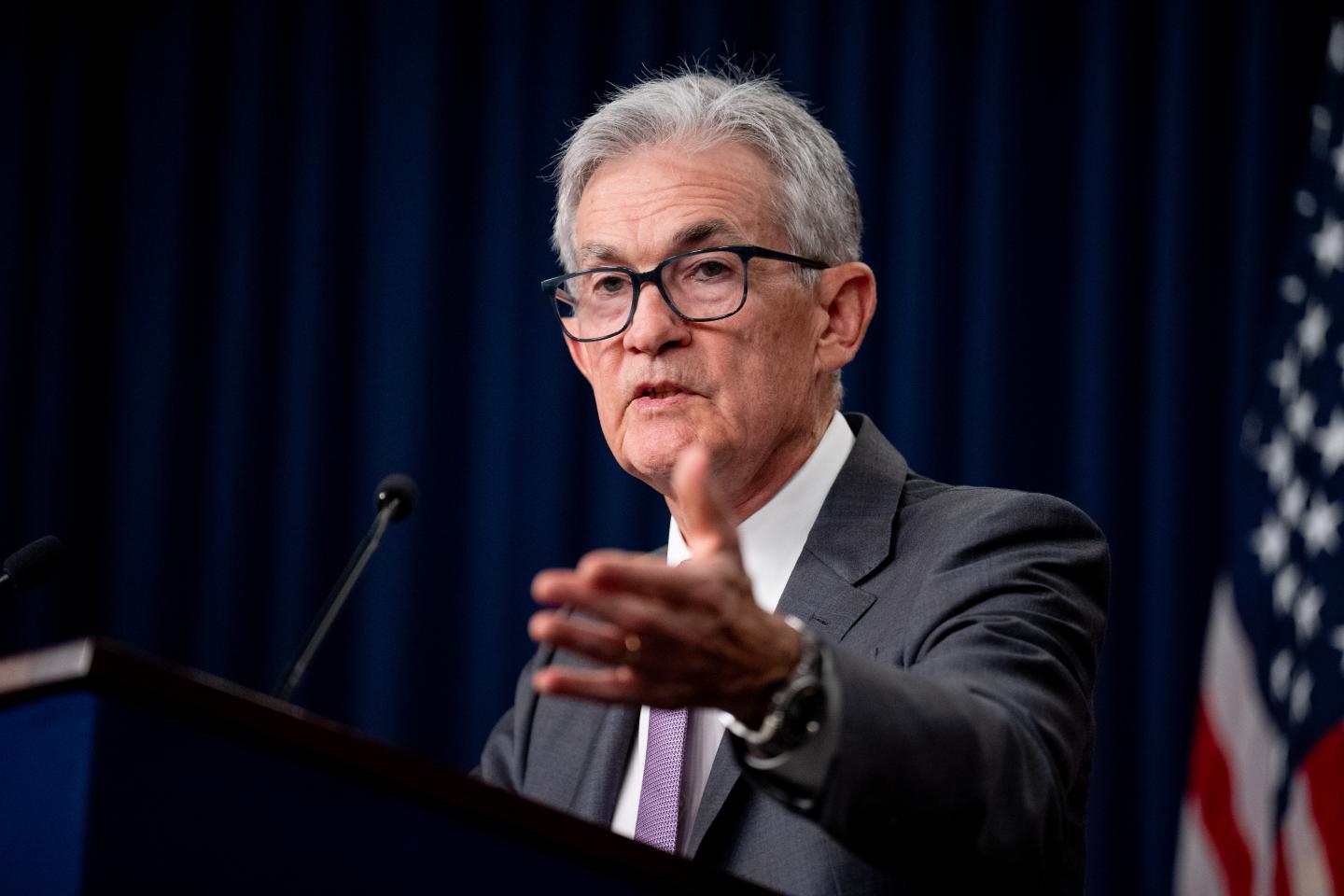
Federal Reserve Chairman Jerome Powell speaks at a news conference following a Federal Open Market Committee meeting on July 31.
Federal Reserve Chairman Jerome Powell speaks at a news conference following a Federal Open Market Committee meeting on July 31.Andrew Harnik - Getty Images
Add Fortune on Google for similar content.

This week at the Jackson Hole symposium, the annual gathering of the Federal Reserve in the Grand Tetons, the people who guide our financial markets will discuss the state of our economy at large, and onlookers will parse the Federal Reserve chair’s words about monetary policy. But some topics probably won’t come up. Climate impact is the elephant in the room that we haven’t heard about enough from the Fed—and that has to change.

Climate-informed risk management advocates have urged, to some limited success, that the Fed roll climate risk into regulation, but it’s time to infuse it into the conduct of monetary policy, too, to cushion the economy from shocks and uncertainty.

In the past few years, Americans have seen unusually damaging hurricanes, drought, wildfire, and punishing summer heat. Climate change isn’t just hitting our homes—it’s hitting our budgets, as insurers experience the riskiest market in generations, making home insurance unaffordable or even unavailable.

Climate change also impacts the broader economy, increasing production and labor costs and reducing productivity in non-trivial and unpredictable ways. Cocoa and coffee yields are dropping. Desertification is changing cultivation patterns. Outdoor workers are suffering from excessive heat. Drought, heat, and flooding are disrupting shipping, with impacts on food and energy prices. Storms and rising waters are damaging homes and businesses with unusual ferocity, setting insurance prices soaring and driving inflation (as Chair Powell describes).

Meanwhile, the energy economy is undergoing a long-term transition from fossil fuels to renewables, with solar and wind power rapidly becoming more widespread, cheaper, and better connected to the power grid. In the short run, as the transition plays out, utilities face uncertainty and unpredictability and will be left with stranded assets like gas-powered generation plants they no longer need. At the same time, climate events disrupt the power grid, interrupt fuel delivery, and knock generation facilities offline, leaving millions of customers in the dark during punishing storms and heat.

Monetary policy can’t solve these problems. The Fed can’t manufacture solar panels, upgrade the power grid, or help farmers transition to climate-resistant crops. But it can smooth the climate transition for economic actors in every sector. Monetary policy can cushion the economy from shocks and disruptions, and keep prices from spiking for businesses and consumers. It can moderate the cost of financing for investment in transition and risk mitigation. It can spread out the economic impact of extreme weather, and facilitate the building of resilience into manufacturing, logistics, and agriculture. It can even help shape more sustainable long-term supply and demand patterns.

As the Jackson Hole group considers how monetary policy can be used to steer our economic future, they could start with the lowest-hanging fruit: studying the impact of climate on prices in the United States.

Chair Powell has said that while he believes climate change “is real and poses risks over the long term,” he does not believe the Fed needs to take it into account in steering monetary policy. But other countries’ central bankers, and a growing chorus of academics, have shown climate change does impact price stability, including through inflation—and this impact should be built into our modeling.

For example, when the European Central Bank (ECB), a leader in climate-conscious stewardship, investigated the impact of global warming on inflation in 121 countries, they concluded warming will cause a 1% increase each year in global inflation, and a steeper 3% increase in food prices. The Network for Greening the Financial System, a consortium of 141 central banks around the world, reports that 40% of members have already undertaken efforts to integrate climate into monetary policy, including through their asset purchase programs, collateral frameworks, and credit operations.

The Fed should also consider the price stability impacts of the energy transition. A haphazard transition from fossil fuels to renewables could cause significant price disruptions, but the Fed does not appear to be taking this risk seriously – their inflation targeting does not even incorporate energy prices in core price measures. How well the Fed dampens energy price volatility will determine how easily the economy as a whole can absorb it and if it does nothing, inflation and employment are likely to see shocks, too.

Considering the evidence and plotting a course toward a prosperous future is what central banks do. It would be a missed opportunity for this year’s Jackson Hole symposium to pass without a meaningful interrogation of the climate risks we are ignoring as we set our monetary policy.  Federal Reserve governors and the American macroeconomic community need to widen our scope at least enough to acknowledge the elephant sitting right in front of us: climate change threatens price stability. We must use all the tools we have available, including monetary policy, to protect the economy. 

More must-read commentary published by Fortune:

  • An economic catastrophe is lurking beneath Russia’s GDP growth as Putin ‘throws everything into the fireplace’
  • The ‘sustainability recession’ will end soon—and not by choice
  • ‘Godmother of AI’ says California’s well-intended AI bill will harm the U.S. ecosystem
  • 4 potential scenarios—and 1 map—showing how the world will trade goods for the next decade, according to BCG

The opinions expressed in Fortune.com commentary pieces are solely the views of their authors and do not necessarily reflect the opinions and beliefs of Fortune.

About the Authors
By Sarah Bloom Raskin
See full bioRight Arrow Button Icon
By Kristina Karlsson
See full bioRight Arrow Button Icon
Add Fortune on Google for similar content.

Latest in Commentary

Finance
Lorem ipsum dolor sit amet, consectetur adipiscing elit, sed do eiusmod tempor incididunt ut labore et dolore magna aliqua. Ut enim ad minim veniam
By Fortune Editors
October 20, 2025
Finance
Lorem ipsum dolor sit amet, consectetur adipiscing elit, sed do eiusmod tempor incididunt ut labore et dolore magna aliqua. Ut enim ad minim veniam
By Fortune Editors
October 20, 2025
Finance
Lorem ipsum dolor sit amet, consectetur adipiscing elit, sed do eiusmod tempor incididunt ut labore et dolore magna aliqua. Ut enim ad minim veniam
By Fortune Editors
October 20, 2025
Finance
Lorem ipsum dolor sit amet, consectetur adipiscing elit, sed do eiusmod tempor incididunt ut labore et dolore magna aliqua. Ut enim ad minim veniam
By Fortune Editors
October 20, 2025
Finance
Lorem ipsum dolor sit amet, consectetur adipiscing elit, sed do eiusmod tempor incididunt ut labore et dolore magna aliqua. Ut enim ad minim veniam
By Fortune Editors
October 20, 2025
Finance
Lorem ipsum dolor sit amet, consectetur adipiscing elit, sed do eiusmod tempor incididunt ut labore et dolore magna aliqua. Ut enim ad minim veniam
By Fortune Editors
October 20, 2025

Most Popular

Finance
Lorem ipsum dolor sit amet, consectetur adipiscing elit, sed do eiusmod tempor incididunt ut labore et dolore magna aliqua. Ut enim ad minim veniam
By Fortune Editors
October 20, 2025
Finance
Lorem ipsum dolor sit amet, consectetur adipiscing elit, sed do eiusmod tempor incididunt ut labore et dolore magna aliqua. Ut enim ad minim veniam
By Fortune Editors
October 20, 2025
Finance
Lorem ipsum dolor sit amet, consectetur adipiscing elit, sed do eiusmod tempor incididunt ut labore et dolore magna aliqua. Ut enim ad minim veniam
By Fortune Editors
October 20, 2025
Finance
Lorem ipsum dolor sit amet, consectetur adipiscing elit, sed do eiusmod tempor incididunt ut labore et dolore magna aliqua. Ut enim ad minim veniam
By Fortune Editors
October 20, 2025
Finance
Lorem ipsum dolor sit amet, consectetur adipiscing elit, sed do eiusmod tempor incididunt ut labore et dolore magna aliqua. Ut enim ad minim veniam
By Fortune Editors
October 20, 2025
Finance
Lorem ipsum dolor sit amet, consectetur adipiscing elit, sed do eiusmod tempor incididunt ut labore et dolore magna aliqua. Ut enim ad minim veniam
By Fortune Editors
October 20, 2025
Fortune Secondary Logo
Rankings
  • 100 Best Companies
  • Fortune 500
  • Global 500
  • Fortune 500 Europe
  • Most Powerful Women
  • World's Most Admired Companies
  • See All Rankings
  • Lists Calendar
Sections
  • Finance
  • Fortune Crypto
  • Features
  • Leadership
  • Health
  • Commentary
  • Success
  • Retail
  • Mpw
  • Tech
  • Lifestyle
  • CEO Initiative
  • Asia
  • Politics
  • Conferences
  • Europe
  • Newsletters
  • Personal Finance
  • Environment
  • Magazine
  • Education
Customer Support
  • Frequently Asked Questions
  • Customer Service Portal
  • Privacy Policy
  • Terms Of Use
  • Single Issues For Purchase
  • International Print
Commercial Services
  • Advertising
  • Fortune Brand Studio
  • Fortune Analytics
  • Fortune Conferences
  • Business Development
  • Group Subscriptions
About Us
  • About Us
  • Press Center
  • Work At Fortune
  • Terms And Conditions
  • Site Map
  • About Us
  • Press Center
  • Work At Fortune
  • Terms And Conditions
  • Site Map
  • Facebook icon
  • Twitter icon
  • LinkedIn icon
  • Instagram icon
  • Pinterest icon

Latest in Commentary

b
CommentaryWorld Cup
Columbia Business School professors: What the Balogun red card can teach us about AI and judgment
By Oded Netzer, Christopher Frank and Paul MagnoneJuly 13, 2026
13 hours ago
usa
Commentary250 Years of Innovation
For 250 years, work defined American identity. That era Is ending
By Keith Ferrazzi and Wendy SmithJuly 11, 2026
3 days ago
m
Commentarymedicine
America’s bone health is quietly headed for a $19 billion crisis
By Matthew T. DrakeJuly 9, 2026
5 days ago
t
CommentaryEducation
AI is about to disrupt millions of jobs. A century ago, America’s answer was to build a new high school
By Tim KnowlesJuly 8, 2026
6 days ago
amit
CommentaryVenture Capital
Physical AI’s $50 trillion opportunity requires long-term conviction, but the payoff is huge 
By Amit ChaturvedyJuly 8, 2026
6 days ago
heat
Commentaryclimate change
McKinsey Global Institute: Climate planning has prioritized floods. Heat demands equal attention
By Sylvain Johansson, Mekala Krishnan, Kanmani Chockalingam and Annabel FarrJuly 7, 2026
7 days ago

Most Popular

The U.S. spent $30 billion to ditch textbooks for laptops and tablets: The result is the first generation less cognitively capable than their parents
Innovation
The U.S. spent $30 billion to ditch textbooks for laptops and tablets: The result is the first generation less cognitively capable than their parents
By Sasha RogelbergJuly 12, 2026
2 days ago
Current price of oil as of July 13, 2026
Personal Finance
Current price of oil as of July 13, 2026
By Joseph HostetlerJuly 13, 2026
18 hours ago
Current price of silver as of Monday, July 13, 2026
Personal Finance
Current price of silver as of Monday, July 13, 2026
By Joseph HostetlerJuly 13, 2026
18 hours ago
Trump embraces Australian retirement system backed by Larry Fink
Personal Finance
Trump embraces Australian retirement system backed by Larry Fink
By Brianna Sosa and BloombergJuly 12, 2026
1 day ago
Peter Thiel and other tech billionaires are publicly shielding their children from the products that made them rich
Big Tech
Peter Thiel and other tech billionaires are publicly shielding their children from the products that made them rich
By Marco Quiroz-GutierrezJuly 12, 2026
2 days ago
Ex-PepsiCo CEO Indra Nooyi worked from midnight until 5 a.m. as a receptionist to pay for her Yale degree—and she says ‘respect went up’ because of it
Success
Ex-PepsiCo CEO Indra Nooyi worked from midnight until 5 a.m. as a receptionist to pay for her Yale degree—and she says ‘respect went up’ because of it
By Preston ForeJuly 6, 2026
8 days ago

© 2026 Fortune Media IP Limited. All Rights Reserved. Use of this site constitutes acceptance of our Terms of Use and Privacy Policy | CA Notice at Collection and Privacy Notice | Do Not Sell/Share My Personal Information
FORTUNE is a trademark of Fortune Media IP Limited, registered in the U.S. and other countries. FORTUNE may receive compensation for some links to products and services on this website. Offers may be subject to change without notice.