In Scott Saffer’s science classroom, kids bake cookies in a decked-out kitchen, care for fish, turtles and a snake, and have access to a workshop full of tools. As the gifted enrichment coordinator at Tri-Point School District, Saffer is living his teaching dream, one he knew he’d need money to accomplish.
For a while, due to budgetary concerns in rural Ford County, Illinois, he moved to a neighboring school district. But when wind turbines came to town, Tri-Point had the funding to bring him back without a pay cut. There, he was one of 10 recipients of a prestigious statewide teaching award last year.
“It made a huge difference in our budgets,” Saffer said of the nearby wind farm, which went online about five years ago, that added almost a million dollars to his school’s annual operating funds. “Those kinds of numbers, they’re the difference between us being here and not.”
An Associated Press analysis of county tax data from local governments in Illinois, Iowa and Nebraska — states either with many wind farms or a high potential for wind power — found wind companies rank among the biggest taxpayers in many rural communities, with their total tax bills at times outstripping that of large farms, power plants and other major businesses. While that tax income from wind power does not represent a significant percent of counties’ budgets, it totals millions of dollars some local leaders say has translated into meaningful change. But the Sabin Center for Climate Change Law at Columbia University, which tallies local opposition to wind power, finds efforts to block wind projects are “widespread and growing.”
The center’s June report found 395 local restrictions that could effectively block wind or solar developments, up by 73% compared to less than a year ago. Local restrictions have made it harder for wind companies to find places to build even as the U.S. has committed to tripling renewables by 2030 in order to do its part in addressing climate change.
Local officials and school superintendents, fire chiefs and community college administrators are often among the first to see the economic benefits of wind development in their communities broadly.
Denny Kingren, the fire chief of Paxton, Illinois, says he had neither positive or negative feelings about wind development to start off with — he’d just seen them crop up throughout Illinois.
Then about 13 years ago, came the funds: about $40,000 a year since then, which has since gone toward new trucks, new equipment and more on-call firefighters. “It was a true benefit to our fire department,” he said.
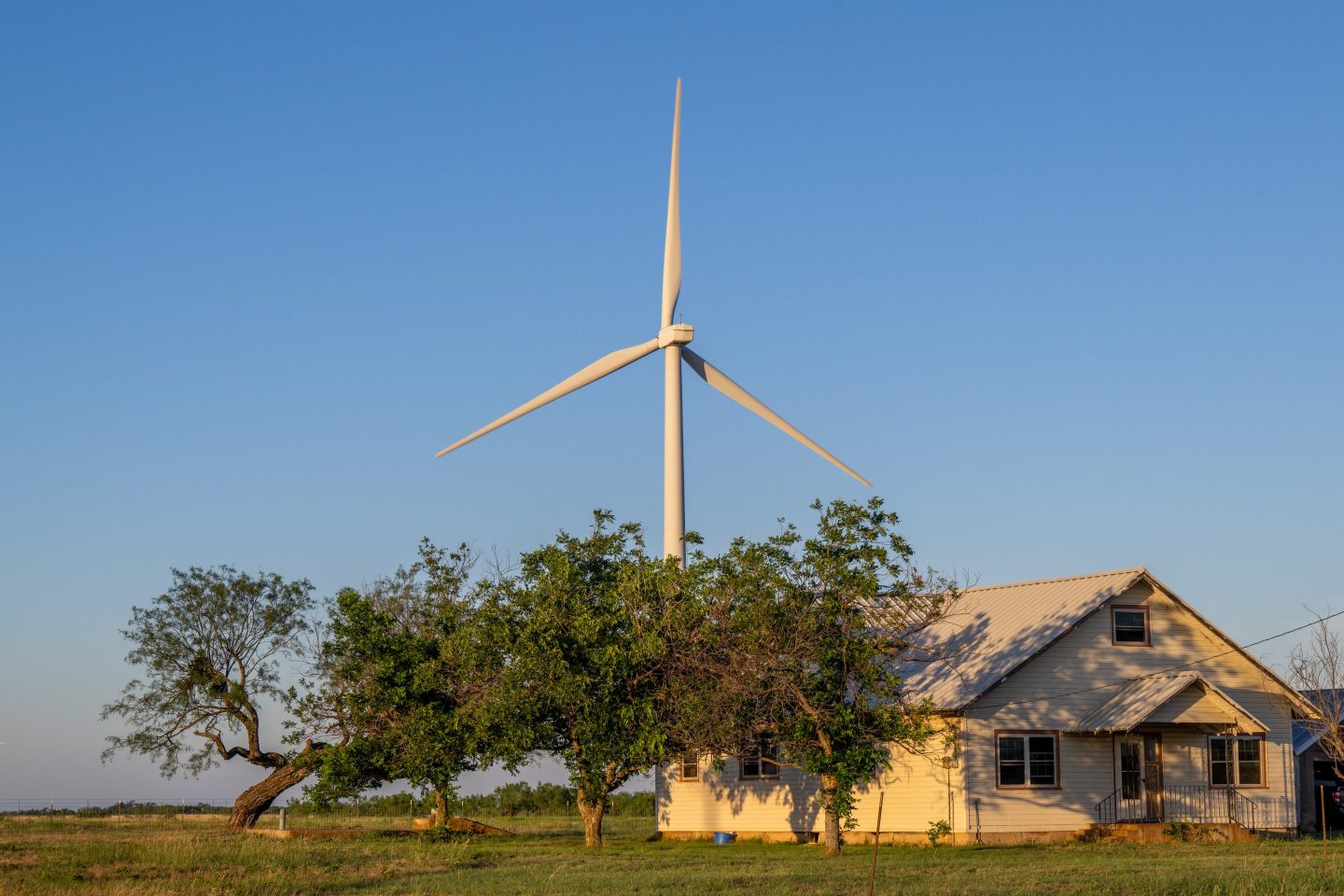
This year, Ford County’s nearly 200 wind turbines owe the county $3.8 million, representing about 10% of the property taxes due to the county. AP’s analysis found wind farms there are three of the top four taxpayers in the county.
Farm land still contributes far more to the county’s tax base than wind turbines; about 90% of the county is farm land. But wind farms can create an influx of cash for local schools: Tri-Point, where Saffer works, takes in more than $900,000 from the local wind farms annually, representing 15% of the school district’s income from local taxes, according to the district’s superintendent.
Benefits like growth of local economies “are really measurable in places with a lot of installed wind energy capacity,” said David Schwegman, an assistant professor at American University and co-author of a 2022 paper on wind installations and economic development.
Farmers who sign wind leases can also continue farming most of their land while adding additional revenue. Some of that money ends up funneled into the community through spending. And wind projects bring jobs — many temporary or requiring travel, some permanent — offering a new career path for community college students.
Schwegman added, however, that wind development doesn’t necessarily change some of the long-term forces affecting rural economies, which have been losing population as people move to cities and suburbs for decades now.
And in some communities, local tax structures mean that a school district won’t get extra money from wind for several years or even decades. In places like Iowa that have what are called tax increment financing districts, sometimes the county lends money to a wind developer in order to get a bigger windfall down the line, said Phuong Nguyen, who studies public finance as an associate professor at The University of Iowa.
It’s a long wait, but when the projects end, it can boost school budgets by millions of dollars and “everybody’s happy,” Nguyen said. However, he thinks people can be more skeptical in the 20 years before the payoff. He noted that if Iowa tax laws were different, schools could get that money sooner.
Mike Marron, a former Illinois state representative and the current CEO of Vermilion Advantage, his county’s economic development arm, says the reality of wind’s benefits hit home when the money started hitting the county coffers, which were “running a pretty good budget deficit,” and effectively saved him from having to increase taxes on property owners at the time, about 12 years ago.
But Marron said the pushback from anti-wind groups was so strong and so polarizing that it took the topic off the table. “As an elected official, I felt constrained to not be able to communicate the benefits of it” because of the political reality, he said.
And or the people who don’t like them, no amount of investment may supersede the visual reminders of wind turbines on a landscape, Schwegman said.
“Renewable energies are ultimately community-based projects,” he said. “People who tend to get negatively impacted by wind turbines tend to be a very hyper-localized group, where the benefits of wind tend to be much more dispersed over larger groups.”
Despite the benefits in Ford County, the local government opted to effectively halt future wind development in 2017 by issuing a moratorium on special-use permits for wind projects, then instituting strict regulations on where the turbines can be built. Then state legislature passed a law in 2023 that limits counties’ ability to restrict wind and solar projects, rendering many such local rules invalid, according to the Sabin Center.
Saffer said called such local moves a “community decision,” one school districts watch closely, knowing they need the money, but can’t interfere.
“If we didn’t have that income, we didn’t have this district here, these little towns would just cease being a community,” he said.
But communities are made up of individuals. That’s why Marron thinks good neighbor agreements, which compensate everyone in a given area of wind development whether they have turbines on their property or not, make sense.
“You’re going to notice a check in the mail quicker than you’re going to notice the fact that your property tax bills aren’t going up,” Marron said.