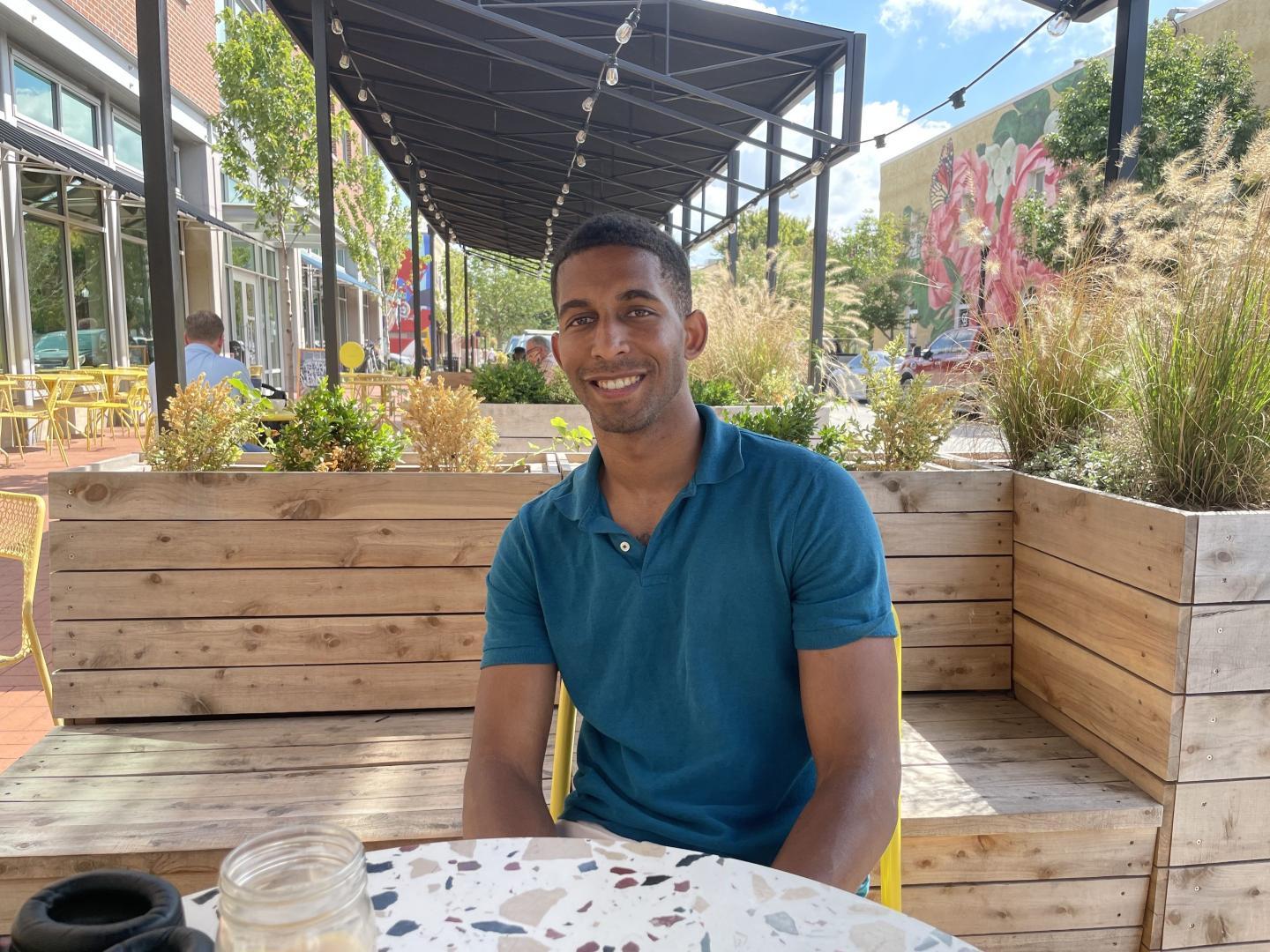
Three years ago, Chris Thompson told more than a dozen venture capitalists he didn’t want their funding to help expand his startup, which helps people who are struggling with addiction. Then he killed the company’s only source of revenue.
It was a huge risk for Sober Sidekick, his app—but it turned out to be an easy decision. The venture capitalists had wanted Thompson to increase the amount of money his company collected by referring users to rehabilitation centers, from nearly $850,000 annually at the time. But Thompson, who had built the social media platform while he was himself recovering from addiction in a sober living facility, had become uncomfortable with how those rehabilitation centers were making money. Instead of increasing ties to those centers, he wanted to cut them.
Thompson had heard rumors that body brokering was taking place at the centers where he was referring customers—an illegal practice in which centers pay people to check into their facilities. He had tried to vet the centers carefully before accepting them as customers but felt it wasn’t enough, as users of his app were giving the centers he had partnered with poor reviews, and he was having to spend most of his time monitoring how they were treating his members. Most of all, Thompson was becoming increasingly disenchanted with how these centers made their money: insurance payouts for each person who walked through the door.
“I don’t want to have a customer that wins when my members relapse,” Thompson says. “It just means that their model is completely misaligned from the impact we want to see in the world.”
So Thompson fired all the rehab centers he worked with and parted ways with the potential investors, who, he recalls, “looked at me like I was crazy.” He then turned his attention to figuring out a new business model that better aligned with why he built Sober Sidekick in the first place: to help people get sober.
More than half a million people across the U.S., South Africa, New Zealand, the U.K., Canada, and Australia have downloaded Sober Sidekick—up from 70,000 when he was first speaking with venture capitalists. About 40,000 of those people use the app at least once a month.
Rival apps that also help people struggling with addiction include Loosid and Everything AA.
On Sober Sidekick, which is free, users post photos and messages about their struggles and their victories, and are connected with other users in seconds or minutes for encouragement. There is also an around-the-clock Zoom call connecting users to Alcoholics Anonymous meetings and a button to be connected with local and online counselors.
Jim Laing, a 57-year-old Sober Sidekick user who works a rotating shift at a chemical plant, used Sober Sidekick daily after he left a rehabilitation center last year. When he got off work late at night, he would sit on the front porch of a recovery house where he was living at the time, get on the app, and chat with people in other time zones. “I needed something that was available at midnight when I got home from work,” he said. “Being able to reach out to someone to talk about how my day was and what I was thinking—what I was feeling, my temptations, my triggers.”
Also crucial, users self-report the last day they drank or used, giving Sober Sidekick real-time relapse data. Thompson has used it to build an algorithm that predicts, at a 93% accuracy rate, when Sober Sidekick users are likely to relapse within the next two weeks. Users who are at high risk of relapse can submit this data to health plans, if they like, and be connected with resources or counselors who can help them prevent a relapse.
This dataset has proved incredibly valuable and prompted a shift in Thompson’s business model: At the end of last year, Thompson started working directly with insurance plans—pitching the potential for cost savings (the average member struggling with substance abuse costs employer-sponsored insurance plans $15,640 annually in medical expenses in the U.S., according to research).
So far, Empathy HealthTech, Sober Sidekick’s parent company, has a contract with one health plan, AmeriHealth Caritas. Contracts with three more nationwide health plans and state Medicaid plans are being finalized, according to Thompson. Those plans will pay the startup for each of their customers who engages with Sober Sidekick monthly. In addition, those plans will pay Sober Sidekick from 20% to 50% of whatever money Sober Sidekick is saving them—which they calculate by comparing the cost of those users to the average cost of a member who suffers from addiction year over year.
As Thompson started lining up those contracts, he returned to fundraising, collecting $2.8 million in seed money from investors including HealthX Ventures, Nina Capital, Ikigai Growth Partners, and others. The investment valued his business at $12 million pre-money. (Thompson previously bootstrapped the business for more than three years, and then raised $2 million over 2022 and 2023 from the American Heart Association, Nina Capital, and angel investors to hire employees and grow.)
For the latest investment, Thompson started accepting money earlier this year and within two months the fundraising round was already oversubscribed. Some of Sober Sidekick’s investors told Fortune they were drawn to how he wanted to build the business—and its potential for real impact.
“In terms of upside potential, it’s number one,” says Michael Brouthers of Ikigai Growth Partners about where Sober Sidekick fits into his overall investment portfolio. Brouthers had met Thompson at a conference, heard about his journey recovering from addiction, and made a verbal commitment to write him a check that same day as one of his company’s earliest investors.
HealthX Ventures, whose partner Kristi Ebong had also met Thompson at a conference, led the latest round. Ebong said she had been interested in peer-support models for a few years before she sat down with Thompson in early 2024. She asked for a couple weeks to prove to Thompson her firm should be an investor and ended up leading the round.
“There are predatory models out there,” Ebong says. Sober Sidekick, she adds, seemed like a “really obvious way” to create connections between people and help them get sober in a way that could also make money.
Since his first fundraising effort, Thompson has become far more selective about who he wants to work with. This time, he says, a few of the VCs he spoke with three years ago have recontacted him now that Sober Sidekick has hit half a million downloads and adopted a new business model—but he said he wasn’t interested.
“That’s one thing about this company: With every employee, with every investor—we make it really clear to them that we’re not going to sacrifice the people we’re working to serve over short-term revenue,” Thompson says.
That big risk—staying true to his initial mission by cutting that initial revenue spigot—is what he thinks will carry the company into its next growth phase. Says Thompson: “We’re starting to see that was the best position we could possibly take.”