• Home
  • Latest
  • Fortune 500
  • Finance
  • Tech
  • Leadership
  • Lifestyle
  • Rankings
  • Multimedia
FinanceRailroads

BNSF Railway must pay $400m to a Native American tribe for intentionally trespassing by running 100-car crude oil trains over its reservation

By
Gene Johnson
Gene Johnson
and
The Associated Press
Down Arrow Button Icon
By
Gene Johnson
Gene Johnson
and
The Associated Press
Down Arrow Button Icon
June 18, 2024, 6:55 AM ET
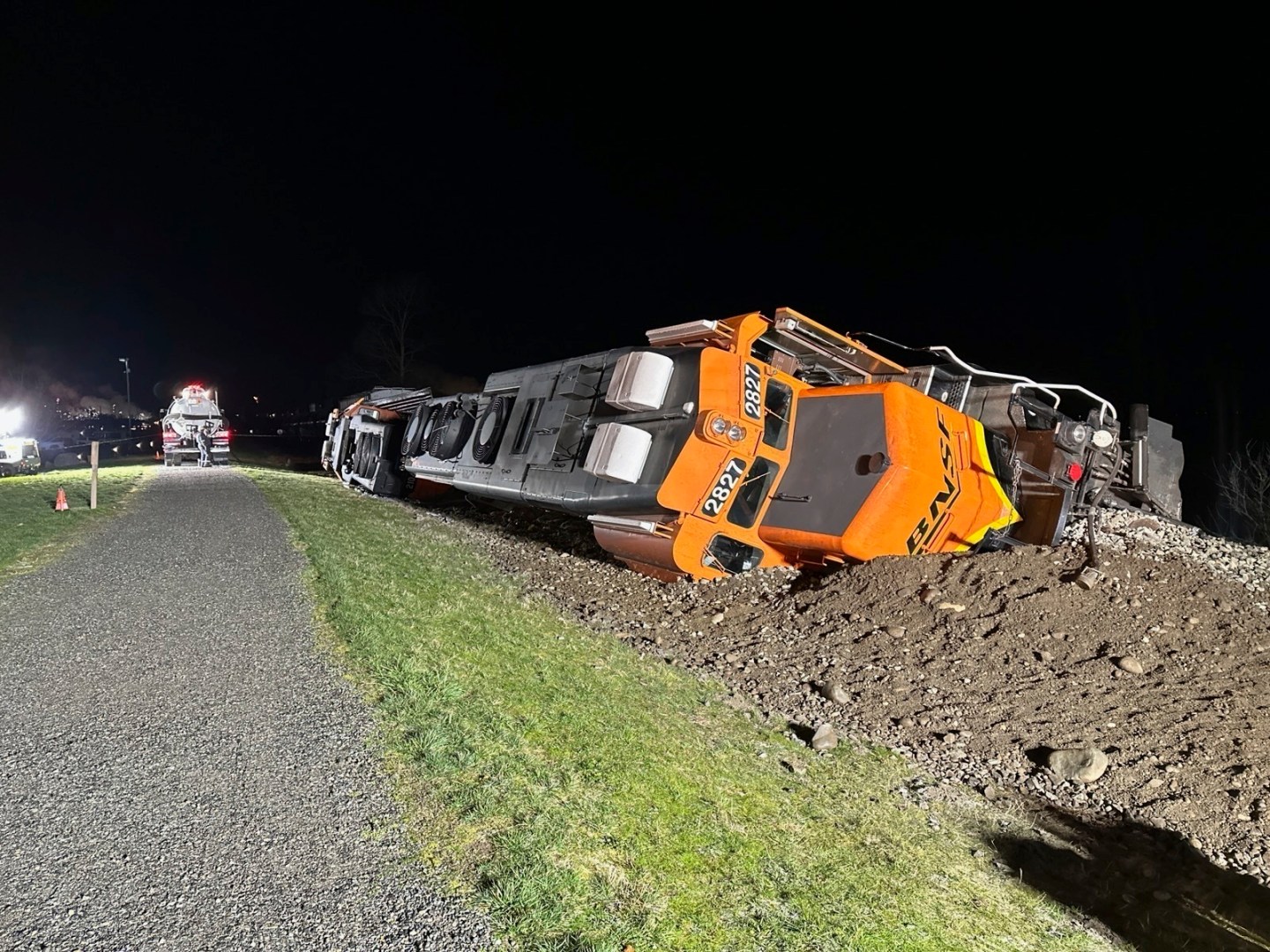
A derailed BNSF train on the Swinomish tribal reservation near Anacortes, Wash. on March 16, 2023.
A derailed BNSF train on the Swinomish tribal reservation near Anacortes, Wash. on March 16, 2023. Washington Department of Ecology via AP

BNSF Railway must pay nearly $400 million to a Native American tribe in Washington state, a federal judge ordered Monday after finding that the company intentionally trespassed when it repeatedly ran 100-car trains carrying crude oil across the tribe’s reservation.

Recommended Video

U.S. District Judge Robert Lasnik initially ruled last year that the railway deliberately violated the terms of a 1991 easement with the Swinomish Tribe north of Seattle that allows trains to carry no more than 25 cars per day. The judge held a trial earlier this month to determine how much in profits BNSF made through trespassing from 2012 to 2021 and how much it should be required to disgorge.

“We know that this is a large amount of money. But that just reflects the enormous wrongful profits that BNSF gained by using the Tribe’s land day after day, week after week, year after year over our objections,” Steve Edwards, chairman of the Swinomish Indian Tribal Community, said in a statement. “When there are these kinds of profits to be gained, the only way to deter future wrongdoing is to do exactly what the Court did today — make the trespasser give up the money it gained by trespassing.”

The company based in Fort Worth, Texas, said in an email it had no comment.

The tribe, which has about 1,400 members, sued in 2015 after BNSF dramatically increased, without the tribe’s consent, the number of cars it was running across the reservation so that it could ship crude oil from the Bakken Formation in and around North Dakota to a nearby refinery. The route crosses sensitive marine ecosystems along the coast, over water that connects with the Salish Sea, where the tribe has treaty-protected rights to fish.

Bakken oil is easier to refine into the fuels sold at the gas pump and ignites more easily. After train cars carrying Bakken crude oil exploded in Alabama, North Dakota and Quebec, a federal agency warned in 2014 that the oil has a higher degree of volatility than other crudes in the U.S.

Last year, two BNSF engines derailed on Swinomish land, leaking an estimated 3,100 gallons (11,700 liters) of diesel fuel near Padilla Bay.

The tribe pointed out that a corporate predecessor of BNSF laid the tracks in the late 19th century over its objections. The tribe sued in the 1970s, alleging decades of trespassing, and only in 1991 was that litigation settled, when the tribe granted an easement allowing limited use of the tracks.

The easement limited rail traffic to one train of 25 cars per day in each direction. It required BNSF to tell the tribe about the “nature and identity of all cargo” transported across the reservation, and it said the tribe would not arbitrarily withhold permission to increase the number of trains or cars.

The tribe learned through a 2011 Skagit County planning document that a nearby refinery would start receiving crude oil trains. It wasn’t until the following year that the tribe received information from BNSF addressing current track usage, court documents show.

The tribe and BNSF discussed amending the agreement, but “at no point did the Tribe approve BNSF’s unilateral decision to transport unit trains across the Reservation, agree to increase the train or car limitations, or waive its contractual right of approval,” Lasnik said in his decision last year.

“BNSF failed to update the Tribe regarding the nature of the cargo that was crossing the Reservation and unilaterally increased the number of trains and the number of cars without the Tribe’s written agreement, thereby violating the conditions placed on BNSF’s permission to enter the property,” Lasnik said.

The four-day trial this month was designed to provide the court with details and expert testimony to guide the judge through complex calculations about how much in “ill-gotten” profit BNSF should have to disgorge. Lasnik put that figure at $362 million and added $32 million in post-tax profits such as investment income for a total of more than $394 million.

In reality, the judge wrote, BNSF made far more than $32 million in post-tax profits, but adding all of that up would have added hundreds of millions more to what was already a large judgment against the railway.

The tribe said it expects BNSF to appeal the ruling.

Join us at the Fortune Workplace Innovation Summit May 19–20, 2026, in Atlanta. The next era of workplace innovation is here—and the old playbook is being rewritten. At this exclusive, high-energy event, the world’s most innovative leaders will convene to explore how AI, humanity, and strategy converge to redefine, again, the future of work. Register now.
About the Authors
By Gene Johnson
See full bioRight Arrow Button Icon
By The Associated Press
See full bioRight Arrow Button Icon

Latest in Finance

Federal Reserve Bank Chair Jerome Powell speaks during the George P. Shultz Memorial Lecture Series at Stanford University on December 01, 2025 in Stanford, California.
EconomyFederal Reserve
The Fed delivers a rare ‘hawkish cut’ as Powell tries to steady a softening job market
By Eva RoytburgDecember 10, 2025
2 hours ago
Jerome Powell, chairman of the US Federal Reserve, during the Hoover Institution's George P. Shultz Memorial Lecture Series in Stanford, California, US, on Monday, Dec. 1, 2025. The Federal Reserve said it was monitoring community and regional banks' commercial real estate loan portfolios amid concerns over "elevated interest rates, tighter underwriting standards, and lower commercial property values." Photographer: Jason Henry/Bloomberg via Getty Images
EconomyFederal Reserve
‘Be careful what you wish for’: Top economist warns any additional interest rate cuts after today would signal the economy is slipping into danger
By Eva RoytburgDecember 10, 2025
3 hours ago
RetailGrocery
Instacart may be jacking up your grocery prices using AI, study shows—a practice called ‘smart rounding’
By Dave Lozo and Morning BrewDecember 10, 2025
4 hours ago
C-SuiteLeadership Next
Circle CEO Jeremy Allaire worked his way up from selling baseball cards as a kid to having one of the most influential IPOs of the year
By Fortune EditorsDecember 10, 2025
4 hours ago
Zaslav
InvestingM&A
Mario Gabelli signals support for Paramount in Warner fight
By Christopher Palmeri and BloombergDecember 10, 2025
4 hours ago
Warner
InvestingMedia
Warner Bros. fight hinges on value of shrinking cable assets
By Hannah Miller and BloombergDecember 10, 2025
4 hours ago

Most Popular

placeholder alt text
Politics
Exclusive: U.S. businesses are getting throttled by the drop in tourism from Canada: ‘I can count the number of Canadian visitors on one hand’
By Dave SmithDecember 10, 2025
9 hours ago
placeholder alt text
Economy
‘Fodder for a recession’: Top economist Mark Zandi warns about so many Americans ‘already living on the financial edge’ in a K-shaped economy 
By Eva RoytburgDecember 9, 2025
24 hours ago
placeholder alt text
Banking
Jamie Dimon taps Jeff Bezos, Michael Dell, and Ford CEO Jim Farley to advise JPMorgan's $1.5 trillion national security initiative
By Nino PaoliDecember 9, 2025
1 day ago
placeholder alt text
Success
At 18, doctors gave him three hours to live. He played video games from his hospital bed—and now, he’s built a $10 million-a-year video game studio
By Preston ForeDecember 10, 2025
11 hours ago
placeholder alt text
Uncategorized
Transforming customer support through intelligent AI operations
By Lauren ChomiukNovember 26, 2025
14 days ago
placeholder alt text
Economy
The 'forever layoffs' era hits a recession trigger as corporates sack 1.1 million workers through November
By Nick Lichtenberg and Eva RoytburgDecember 9, 2025
1 day ago
Rankings
  • 100 Best Companies
  • Fortune 500
  • Global 500
  • Fortune 500 Europe
  • Most Powerful Women
  • Future 50
  • World’s Most Admired Companies
  • See All Rankings
Sections
  • Finance
  • Leadership
  • Success
  • Tech
  • Asia
  • Europe
  • Environment
  • Fortune Crypto
  • Health
  • Retail
  • Lifestyle
  • Politics
  • Newsletters
  • Magazine
  • Features
  • Commentary
  • Mpw
  • CEO Initiative
  • Conferences
  • Personal Finance
  • Education
Customer Support
  • Frequently Asked Questions
  • Customer Service Portal
  • Privacy Policy
  • Terms Of Use
  • Single Issues For Purchase
  • International Print
Commercial Services
  • Advertising
  • Fortune Brand Studio
  • Fortune Analytics
  • Fortune Conferences
  • Business Development
About Us
  • About Us
  • Editorial Calendar
  • Press Center
  • Work At Fortune
  • Diversity And Inclusion
  • Terms And Conditions
  • Site Map

© 2025 Fortune Media IP Limited. All Rights Reserved. Use of this site constitutes acceptance of our Terms of Use and Privacy Policy | CA Notice at Collection and Privacy Notice | Do Not Sell/Share My Personal Information
FORTUNE is a trademark of Fortune Media IP Limited, registered in the U.S. and other countries. FORTUNE may receive compensation for some links to products and services on this website. Offers may be subject to change without notice.