• Home
  • Latest
  • Fortune 500
  • Finance
  • Tech
  • Leadership
  • Lifestyle
  • Rankings
  • Multimedia

Trendingnow

1

Current price of oil as of June 15, 2026

2

CEO of $20 billion AI firm Perplexity says the secret to success is ‘sleeping with that fear’ that your competitor will steal your idea

3

Meet Gwynne Shotwell, the engineer-turned-COO who runs SpaceX in platform heels and is now worth over $2 billion

1

Current price of oil as of June 15, 2026

2

CEO of $20 billion AI firm Perplexity says the secret to success is ‘sleeping with that fear’ that your competitor will steal your idea

3

Meet Gwynne Shotwell, the engineer-turned-COO who runs SpaceX in platform heels and is now worth over $2 billion
LeadershipFortune 500

Only 49 companies have been on the Fortune 500 for all 70 years. Here are their secrets to staying in power

Geoff Colvin
By
Geoff Colvin
Geoff Colvin
Senior Editor-at-Large
Down Arrow Button Icon
Geoff Colvin
By
Geoff Colvin
Geoff Colvin
Senior Editor-at-Large
Down Arrow Button Icon
June 4, 2024, 10:30 AM ET
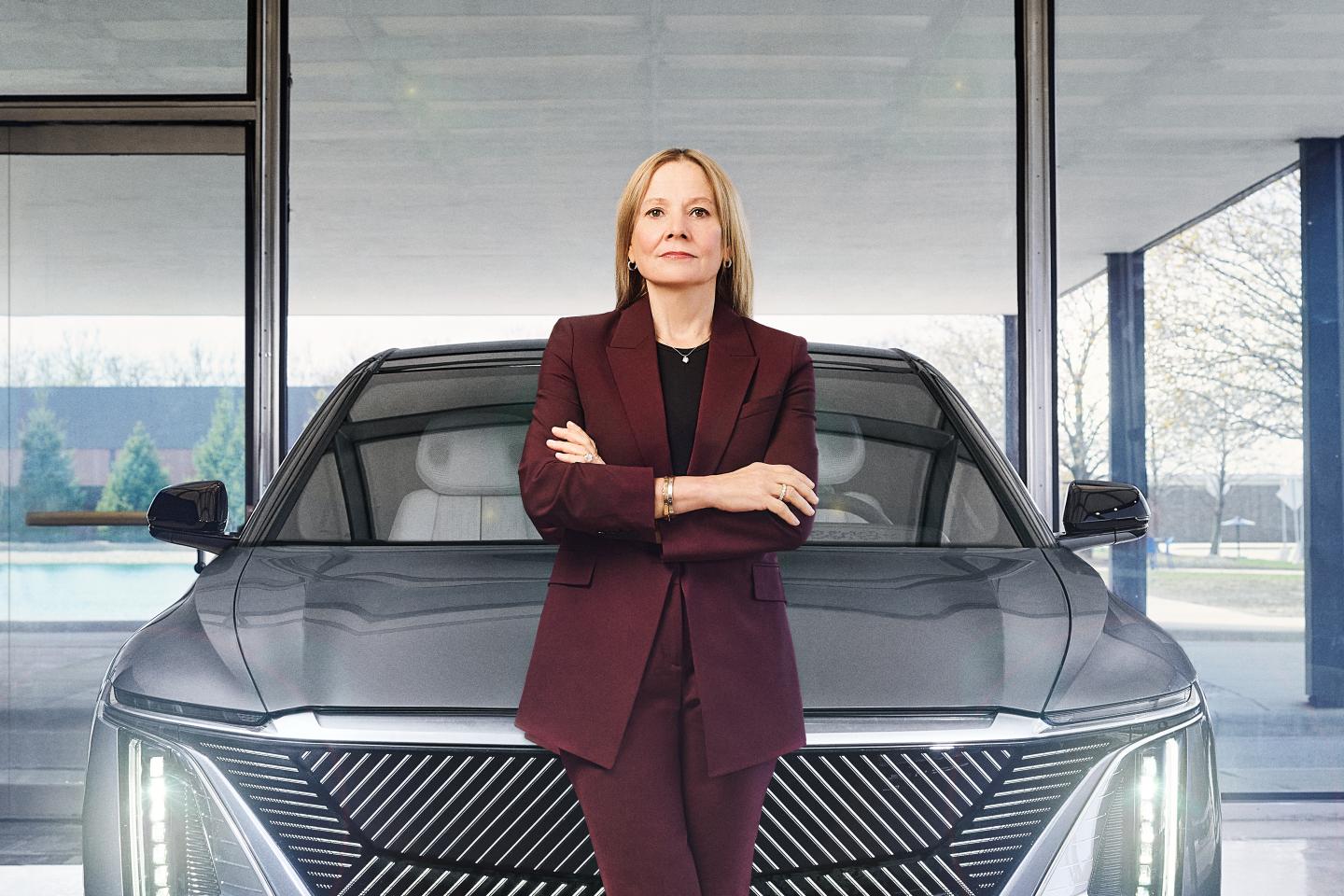
GM CEO Mary Barra photographed at GM's Design Center with the Cadillac LYRIQ EV on May 4, 2022, in Detroit.
GM CEO Mary Barra photographed at GM's Design Center with the Cadillac LYRIQ EV on May 4, 2022, in Detroit.Spencer Lowell for Fortune
Add Fortune on Google for similar content.

Think of the most exclusive groups you know—SEAL Team 6, Skull and Bones, Augusta National—and they’re probably easier to join than the Fortune 500. Only 0.03% of America’s incorporated companies make it, and each one must requalify every year; dozens of them typically don’t. Now, as we publish the 70th annual ranking of the Fortune 500, consider an even more exclusive club within this pantheon of U.S. companies. Of the thousands of firms that have come and gone in the 500 since 1955, only 49 have merited membership in every one of those 70 annual rankings. They are America’s corporate Olympians.

Recommended Video

What have these extraordinary 49ers got?  An analysis shows that their magic was at work long before the first Fortune 500. The vast majority of them had grown so large by then that they were in the top half of the 1955 ranking. We should note that all of them are manufacturers or oil companies because in 1955 the 500 did not include service companies such as retailers, banks, insurers, utilities, and transportation providers (those industries have been included since 1996). In addition, many were already uncommonly old—DuPont had been growing for 153 years, Colgate-Palmolive for 149 years, Deere and Procter & Gamble for 118 years. Decades before the Fortune 500 came along, natural selection had identified most of the 49ers as business sequoias.

But that doesn’t entirely explain why the 49ers have survived and thrived through the 70 years since that first 500. Plenty of the other old companies in 1955 are gone. As a fuller explanation, the Darwinian analogy suggests the 49ers must be champions of adaptability, nimbly responding to an ever-changing environment—and, yes, they can all do that. But a closer look shows that the fundamental factors in their unusual success are subtly different.

The key insight comes from Jim Collins and Jerry Porras, authors of the bestseller Built to Last: Successful Habits of Visionary Companies. Their overall findings, first published in 1994, have held up remarkably well. They chose a list of “visionary companies” and analyzed each against a similar “comparison company” that was in the same industry and doing well, but not quite as well as the visionary company. Today, 30 years later, all 17 of their visionary companies that are eligible for the Fortune 500 are in the 500; only six of the comparison companies are.

After years of study, Collins and Porras derived several principles for leaders. The most important principle, and a central factor in our 49ers’ performance, was to “preserve the core and stimulate progress.” Collins, who later wrote the bestsellers Good to Great and Great by Choice, tells Fortune, “The more I live with it, the more I think it might be the deepest explanatory idea across all the multiple decades of research I’ve had the privilege to be involved in.”

A company’s core, they emphasized, isn’t strategies, structures, technologies, or even culture. Over time, “all that stuff is going to change,” Collins says. The core is a company’s DNA, its reason for being. Collins says he and Porras found that their visionary companies, when seen beside their comparison companies, “had a much deeper allegiance to their core values and a clear sense they had a core purpose beyond just making money.” The virtue of that foundation has attracted much attention in recent years, but it’s hardly new. Some of our 49ers adopted it 100 or 200 years ago.

Our 49ers’ CEOs explain their companies’ longevity in the language of the core as defined by Collins and Porras—purpose, values, reason for being. Pfizer CEO Albert Bourla tells Fortune, “Pfizer exists to deliver breakthroughs for patients.” Colgate-Palmolive CEO Noel Wallace says employee commitment to “our purpose” and “the values we share” is central to the company’s long-running performance. Eli Lilly CEO David A. Ricks says, “Lilly’s longevity is rooted in our purpose.”

A striking example of the core is 3M, founded in 1902. It’s one of the Built to Last visionary companies and one of our 49ers. Longtime leader William McKnight, 3M’s architect in the early days, believed the company’s core was inventing. That was a new concept—a company not defined by industry or products or services, but by inventing, broadly defined. “He just thought humans innovating is what 3M should be doing because that’s what humans should do,” Collins says.

3M’s example illustrates why it isn’t quite right to say adaptability is the essence of the 49ers. Adapting is reactive. Every company faces competition and must sometimes adapt. But the 49ers mostly do what their powerful core drives them to do, and the world adapts to them. Think of such industry-changing advances as Johnson & Johnson’s invention of mass-produced sterile sutures (1887) or Procter & Gamble’s invention of synthetic detergent (1933) or DuPont’s invention of nylon (1935).

The 49ers are by no means perfect. They didn’t attain their lofty reputations by avoiding bad decisions. That’s impossible. A key factor that sets those companies apart is their superior ability to recover from mistakes. Consider Coca-Cola’s New Coke, a historic blunder that in 1985 infuriated the nation like no other marketing strategy before or since. Yet today that snafu is an imperceptible blip on a stock price chart that recently hit all-time highs. All the 49ers have similarly come through grave crises.

An enlightening way to see what differentiates the 49ers is to compare them with long-gone corporate giants from the original Fortune 500. Back then, No. 5 on the list, the Swift meat company, would have seemed a strong candidate to stay in the 500 for 70 years. It was a colossus, bigger than Shell and Chevron combined. Besides, people will always need food, and indeed the 49ers include more companies from the food and beverage industry than from any other. But in the 1960s Swift expanded wildly beyond meat, becoming a diversified conglomerate with businesses in life insurance, petroleum, and women’s undergarments. It didn’t work. After years of being bought and sold by various firms, Swift is now only a brand owned by the Brazilian company JBS, the world’s largest meat company.

The lesson: Swift didn’t fall off the Fortune 500 because it became a conglomerate. It fell off because being a conglomerate wasn’t in its core. Conglomerating was never part of its DNA, pushing the company to diversify no matter what. By contrast, Textron, one of our 49ers, was a conglomerate when it landed on the original Fortune 500 and has remained one. Conglomerating is in its DNA.

After 70 years at the apex of industry in the world’s largest economy, what’s ahead for the 49ers? In theory, their performance says they should be able to carry on indefinitely. But in real life, big companies don’t live forever; the 49ers’ impressive longevity suggests they’re living on borrowed time.

They would probably be wise to follow Amazon founder Jeff Bezos’s realist advice. “I predict one day Amazon will fail,” he told an employee meeting in 2018. “Amazon will go bankrupt… We have to try and delay that day for as long as possible.” To do that, companies as outstanding as the 49ers face the particularly insidious threat of hubris. Caused by success but also hidden by success, it turns the company’s focus inward. The damage accrues slowly at first. By the time it’s apparent, rescue may be impossible.

For the 49ers, fending off that threat is a serious problem. It’s a problem most other companies would love to have.

Subscribe to the Fortune Archives newsletter to unearth the stories that have had a lasting impact on business and culture.

About the Author
Geoff Colvin
By Geoff ColvinSenior Editor-at-Large
LinkedIn iconTwitter icon

Geoff Colvin is a senior editor-at-large at Fortune, covering leadership, globalization, wealth creation, the infotech revolution, and related issues.

See full bioRight Arrow Button Icon
Add Fortune on Google for similar content.

Latest in Leadership

Finance
Lorem ipsum dolor sit amet, consectetur adipiscing elit, sed do eiusmod tempor incididunt ut labore et dolore magna aliqua. Ut enim ad minim veniam
By Fortune Editors
October 20, 2025
Finance
Lorem ipsum dolor sit amet, consectetur adipiscing elit, sed do eiusmod tempor incididunt ut labore et dolore magna aliqua. Ut enim ad minim veniam
By Fortune Editors
October 20, 2025
Finance
Lorem ipsum dolor sit amet, consectetur adipiscing elit, sed do eiusmod tempor incididunt ut labore et dolore magna aliqua. Ut enim ad minim veniam
By Fortune Editors
October 20, 2025
Finance
Lorem ipsum dolor sit amet, consectetur adipiscing elit, sed do eiusmod tempor incididunt ut labore et dolore magna aliqua. Ut enim ad minim veniam
By Fortune Editors
October 20, 2025
Finance
Lorem ipsum dolor sit amet, consectetur adipiscing elit, sed do eiusmod tempor incididunt ut labore et dolore magna aliqua. Ut enim ad minim veniam
By Fortune Editors
October 20, 2025
Finance
Lorem ipsum dolor sit amet, consectetur adipiscing elit, sed do eiusmod tempor incididunt ut labore et dolore magna aliqua. Ut enim ad minim veniam
By Fortune Editors
October 20, 2025

Most Popular

Finance
Lorem ipsum dolor sit amet, consectetur adipiscing elit, sed do eiusmod tempor incididunt ut labore et dolore magna aliqua. Ut enim ad minim veniam
By Fortune Editors
October 20, 2025
Finance
Lorem ipsum dolor sit amet, consectetur adipiscing elit, sed do eiusmod tempor incididunt ut labore et dolore magna aliqua. Ut enim ad minim veniam
By Fortune Editors
October 20, 2025
Finance
Lorem ipsum dolor sit amet, consectetur adipiscing elit, sed do eiusmod tempor incididunt ut labore et dolore magna aliqua. Ut enim ad minim veniam
By Fortune Editors
October 20, 2025
Finance
Lorem ipsum dolor sit amet, consectetur adipiscing elit, sed do eiusmod tempor incididunt ut labore et dolore magna aliqua. Ut enim ad minim veniam
By Fortune Editors
October 20, 2025
Finance
Lorem ipsum dolor sit amet, consectetur adipiscing elit, sed do eiusmod tempor incididunt ut labore et dolore magna aliqua. Ut enim ad minim veniam
By Fortune Editors
October 20, 2025
Finance
Lorem ipsum dolor sit amet, consectetur adipiscing elit, sed do eiusmod tempor incididunt ut labore et dolore magna aliqua. Ut enim ad minim veniam
By Fortune Editors
October 20, 2025
Fortune Secondary Logo
Rankings
  • 100 Best Companies
  • Fortune 500
  • Global 500
  • Fortune 500 Europe
  • Most Powerful Women
  • World's Most Admired Companies
  • See All Rankings
  • Lists Calendar
Sections
  • Finance
  • Fortune Crypto
  • Features
  • Leadership
  • Health
  • Commentary
  • Success
  • Retail
  • Mpw
  • Tech
  • Lifestyle
  • CEO Initiative
  • Asia
  • Politics
  • Conferences
  • Europe
  • Newsletters
  • Personal Finance
  • Environment
  • Magazine
  • Education
Customer Support
  • Frequently Asked Questions
  • Customer Service Portal
  • Privacy Policy
  • Terms Of Use
  • Single Issues For Purchase
  • International Print
Commercial Services
  • Advertising
  • Fortune Brand Studio
  • Fortune Analytics
  • Fortune Conferences
  • Business Development
  • Group Subscriptions
About Us
  • About Us
  • Press Center
  • Work At Fortune
  • Terms And Conditions
  • Site Map
  • About Us
  • Press Center
  • Work At Fortune
  • Terms And Conditions
  • Site Map
  • Facebook icon
  • Twitter icon
  • LinkedIn icon
  • Instagram icon
  • Pinterest icon

Latest in Leadership

Agentic AI systems are doing more and more work. Now humans need to figure out how to verify it all
AIBrainstorm Tech
Agentic AI systems are doing more and more work. Now humans need to figure out how to verify it all
By Alexei OreskovicJune 15, 2026
7 hours ago
‘We’ll never do this again’: UFC CEO Dana White says White House fight night was too expensive to do it again
North AmericaDonald Trump
‘We’ll never do this again’: UFC CEO Dana White says White House fight night was too expensive to do it again
By The Associated Press and Dan GelstonJune 15, 2026
12 hours ago
The billionaire founder and CEO of Vista Equity Partners makes plea to businesses adopting AI: ‘Don’t destroy your intern program’
AIBrainstorm Tech
The billionaire founder and CEO of Vista Equity Partners makes plea to businesses adopting AI: ‘Don’t destroy your intern program’
By Jeff John RobertsJune 15, 2026
15 hours ago
Ricardo Pepi
SuccessCareers
Team USA star Ricardo Pepi grew up in a trailer in El Paso—and his parents pawned their car title to fuel his soccer dream. Now, he’s in the World Cup
By Preston ForeJune 15, 2026
15 hours ago
NBA Finals MVP Jalen Brunson
SuccessCareers
Jalen Brunson just led the Knicks to an NBA title—and credits his famous dad’s work ethic for preparing him for the job
By Emma BurleighJune 15, 2026
15 hours ago
vinod
C-SuiteGoogle
Silicon Valley legend Vinod Khosla tears into ‘idiotic, shortsighted, and very selfish’ Gen Z Stanford protests of Google CEO: ‘The stupidity’
By Nick LichtenbergJune 15, 2026
15 hours ago

Most Popular

Current price of oil as of June 15, 2026
Personal Finance
Current price of oil as of June 15, 2026
By Joseph HostetlerJune 15, 2026
18 hours ago
CEO of $20 billion AI firm Perplexity says the secret to success is ‘sleeping with that fear’ that your competitor will steal your idea
Success
CEO of $20 billion AI firm Perplexity says the secret to success is ‘sleeping with that fear’ that your competitor will steal your idea
By Preston ForeJune 13, 2026
3 days ago
Meet Gwynne Shotwell, the engineer-turned-COO who runs SpaceX in platform heels and is now worth over $2 billion
Startups & Venture
Meet Gwynne Shotwell, the engineer-turned-COO who runs SpaceX in platform heels and is now worth over $2 billion
By Eva RoytburgJune 15, 2026
1 day ago
Boomers actually do hold most of the wealth and power. So why do they call it 'whiny' to point that out?
Economy
Boomers actually do hold most of the wealth and power. So why do they call it 'whiny' to point that out?
By Nick LichtenbergJune 14, 2026
2 days ago
Current price of silver as of Monday, June 15, 2026
Personal Finance
Current price of silver as of Monday, June 15, 2026
By Joseph HostetlerJune 15, 2026
18 hours ago
Social Security's 2032 deadline puts a 22% cut on the table — but Washington has way less room to negotiate than 1983
Personal Finance
Social Security's 2032 deadline puts a 22% cut on the table — but Washington has way less room to negotiate than 1983
By John W. Diamond and The ConversationJune 12, 2026
4 days ago

© 2026 Fortune Media IP Limited. All Rights Reserved. Use of this site constitutes acceptance of our Terms of Use and Privacy Policy | CA Notice at Collection and Privacy Notice | Do Not Sell/Share My Personal Information
FORTUNE is a trademark of Fortune Media IP Limited, registered in the U.S. and other countries. FORTUNE may receive compensation for some links to products and services on this website. Offers may be subject to change without notice.