
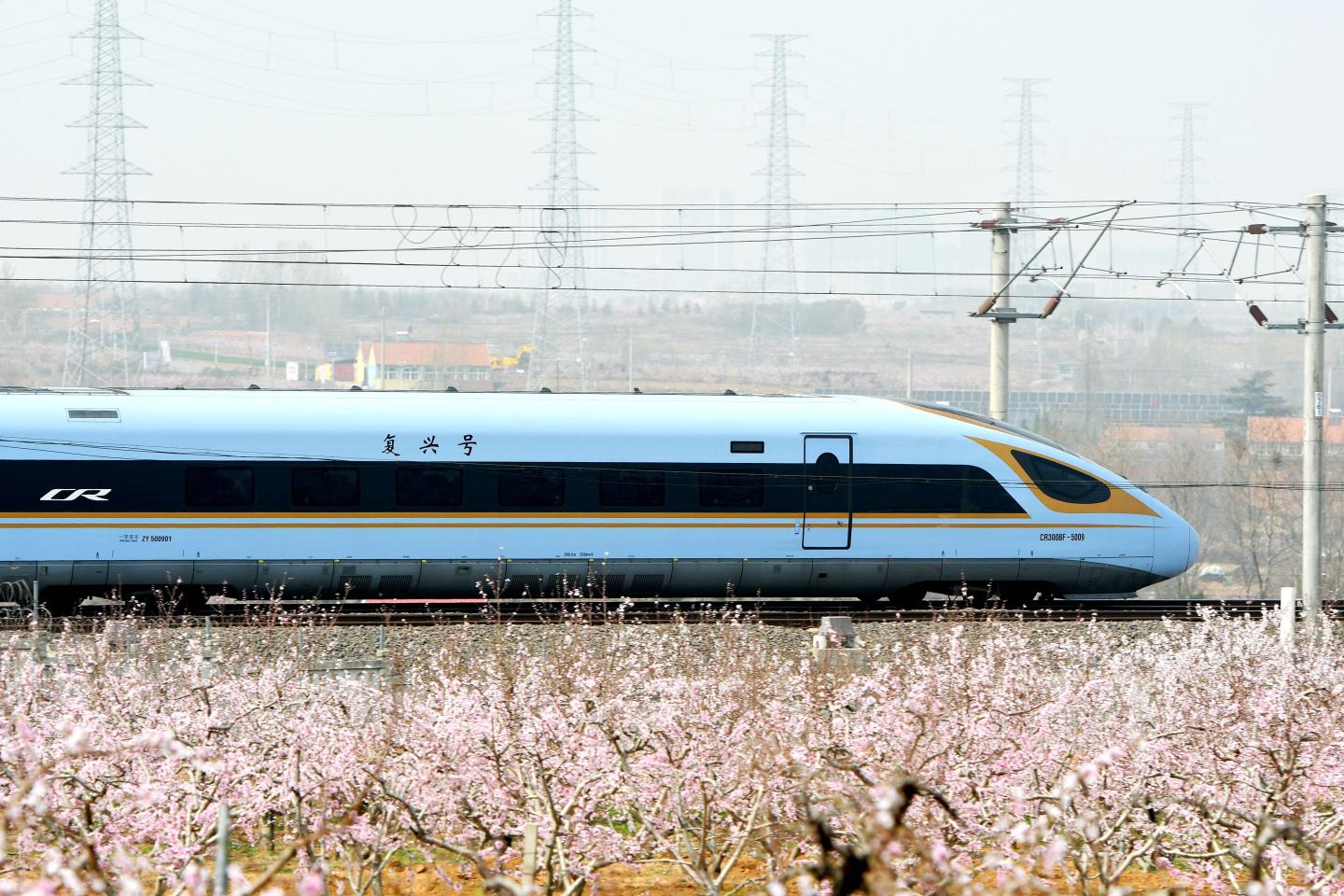
Around the world, high-speed trains zip from city to city, sometimes topping 250 miles per hour before dropping off hundreds of passengers right in a city’s downtown. However, in the U.S., that vision of efficient, fast, environmentally friendly travel remains a dream.
Japan built high-speed trains more than 50 years ago, an engineering marvel then and now. Its bullet trains (a term coined by the Japanese) connect the country’s megalopolises with eye-popping levels of efficiency; the average delay is less than a minute. China has 23,500 miles of high-speed tracks traversing its countryside, linking its coastal megacities like Shanghai and Shenzhen to each other and to its vast interior. European rail connects the continent so well it serves both the backpacking crowd and executives hurrying from one country’s financial capital to another on trains like the London-Paris Eurostar.
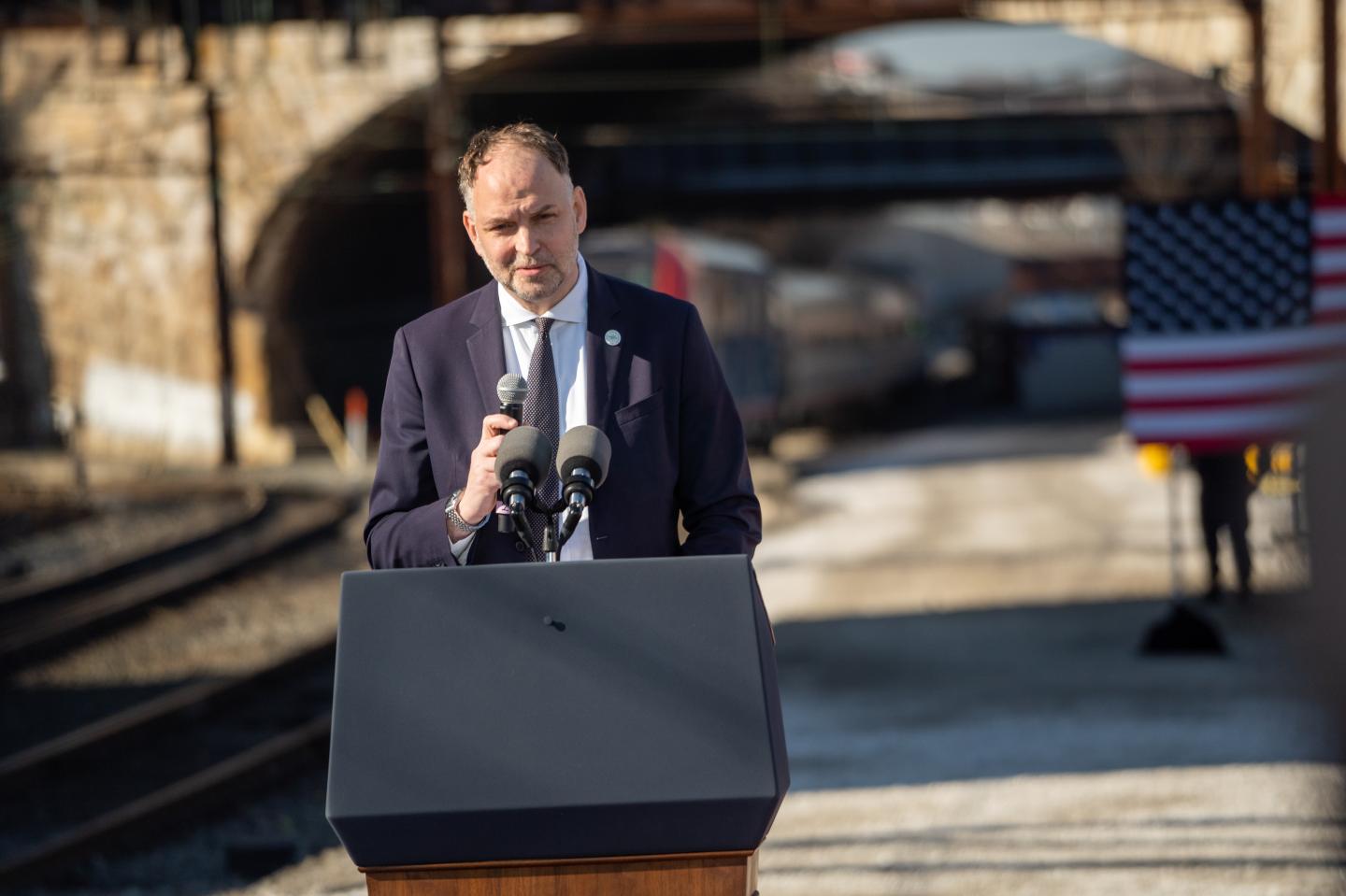
The U.S., on the other hand, looks on. Not because we lack the technical know-how to build high-speed rail, but because politicians lack the will to fund it, according to Amtrak CEO Stephen Gardner.
“It’s a financial conversation, not a technical one,” he told Fortune in an interview. “There’s not a technical barrier to building high-speed rail. But what you need is political and financial alignment to make the investment.”
In the U.S., passenger rail is stifled because of its aging infrastructure, a problem only made worse by decades of political disagreements and earlier lobbying from automobile and aviation industries that called for competing investments in their infrastructure. In some stretches of the Northeast Corridor, trains slow to just 30 miles per hour due to Reconstruction-era tracks.
Even $66 billion in federal funding for rail in the 2021 infrastructure package is but a drop in the bucket of what it would take to build high-speed rail. The cost to build a such a network across the U.S. would be approximately $4 trillion, according to the libertarian Cato Institute, which does not support building a passenger rail network on the grounds it would be too expensive.
“We’ve got to decide to do it, that’s really as simple as it is,” Gardner says. “The federal government of the nation has to make a decision. That’s how it happens. That’s how it’s happened everywhere in the world.”
That’s not to say the money from the infrastructure bill is going to waste. On the contrary, it is upgrading passenger rail infrastructure across the entire country, from the Cascades in the Pacific Northwest to Texas and Appalachia. The funds are also going toward a new fleet—both cars and locomotives. Amtrak has already committed $7.3 billion for 83 new trains from the mobility division of the German industrial giant Siemens, with the first set to begin carrying passengers in 2026. Those trains will reach a top speed of 125 miles per hour. A new, faster model of the Acela trains that can travel at 160 miles per hour on some stretches of the Northeast Corridor began test runs in January, according to the New York Times.
Both of those trains are still far slower than those in France, Japan, and China, which has the fastest train in the world, clocking in at 286 miles per hour at top speed. In fact, the new U.S. trains may not even reach their own top speeds that often. Winding tracks mean that trains on the Northeast Corridor travel at an average speed between 70 and 80 miles per hour. To enable true high speed, the U.S. would need to build specially designed tracks that are straighter, a project that would take at least 10 years and possibly up to 30, Gardner says.
Funding these projects is no small feat, either. Every other high-speed rail network in the world was constructed with massive investments from governments that made it a national priority. Governments often have to subsidize investments in train travel because virtually all rail companies are unprofitable, or at least don’t make enough money to regularly fund tens of billions of dollars of capital expenditures. Even China’s vaunted rail system is raising fares as its state-owned operator is saddled with $870 billion in borrowing.
By comparison, the U.S. investment over the years has been “almost a rounding error to the amount that Europe has been investing in its network,” Gardner said.
When asked for more detail on the CEO’s comments, an Amtrak spokesperson provided per-capita spending data from a German trade group. It shows that Europe’s biggest spenders on rail in 2022 were Luxembourg at $625, Switzerland at $489, and Norway at $376. In the U.S., the comparable number was just $39, trailing even Europe’s stingiest spenders, like Spain’s $73 and France’s $50.
Passenger rail vs. freight rail
In addition to undertaking a sprawling infrastructure project like railroad construction, Amtrak also has to deal with stakeholders it doesn’t always see eye-to-eye with. Amtrak has to collaborate, sometimes begrudgingly, with freight rail companies that own about 71% the railroad tracks on which Amtrak runs many of its trains. The two groups have a sometimes tense relationship because Amtrak alleges they do not obey laws meant to give passenger trains the right-of-way over freight trains.
“There has been decades of no enforcement” of those laws, Gardner said.
Amtrak is now gearing up for a fight with freight-rail operators. In recent years Amtrak has become increasingly vocal about what it deems repeated violations by host railroads of these right-of-way laws, which date back to Amtrak’s inception. After years of frustrations, Amtrak urged federal regulators in 2022 to investigate delays caused by freight traffic and is also lobbying for the right to sue those operators in federal court when it believes they’re not following the law.
When reached for comment, a spokesperson for the Association of American Railroads (AAR) directed Fortune to a May 2023 letter from the trade group accusing Amtrak of substandard performance on its Sunset Limited line that runs from New Orleans and Los Angeles. The spokesperson also referred to a section of the AAR’s website that asked policymakers to ensure expansion of passenger rail “not compromise freight railroads’ ability to serve present or future customers.”
Elsewhere in the country a few private passenger rail companies have also entered the fray in an attempt to compete with Amtrak. Brightline, which claims to be the only private intercity train company in the U.S., broke ground last month on a $12 billion project meant to connect Southern California’s Inland Empire to Las Vegas. Brightline already operates a train route from Miami to Orlando with plans to expand to Tampa Bay by 2026.
The U.S. is too big for high-speed rail everywhere
But all high-speed rail in the U.S., whether it’s Amtrak or Brightline, has to contend with genuine geographical considerations that make it more difficult to execute than in other countries. Namely that the U.S. is a huge country, according to Allan Zarembski, director of the Railway Engineering and Safety Program at the University of Delaware.
Certain train journeys will always be less appealing than flying. Houston to Boston or San Diego to Milwaukee will virtually never make sense by rail, even on a train that goes 286 miles per hour, as the fastest trains in the world do. Those two trips would take six and a half and seven and a half hours respectively, and that’s with no stops, unlikely for a roughly 2,000-mile trip. Because of that, Gardner says he doesn’t see air travel as Amtrak’s main competitor.
“The auto market is the primary market we are competing with,” Gardner says.
High-speed rail is best suited for between cities that are near each other, where a train ride is around the same time as a short flight without the hassle of getting to and from the airport. Rail is also a much more environmentally friendly option than carbon-spewing airplanes. A flight from Washington, D.C., to New York emits between 1.4 to 3.7 times more greenhouse gases per person than a train, depending on the type of locomotive, according to Amtrak’s analysis. Traveling by car on the same journey produces between 2.2 to 5.8 times more carbon per passenger, driven by the fact that cars carry much fewer people than a train can.
“If we’re going to take on carbon in a meaningful way, you’ve got to achieve more both passenger and goods movement by train,” Gardner says. “There’s no way around that fact.”