• Home
  • Latest
  • Fortune 500
  • Finance
  • Tech
  • Leadership
  • Lifestyle
  • Rankings
  • Multimedia

Trendingnow

1

Analysts expected oil to surge above $200 but China has quietly kept prices half of that—and can’t for much longer

2

Corporate America has been draining the world's water. Matt Damon's new campaign calls on Gap, Starbucks, and Amazon to help give it back

3

Marc Lore’s robots make 500 burrito bowls an hour. A human can make 45

1

Analysts expected oil to surge above $200 but China has quietly kept prices half of that—and can’t for much longer

2

Corporate America has been draining the world's water. Matt Damon's new campaign calls on Gap, Starbucks, and Amazon to help give it back

3

Marc Lore’s robots make 500 burrito bowls an hour. A human can make 45
CommentaryHealth

My 2-year-old daughter needed a pacemaker. That spurred me to engineer a virtual heart, and now customized 3D simulations are saving lives

By
Steve Levine
Steve Levine
Down Arrow Button Icon
By
Steve Levine
Steve Levine
Down Arrow Button Icon
April 11, 2024, 1:12 PM ET
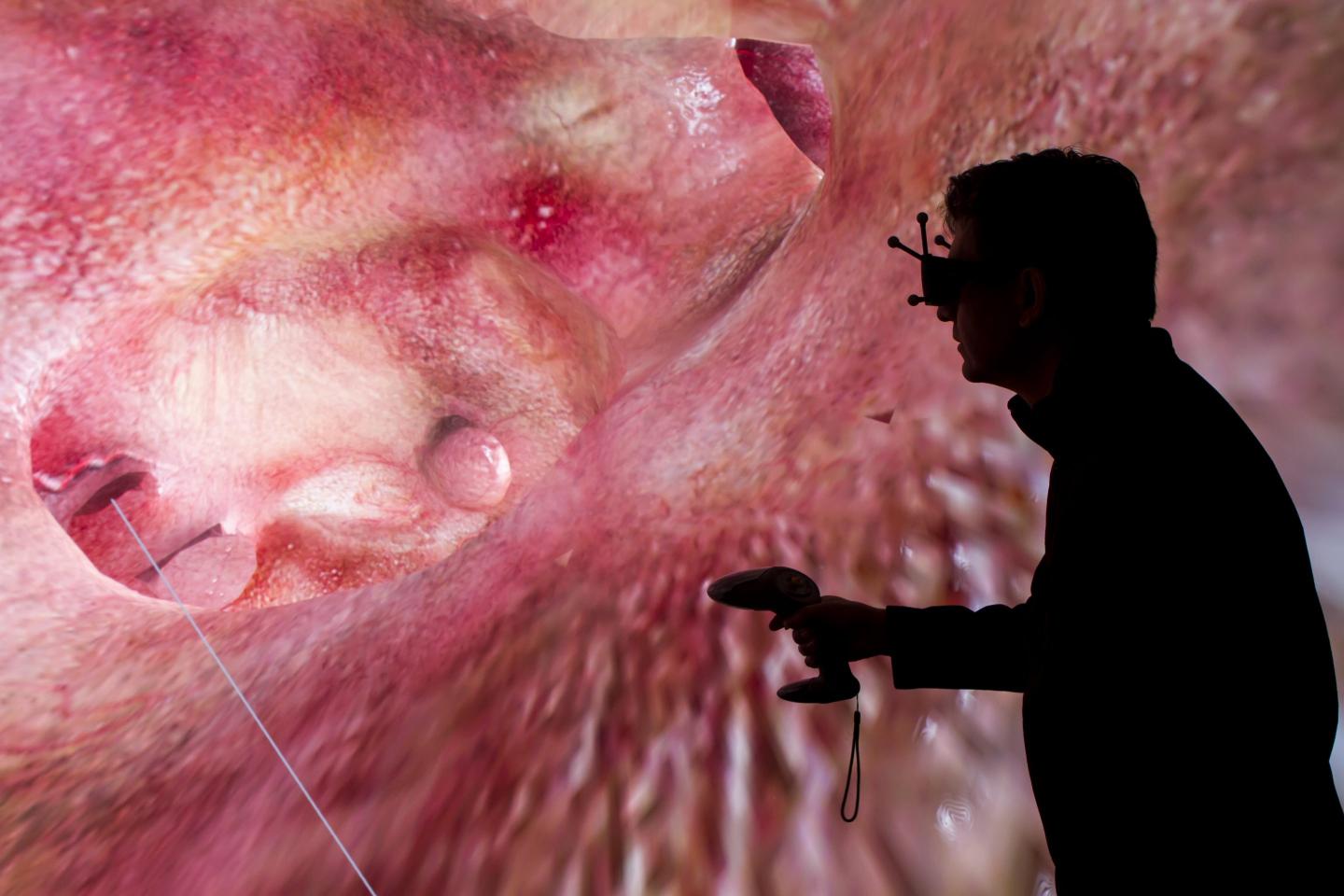
Doctors are examining individual human hearts in ways never before possible—and it's changing health care.
Doctors are examining individual human hearts in ways never before possible—and it's changing health care.Photo courtesy of Dassault Systemes

My daughter was two when she got her first pacemaker. She needed it because of a congenital condition that had reversed the lower chambers of her heart. That resulted in electrical problems—making her heart less efficient at circulating blood and significantly shortening her expected lifespan. 

There was little guidance for the doctors managing her condition as it was so rare that there was no way to predict how she would react to treatments. Hearts are complex organs with many moving parts, and each person’s is unique. There are countless ways for unsuspecting problems to arise, especially in children. That means there’s often not enough information available to make data-driven decisions about unusual disorders.

As an engineer, I knew there had to be a solution. I’d seen how advanced three-dimensional models—known as “virtual twins”—help airplane and automotive manufacturers test new, complex machines in digital simulations. I thought, the heart is designed like a machine. It pumps blood in a regular pattern. It runs on electricity. Maybe I could help.

That realization led me to start the Living Heart Project more than a decade ago. While it’s possible to capture the specifics of a person’s heart with medical imaging tools like CT and MRI scans, that imaging is still incomplete.

So we gathered a team of experts to get a better picture. Together, our coalition of engineers and physicians developed a way to create simulations of living people’s hearts—first creating a generic “average” heart, and more recently modeling the hearts of specific individuals, accurate down to the smallest, most singular details. 

My daughter’s condition was one in a million, but her predicament was not. Heart disease is consistently the leading U.S. cause of death and accounts for larger medical costs than any other condition. By 2035, the American Heart Association projects that 45% of Americans will have some form of heart disease.

Despite being so commonplace, heart disease is difficult to diagnose because the symptoms are similar to those of other diseases like respiratory ailments. Patients with heart failure are misdiagnosed at a rate of 16% in hospitals and nearly 70% when general practitioners refer patients to specialists, according to a study in the Journal of Cardiac Failure. 

Seeing inside the heart

But with a virtual twin involved, the diagnostic picture changes. The twin can be displayed on a screen or in virtual reality as a three-dimensional model that can be enlarged, rotated, and examined by a team of experts. Doctors can “see” inside a patient’s heart, pumping under different conditions to locate problems. They can hear the heart beating and watch the blood and oxygen flow—all without cutting into the patient. 

Because virtual twins include the necessary features of each patient’s heart, they allow doctors to design complex reconstructions and even test drugs and devices such as coronary stents safely on the twin. In short, they help determine the best course of treatment by using simulations. 

In one case, Dr. David Hoganson at Boston Children’s Hospital encountered a toddler with a perplexing condition: Oxygen in the blood was flowing from the heart to only one of their lungs. Using a virtual twin of the heart, Hoganson and his team identified the problem, designed and tested a surgical procedure, and used it to save the child’s life. They’ve since done hundreds more surgeries using virtual twins. 

Virtual twins are also valuable teaching tools, helping students learn about the heart and other organs. They let patients and their families see what’s happening up close, promoting understanding and hope during an otherwise frightening experience. And thanks to artificial intelligence and cloud services, insights from one doctor can inform the work of others across the world.

Today, the possibilities continue to grow. We’re beginning to understand how to simulate other organs, such as lungs and brains. One day, we’ll be able to create virtual twins of our entire bodies, transforming the way that we manage our health. We’re already working with the FDA to build virtual human subjects for early clinical trials, helping deliver treatments to people who need them faster than ever. 

From verifying the best location for medical devices to understanding how a new drug will interact with living tissue, a virtual twin enables researchers to conduct testing in days that used to require years of patient trials.

When I started this work, people wondered if I would trust my daughter’s life to this new technology. When she was first diagnosed, doctors had little confidence in their options to keep her heart working. They thought her heart would last just 30 years. She’s now 34, and not slowing down. She’s a pediatric neuroscientist at a top program in the country, where she works to discover treatments for children with brain disorders. Her future is still uncertain, but with a personalized health care plan and her virtual twin, she has the best chance ever. 

Virtual twin technology has already improved the lives of countless patients. In the years to come, it will change the world.

Steve Levine, Ph.D., is senior director of virtual human modeling at Dassault Systèmes and founder and executive director of the Living Heart Project.

More must-read commentary published by Fortune:

  • Snowflake CEO: Hallucinations are the bane of AI-driven insights. Here’s what search can teach us about trustworthy responses
  • We analyzed 46 years of consumer sentiment data–and found that today’s ‘vibecession’ is just men starting to feel as bad about the economy as women historically have
  • 90% of homebuyers have historically opted to work with a real estate agent or broker. Here’s why that’s unlikely to change, according to the National Association of Realtors
  • Intel CEO: ‘Our goal is to have at least 50% of the world’s advanced semiconductors produced in the U.S. and Europe by the end of the decade’

The opinions expressed in Fortune.com commentary pieces are solely the views of their authors and do not necessarily reflect the opinions and beliefs of Fortune.

About the Author
By Steve Levine
See full bioRight Arrow Button Icon

Latest in Commentary

Finance
Lorem ipsum dolor sit amet, consectetur adipiscing elit, sed do eiusmod tempor incididunt ut labore et dolore magna aliqua. Ut enim ad minim veniam
By Fortune Editors
October 20, 2025
Finance
Lorem ipsum dolor sit amet, consectetur adipiscing elit, sed do eiusmod tempor incididunt ut labore et dolore magna aliqua. Ut enim ad minim veniam
By Fortune Editors
October 20, 2025
Finance
Lorem ipsum dolor sit amet, consectetur adipiscing elit, sed do eiusmod tempor incididunt ut labore et dolore magna aliqua. Ut enim ad minim veniam
By Fortune Editors
October 20, 2025
Finance
Lorem ipsum dolor sit amet, consectetur adipiscing elit, sed do eiusmod tempor incididunt ut labore et dolore magna aliqua. Ut enim ad minim veniam
By Fortune Editors
October 20, 2025
Finance
Lorem ipsum dolor sit amet, consectetur adipiscing elit, sed do eiusmod tempor incididunt ut labore et dolore magna aliqua. Ut enim ad minim veniam
By Fortune Editors
October 20, 2025
Finance
Lorem ipsum dolor sit amet, consectetur adipiscing elit, sed do eiusmod tempor incididunt ut labore et dolore magna aliqua. Ut enim ad minim veniam
By Fortune Editors
October 20, 2025

Most Popular

Finance
Lorem ipsum dolor sit amet, consectetur adipiscing elit, sed do eiusmod tempor incididunt ut labore et dolore magna aliqua. Ut enim ad minim veniam
By Fortune Editors
October 20, 2025
Finance
Lorem ipsum dolor sit amet, consectetur adipiscing elit, sed do eiusmod tempor incididunt ut labore et dolore magna aliqua. Ut enim ad minim veniam
By Fortune Editors
October 20, 2025
Finance
Lorem ipsum dolor sit amet, consectetur adipiscing elit, sed do eiusmod tempor incididunt ut labore et dolore magna aliqua. Ut enim ad minim veniam
By Fortune Editors
October 20, 2025
Finance
Lorem ipsum dolor sit amet, consectetur adipiscing elit, sed do eiusmod tempor incididunt ut labore et dolore magna aliqua. Ut enim ad minim veniam
By Fortune Editors
October 20, 2025
Finance
Lorem ipsum dolor sit amet, consectetur adipiscing elit, sed do eiusmod tempor incididunt ut labore et dolore magna aliqua. Ut enim ad minim veniam
By Fortune Editors
October 20, 2025
Finance
Lorem ipsum dolor sit amet, consectetur adipiscing elit, sed do eiusmod tempor incididunt ut labore et dolore magna aliqua. Ut enim ad minim veniam
By Fortune Editors
October 20, 2025
Fortune Secondary Logo
Rankings
  • 100 Best Companies
  • Fortune 500
  • Global 500
  • Fortune 500 Europe
  • Most Powerful Women
  • World's Most Admired Companies
  • See All Rankings
  • Lists Calendar
Sections
  • Finance
  • Fortune Crypto
  • Features
  • Leadership
  • Health
  • Commentary
  • Success
  • Retail
  • Mpw
  • Tech
  • Lifestyle
  • CEO Initiative
  • Asia
  • Politics
  • Conferences
  • Europe
  • Newsletters
  • Personal Finance
  • Environment
  • Magazine
  • Education
Customer Support
  • Frequently Asked Questions
  • Customer Service Portal
  • Privacy Policy
  • Terms Of Use
  • Single Issues For Purchase
  • International Print
Commercial Services
  • Advertising
  • Fortune Brand Studio
  • Fortune Analytics
  • Fortune Conferences
  • Business Development
  • Group Subscriptions
About Us
  • About Us
  • Press Center
  • Work At Fortune
  • Terms And Conditions
  • Site Map
  • About Us
  • Press Center
  • Work At Fortune
  • Terms And Conditions
  • Site Map
  • Facebook icon
  • Twitter icon
  • LinkedIn icon
  • Instagram icon
  • Pinterest icon

Latest in Commentary

Three ways that Asia’s enterprises are adopting AI—and where they are falling behind
CommentaryOracle
Three ways that Asia’s enterprises are adopting AI—and where they are falling behind
By Garrett IlgJune 11, 2026
9 hours ago
gordon
CommentaryVenture Capital
Gordon Ritter: I predicted AI’s learning loop a decade ago. The doomers are still measuring the wrong thing
By Gordon RitterJune 11, 2026
17 hours ago
bessent
CommentarySocial Security
Social Security and Medicare are heading toward insolvency. Congress has 6 years to act
By Steve H. Hanke and David M. WalkerJune 11, 2026
20 hours ago
Digital sovereignty isn’t the same thing as digital isolation. Asia’s governments should be careful
Commentarydata sovereignty
Digital sovereignty isn’t the same thing as digital isolation. Asia’s governments should be careful
By Leonard LimJune 10, 2026
1 day ago
tim
CommentaryAirline industry
Merlin CTO: autonomy can rebuild the foundation of aviation — and national security
By Tim BurnsJune 9, 2026
3 days ago
dewar
CommentaryLeadership
I founded McKinsey’s CEO practice: Here’s why operational excellence is a liability right now
By Carolyn DewarJune 9, 2026
3 days ago

Most Popular

Analysts expected oil to surge above $200 but China has quietly kept prices half of that—and can’t for much longer
Energy
Analysts expected oil to surge above $200 but China has quietly kept prices half of that—and can’t for much longer
By Sasha RogelbergJune 10, 2026
1 day ago
Corporate America has been draining the world's water. Matt Damon's new campaign calls on Gap, Starbucks, and Amazon to help give it back
Environment
Corporate America has been draining the world's water. Matt Damon's new campaign calls on Gap, Starbucks, and Amazon to help give it back
By Catherina GioinoJune 9, 2026
3 days ago
Marc Lore’s robots make 500 burrito bowls an hour. A human can make 45
Innovation
Marc Lore’s robots make 500 burrito bowls an hour. A human can make 45
By Amanda GerutJune 9, 2026
2 days ago
Current price of oil as of June 11, 2026
Personal Finance
Current price of oil as of June 11, 2026
By Joseph HostetlerJune 11, 2026
17 hours ago
Costco CEO Ron Vachris rose from forklift driver to the C-suite without a college degree: ‘Don’t chase a title’ is the career advice that got him there
Success
Costco CEO Ron Vachris rose from forklift driver to the C-suite without a college degree: ‘Don’t chase a title’ is the career advice that got him there
By Preston ForeJune 8, 2026
4 days ago
Pentagon accuses Alibaba, Baidu and BYD, three of China's biggest companies, of supporting the Chinese military
Asia
Pentagon accuses Alibaba, Baidu and BYD, three of China's biggest companies, of supporting the Chinese military
By Kate O'Keeffe and BloombergJune 8, 2026
3 days ago

© 2026 Fortune Media IP Limited. All Rights Reserved. Use of this site constitutes acceptance of our Terms of Use and Privacy Policy | CA Notice at Collection and Privacy Notice | Do Not Sell/Share My Personal Information
FORTUNE is a trademark of Fortune Media IP Limited, registered in the U.S. and other countries. FORTUNE may receive compensation for some links to products and services on this website. Offers may be subject to change without notice.