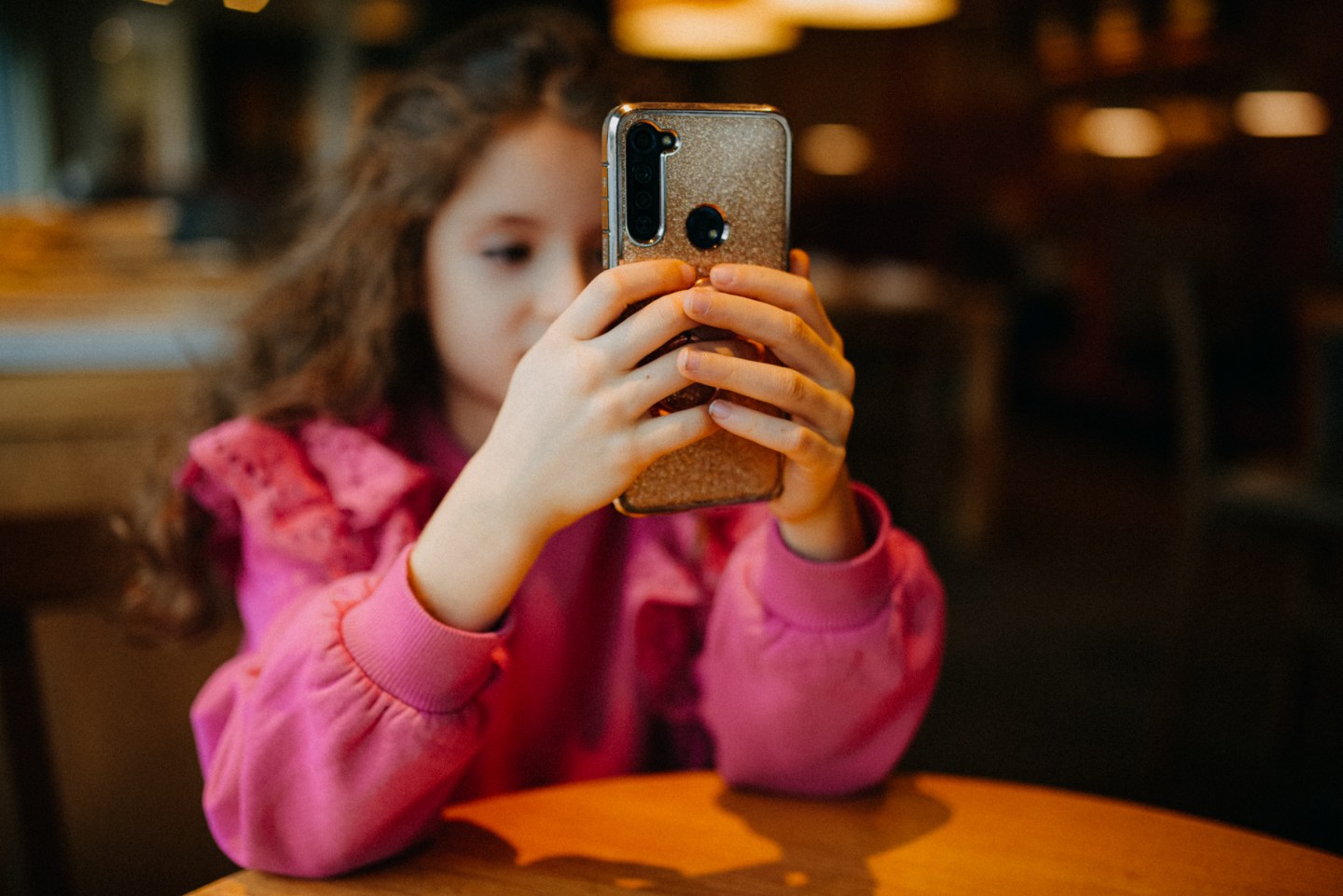
When Shai Eisenman and her team at Bubble Skincare launched an exfoliating serum in the US earlier this year, they did something unusual: They advised some of their core customers not to buy it.
The reason? The serum is too harsh for thousands of the brand’s preadolescent fans — the exact demographic that founder Eisenman said has been buying more in the past six months, helping drive Bubble’s expansion into 12,000 stores in the US and the UK. In posts on both TikTok and Instagram, the brand told younger kids to avoid its products that exfoliate or treat blemishes. They received more than 40,000 likes.
“It’s not a common thing for a brand to come and say, ‘You should not use my products,’” Eisenman said.
As demand for skin care in the US has surged among teens and tweens, including girls as young as 8 and 9 years old, beauty brands are navigating how to communicate with their new customers. US households with 6- to 12-year-olds spent 27% more on skin care in 2023 versus a year earlier, according to data firm NielsenIQ. Households with 13- to 17-year-olds saw a similar increase. Both significantly outpaced the 13% growth rate across the US.
The shift has forced brands to come up with a playbook to engage with a demographic that was barely interested in these products a year ago — and to the adults who buy them most of the items. Companies are also navigating the potential legal risks of marketing to children.
While youngsters have long tinkered with drugstore makeup, the recent skin-care craze is different: They’re spending more money and buying more sophisticated treatments, mixing products from Christian Dior SE and Drunk Elephant with lower-cost offerings from brands like L’Oréal SA-owned CeraVe.
The shift is boosting companies that are popular among the group. Demand for Sol de Janeiro’s lotions and $38 body sprays have helped push up shares of its parent company, L’Occitane International SA, by 40% this year, making it among the best-performing personal-care stocks globally.
Shares in e.l.f. Beauty Inc., whose $8 skin toners and $13 face creams are popular with teens, have almost doubled in the past year. Sales of its skin-care products outpaced cosmetics in the most recent quarter, spiking nearly 90%.
Oshiya Savur, chief brand and marketing officer at Maesa, which develops and runs personal-care and beauty brands, said the speed at which younger kids have seized on the trend has been a “seismic shift.”
“We were focused on Gen-Z and suddenly we’re talking about Gen-Alpha,” Savur said, referring to the cohort born since the early 2010s.
Cleanser, Sunscreen
Many dermatologists agree that most tweens and teens only need a cleanser, a moisturizer and a sunscreen. But some young people are buying half a dozen or more products, inspired by TikTok videos known as “Get Ready With Me,” which show influencers applying layers of skin care and makeup.
“What is troubling about this interest is how much consumerism is being pushed,” said Ivy Lee, a board-certified dermatologist in Pasadena, California, and “the unspoken message that a complex and expensive skin-care regimen is needed.” Lee is seeing more young patients with skin irritation and breakouts caused by using too many products.
Brands are also eliciting the ire of some parents. When Drunk Elephant, owned by Shiseido Co., posted on social media a list of more than a dozen of its products it said are safe for kids, one commenter responded: “NONE of this is appropriate for children.” A Drunk Elephant spokeswoman said the brand doesn’t recommend young people use products with a high concentration of active ingredients.
The pushback has led to some of the world’s biggest beauty companies responding with a kind of anti-marketing. Last month, Kiehl’s, owned by L’Oréal, posted a photo of a girl whose face was covered in ice cream to its almost 1 million Instagram followers. “The only anti-aging cream kids should buy,” the caption read. In February, the Ordinary, owned by Estée Lauder Cos., posted, “Teens, you don’t need ten steps,” cautioning young people to avoid ingredients like retinoids and alpha hydroxy acids.
By showcasing that they’re not marketing to children, Kiehl’s and the Ordinary are, by extension, appealing to parents who are concerned and bewildered by the skin-care surge. Brands are keen to keep parents happy partly because they often are the ones buying products for their kids — as well as themselves.
On a recent Saturday at a Sephora store in Manhattan, shopper Tonya Powell described how her young daughters had got her into skin care. The shared interest “brings us closer because now we can talk about different products and what we like and don’t like,” she said. Sephora, owned by LVMH, has emerged as one of the most popular destinations for kids to buy skin care. At two stores in Manhattan, several associates said they’d been told during training to advise teens and tweens to avoid products with active ingredients such as the anti-aging retinol. A spokeswoman for LVMH declined to comment.
The big cosmetics conglomerates are also wary of jumping on the tween skin-care bandwagon because — as publicly traded companies with teams of attorneys — they’re more aware than some of the beauty upstarts of the potential legal pitfalls, according to executives and lawyers. Spokeswomen for L’Oréal and Estée Lauder declined to comment.
If brands say their products are safe for a certain age group, the ingredients should have been tested on that demographic and meet standards set by the US Food and Drug Administration, said Laura Brett, head of the BBB National Programs’ National Advertising Division, a watchdog for the US advertising industry. Clinical testing ensures a brand’s safety claims are reasonable, she said.
The self-regulatory agency is considering opening cases with some beauty companies to learn more about their marketing claims, Brett said. If a company doesn’t cooperate, the watchdog would escalate the case to the US Federal Trade Commission. “The FTC is certainly looking at the beauty industry,” Brett said. “There’s a lot of concern about how social media is impacting teens and tweens.”
In a statement, an FTC spokesman said the agency will use existing laws to do everything it can to protect children.
Brands marketing to those under 13 face even stricter standards, including age restrictions on platforms such as TikTok and Instagram in the US.
“The under-13 set is quite vulnerable,” said Dona Fraser, head of the Children’s Advertising Review Unit, another division of the BBB National Programs. She recommended that brands follow the organization’s advertising guidelines, such as not implying that buying a certain product will make a person more popular.
Legal concerns could add hurdles to future dealmaking, said Diana Melencio, a general partner at XRC Ventures who invests in the beauty sector. That could include more due-diligence requirements for major conglomerates considering buying a smaller brand that’s focused on tweens and teens.
Selling to a big corporation has been a popular exit strategy for beauty founders in recent years. Singer and actress Selena Gomez, for example,
recently hired advisers to weigh offers for her cosmetics company, Rare Beauty, Bloomberg News reported.
“L’Oréal, Shiseido, Estée Lauder are still a little apprehensive about targeting that specific demographic because of the backlash that would happen if their products proved to be unsafe or have negative side effects,” Melencio said. Shiseido declined to comment.