We all know the story of the Global Financial Crisis by now. It put an end to the Great Moderation, a period of economic stability after inflation reached insane heights in the early ’80s. But nothing lasts forever, particularly in boom-bust cycles. In short, risky lending practices fueled a subprime mortgage crisis. Home prices peaked in the beginning of 2007, but then they plummeted, and mortgage defaults rose, and mortgage-backed securities deteriorated. Financial institutions suffered great losses, the housing bubble popped, and a wave of foreclosures followed.
After a roughly decade-long recovery, the housing market found itself in another bust era. Home prices rose substantially during the pandemic-fueled housing boom, and mortgage rates more than doubled shortly after as the Federal Reserve raised interest rates to once again tame inflation. Last year, the housing market froze; existing-home sales fell to their lowest point in nearly 30 years.
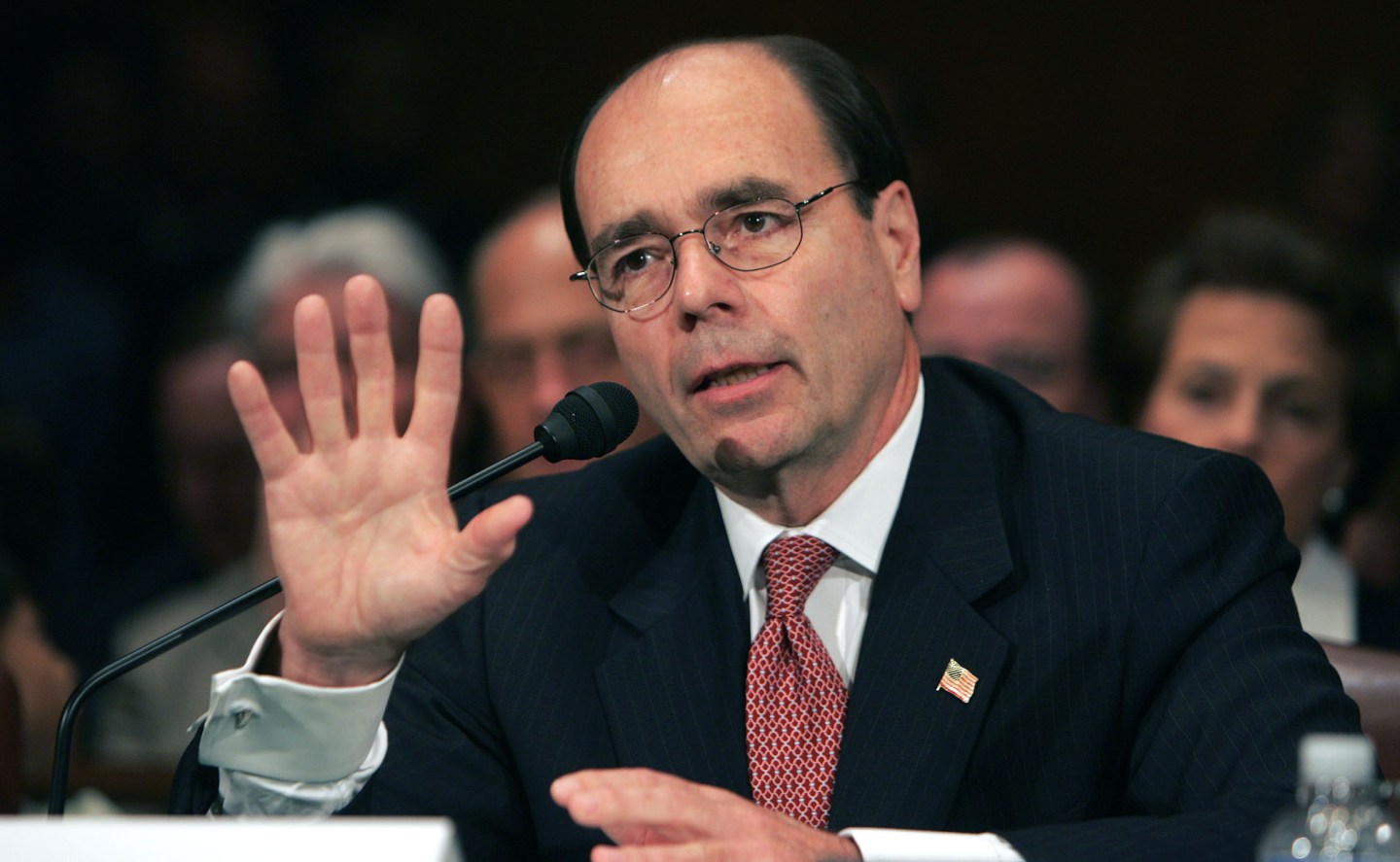
“Every crisis is different, and we’re not in a crisis now,” James B. Lockhart III, a senior fellow at the Bipartisan Policy Center who played a pivotal role in the 2008 global financial collapse, told Fortune.
Lockhart said he was persuaded to take over the Office of Federal Housing Enterprise Oversight, the agency that oversaw Fannie Mae and Freddie Mac, in 2006, not long before the housing market crashed. It eventually became the Federal Housing Finance Agency, and he continued to serve as its director until the summer of 2009.
“I could have stayed around,” Lockhart told Fortune. “We could see the housing market starting to bottom…all the pieces were in place at that point, and so it was time to move on.”
That’s not to say we don’t have a big problem in 2024—Lockhart says we do, in the form of an underbuilt housing market.
There are varying estimates of the housing shortage, but they’re generally between 2 million and 6 million—a result of “bad housing policies,” Lockhart said. Most housing policy analysts and urban economists would agree with him, although they’d likely use the term “housing crisis” to describe the situation. Still, there are three reasons why we aren’t in a housing crisis, at least not one comparable to the Great Financial Crisis.
For one, lending standards aren’t lax. Back in the early 2000s, “there was a lot of pretty ugly mortgages written,” Lockhart said. He mentioned teaser mortgages, ones that had low rates to begin with before going up after two or three years, and underwriting that didn’t look at assets or people’s income. A large number of the loans were put into private-label mortgage-backed securities, and Fannie Mae and Freddie Mac were losing market share on top of their existing dilemmas. This leads to reason two.
“When I arrived, we didn’t know there was going to be a crisis,” Lockhart said, “but we did know that they were extremely heavily leveraged.” Not to mention, both Fannie and Freddie “had accounting scandals,” he said.
Fannie Mae and Freddie Mac weren’t able to produce audited financial accounts for several years, Lockhart explained. So when the housing market began its descent and mortgage-backed securities lost so much of their value, Fannie and Freddie had so little capital that it hit them badly. “By the middle of the summer of 2008, both companies looked like, if you mark their books to market, they were underwater,” Lockhart said.
A lot of the housing market was underwater. But after going through their books with the Federal Reserve and Treasury Secretary Henry Paulson, it became very apparent that they couldn’t make it, he said. Luckily, legislation passed in the summer of 2008 that allowed them to pump money into Fannie and Freddie.
“Paulson had gotten his bazooka,” Lockhart said. “If we hadn’t had that, I don’t know what would have happened because there was no way that they could be saved without it.”
Between Fannie Mae and Freddie Mac, they had more than $5 trillion in mortgage-backed securities, and if they failed, they would have brought down plenty of financial institutions with them. Fannie Mae and Freddie Mac were placed into conservatorship in September 2008. They remain under conservatorship, which Lockhart said there’s no reason for, despite the fact he was the one who made the call years ago.
Still, at one point, roughly 25% of the houses in the country were underwater, Lockhart said, and his agency was trying to figure out how to help people stay in their homes.
That’s the third reason we’re not currently in a crisis: Housing affordability is worse now than at the height of the housing bubble, but there aren’t vast swaths of people who owe more on their home than it’s actually worth. There hasn’t been a crash; home prices generally haven’t fallen. There are a lot of reasons why that is: 98% of outstanding borrowers are locked in at a below-market mortgage rate; almost 40% of homeowners are mortgage free; and there’s a massive shortage of homes across the country.
This isn’t to say that we don’t have a problem; as mentioned before, we do. Last year, divisions within the housing market seemed to become more visible than ever before. Half of all renters in the country were cost-burdened in 2022, and a typical homebuyer would have spent more than 40% of their income on their mortgage payment, as of last October. Things are expected to ease this year as mortgage rates have fallen from their recent peak and home prices aren’t expected to appreciate at their prior rate, but they’re still high and so are rents.
“We’re just not taking a long-term view of the housing market,” Lockhart said. “We just need sort of a more holistic view of the housing market,” one that accounts for Freddie and Fannie’s conservatorship, all the programs from the Department of Housing and Urban Development, and local control, to start.
It’s an election year, and a lot of Americans are unhappy about the economy, even though it has proved its resilience. One reason for Americans’ dissatisfaction could be their disdain for the housing market; in some instances, they feel like they’ll never own a home, that the American dream has been ripped from them. But the two most likely presidential nominees have both been in office and haven’t done much for housing, Lockhart said.
“What seems to happen in Congress too often is they throw money at a problem without thinking about the root cause,” he said. “They just go from crisis to crisis.”