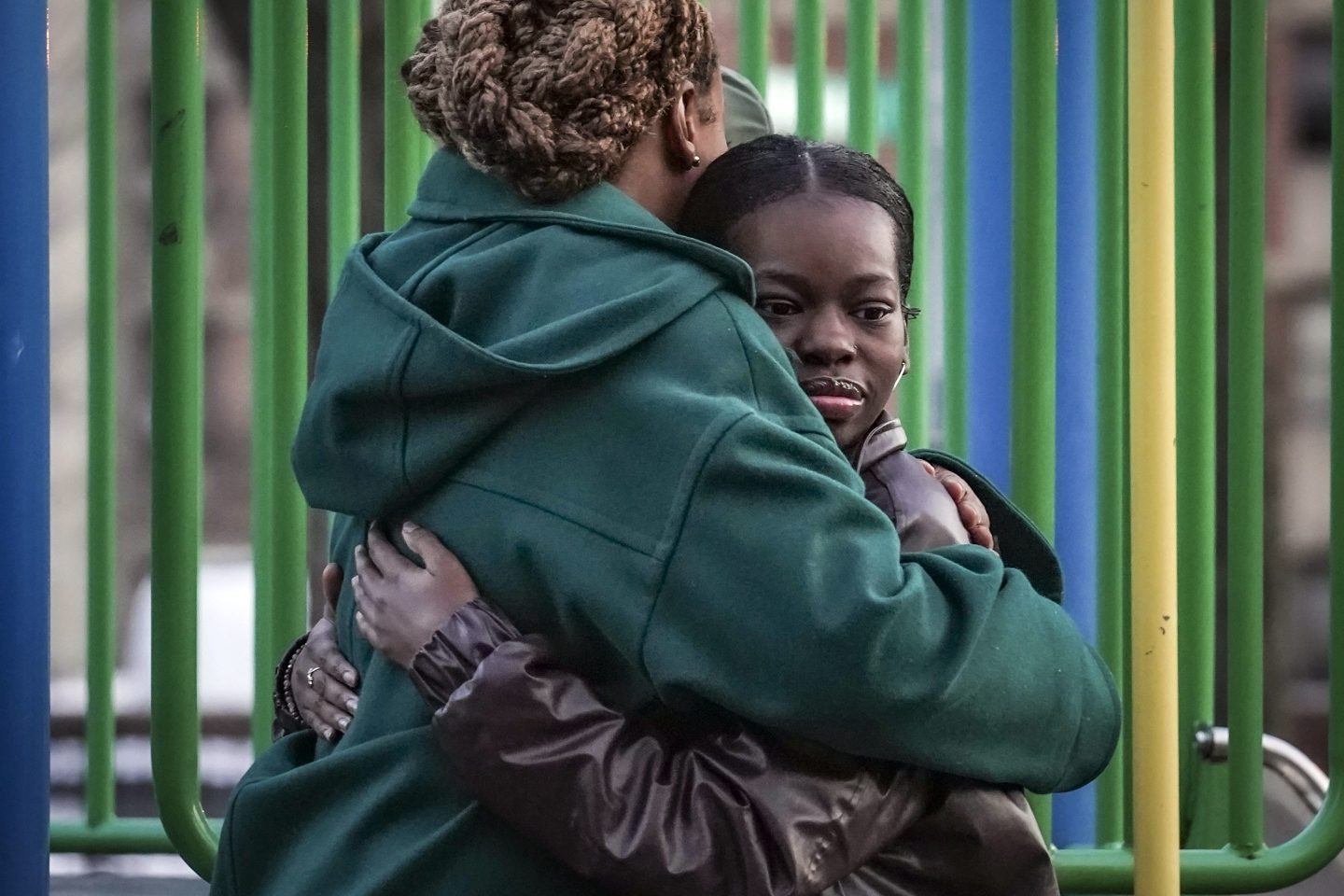
Derry Oliver was in fifth grade when she first talked to her mom about seeing a therapist.
She was living in Georgia with her uncle and grandparents while her mom was in New York scoping out jobs and apartments ahead of moving the family. It was a rough year apart. Oliver, now 17, was feeling depressed. A school staffer raised the idea of a therapist.
Oliver’s mom, also named Derry Oliver, questioned the school’s assessment and didn’t give consent for therapy. “You’re so young,” the mom recalled thinking. “There’s nothing wrong with you. These are growing pains.”
The issue boiled over again during the COVID-19 pandemic when the younger Oliver, struggling with the isolation of remote learning, reached out to her Brooklyn high school for help. School-based mental health professionals like social workers can provide some counseling without parent permission. But in New York, referring a student to more intensive therapy almost always requires a parent’s agreement. In Oliver’s case, that led to more conflict.
“It was very emotional for both of us because I understood her frustrations and fears,” the younger Oliver recalled. “But at the same time it’s sometimes best for your child to be able to access this rather than hold it away from them.”
As schools across the country respond to a youth mental health crisis accelerated by the pandemic, many are confronting the thorny legal, ethical, and practical challenges of getting parents on board with treatment. The issue has become politicized, with some states looking to streamline access as conservative politicians elsewhere propose further restrictions, accusing schools of trying to indoctrinate students and cut out parents.
Differing perspectives on mental health aren’t new for parents and kids, but more conflicts are emerging as young people get more comfortable talking openly about mental health and treatment becomes more readily available. Schools have invested pandemic relief money in hiring more mental health specialists as well as telehealth and online counseling to reach as many students as possible.
“It’s this disconnect,” said Chelsea Trout, a social worker at a charter school in Brooklyn. “The kids are all on TikTok or the internet and understand therapy speak and that this is something that could be helpful for their mental health and are interested in, but don’t have the explicit buy-in from their parents.”
Research suggests that having to obtain parental permission can be a significant barrier to teens accessing treatment.
Access to therapy can be critical, particularly for LGBTQ+ youth, who are significantly more likely than their peers to attempt suicide, and whose parents may not know about or approve of their sexual orientations or gender identities. Jessica Chock-Goldman, a social worker at Bard Early College High School in Manhattan, said she’s seen many cases where mental health issues turn severe in part because teens didn’t get earlier access to therapy.
“A lot of kids would be hospitalized because of suicidal ideations or intent because the preventative work didn’t come into fruition,” she said.
The question of when young people can consent to mental health treatment is getting increasing attention from policymakers. States like California and Colorado have recently lowered the age of consent for treatment to 12. But in some states like North Carolina, the issue has been swept up into larger political debates about parents’ input on curriculum and the rights of transgender students.
There’s also a huge obstacle outside the law: Therapy is rarely free, and paying for it or submitting insurance claims often requires parental support.
Teens in New York can consent to therapy starting at age 16, and a provision allows doctors to authorize treatment for younger children if they deem it in their best interest. But there are caveats: The consent laws only apply in outpatient settings licensed by the state, and they don’t extend to the prescription of medications.
New York City Mayor Eric Adams recently announced a partnership with the platform Talkspace to provide free online counseling to all city teens, through a program known as NYC Teenspace. It doesn’t ask for insurance, but parental consent is required, “except in the case of special circumstances,” according to the program’s website.
For Oliver and her mom, years of conversations have yielded some progress, but not as much access to therapy as the younger Oliver wants.
Several years ago, the Olivers agreed on a compromise. They found a Black female therapist, which was important to both of them as a Black family. The elder Oliver has felt the sting of being called “aggressive” for expressing normal emotions as a Black woman, and has had negative experiences with therapists and depression medication, which she said made her feel like a “zombie.”
The elder Oliver agreed her daughter could start therapy — as long as she sat in on the sessions. But the therapist changed jobs after about a month, and Oliver hasn’t seen another therapist since.
“It has to be someone trustworthy,” the elder Oliver said of a potential therapist for her daughter.
Trout, the school social worker at the Brooklyn charter school, said she’s encountered a number of parents who, like Oliver, don’t trust the school’s recommendations, and wonder why their child would need therapy if they’re succeeding academically and socially.
“If we’re thinking about predominantly Black and brown communities, if your interactions with social workers or mental health services or anything in that realm thus far have not been positive,” she said, “how could you trust them with your kids?”
Statistics show a racial divide. In 2021, 14% of white children reported seeing a therapist at some point during that year, compared to 9% of Black children, 8% of Hispanic kids, and only 3% of Asian American children, according to a survey from the Centers for Disease Control and Prevention.
Without access to therapy, the younger Oliver has sought advice about managing her emotions through friends, school social workers, and the internet. But she’s convinced she could do a lot more with consistent professional help.
Oliver has already gotten into a number of colleges — to her mom’s enormous pride — and is weighing her options for next year.
One thing she’s considering: how much access they offer to therapists.
___
The Associated Press’ education coverage receives financial support from multiple private foundations. AP is solely responsible for all content. Find AP’s standards for working with philanthropies, a list of supporters and funded coverage areas at AP.org.