• Home
  • Latest
  • Fortune 500
  • Finance
  • Tech
  • Leadership
  • Lifestyle
  • Rankings
  • Multimedia
FinanceEconomy

America shocks economists again with 3.3% fourth-quarter GDP growth as ‘soft landing’ looms ever nearer

By
Paul Wiseman
Paul Wiseman
and
The Associated Press
Down Arrow Button Icon
By
Paul Wiseman
Paul Wiseman
and
The Associated Press
Down Arrow Button Icon
January 25, 2024, 8:50 AM ET
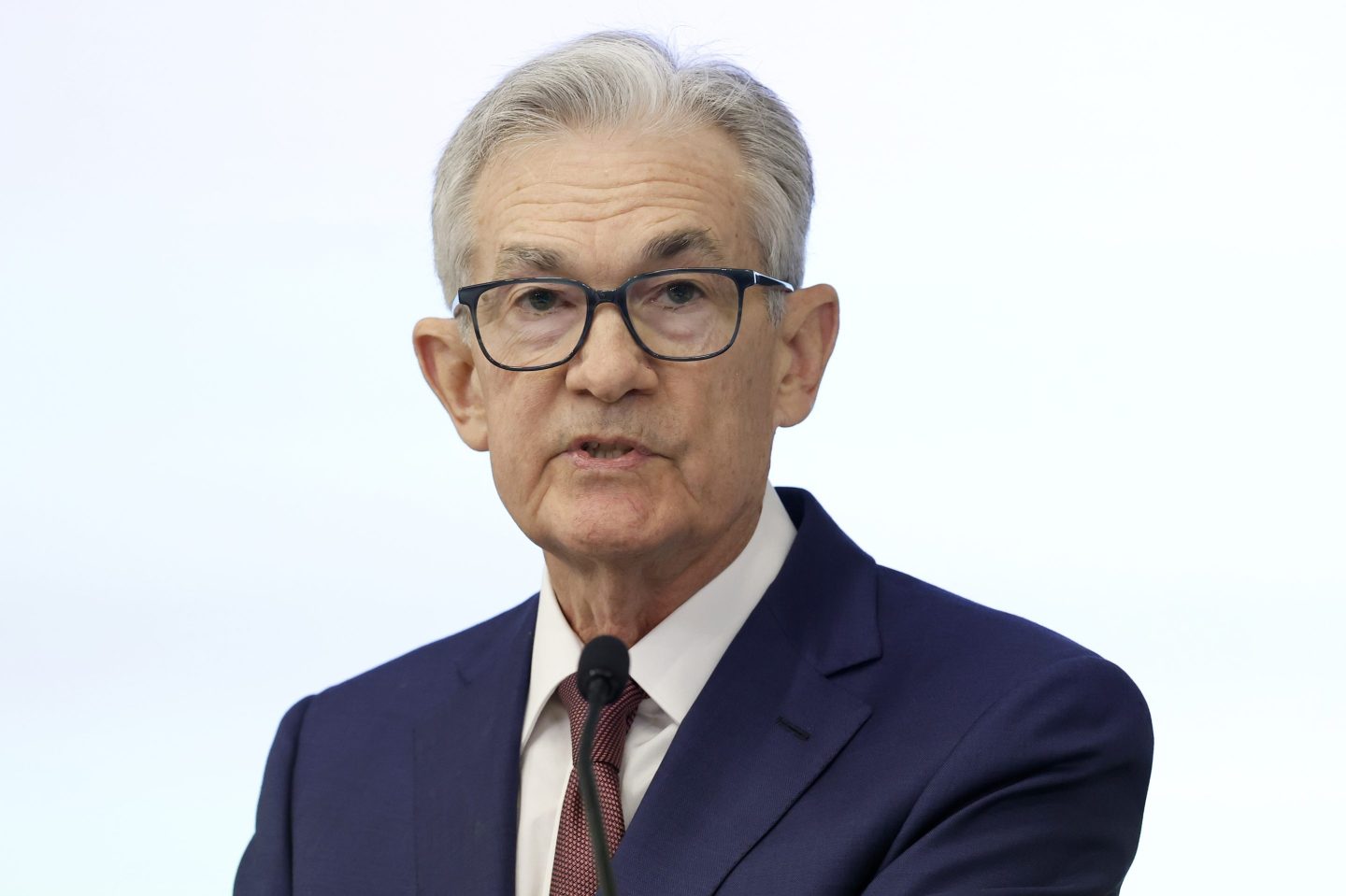
Jerome Powell
Federal Reserve Chair Jerome Powell.Chip Somodevilla—Getty Images

The nation’s economy grew at an unexpectedly brisk 3.3% annual pace from October through December as Americans showed a continued willingness to spend freely despite high interest rates and price levels that have frustrated many households.

Thursday’s report from the Commerce Department said the gross domestic product — the economy’s total output of goods and services — decelerated from its sizzling 4.9% growth rate the previous quarter. But the latest figures still reflected the surprising durability of the world’s largest economy, marking the sixth straight quarter in which GDP has grown at an annual pace of 2% or more. Consumers fueled much of last quarter’s expansion.

For all of 2023, the economy grew 2.5%, up from 1.9% in 2022.

The state of the economy is sure to weigh on people’s minds ahead of the November elections. After an extended period of gloom, Americans are starting to feel somewhat better about inflation and the economy — a trend that could sustain consumer spending, fuel economic growth and potentially affect voters’ decisions. A measure of consumer sentiment by the University of Michigan, for example, has jumped in the past two months by the most since 1991.

There is growing optimism that the Federal Reserve is on track to deliver a rare “soft landing” — raising borrowing rates enough to cool growth, hiring and inflation yet not so much as to send the economy into a tailspin. Inflation touched a four-decade high in 2022 but has since edged steadily lower without the painful layoffs that most economists had thought would be necessary to slow the acceleration of prices.

The economy’s outlook had looked far bleaker a year ago. As recently as April 2023, an economic model published by the Conference Board, a business group, had pegged the likelihood of a U.S. recession over the next 12 months at close to 99%.

Even as inflation in the United States has slowed significantly, overall prices remain nearly 17% above where they were before the pandemic erupted three years ago, which has exasperated many Americans. That fact will likely raise a pivotal question for the nation’s voters, many of whom are still feeling the lingering financial and psychological effects of the worst bout of inflation in four decades. Which will carry more weight in the presidential election: The sharp drop in inflation or the fact that most prices are well above where they were three years ago?

The Fed began raising its benchmark rate in March 2022 in response to the resurgence in inflation that accompanied the economy’s recovery from the pandemic recession. By the time its hikes ended in July last year, the central bank had raised its influential rate from near zero to roughly 5.4%, the highest level since 2001.

As the Fed’s rate hikes worked their way through the economy, year-over-year inflation slowed from 9.1% in June 2022, the fastest rate in four decades, to 3.4% as of last month. That marked a striking improvement but still leaves inflation above the Fed’s 2% target.

The progress so far has come at surprisingly little economic cost. Employers have added a healthy 225,000 jobs a month over the past year. And unemployment has remained below 4% for 23 straight months, the longest such streak since the 1960s.

The once red-hot job market has cooled somewhat, easing pressure on companies to raise pay to keep or attract employees and then pass on their higher labor costs to their customers through price hikes.

It’s happened in perhaps the least painful way: Employers are generally posting fewer job openings rather than laying off workers. That is partly because many companies are reluctant to risk losing workers after having been caught flat-footed when the economy roared back from the brief but brutal 2020 pandemic recession.

Another reason for the economy’s sturdiness is that consumers emerged from the pandemic in surprisingly good financial shape, partly because tens of millions of households had received government stimulus checks. As a result, many consumers have managed to keep spending even in the face of rising prices and high interest rates.

Some economists have suggested that the economy will weaken in the coming months as pandemic savings are exhausted, credit card use nears its limits and higher borrowing rates curtail spending. Still, the government reported last week that consumers stepped up their spending at retailers in December, an upbeat end to the holiday shopping season.

Joe Brusuelas, chief economist at the tax and consulting firm RSM, said he thinks consumer spending is even stronger than the retail sales report indicated. Brusuelas suggested that the government data “did not adequately capture’’ increased holiday splurging on travel and other services.


Join us at the Fortune Workplace Innovation Summit May 19–20, 2026, in Atlanta. The next era of workplace innovation is here—and the old playbook is being rewritten. At this exclusive, high-energy event, the world’s most innovative leaders will convene to explore how AI, humanity, and strategy converge to redefine, again, the future of work. Register now.
About the Authors
By Paul Wiseman
See full bioRight Arrow Button Icon
By The Associated Press
See full bioRight Arrow Button Icon

Latest in Finance

InnovationRobots
Even in Silicon Valley, skepticism looms over robots, while ‘China has certainly a lot more momentum on humanoids’
By Matt O'Brien and The Associated PressDecember 13, 2025
30 minutes ago
HealthAffordable Care Act (ACA)
A Wisconsin couple was paying $2 a month for an ACA health plan. But as subsidies expire, it’s soaring to $1,600, forcing them to downgrade
By Ali Swenson and The Associated PressDecember 13, 2025
44 minutes ago
Julian Braithwaite is the Director General of the International Alliance for Responsible Drinking
CommentaryProductivity
Gen Z is drinking 20% less than Millennials. Productivity is rising. Coincidence? Not quite
By Julian BraithwaiteDecember 13, 2025
2 hours ago
carbon
Commentaryclimate change
Banking on carbon markets 2.0: why financial institutions should engage with carbon credits
By Usha Rao-MonariDecember 13, 2025
3 hours ago
Oracle chairman of the board and chief technology officer Larry Ellison delivers a keynote address during the 2019 Oracle OpenWorld on September 16, 2019 in San Francisco, California.
AIOracle
Oracle’s collapsing stock shows the AI boom is running into two hard limits: physics and debt markets
By Eva RoytburgDecember 13, 2025
6 hours ago
EconomyFederal Reserve
Trump names Warsh, Hassett as top Fed contenders, WSJ says
By Jennifer A. Dlouhy and BloombergDecember 12, 2025
16 hours ago

Most Popular

placeholder alt text
Economy
Tariffs are taxes and they were used to finance the federal government until the 1913 income tax. A top economist breaks it down
By Kent JonesDecember 12, 2025
1 day ago
placeholder alt text
Success
Apple cofounder Ronald Wayne sold his 10% stake for $800 in 1976—today it’d be worth up to $400 billion
By Preston ForeDecember 12, 2025
1 day ago
placeholder alt text
Success
40% of Stanford undergrads receive disability accommodations—but it’s become a college-wide phenomenon as Gen Z try to succeed in the current climate
By Preston ForeDecember 12, 2025
1 day ago
placeholder alt text
Economy
For the first time since Trump’s tariff rollout, import tax revenue has fallen, threatening his lofty plans to slash the $38 trillion national debt
By Sasha RogelbergDecember 12, 2025
20 hours ago
placeholder alt text
Economy
The Fed just ‘Trump-proofed’ itself with a unanimous move to preempt a potential leadership shake-up
By Jason MaDecember 12, 2025
18 hours ago
placeholder alt text
Success
At 18, doctors gave him three hours to live. He played video games from his hospital bed—and now, he’s built a $10 million-a-year video game studio
By Preston ForeDecember 10, 2025
3 days ago
Rankings
  • 100 Best Companies
  • Fortune 500
  • Global 500
  • Fortune 500 Europe
  • Most Powerful Women
  • Future 50
  • World’s Most Admired Companies
  • See All Rankings
Sections
  • Finance
  • Leadership
  • Success
  • Tech
  • Asia
  • Europe
  • Environment
  • Fortune Crypto
  • Health
  • Retail
  • Lifestyle
  • Politics
  • Newsletters
  • Magazine
  • Features
  • Commentary
  • Mpw
  • CEO Initiative
  • Conferences
  • Personal Finance
  • Education
Customer Support
  • Frequently Asked Questions
  • Customer Service Portal
  • Privacy Policy
  • Terms Of Use
  • Single Issues For Purchase
  • International Print
Commercial Services
  • Advertising
  • Fortune Brand Studio
  • Fortune Analytics
  • Fortune Conferences
  • Business Development
About Us
  • About Us
  • Editorial Calendar
  • Press Center
  • Work At Fortune
  • Diversity And Inclusion
  • Terms And Conditions
  • Site Map

© 2025 Fortune Media IP Limited. All Rights Reserved. Use of this site constitutes acceptance of our Terms of Use and Privacy Policy | CA Notice at Collection and Privacy Notice | Do Not Sell/Share My Personal Information
FORTUNE is a trademark of Fortune Media IP Limited, registered in the U.S. and other countries. FORTUNE may receive compensation for some links to products and services on this website. Offers may be subject to change without notice.