• Home
  • Latest
  • Fortune 500
  • Finance
  • Tech
  • Leadership
  • Lifestyle
  • Rankings
  • Multimedia

Trendingnow

1

Gen Z fled San Francisco for Texas and Florida. Now they’re turning ‘welcomer cities’ into the next big tech towns

2

Melinda French Gates' advice to new IPO millionaires: 'Give half your money away'

3

Trump expects to sign a deal with Iran on Sunday, but Tehran may want to avoid giving him a gift on his birthday

1

Gen Z fled San Francisco for Texas and Florida. Now they’re turning ‘welcomer cities’ into the next big tech towns

2

Melinda French Gates' advice to new IPO millionaires: 'Give half your money away'

3

Trump expects to sign a deal with Iran on Sunday, but Tehran may want to avoid giving him a gift on his birthday
FinanceReal Estate

The least affordable housing market in more than a generation is facing another threat: Uninsurable properties

By
Alena Botros
Alena Botros
Former staff writer
Down Arrow Button Icon
By
Alena Botros
Alena Botros
Former staff writer
Down Arrow Button Icon
January 20, 2024, 7:00 AM ET
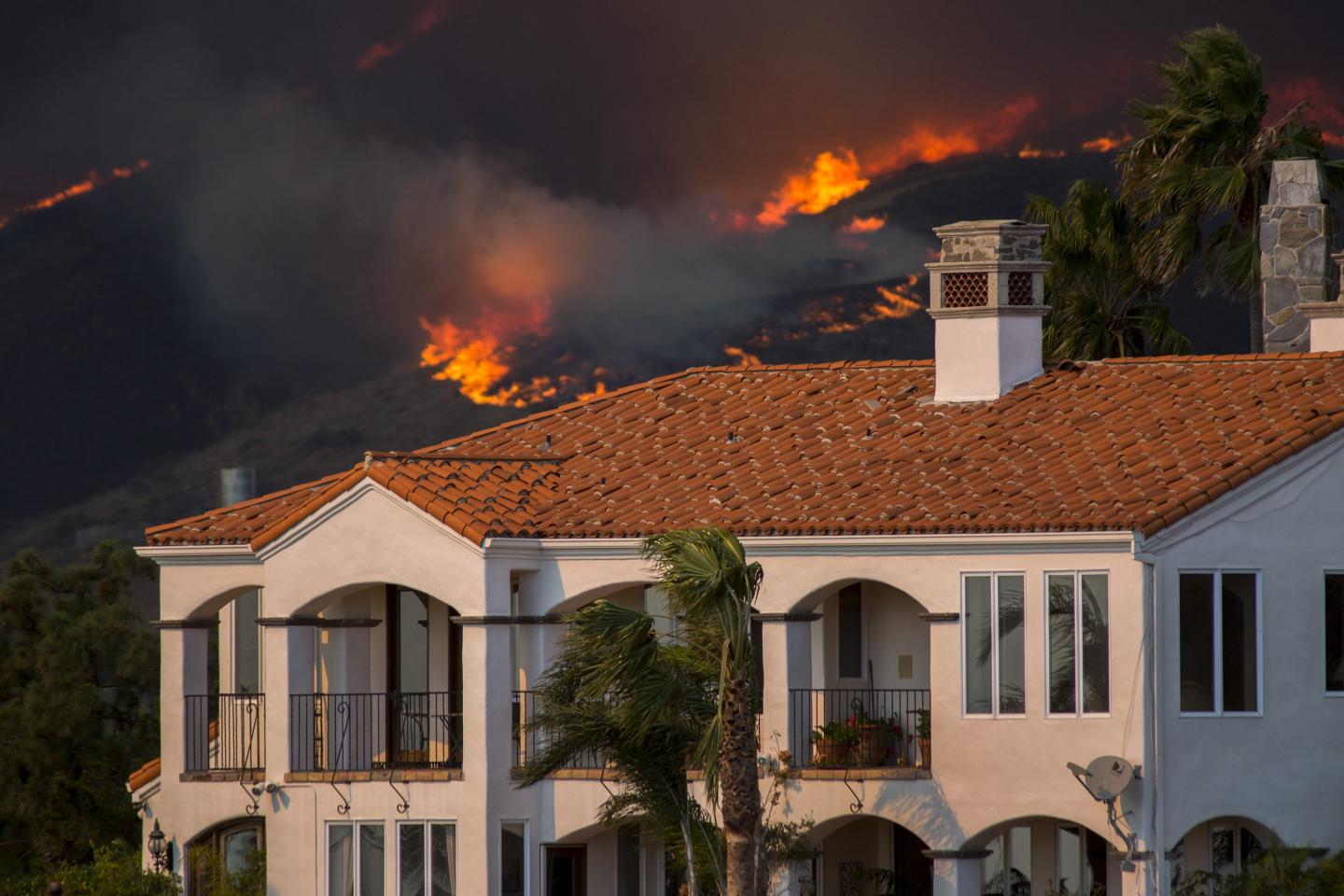
The Woolsey Fire approaching homes in November 2018 in Malibu, California.
The Woolsey Fire approaching homes in November 2018 in Malibu, California. David McNew/Getty Images

Garret Gray sort of laughs when he tells Fortune about how his house in a Los Angeles canyon was nearly uninsurable. Surrounded by brush, “it’s got a really bad CoreLogic fire score,” he says. And he should know: As the president of CoreLogic’s global insurance solutions business, he knows how the changing insurance scene is shaking up real estate. 

The extreme weather problem costs the country $23 billion a year and counting (last year saw 23 major weather events that caused at least $1 billion in damage), and it’s wreaking havoc on homeowners’ insurance in climate risk-prone states. The California and Florida housing markets are staring down a bona fide insurance shock.

Lately, homeowners’ insurance in California has been a mess, with property insurers either capping the number of policies they write in the state or simply refusing to write new homeowner policies altogether. Consider State Farm, California’s largest home insurer, which last year announced that it would stop accepting new applications for property insurance because of “historic increases in construction costs outpacing inflation, rapidly growing catastrophe exposure, and a challenging reinsurance market.” And now, State Farm is reportedly raising rates by an average of about 20% this year. “These rate changes are driven by increased costs and risk,” the company said in a statement to the San Francisco Chronicle. 

What’s happening in California mirrors trends across the country, Amy Bach, the cofounder and executive director of United Policyholders, said. The insurance crisis is just as acute in wildfire-prone California as it is in hurricane-prone Florida — although the latter has been at the forefront of the problem, Bach told Fortune. Florida has lost multiple home insurers as they flee the state. And this insurance shock is only going to get worse as the severity and frequency of extreme weather events is increasing. 

There’s a “very unfortunate confluence of factors and a very uncertain future for the private property insurance ecosystem as we’ve known it,” Bach said. For one, in her view, insurance executives fear increasingly frequent and expensive claims from policyholders alongside more and more extreme weather events; they’re worried that it’s going to be much harder for the residential property insurance business to be profitable. Then there’s the rise of technology that promises to filter out higher-risk properties, Bach said, pointing to none other than CoreLogic’s risk-scoring and assessment system. Such tools offer to reduce insurance consumers, and individual risk to a single number—which an insurer can then decline to cover. And it’s also been a hard market for reinsurance, which is essentially insurance for insurance companies.

“The advent of risk scoring, the advent of insurance scoring, the satellite drone imagery, the migration of human-driven underwriting to machine-learning-driven underwriting has really changed the odds,” she said. 

In California, the FAIR Plan exists for residents that can’t obtain insurance through a regular insurance company, but it’s bare-bones and costly. United Policyholders’ 2023 California homeowners’ insurance survey unearthed many sad stories, Bach said—people fearing that they’ll lose their home because they can’t afford the FAIR Plan, which is reportedly receiving 1,000 applications every day. 

“There’s no question people in California are going to be paying more for insurance in the foreseeable future,” Bach said. 

Severe weather: Bad today, worse tomorrow

Perilous weather events are at the core of the insurance business, and at the moment, several insurance models aren’t allowed to account for climate change, which is affecting the severity, frequency, and often location of major disasters. That’s created more losses for carriers, and for homeowners, it has meant more people displaced from their homes, Gray said. 

It’s a problem for the housing market, which is only now beginning to thaw with slightly improved affordability after home prices skyrocketed during the pandemic housing boom and mortgage rates more than doubled. Given how connected insurance and real estate are, a problem in the insurance market could affect many Americans’ ability, and decision, to buy. But there are some regulatory changes on the way that could alleviate insurance woes in the two states. In California, Proposition 103 has limited the ability to use climate models to predict risk far into the future, Gray explained. But it could be revisited, changing how the insurance market functions in the state. 

“We think some carriers are exiting the state because they aren’t able to take into account all the things they need to do to price risk,” Gray said, “so we think the loosening of 103 will help induce carriers to come back.” 

While that might be true, there’s other legislation that Bach’s nonprofit supports, which essentially says that if a homeowner has mitigated their risk by meeting a “safer from wildfires” standards, then an insurer must offer them a policy. 

Meanwhile, in Florida, state officials are updating building codes to address the increasing frequency and severity of weather events, and wind in particular, Gray said. However, that won’t have an immediate effect because building codes only apply to new construction buildings or those undergoing significant renovations, he added. Still, “over time, just like with earthquake codes in California, you will find that buildings are more resilient, which will reduce the costs and severity of claims, which will bring down the cost of insurance,” he predicted.

Any relief in costs is welcome given homeowners in Florida are already paying the highest insurance premiums in the nation, at on average $6,000 per year as of last summer, versus the U.S. average of $1,700 per year, according to Mark Friedlander, the Florida-based director of corporate communications for the Insurance Information Institute.

But climate risk goes beyond California and Florida; Gray pointed to Maui, which has historically had a very low risk of wildfire given how wet it is. Yet in August of last year, the island was racked by a series of wildfires—the deadliest in the country in more than a century. That goes to show that weather-related catastrophes are not only occurring more frequently and more intensely, but are happening in areas that weren’t previously perceived as risky. “We’re having to adjust our models,” Gray said. 

Still, trouble in the insurance market spells even more trouble for the housing market. With his own home that was almost impossible to insure, “I almost backed out of the deal,” he said. Ultimately, Gray made some changes to make his home more insurable, but there’s likely more real estate deals falling through “because of the lack of insurability of the property,” he said. 

It’s true for Malibu and the surrounding canyons, Gray said, adding that the farther up you go, the more difficult it becomes to insure a property. And if people can’t self-insure or set aside money to be used in the event that something happens to their home, which most can’t, it’s likely to affect buying decisions. More conscientious homebuyers will want to know about what weather events generally occur and what kind of vegetation surrounds the property to gauge insurability. From there, it could make some homes more marketable (though more costly), and others less marketable—meaning sellers may have to offer concessions. 

In the past, being able to get homeowners’ insurance was a given, but that’s no longer the reality we live in, Gray said. 

“It’s very scary as a homeowner—your home is generally your biggest asset, right? It’s where your family lives, and it should be your safe space,” he said. “If you can’t insure your safe space, think of the emotional toll of that.” 

About the Author
By Alena BotrosFormer staff writer
LinkedIn iconTwitter icon

Alena Botros is a former reporter at Fortune, where she primarily covered real estate.

See full bioRight Arrow Button Icon

Latest in Finance

Finance
Lorem ipsum dolor sit amet, consectetur adipiscing elit, sed do eiusmod tempor incididunt ut labore et dolore magna aliqua. Ut enim ad minim veniam
By Fortune Editors
October 20, 2025
Finance
Lorem ipsum dolor sit amet, consectetur adipiscing elit, sed do eiusmod tempor incididunt ut labore et dolore magna aliqua. Ut enim ad minim veniam
By Fortune Editors
October 20, 2025
Finance
Lorem ipsum dolor sit amet, consectetur adipiscing elit, sed do eiusmod tempor incididunt ut labore et dolore magna aliqua. Ut enim ad minim veniam
By Fortune Editors
October 20, 2025
Finance
Lorem ipsum dolor sit amet, consectetur adipiscing elit, sed do eiusmod tempor incididunt ut labore et dolore magna aliqua. Ut enim ad minim veniam
By Fortune Editors
October 20, 2025
Finance
Lorem ipsum dolor sit amet, consectetur adipiscing elit, sed do eiusmod tempor incididunt ut labore et dolore magna aliqua. Ut enim ad minim veniam
By Fortune Editors
October 20, 2025
Finance
Lorem ipsum dolor sit amet, consectetur adipiscing elit, sed do eiusmod tempor incididunt ut labore et dolore magna aliqua. Ut enim ad minim veniam
By Fortune Editors
October 20, 2025

Most Popular

Finance
Lorem ipsum dolor sit amet, consectetur adipiscing elit, sed do eiusmod tempor incididunt ut labore et dolore magna aliqua. Ut enim ad minim veniam
By Fortune Editors
October 20, 2025
Finance
Lorem ipsum dolor sit amet, consectetur adipiscing elit, sed do eiusmod tempor incididunt ut labore et dolore magna aliqua. Ut enim ad minim veniam
By Fortune Editors
October 20, 2025
Finance
Lorem ipsum dolor sit amet, consectetur adipiscing elit, sed do eiusmod tempor incididunt ut labore et dolore magna aliqua. Ut enim ad minim veniam
By Fortune Editors
October 20, 2025
Finance
Lorem ipsum dolor sit amet, consectetur adipiscing elit, sed do eiusmod tempor incididunt ut labore et dolore magna aliqua. Ut enim ad minim veniam
By Fortune Editors
October 20, 2025
Finance
Lorem ipsum dolor sit amet, consectetur adipiscing elit, sed do eiusmod tempor incididunt ut labore et dolore magna aliqua. Ut enim ad minim veniam
By Fortune Editors
October 20, 2025
Finance
Lorem ipsum dolor sit amet, consectetur adipiscing elit, sed do eiusmod tempor incididunt ut labore et dolore magna aliqua. Ut enim ad minim veniam
By Fortune Editors
October 20, 2025
Fortune Secondary Logo
Rankings
  • 100 Best Companies
  • Fortune 500
  • Global 500
  • Fortune 500 Europe
  • Most Powerful Women
  • World's Most Admired Companies
  • See All Rankings
  • Lists Calendar
Sections
  • Finance
  • Fortune Crypto
  • Features
  • Leadership
  • Health
  • Commentary
  • Success
  • Retail
  • Mpw
  • Tech
  • Lifestyle
  • CEO Initiative
  • Asia
  • Politics
  • Conferences
  • Europe
  • Newsletters
  • Personal Finance
  • Environment
  • Magazine
  • Education
Customer Support
  • Frequently Asked Questions
  • Customer Service Portal
  • Privacy Policy
  • Terms Of Use
  • Single Issues For Purchase
  • International Print
Commercial Services
  • Advertising
  • Fortune Brand Studio
  • Fortune Analytics
  • Fortune Conferences
  • Business Development
  • Group Subscriptions
About Us
  • About Us
  • Press Center
  • Work At Fortune
  • Terms And Conditions
  • Site Map
  • About Us
  • Press Center
  • Work At Fortune
  • Terms And Conditions
  • Site Map
  • Facebook icon
  • Twitter icon
  • LinkedIn icon
  • Instagram icon
  • Pinterest icon

Latest in Finance

mid
Real EstateMidwest
The Sun Belt boom is over. Midwest real-estate investors say ‘I told you so’
By Ivan BarrattJune 14, 2026
4 hours ago
A 1% mistake costs $10 billion: Inside the impossible math of managing Elon Musk’s trillionaire SpaceX wealth
Personal FinanceElon Musk
A 1% mistake costs $10 billion: Inside the impossible math of managing Elon Musk’s trillionaire SpaceX wealth
By Sydney LakeJune 14, 2026
5 hours ago
Boomers actually do hold most of the wealth and power. So why do they call it ‘whiny’ to point that out?
Economybaby boomers
Boomers actually do hold most of the wealth and power. So why do they call it ‘whiny’ to point that out?
By Nick LichtenbergJune 14, 2026
5 hours ago
t
CommentaryTariffs
A quartz countertop tariff could double your kitchen renovation cost — and kill 13 jobs for every one it creates
By Steve SwedbergJune 14, 2026
7 hours ago
Pump pain, Wall Street gain: Iran war sends U.S. oil profits, stocks soaring as the big winners
Energycrude oil
Pump pain, Wall Street gain: Iran war sends U.S. oil profits, stocks soaring as the big winners
By Jordan BlumJune 14, 2026
7 hours ago
Middle-aged adults taking GLP-1s for obesity can save over $192K on lifetime medical costs, higher if they don’t have college degrees, new study finds
HealthHealth
Middle-aged adults taking GLP-1s for obesity can save over $192K on lifetime medical costs, higher if they don’t have college degrees, new study finds
By Mia OsmonbekovJune 14, 2026
8 hours ago

Most Popular

Gen Z fled San Francisco for Texas and Florida. Now they’re turning ‘welcomer cities’ into the next big tech towns
Real Estate
Gen Z fled San Francisco for Texas and Florida. Now they’re turning ‘welcomer cities’ into the next big tech towns
By Sydney LakeJune 13, 2026
1 day ago
Melinda French Gates' advice to new IPO millionaires: 'Give half your money away'
Startups & Venture
Melinda French Gates' advice to new IPO millionaires: 'Give half your money away'
By Emma HinchliffeJune 13, 2026
1 day ago
Trump expects to sign a deal with Iran on Sunday, but Tehran may want to avoid giving him a gift on his birthday
Middle East
Trump expects to sign a deal with Iran on Sunday, but Tehran may want to avoid giving him a gift on his birthday
By Jason MaJune 13, 2026
20 hours ago
'It's not a jailbreak' — Research leading to U.S. export restrictions on top Anthropic models was for defense, cybersecurity CEO says
AI
'It's not a jailbreak' — Research leading to U.S. export restrictions on top Anthropic models was for defense, cybersecurity CEO says
By Jason MaJune 13, 2026
22 hours ago
SpaceX CFO Bret Johnsen quietly engineered its historic IPO and became an overnight billionaire
C-Suite
SpaceX CFO Bret Johnsen quietly engineered its historic IPO and became an overnight billionaire
By Sasha RogelbergJune 13, 2026
1 day ago
Anthropic disables Fable and Mythos AI models after U.S. government bars it from giving foreigners access
AI
Anthropic disables Fable and Mythos AI models after U.S. government bars it from giving foreigners access
By Jeremy KahnJune 13, 2026
1 day ago

© 2026 Fortune Media IP Limited. All Rights Reserved. Use of this site constitutes acceptance of our Terms of Use and Privacy Policy | CA Notice at Collection and Privacy Notice | Do Not Sell/Share My Personal Information
FORTUNE is a trademark of Fortune Media IP Limited, registered in the U.S. and other countries. FORTUNE may receive compensation for some links to products and services on this website. Offers may be subject to change without notice.