• Home
  • Latest
  • Fortune 500
  • Finance
  • Tech
  • Leadership
  • Lifestyle
  • Rankings
  • Multimedia
TechFinance

Chamath Palihapitiya says venture capitalists also face disruption from AI—and startup founders stand to benefit

Steve Mollman
By
Steve Mollman
Steve Mollman
Contributors Editor
Down Arrow Button Icon
Steve Mollman
By
Steve Mollman
Steve Mollman
Contributors Editor
Down Arrow Button Icon
December 24, 2023, 1:16 PM ET
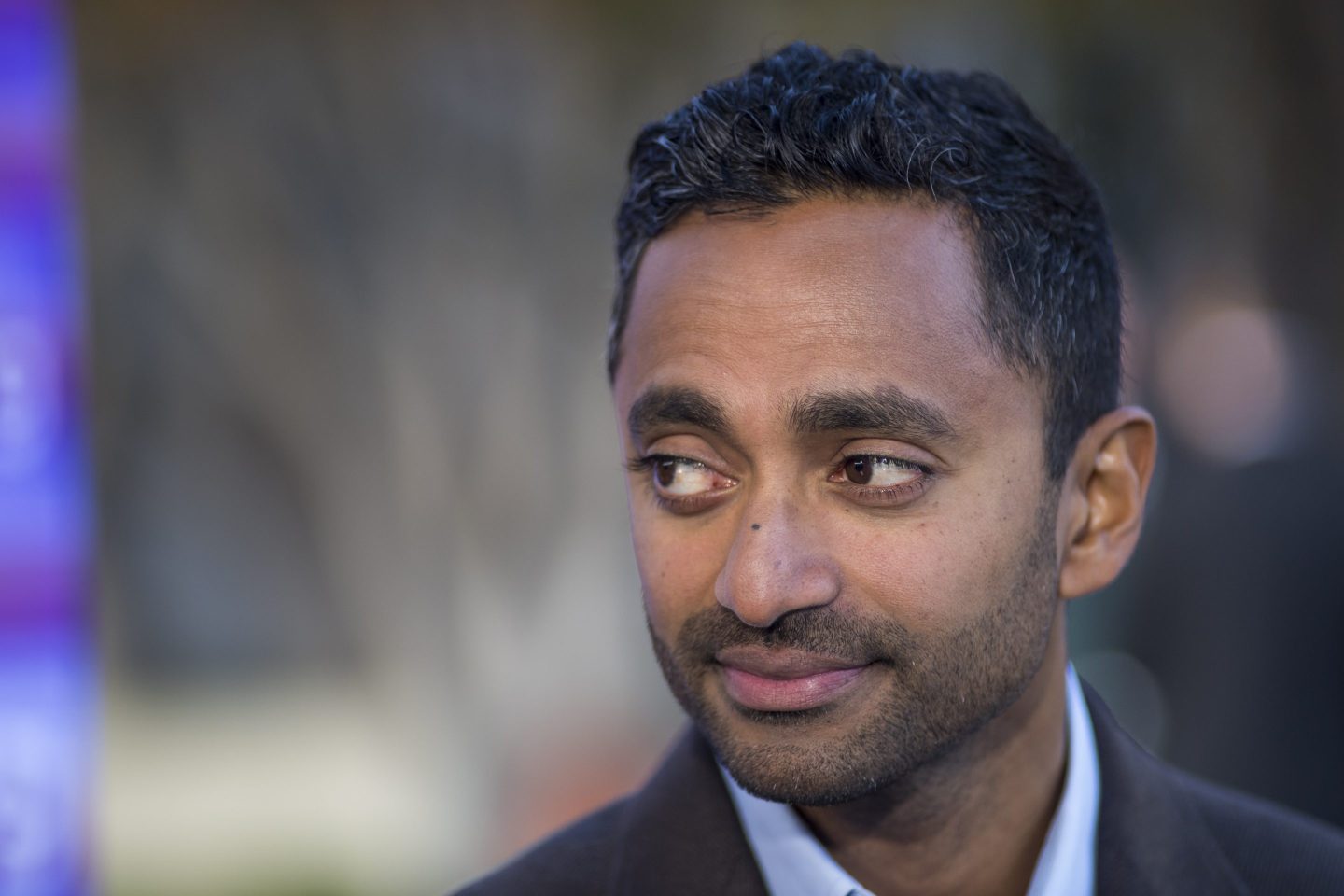
Billionaire investor Chamath Palihapitiya.
Billionaire investor Chamath Palihapitiya.David Paul Morris/Bloomberg via Getty Images

Artificial intelligence has been inescapable this year. After OpenAI released ChatGPT some 13 months ago, attention turned to how such tools will disrupt careers and industries—and eager venture capitalists poured billions into AI startups that might do the disrupting.

But VCs themselves could get disrupted, according to billionaire investor Chamath Palihapitiya, a former Facebook executive and the CEO of VC firm Social Capital.

“We talk about AI as a big disruptor to the big companies and this and that, but AI may be the biggest disruptor to VC in the end,” Palihapitiya said on the All-In Podcast this week.

A “world where AI proliferates,” he said, is “positive for founders,” who will be able to own more of their companies rather than give away too much equity to VCs.

In the past, he said, a tech startup with $2 million in seed funding might hire seven people and have enough capital to survive for a year and a half, after which it hopefully gained enough traction so that investors would pony up $10 million or $15 million in Series A funding. The downside, of course, is that in exchange for capital, VCs want equity in the company.

But AI tools give founders more leverage, Palihapitiya said, mentioning GitHub Copilot, which makes creating and fixing code much easier. Startups can now hire programmers, perhaps in other countries with lower pay rates, to use such tools to get more done faster, he noted.

The upshot is that, today, a tech startup with the same amount of seed funding might have a three- or four-person team and survive on that $2 million for four years rather than a year a half. Founders could then end up owning 80% of their company with the potential to exit for $50 million or $100 million, “and they’ve made more money than in a traditional outcome” he said.

“It’s only a matter of time,” Palihapitiya added, “until they can put two and two together in an Excel spreadsheet to figure out that owning 50% of a $100 million company is greater than owning 18% of some other company when you’re massively diluted, or 8% or whatever.”

Jason Calacanis, an angel investor, responded that now, instead of founders of a particular cohort competing on who can raise the most money at the highest valuation, he’s seen them shifting to, “how do I get to profitability and how do I own as much of my company as possible?” 

Palihapitiya became the face of the SPAC boom-and-bust a few years back due to his involvement with special purpose acquisition companies—shell corporations listed on a stock exchange that acquire a private company, thereby making it public sans the rigors of the IPO process.   

This isn’t the first time he has mulled the role of VCs in an AI-altered world.

It “seems pretty reasonable and logical,” he said last month on the podcast, that AI productivity gains will lead to tens or hundreds of millions of startups made up of only one or two people.

“There’s a lot of sort of financial engineering that kind of goes away in that world,” he said. “I think the job of the venture capitalist changes really profoundly. I think there’s a reasonable case to make that it doesn’t exist.” 

Join us at the Fortune Workplace Innovation Summit May 19–20, 2026, in Atlanta. The next era of workplace innovation is here—and the old playbook is being rewritten. At this exclusive, high-energy event, the world’s most innovative leaders will convene to explore how AI, humanity, and strategy converge to redefine, again, the future of work. Register now.
About the Author
Steve Mollman
By Steve MollmanContributors Editor
LinkedIn iconTwitter icon

Steve Mollman is a contributors editor at Fortune.

See full bioRight Arrow Button Icon

Latest in Tech

AIchief executive officer (CEO)
Microsoft AI boss Suleyman opens up about his peers and calls Elon Musk a ‘bulldozer’ with ‘superhuman capabilities to bend reality to his will’
By Jason MaDecember 13, 2025
27 minutes ago
InvestingStock
There have been head fakes before, but this time may be different as the latest stock rotation out of AI is just getting started, analysts say
By Jason MaDecember 13, 2025
6 hours ago
Politicsdavid sacks
Can there be competency without conflict in Washington?
By Alyson ShontellDecember 13, 2025
6 hours ago
InnovationRobots
Even in Silicon Valley, skepticism looms over robots, while ‘China has certainly a lot more momentum on humanoids’
By Matt O'Brien and The Associated PressDecember 13, 2025
8 hours ago
Sarandos
Arts & EntertainmentM&A
It’s a sequel, it’s a remake, it’s a reboot: Lawyers grow wistful for old corporate rumbles as Paramount, Netflix fight for Warner
By Nick LichtenbergDecember 13, 2025
12 hours ago
Oracle chairman of the board and chief technology officer Larry Ellison delivers a keynote address during the 2019 Oracle OpenWorld on September 16, 2019 in San Francisco, California.
AIOracle
Oracle’s collapsing stock shows the AI boom is running into two hard limits: physics and debt markets
By Eva RoytburgDecember 13, 2025
13 hours ago

Most Popular

placeholder alt text
Economy
Tariffs are taxes and they were used to finance the federal government until the 1913 income tax. A top economist breaks it down
By Kent JonesDecember 12, 2025
2 days ago
placeholder alt text
Success
Apple cofounder Ronald Wayne sold his 10% stake for $800 in 1976—today it’d be worth up to $400 billion
By Preston ForeDecember 12, 2025
1 day ago
placeholder alt text
Success
40% of Stanford undergrads receive disability accommodations—but it’s become a college-wide phenomenon as Gen Z try to succeed in the current climate
By Preston ForeDecember 12, 2025
1 day ago
placeholder alt text
Economy
The Fed just ‘Trump-proofed’ itself with a unanimous move to preempt a potential leadership shake-up
By Jason MaDecember 12, 2025
1 day ago
placeholder alt text
Economy
For the first time since Trump’s tariff rollout, import tax revenue has fallen, threatening his lofty plans to slash the $38 trillion national debt
By Sasha RogelbergDecember 12, 2025
1 day ago
placeholder alt text
Success
Apple CEO Tim Cook out-earns the average American’s salary in just 7 hours—to put that into context, he could buy a new $439,000 home in just 2 days
By Emma BurleighDecember 12, 2025
1 day ago
Rankings
  • 100 Best Companies
  • Fortune 500
  • Global 500
  • Fortune 500 Europe
  • Most Powerful Women
  • Future 50
  • World’s Most Admired Companies
  • See All Rankings
Sections
  • Finance
  • Leadership
  • Success
  • Tech
  • Asia
  • Europe
  • Environment
  • Fortune Crypto
  • Health
  • Retail
  • Lifestyle
  • Politics
  • Newsletters
  • Magazine
  • Features
  • Commentary
  • Mpw
  • CEO Initiative
  • Conferences
  • Personal Finance
  • Education
Customer Support
  • Frequently Asked Questions
  • Customer Service Portal
  • Privacy Policy
  • Terms Of Use
  • Single Issues For Purchase
  • International Print
Commercial Services
  • Advertising
  • Fortune Brand Studio
  • Fortune Analytics
  • Fortune Conferences
  • Business Development
About Us
  • About Us
  • Editorial Calendar
  • Press Center
  • Work At Fortune
  • Diversity And Inclusion
  • Terms And Conditions
  • Site Map

© 2025 Fortune Media IP Limited. All Rights Reserved. Use of this site constitutes acceptance of our Terms of Use and Privacy Policy | CA Notice at Collection and Privacy Notice | Do Not Sell/Share My Personal Information
FORTUNE is a trademark of Fortune Media IP Limited, registered in the U.S. and other countries. FORTUNE may receive compensation for some links to products and services on this website. Offers may be subject to change without notice.