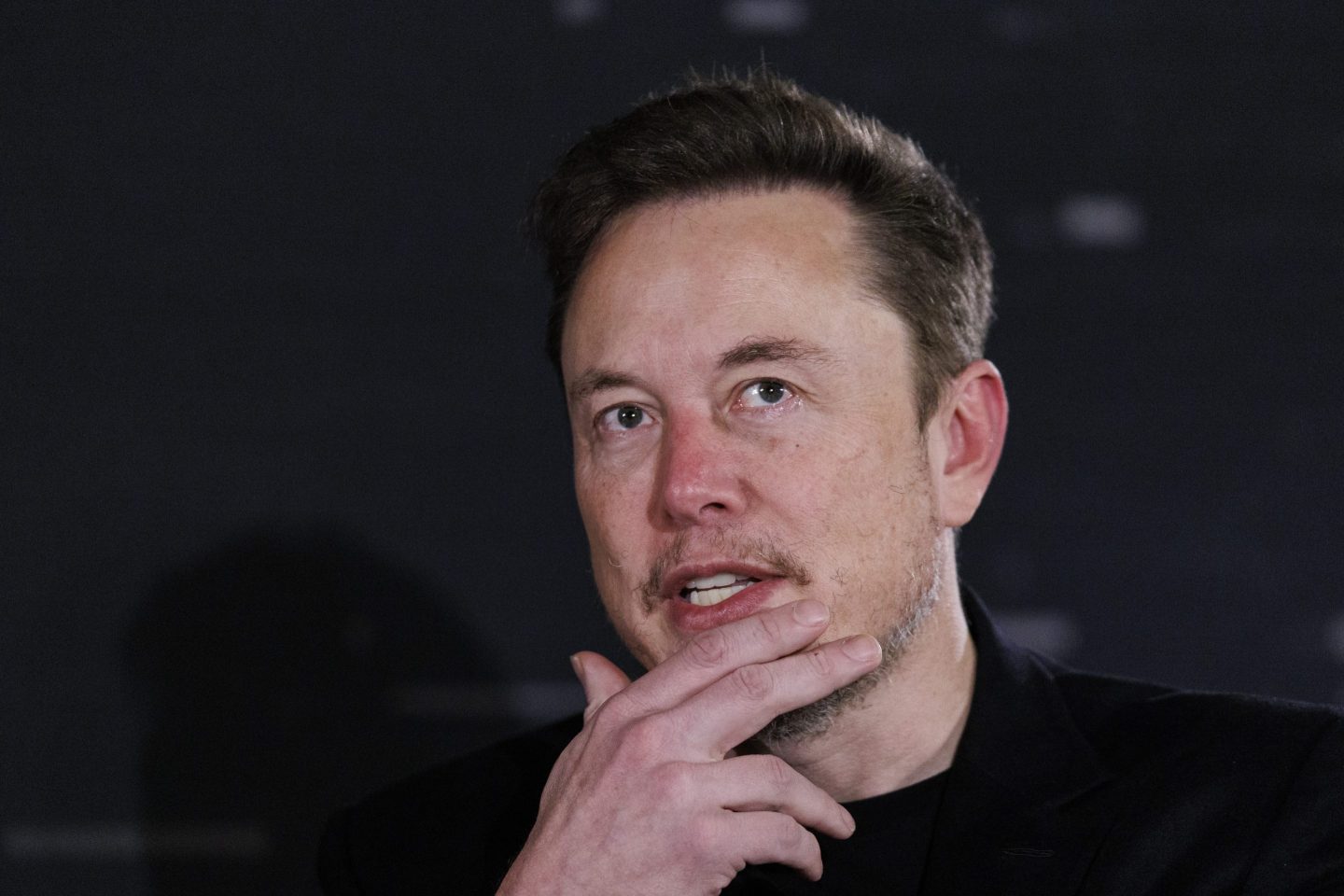
The more queries Elon Musk fielded about price cuts during his recent third-quarter investor call, the more irascible the Tesla CEO became.
At one point the repeated line of questioning around the ebbing pace of growth steamed Musk so much, that the world’s wealthiest man complained of getting “Marie Antoinette vibes” from his very own shareholders, before berating them for being out of touch with the plight of everyday Americans.
“For the vast majority of people, buying a car is about the monthly payment,” the tycoon lectured.
After years of low inflation and near-zero borrowing costs, the pendulum has swung hard in the other direction in the past 12 months. A flurry of Federal Reserve rate hikes combined with a sharp surge in vehicle prices makes it harder than ever for the average household to afford a new car.
“It’s the economic sector most exposed to higher interest rates right now,” Olu Sonola, chief U.S. economist for Fitch Ratings, tells Fortune.
Musk has one big dilemma: what to do in the U.S. market, where lower-income earners are vulnerable to borrowing costs that are now expected to be higher for longer.
Every second EV sold in the country right now bears a Tesla badge. It has become so ubiquitous in California, the leading state for EV owners, that it supplanted Toyota as the brand of choice among all new car buyers in the second quarter, the latest for which data is available.
With demand from early adopters all but saturated, further sales gains will largely have to come from moving downmarket to lure average drivers that care little about status or technology. They prize convenience and often just want a safe, reliable and affordable car to go from A to B.
“We’re just hitting a ‘law of large numbers’ situation here,” Musk admitted.
This dilemma has raised the question among investors if more price cuts will recruit enough new customers to return to 50% annual growth or whether another strategy would be more effective.
Many believe Musk needs to spend on “customer education”, a euphemism advocates reach for since the CEO so thoroughly stigmatized the practice of advertising.
“Informing people of a car that is great but they cannot afford doesn’t really help,” he countered last month.
Financing drying up as banks pull back on lending
One idea that might help is Tesla stepping up its financing operations.
Most incumbent carmakers operate their own dedicated subsidiaries known as captives to provide competitive loan and lease deals.
When managed professionally, they can be a stable contributor to profits while also driving vehicle sales.
Former finance chief Zach Kirkhorn wasn’t a fan, however, since they consume a lot of cash, especially when credit is tightening. As a result Tesla instead chose to rely almost exclusively on third parties to lend money to its prospective car buyers.
This has come back to bite Tesla as banks and credit unions have cut back on business this year, according to data from market researcher Experian. Whereas these two channels once provided nearly 48% of all new car loans and leases last year, they are tracking at just 36% at present.
Captive financing subsidiaries have stepped into the gap—partly out of necessity—and now comprise over 58% of the new car financing market, up from 47% a year ago.
There’s another possible advantage incumbents might have over Tesla when it comes to reaching the mass market: the ability to draw in customers who might not be shopping for an EV.
“If I’m going into a GM dealership to buy a regular car I might be convinced to buy a hybrid or EV, which gives them an edge,” explains Sonola. “Tesla is unique in that you really have to want a Tesla to go into a showroom.”
Unlike Tesla, whose adjusted earnings per share dropped to a two-year low in the third quarter, GM’s underlying EPS remained stable.
“The observation about slowing EV demand growth is something that everybody’s been talking about,” CFO Paul Jacobson told investors. “I want to be clear—we’re not seeing that in our portfolio right now.”
This is partly because GM is in a much different position as a distant second with a share below 6% in its core U.S. market. It doesn’t have an installed global capacity of 2.35 million in electric vehicles like Tesla it needs to move annually to keep its factories humming.
Federal tax credit little help
President Biden’s $7,500 federal tax credit was supposed to level the playing field by reducing the premium consumers pay for an EV over a comparable gas car.
But as Musk noted, it hasn’t been helping much so far, since most people simply do not have that kind of spare cash lying around to afford a new Tesla, even if it will eventually be reimbursed by the government.
Peter Glenn knows all about that. The co-founder of fintech platform EV Life enables customers to use their federal EV tax credits and state rebates upfront in their auto loans.
This allows buyers to reduce their monthly payments by up to $200, making an EV in many cases just as affordable as a conventional car.
He just raised $8 million in financing to triple the number of cars it can underwrite this year, since traditional lenders are far too risk-averse at present.
“They think what we’re doing is kinda nuts. Some of their chief compliance offers actually said that to us,” Glenn tells Fortune.
He believes they fail to spot the opportunities offered by the sector and its unique customer base: “A quarter of our customers in California qualify as low income, but because they’re extremely responsible fiscally, they have high FICOs.”
This means he can help put them behind the wheel of an EV like a Tesla Model Y previously out of their price range without taking on too much undue risk in the process: “Otherwise they would have driven off in Camry, RAV4 or a Corolla.”
Hertz scales back EV plans
The skepticism Glenn is encountering may be because there are warning signs of stress building in the system.
One telling sign came from Hertz. The rental agency’s announcement in October 2021 to add Teslas to its fleet helped the stock vault to a $1 trillion market cap.
Last week however, it postponed indefinitely its goal of having EVs account for a quarter of its fleet by the end of next year.
Two-thirds of Musk’s car sales, meanwhile, come from just one vehicle. The Model Y is expected to sell well over 1 million units worldwide this year, becoming the best-selling car of any kind bar none.
But where can he go from here? If he doesn’t find a steady number that are willing to make the switch, the gonzo growth rates of the past could be gone and with it his company’s $700 billion valuation.
That’s why he needs his vehicles to be just as affordable as those offered by Toyota and Honda. At a market cap greater than the next seven largest carmakers combined, relying solely on early EV adopters no longer cuts it.
“If our car cost the same as a RAV4, nobody would buy a RAV4,” Musk snapped.