Welcome to “How I Made My First Million,” Fortune’s newest series in which we interview today’s most powerful people about how they amassed their wealth. You’ll hear from founders, entrepreneurs, investors, and creatives across the globe on how they joined the seven-figure-club, what they’d do differently, and their best piece of advice for building wealth.
Key takeaways
- Age: 41
- Career highlights: Founder of iwillteachyoutoberich.com, author of “I Will Teach You To Be Rich,” host of advice podcast of the same name, and star of Netflix series “How To Get Rich”
- Approximate net worth: $25 million
- Prior debt: None
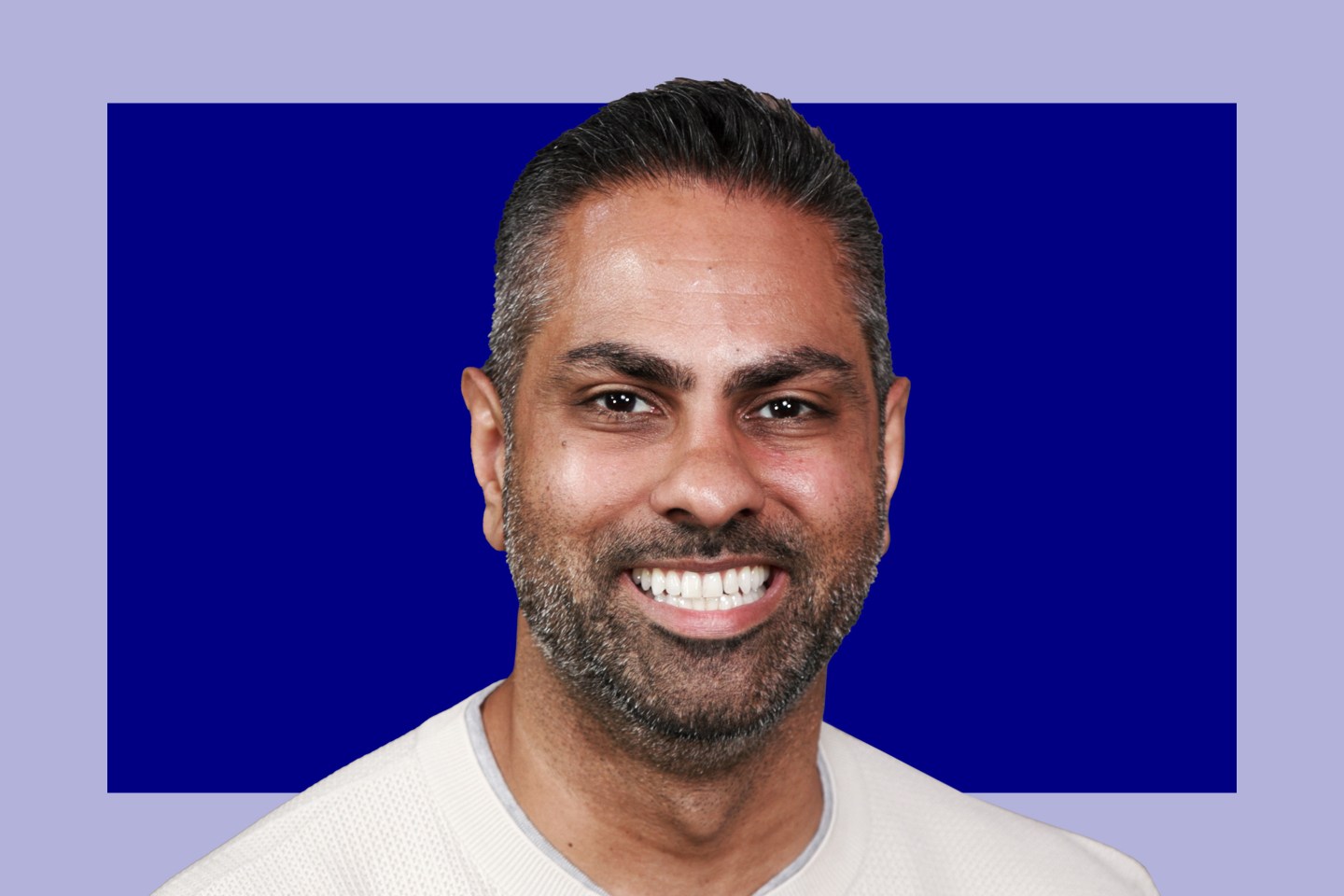
Ramit Sethi, the personal finance guru behind the “I Will Teach You To Be Rich” podcast, book series, and money coaching program, drives a 17-year-old car. Despite being a self-made millionaire, he hasn’t upgraded the sensible four-door Honda because having a fancy car isn’t one of his money dials.
If that sentence makes no sense to you, you probably didn’t catch Sethi, 41, on Netflix’s How To Get Rich, where he teaches viewers the importance of maxing out their investments, funneling money into the areas they care most about (perhaps convenience, travel, luxury shopping, or—yes—new cars), and bloodlessly cutting their spending on any areas they don’t care about, all in service of building their own “rich life.”
He’s been a financial educator, in one way or another, since he was an undergrad at Stanford two decades ago. Sethi’s philosophy is that anyone—at any income level—can work towards not just financial independence, but a truly satisfying life, replete with the things that make each individual “feel rich.” That simple and effective approach caught enough fire to make Sethi his first $1 million. While he declined to share his net worth with Fortune, various outlets have estimated it around $25 million.
The shadowy realm of personal finance advice can be rife with scammers or uneducated influencers hawking a product. But Sethi trades on expertise and a commitment to the long game. “Money is an output,” he tells Fortune. “If I started off chasing the money alone, I probably could have gotten it. But that’s not really the end goal. The end goal is a rich life.”
Below is a transcript of Sethi’s interview with Fortune, condensed and lightly edited for clarity.
You became a self-made millionaire at a relatively early age. Walk us through that trajectory. How did you make that first million dollars?
It’s funny you mentioned making $1 million because that’s not even one of the most pivotal moments for me. I never woke up and said, “I want to have a million dollars.” My parents immigrated here from India. They taught me a lot about family, about money. Mostly about education and working hard. After I graduated, where I studied human psychology and human behavior, I was working at a tech company. On the side, I was writing about money.
Most of the advice that I had read was: No, no, no. No, you can’t buy lattes. No, you can’t buy jeans. No, you can’t go on vacation. Hoard your money until you’re 95 years old, and maybe you can spend your money then. It’s not the life for me, and it wasn’t the life for my friends.
Eventually, I started a blog after trying to teach my friends in college about money. That started to take off. Wrote a book after many years of the blog and testing things and eventually started a business where I help people live a rich life.
You’re saying you didn’t make this concerted effort to become a millionaire, but wealth creation requires a mindset that you honed as a college student. You’ve made many millions; what did the foray into that look like?
I remember my parents during high school telling me, “Be good enough to get into a great college, and the money will work itself out.” It’s kind of funny for a financial guy to say that because things do not work themselves out. You’re supposed to plan. But they turned out to be right.
I learned that, for example, if you get into a very good college, they often will take care of the funding for you, and that’s exactly what happened. My college offered me great financial aid, and then I stacked on scholarships to pay my way through undergrad and grad school. [Editor’s note: Sethi graduated from Stanford University in 2004 and earned a master’s degree in sociology from Stanford in 2005.]
Similarly, when it comes to making money, I always knew that if I was enjoying what I was doing creating value for other people, that the money would come. But I personally think that the money is an output. If I started off chasing the money alone, I probably could have gotten it. But that’s not really the end goal. The end goal is a rich life. And money happens to be a byproduct of doing hard work. And it allows you to fuel what your rich life is.
That’s interesting. You say money is the output, which begs the question: What was your input?
Hard work and a lot of luck, I have to admit, because I was born to two parents who taught me about education and hard work. And I was born in America, which is very fortunate in and of itself.
And then it’s learning a skill that the world values. For example, I love to iron clothes. I’d love to teach an ironing class. The problem is not that many people value it. While I would love to teach an ironing course and charge $99, I’d probably get one buyer. But to learn how investments work, to learn about automation and money psychology? People want that, and they’re willing to pay.
You talk at length about living a “rich life.” How do you define that?
A rich life can be traveling for three months a year, buying a beautiful cashmere coat, or as simple as picking up your children from school every afternoon. Your rich life is yours, and the way you define it is going to be really different than the way I define it. That definition also changes over time.
When I was in my early twenties living in New York, a rich life was as simple as being able to buy appetizers. When I was a kid, we couldn’t afford appetizers. We would only eat out every month or two with a coupon. To come to New York and realize I can get an appetizer, or in fact, I can order three of them, and to know that I can take a taxi on a hot August day instead of having to take the subway occasionally, that felt incredibly rich.
Now, I’m a little older. I have had a business under my belt for 20 years. My rich life has grown, and that’s exactly what I want for other people.
What is your rich life today?
To be able to work with people I like and respect. To travel frequently with my wife and with my family. And to be able to share my message of a rich life as broadly as possible.
It seems like freedom is at the core of having a rich life, or at least in your definition.
When I ask people, “What is your rich life?” over 85% of people say, “I want to do what I want when I want.” And so then I go, “What do you want?” And most of them just sit back. They’ve never actually thought about it.
A common, second response is freedom. I don’t love that answer. Because it’s just a word. What does freedom mean to you? To me, it was appetizers. It has an emotional resonance with me because of my childhood. Freedom could be going in the grocery store and never looking at the price. What’s the difference? $20, $30? But if you remember going shopping with mom or dad when you were a kid and they were agonizing over the price of Campbell’s Soup, that might be relevant to you. So I don’t love surface level words.
Should one focus on a rich life? Or should they focus on money—investing, budgeting—to then get a rich life? Which comes first?
Having a powerful, specific vivid vision will help you get through the logistics of money. This is one of the reasons that people struggle to get interested in money. They’re interested in what money gets them. They’re interested in not worrying about money.
So how do I help people get interested in it? I first help them develop a very specific personal vision of a rich life that almost fits each person like a handmade glove.
And then I’ll ask ’em, “Okay, I want you to spend extravagantly on the things you love. As long as you cut costs mercilessly on the things you don’t.” And they go, “Wait a minute. Spend extravagant? Are you saying I could spend more on the things I love? Concerts, organic food, my car, whatever?” I go, “Yeah, let’s find a way to do that.” And they’ve never heard someone talk about money in that way.
Then when I say “Look, let’s talk about your automatic investments. Let’s talk about your debt payoff date. You don’t even know how much debt you owe.” They’re much more willing because there’s a why. There’s a reason behind it.
You refer to that as conscious spending. What if you’re someone who is consciously spending very extravagantly? You like designer items and that’s dominating your budget. And the things that you want to ruthlessly pull back on don’t make up a sizable portion of said budget.
We have to be realistic with what our rich life is today and what our richer life can be tomorrow.
I get that on my social media a lot. I’ll say: “Spend extravagantly on the things you love. What are your money dials?” Those are the things you love. So you can turn that dial up or down. And then I always get these half-joking comments: “What if I love everything?”
That’s an intellectually lazy answer because nobody can equally love food, travel, health and wellness, convenience, luxury. You can’t. I love luxury hotels. I go deep on it. I know the exact hotels. I know the exact rooms. I know the exact time of year I want to stay because the view changes. That’s freakish. But that’s what I love.
What does a ruthless cutting look like in practice?
It’s a lot more ruthless than people think. I work with couples on my podcast; they talk about every number: income, debt, spending. It’s quite voyeuristic. Very often we’ll discover they’re spending more than they make every single month. 50% of the people I talk to don’t even know how much they earn. That is shocking.
Sometimes they’re making $200,000 a year and they feel like they never have enough. And this teaches us a key lesson: The way you feel about money is highly uncorrelated to how much you’ve got in the bank.
Is there a baseline salary or amount of money that one should have saved up before entertaining investing?
No. One of the ideas that many people have is that investing is for the wealthy. And it’s actually quite the opposite.
The way you become wealthy is by investing even $50 a month. The behavioral key there is that you’re going from zero to one. So making that first investment and setting it up to be automatic. As your earnings increase, you simply have to turn that dial from $50 to $100. $100 to $500. And on and on and on. I know many people who have relatively low incomes started investing at the age of 22, 23. And they’re doing exceptionally well 10 years later just because they automated their investments, they don’t even look at it. It’s compounded over the last decade.
When you were in college, how much were you investing?
A lot. I have been investing since I was 14. At 14, my dad helped me open up a custodial Roth IRA.
I was working at a pizza place making $4.25 an hour—minimum wage. And I was taking my money from working as a soccer referee. I was making pretty good money, about $20 per game.
So I had a few thousand dollars to invest. I was living with my mom and dad. We had dinner every night at home. I wasn’t a party kid. I was sitting at home practicing my spelling bee books. I said, “Yeah, I’ll take this money and invest it.”
So I picked three stocks. One: JDSU, a telecom company, now bankrupt. Excite@Home; search engine, now bankrupt. And a little company called Amazon.com. So, I still have that stock. It’s done really well. What’s the lesson?
Not, “Oh, just pick the next Amazon.” I got lucky. I should have never been picking stocks. What I should have instead done was to say, “Let me build a broad, diversified portfolio. And once I have all that dialed in, if I want to take 5% of my money and pick some random stocks for entertainment, great.” I happened to luck out, but that is not the lesson to learn. And now my portfolio consists almost exclusively of broad-based index funds.
Obviously, there are a number of gamified trading platforms that have really democratized access to investing. What are your thoughts on platforms like Robinhood?
I hate Robinhood. No individual investor should be using Robinhood. You should not be gamified to trade. When you log in, and they go, “Here’s $5. Here’s $10. Pick a random stock.” That is exactly how you turn young people into traders versus investors.
I want steady, boring investing. Look at this wall. I’m just staring at that wall. That’s how boring investing should be. That’s it.
Once you invest in some meme stock or crypto, and you see 1,200% return in one year, you become addicted to it. For the rest of your life, you’re going to be chasing that thrill of 1,200%, which, by the way, has now crashed. And you think that 7% is a joke. 7% is actually really good, if you have enough capital.
So it’s very difficult to reason with somebody who has been almost radicalized by 1,000% returns. And gamification is one important way that Wall Street has onboarded young people to now expect that.
Homeownership still remains a primary driver of household wealth. When does it make sense to buy versus rent?
It’s not always. I rented for 11 years living in New York. I made more money renting than I would have owning.
What do you mean by that?
I kept a very close eye on real estate prices. My rent went down four times in 11 years, and I negotiated hard every year. Unfortunately, I didn’t always get what I wanted.
There was a building right next door and I looked because there were units that were the same size as I lived in where I was renting. Same number of bathrooms. Same view. To own that place, instead of renting, would have cost 2.2 times more. So if I was spending $3,000 a month on my rent, it would have been over $6,000 when you factor in all phantom costs, including taxes, interest, maintenance, and on and on and on.
Instead of paying $6,000 to own, I took the $3,000 that I was saving and invested it. That money grew to way more than owning that would have ever done. I’m not saying rent forever. I’m saying, “Run the numbers on the biggest purchase of your life.” The fact that people find that controversial shows you how far the pendulum has swung towards this idea of you must buy.
In America, real estate is religion. And what the unstated truth that many people believe is that if you rent, you’re a loser.
Is there a bit of privilege that comes with the flexibility to be able to do this?
There’s a lot of privilege in being able to talk about who buys property, who rents. Many people do not know all the striking racial differences.
But in terms of my expectation that you run the numbers before spending hundreds of thousands of dollars? No. I have zero problem having that expectation. You can go online and search for a buy-versus-rent calculator right now. It’ll take you two seconds. You can plug in the numbers. That will take five minutes, and you can get 80% of the right answer right there.
Now, when it comes to buying a house, I expect people to understand the intricacies. You’re making the biggest purchase of your life. Yes, you need to understand what an amortization table looks like. And you need to understand that in the first 10 years, you are paying mostly interest. So, if anything, you’re throwing money away on interest.
Now, if [you’re] thinking, “What the hell is this guy talking about?” That’s why I’m here. All I want is for you to become very good at understanding these concepts before you go to buy a house.
So, no, I actually don’t agree that it requires privilege to be able to run a buy versus rent calculator. That is exactly what you should do for the biggest purchase of your life.
You’ve said that there are two things people spend the most money on. One is houses, the other cars. Talk to me about the latter.
I have a very sensible four-door Honda. Car and auto costs come with massive phantom costs. This is something we don’t consider. Most people walk into an auto dealership and they simply pay based on the monthly payment.
A better approach is TCO: Total cost of ownership. That means: How much does a car cost? I need the full cost. Let me add insurance, parking, gas, maintenance. Registration, all of it. Just to give you an example, my car payment used to be $350 a month. But when I factored in all the costs, including gas, insurance, parking, parking tickets, living in San Francisco, and on and on and on, it was over $1,000 a month.
So imagine you buy something thinking it’s gonna be $350 a month. And when you actually add everything up, it’s over $1,000 a month. That’s how people get into trouble.
I want to discuss the current economic climate. How should one’s investing strategy, or perhaps more broadly speaking, their approach to finances change during this inflationary period?
Investing, if you have the right setup, whether the market is good or bad, doesn’t change. Whether inflation is good or bad, it doesn’t change. I didn’t change anything for my investing. I have an asset allocation or a pie chart of how my investments should look knowing that I’m in my early forties and I have it automatically set. That’s the way to do it. That’s how real investing is done. You’re not sitting there looking at P/E ratios and reading what’s on the news.
As for spending, I will say certainly things have gotten more expensive. Housing has gotten crazy expensive. So there are certain adjustments that we have to look at.
You’re a big fan of expensive weddings, which I find surprising. Maybe you’d rephrase in another way, that you saved up a ton for your wedding. Fine. But at what opportunity cost?
The idea that everything should be looked at as an opportunity cost? Way to squeeze the joy out of any rich life. No wonder people hate money. And hate talking about it.
Before I met my wife, I was in my twenties. I knew one day I would be married and that I wanted to have an awesome wedding. A part of it is cultural because Indian weddings are big and we want to invite everybody. And part of it is that I have a personal philosophy. For the important things in my life, I don’t want cost to be the number one factor. So my philosophy is that for those things, I’m going to over-save.
I created a savings account named wedding and one for our honeymoon. And I just automated it. When I met my wife and we started talking about getting engaged, that money was there. It was ready to be used.
That was some of the best money I ever spent. Because those memories with our friends and family, some of whom are not with us anymore, are incredible. And every year for our anniversary, we watch our wedding video. And we think about the people who were there with us. And to me, that is the real value of money. To live your rich life. And for us, that was our rich life.
Where do you spend your fun funds?
My number one money dial is convenience. That would be food. I have an amazing personal assistant. All of that makes my life easy. Next, I love to travel. So my wife and I travel a lot. We’ve invited our family many times. I also love clothes.
What did you have to deprioritize as you created your various money dials?
My car is 17 years old. I don’t mind. I have no payments. It’s a nice car, I guess. Well, it was. It’s beautiful. I think it’s great.
How often are you rejiggering those priorities?
Every year in December, we do what’s called a “rich life review.” My wife and I will sit down. I’ll do it individually, too. So will she, but we do it together. And we’ll say, “What worked last year? What was awesome?” And we write that down. “What would we change? I didn’t really like this trip we took.” Or, you know, “I feel like we’re too tight on this. I’m always, like, constrained.” And then we look at the numbers. Okay, we had a plan. This is where we thought we would be. Where are we over? Where are we under? And it’s not judgmental.
We were having difficulty connecting about money. And I was, like, “I’m the money guy. This should be easy.” She suggested that we see a therapist and I was totally game because we needed help. Went to see a therapist. Asked us some great questions. One of them was: How do you see money?
I said, “Growth. So easy.” I could see the numbers floating in front of my eyes. I could see the compounding. And then she asked my wife. And my wife said, “Safety.” And that really was the genesis of a discussion about how we see money. We see it totally differently. And then we started connecting more.
Let’s end with some rapid fire questions. Biggest misconception about wealth creation?
That you have to be rich to start investing.
One thing you absolutely will not spend money on.
Medium salsa.
Worst money advice you’ve ever received?
If you stay at the same company for the next 35 or 40 years, you will retire with $1 million in your 401(k).
You mentioned that when you envision money and all that it can do for you, you’re focused on growth. Your wife is focused on security. Have you ever viewed it through the security lens?
Of course. I want to make sure that I have enough so we never are at financial risk. So for me, that means being conservative with my investments. Right? I’m not putting 80% in crypto. It means having a little extra cash cushion. It means being extremely thoughtful before I commit to a fixed cost, like, a house or a car. Those things I will spend a lot of time on. How much something costs at the grocery store? Much less time on.