• Home
  • News
  • Fortune 500
  • Tech
  • Finance
  • Leadership
  • Lifestyle
  • Rankings
  • Multimedia
Financeglobal oil supply

Global JPMorgan strategist says oil price surge ‘doesn’t seem worth losing sleep over in 2023’

Eleanor Pringle
By
Eleanor Pringle
Eleanor Pringle
Senior Reporter, Economics and Markets
Down Arrow Button Icon
Eleanor Pringle
By
Eleanor Pringle
Eleanor Pringle
Senior Reporter, Economics and Markets
Down Arrow Button Icon
September 14, 2023, 10:59 AM ET
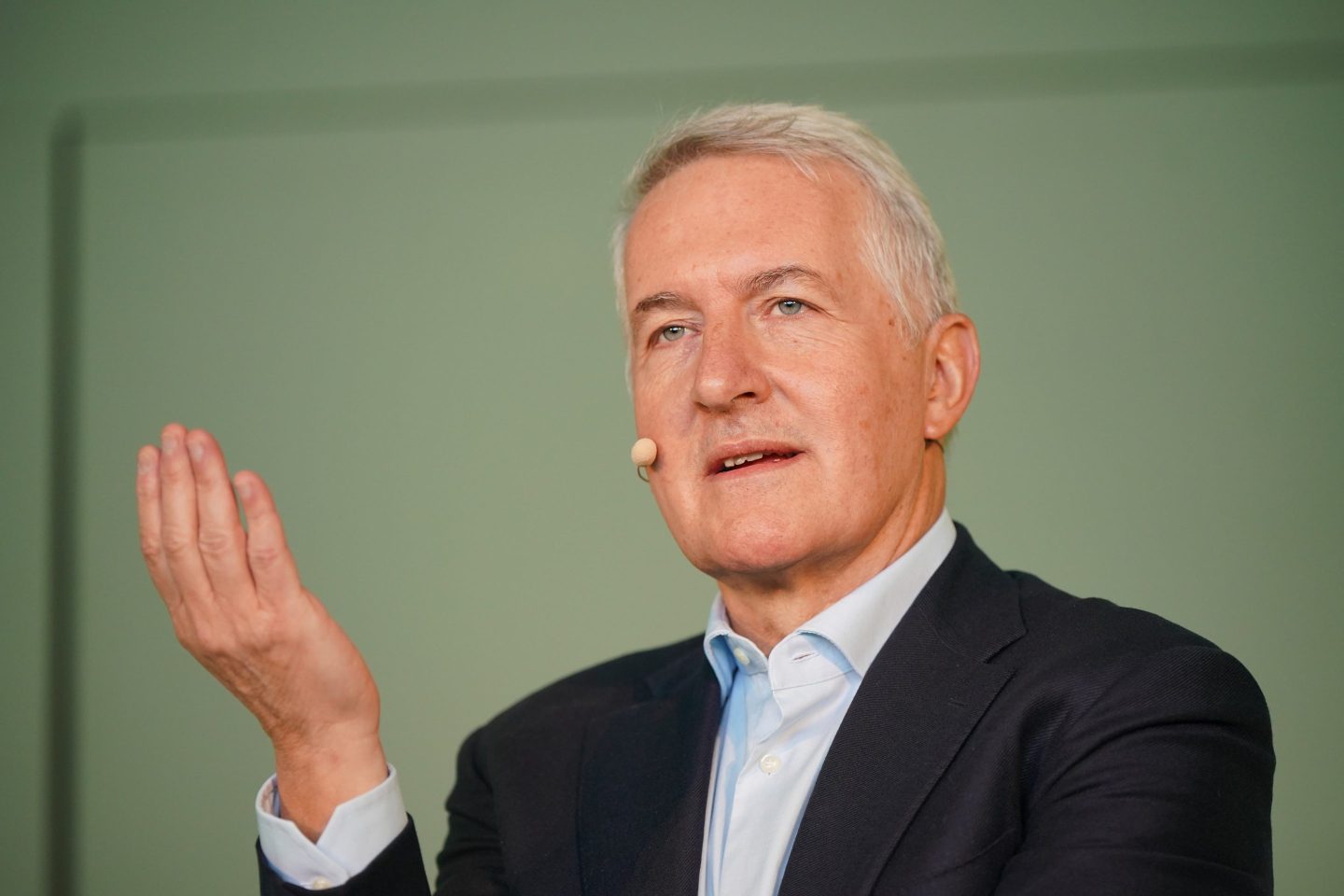
David Kelly, chief global strategist of JPMorgan Asset Management, during the Bloomberg Invest event in New York, US, on Wednesday, June 7, 2023.
JPMorgan's David Kelly comes from a long line of worriers, but even he is choosing not to panic about oil.Jeenah Moon/Bloomberg - Getty Images

Prices at the pump are among the most noted costs for American families: If prices slump there’s a rush to forecourts; if they spike higher it’s the topic of conversation.

Recommended Video

So it’s no surprise that a 10.6% rise in gasoline prices in August—which in turn pushed up core inflation by 0.6%—might be causing a stir; after all, an estimated 84.1% of the U.S. population holds a license.

But a JPMorgan strategist—and a self-professed worrier—says even he isn’t panicking over fuel prices.

David Kelly, chief global strategist at JPMorgan, wrote the oil price surge “from an economic or investment perspective really doesn’t seem worth losing sleep over in 2023.”

In a note sent to clients on Monday, Kelly professes he comes “from a long line of worriers”—his father doing so “loudly” while his mother fretted more quietly—”sparing her vocal cords at the expense of her sleep.”

An inherent trait, the economic expert says “on any given evening [he could] compile an extensive catalog of the things that are troubling [him]” but adds some things “are just not worth the worrying.”

America’s ‘bogeyman’

Oil falls into this category, though Kelly acknowledges the asset has been America’s “economic bogeyman” for decades.

Foreign factors pushing up prices have indeed tightened the purse strings of U.S. consumers over the years: the Arab oil embargo of 1973, the Iranian revolution of 1979, and the first Gulf War in 1990 all inflated costs.

Price increases in 2023 are no different. In April members of OPEC announced they were going to begin curbing production, slashing approximately 1.15m barrels a day in a bid to stabilize the market.

Meanwhile Russia—another oil-rich nation, though not a part of OPEC—has said it will not sell its product either directly or indirectly to the U.S., after the latter placed price caps on the commodity following Russia’s invasion of Ukraine. The retaliation will do little harm to prices any further, as President Biden has already banned Russian oil imports into the U.S.

Currently, Brent crude futures for October sit at $85.86 a barrel, while U.S. West Texas Intermediate crude futures rose to $81.63.

The very fact they can’t control these rises are part of the reason consumers fear the fluctuations so much, which Kelly writes is completely understandable: “There is no price in America better known than the price of a gallon of gasoline so when gas prices rise, Americans often regard it as a sign of runaway inflation, leading to lower consumer confidence and greater business caution.  Moreover, for many lower and middle-income Americans, spending more on gasoline means spending less elsewhere, undermining the consumption that is the principal driver of the American economy.”

However, Kelly highlights there is easing pressure both on the demand and supply side. For example, the expert highlights that long-term investment into energy transition will dampen demand, while America’s increasing domestic oil supply is continuing to ramp up.

The nation is therefore freeing itself of the constraints of being a net oil importer, thus protecting consumers from outside influences, he writes: “For many decades, the U.S. had been a net importer of oil so that when oil prices rose, American consumers found themselves poorer and foreign oil producers found themselves richer.

“However, because of the success of fracking technology, since the end of 2019, the U.S. has largely been a net exporter of oil and in the first half of 2023, our trade surplus in oil and petroleum products amounted to over 0.1% of GDP.”

‘Don’t worry too much’

Despite understandable concerns about the cozy relationship between Saudi Arabia and Russia pushing up a key inflation factor further, Kelly adds the Fed could be a secret weapon.

“We expect inflation to moderate next year and, when the economy inevitably falters, we expect the Fed to reverse a good chunk of its recent aggressive tightening,” Kelly writes.

“There is, as always, no shortage of things for investors to worry about in the weeks ahead, including the possibility of a government shutdown and an auto-workers strike,” he added. “For now, however, investors should probably not worry too much about the recent spike in oil.”

Fortune Brainstorm AI returns to San Francisco Dec. 8–9 to convene the smartest people we know—technologists, entrepreneurs, Fortune Global 500 executives, investors, policymakers, and the brilliant minds in between—to explore and interrogate the most pressing questions about AI at another pivotal moment. Register here.
About the Author
Eleanor Pringle
By Eleanor PringleSenior Reporter, Economics and Markets
LinkedIn icon

Eleanor Pringle is an award-winning senior reporter at Fortune covering news, the economy, and personal finance. Eleanor previously worked as a business correspondent and news editor in regional news in the U.K. She completed her journalism training with the Press Association after earning a degree from the University of East Anglia.

See full bioRight Arrow Button Icon

Latest in Finance

Jerome Powell, chairman of the US Federal Reserve, during the Hoover Institution's George P. Shultz Memorial Lecture Series in Stanford, California, US, on Monday, Dec. 1, 2025.
Economyfed interest rate
For Wall Street, pandemic-level bad news for jobs is good news for stocks—it pushes the Fed further into cutting territory
By Eleanor PringleDecember 4, 2025
26 minutes ago
Traders Michael Urkonis, left, and Fred Demarco work on the floor of the New York Stock Exchange, Tuesday, Dec. 2, 2025.
InvestingMarkets
Wall Street drifts while Dollar General and Spam sales jump in a market hungry for affordability
By Stan Choe and The Associated PressDecember 4, 2025
29 minutes ago
Factory worker on assembly line.
SuccessGen Z
Nearly 4 million new manufacturing jobs are coming to America as boomers retire—but it’s the one trade job Gen Z doesn’t want
By Emma BurleighDecember 4, 2025
38 minutes ago
Mother tying shoelace of daughter sitting on wheelchair at home
Personal FinanceHealth
‘I don’t know how people are going to live’: ACA enrollees brace for massive premium hikes as subsidies expire
By Amelia Thomson-Deveaux, Ali Swenson, Linley Sanders and The Associated PressDecember 4, 2025
47 minutes ago
SuccessWealth
Meet Luana Lopes Lara: The 29-year-old ballerina spent summers working for Ray Dalio—now she’s the youngest female self-made billionaire
By Orianna Rosa RoyleDecember 4, 2025
2 hours ago
Donald Trump
PoliticsElections
‘There’s this fake narrative that the Democrats talk about, affordability’: Trump keeps dismissing cost of living as his party struggles to hold seats
By Meg Kinnard, Joey Cappelletti and The Associated PressDecember 4, 2025
2 hours ago

Most Popular

placeholder alt text
North America
Jeff Bezos and Lauren Sánchez Bezos commit $102.5 million to organizations combating homelessness across the U.S.: ‘This is just the beginning’
By Sydney LakeDecember 2, 2025
2 days ago
placeholder alt text
Economy
Two months into the new fiscal year and the U.S. government is already spending more than $10 billion a week servicing national debt
By Eleanor PringleDecember 4, 2025
5 hours ago
placeholder alt text
Economy
Ford workers told their CEO 'none of the young people want to work here.' So Jim Farley took a page out of the founder's playbook
By Sasha RogelbergNovember 28, 2025
6 days ago
placeholder alt text
North America
Anonymous $50 million donation helps cover the next 50 years of tuition for medical lab science students at University of Washington
By The Associated PressDecember 2, 2025
2 days ago
placeholder alt text
Economy
Scott Bessent calls the Giving Pledge well-intentioned but ‘very amorphous,’ growing from ‘a panic among the billionaire class’
By Nick LichtenbergDecember 3, 2025
22 hours ago
placeholder alt text
Innovation
Google CEO Sundar Pichai says we’re just a decade away from a new normal of extraterrestrial data centers
By Sasha RogelbergDecember 1, 2025
3 days ago
Rankings
  • 100 Best Companies
  • Fortune 500
  • Global 500
  • Fortune 500 Europe
  • Most Powerful Women
  • Future 50
  • World’s Most Admired Companies
  • See All Rankings
Sections
  • Finance
  • Leadership
  • Success
  • Tech
  • Asia
  • Europe
  • Environment
  • Fortune Crypto
  • Health
  • Retail
  • Lifestyle
  • Politics
  • Newsletters
  • Magazine
  • Features
  • Commentary
  • Mpw
  • CEO Initiative
  • Conferences
  • Personal Finance
  • Education
Customer Support
  • Frequently Asked Questions
  • Customer Service Portal
  • Privacy Policy
  • Terms Of Use
  • Single Issues For Purchase
  • International Print
Commercial Services
  • Advertising
  • Fortune Brand Studio
  • Fortune Analytics
  • Fortune Conferences
  • Business Development
About Us
  • About Us
  • Editorial Calendar
  • Press Center
  • Work At Fortune
  • Diversity And Inclusion
  • Terms And Conditions
  • Site Map

© 2025 Fortune Media IP Limited. All Rights Reserved. Use of this site constitutes acceptance of our Terms of Use and Privacy Policy | CA Notice at Collection and Privacy Notice | Do Not Sell/Share My Personal Information
FORTUNE is a trademark of Fortune Media IP Limited, registered in the U.S. and other countries. FORTUNE may receive compensation for some links to products and services on this website. Offers may be subject to change without notice.