• Home
  • Latest
  • Fortune 500
  • Finance
  • Tech
  • Leadership
  • Lifestyle
  • Rankings
  • Multimedia

Trendingnow

1

The millennial generation has split, new Fed research shows: Those over 35 are edging toward boomer-style wealth, while everyone else falls behind

2

Mark Cuban says he has the solution to growing income inequality, and it's to reward every employee—from CEO to janitor—with company stock

3

Scott Bessent casually says the U.S. has more than $1 trillion in gold—and that it doesn’t matter for the dollar

1

The millennial generation has split, new Fed research shows: Those over 35 are edging toward boomer-style wealth, while everyone else falls behind

2

Mark Cuban says he has the solution to growing income inequality, and it's to reward every employee—from CEO to janitor—with company stock

3

Scott Bessent casually says the U.S. has more than $1 trillion in gold—and that it doesn’t matter for the dollar
SuccessArts & Entertainment

The Michael Oher ‘Blind Side’ scandal shows that Hollywood studios are just pretending to follow the law when they buy ‘life story rights’

By
Jorge L. Contreras
Jorge L. Contreras
,
Dave Fagundes
Dave Fagundes
, and
The Conversation
The Conversation
Down Arrow Button Icon
By
Jorge L. Contreras
Jorge L. Contreras
,
Dave Fagundes
Dave Fagundes
, and
The Conversation
The Conversation
Down Arrow Button Icon
August 31, 2023, 2:30 PM ET
Michael Oher
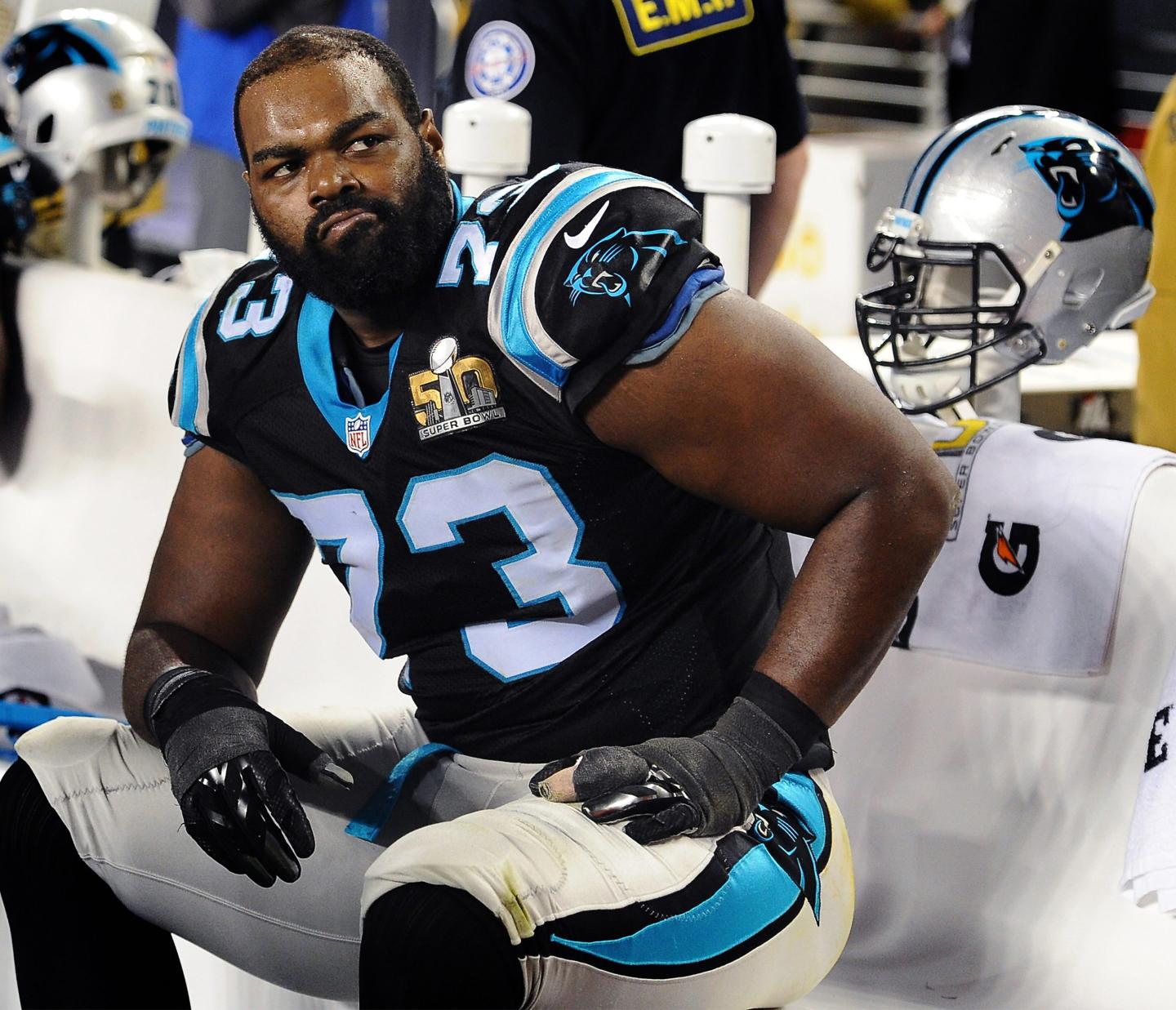
Carolina Panthers offensive tackle Michael Oher.Jeff Siner—Charlotte Observer/Tribune News Service/Getty Images
Add Fortune on Google for similar content.

What if you overcame a serious illness to go on to win an Olympic medal? Could a writer or filmmaker decide to tell your inspiring story without consulting you? Or do you “own” that story and control how it gets retold?

Recommended Video

Michael Oher, the former NFL player portrayed in the 2009 blockbuster “The Blind Side,” has sued Michael and Anne Leigh Tuohy, the suburban couple who took him into their home as a disadvantaged youth.

In his official complaint, Oher claims that through forgery, trickery or sheer incompetence, the Tuohys enabled 20th Century Fox to acquire the exclusive rights to his life story.

The Tuohys, Oher continues, received millions of dollars for a “story that would not have existed without him,” while he claims that he received nothing.

Just a year earlier, former heavyweight champion Mike Tyson was similarly incensed when he learned that Hulu had created a miniseries dramatizing his career without seeking his permission.

“They stole my life story and didn’t pay me,” Tyson charged in an Instagram post.

Oher and Tyson – not to mention countless influencers and wannabe celebs – share the conviction that they own, and can monetize, their life stories. And given regular news stories about studios buying “life story rights,” it’s not surprising to see why.

As law professors, we’ve studied this issue; our research shows that there is no recognized property right under U.S. law – or the laws of any other country of which we are aware – to the facts and events that occur during someone’s life.

So why are Oher, Tyson and others complaining? And why do publishers and studios routinely pay large sums to acquire rights that don’t exist?

No monopoly on the truth

In most states, the commercial use of an individual’s name, image and likeness is protected by the so-called “right of publicity.” But that right generally applies to merchandise, apparel and product endorsements, not facts and actual events. So you can’t sell a T-shirt with Mike Tyson’s face on it without his permission, but writing a book about his rise to fame is fair game.

In the U.S., the freedom to describe historical events is rooted in the free speech clause of the First Amendment, and it’s a fundamental principle that no one – whether it’s a news agency, political party or celebrity – holds a monopoly on the truth.

The law doesn’t sanction the invasion of privacy, so an investigative journalist who uncovers some unsavory detail of your past can’t publish it unless there is a legitimate public interest in doing so. Nor does it condone the dissemination of false information, which can lead to defamation lawsuits.

The First Amendment, however, does allow authors and film producers to truthfully depict factual events that they have legitimately learned about. They are not required to receive authorization from or pay the people involved.

The origin of life story ‘rights’

Film producers, however, are accustomed to paying for the right to repackage or use existing content.

Copyright licenses are required to commission a script based on a book, to depict a comic book character in a film and to include a hit song on a movie soundtrack. Even showing an architecturally distinctive building often requires the consent of a copyright owner, which is why the video game “Spider-Man: Miles Morales” had to remove the Chrysler Building.

Along with these other rights and permissions, Hollywood studios have paid individuals for their life stories for at least a century.

Yet, unlike copyright clearances, life story deals do not involve the acquisition of known intellectual property rights. Life story “rights” are not rights at all. Instead, they bundle together a set of contractual commitments: the subject’s agreement to cooperate with the studio, not to work on a similar project, and to release the studio from claims of defamation and invasion of privacy.

By packaging these commitments under the umbrella of “life story rights,” studios can signal to the market that they have acquired a particularly juicy story.

For example, Netflix’s quick deal with convicted fraudster Anna Sorokin, the subject of the popular streaming series “Inventing Anna,” seems to have deterred competing adaptations of Sorokin’s story.

What’s more, the acquisition of life story rights has become so common that it is viewed, in many cases, as a de facto requirement for film financing and insurance coverage and thus part of the standard clearance procedure for many projects.

Exceptions don’t make the rule

As always with the law, though, there are exceptions.

Notably, the producers of the 2010 film “The Social Network” did not obtain the permission of Facebook founder Mark Zuckerberg before dramatizing the origin story of his company. In moving forward with the project, they risked a defamation or publicity suit by Zuckerberg and others depicted in the film. But their gamble paid off: Zuckerberg, while critical of his depiction, didn’t sue.

Nevertheless, other subjects who have been depicted in dramatic features without their authorization have sued to recover a share of the profits.

Silver screen legend Olivia de Havilland, for example, sued FX Studios for briefly depicting her in a miniseries about Hollywood rivals Bette Davis and Joan Crawford. She won at trial, though an appeals court reversed her victory, citing the producers’ First Amendment rights.

Lawsuits can even be brought when the characters’ names and story details have been changed. U.S. Army Sgt. Jeffrey Sarver, the bomb-defusing expert who inspired the Oscar-winning film “The Hurt Locker,” sued the film’s producers for violating his right of publicity. He lost.

Lawsuits like these are not the norm. But many producers hope to get ahead of a flimsy lawsuit and bad publicity by acquiring nonexistent rights.

History is in the public domain

Ultimately, there is nothing wrong – and much that is right – with paying individuals to cooperate with the production of features about themselves. Doing so can convey respect toward the subject and make the production go more smoothly.

But the fact that life story acquisitions have entered the popular consciousness has spurred the widespread belief that any portrayal of a factual series of events entitles those depicted to a lucrative payday. This expectation increases production costs and the risk of litigation, thereby deterring otherwise worthwhile projects and depriving the public of meaningful content that is based on true stories.

What could be done about this situation?

One idea that we’ve written about would prevent right of publicity laws – the basis for many life story lawsuits – from being used against works that convey ideas and tell a story, such as books, films and TV shows.

Perhaps the most important thing that can be done, though, is educating people that they don’t have a right to cash in on every description of the events of their lives.

Collective history, in our view, belongs in the public domain.

Jorge L. Contreras is James T. Jensen Endowed Professor for Transactional Law and Director, Program on Intellectual Property and Technology Law, University of Utah and Dave Fagundes is Baker Botts LLP Professor of Law and Research Dean, University of Houston Law Center.

This article is republished from The Conversation under a Creative Commons license. Read the original article.

The Fortune 500 Innovation Forum will convene Fortune 500 executives, U.S. policy officials, top founders, and thought leaders to help define what’s next for the American economy, Nov. 16-17 in Detroit. Apply here.
About the Authors
By Jorge L. Contreras
See full bioRight Arrow Button Icon
By Dave Fagundes
See full bioRight Arrow Button Icon
By The Conversation
See full bioRight Arrow Button Icon
Add Fortune on Google for similar content.

Latest in Success

Finance
Lorem ipsum dolor sit amet, consectetur adipiscing elit, sed do eiusmod tempor incididunt ut labore et dolore magna aliqua. Ut enim ad minim veniam
By Fortune Editors
October 20, 2025
Finance
Lorem ipsum dolor sit amet, consectetur adipiscing elit, sed do eiusmod tempor incididunt ut labore et dolore magna aliqua. Ut enim ad minim veniam
By Fortune Editors
October 20, 2025
Finance
Lorem ipsum dolor sit amet, consectetur adipiscing elit, sed do eiusmod tempor incididunt ut labore et dolore magna aliqua. Ut enim ad minim veniam
By Fortune Editors
October 20, 2025
Finance
Lorem ipsum dolor sit amet, consectetur adipiscing elit, sed do eiusmod tempor incididunt ut labore et dolore magna aliqua. Ut enim ad minim veniam
By Fortune Editors
October 20, 2025
Finance
Lorem ipsum dolor sit amet, consectetur adipiscing elit, sed do eiusmod tempor incididunt ut labore et dolore magna aliqua. Ut enim ad minim veniam
By Fortune Editors
October 20, 2025
Finance
Lorem ipsum dolor sit amet, consectetur adipiscing elit, sed do eiusmod tempor incididunt ut labore et dolore magna aliqua. Ut enim ad minim veniam
By Fortune Editors
October 20, 2025

Most Popular

Finance
Lorem ipsum dolor sit amet, consectetur adipiscing elit, sed do eiusmod tempor incididunt ut labore et dolore magna aliqua. Ut enim ad minim veniam
By Fortune Editors
October 20, 2025
Finance
Lorem ipsum dolor sit amet, consectetur adipiscing elit, sed do eiusmod tempor incididunt ut labore et dolore magna aliqua. Ut enim ad minim veniam
By Fortune Editors
October 20, 2025
Finance
Lorem ipsum dolor sit amet, consectetur adipiscing elit, sed do eiusmod tempor incididunt ut labore et dolore magna aliqua. Ut enim ad minim veniam
By Fortune Editors
October 20, 2025
Finance
Lorem ipsum dolor sit amet, consectetur adipiscing elit, sed do eiusmod tempor incididunt ut labore et dolore magna aliqua. Ut enim ad minim veniam
By Fortune Editors
October 20, 2025
Finance
Lorem ipsum dolor sit amet, consectetur adipiscing elit, sed do eiusmod tempor incididunt ut labore et dolore magna aliqua. Ut enim ad minim veniam
By Fortune Editors
October 20, 2025
Finance
Lorem ipsum dolor sit amet, consectetur adipiscing elit, sed do eiusmod tempor incididunt ut labore et dolore magna aliqua. Ut enim ad minim veniam
By Fortune Editors
October 20, 2025
Fortune Secondary Logo
Rankings
  • 100 Best Companies
  • Fortune 500
  • Global 500
  • Fortune 500 Europe
  • Most Powerful Women
  • World's Most Admired Companies
  • See All Rankings
  • Lists Calendar
Sections
  • Finance
  • Fortune Crypto
  • Features
  • Leadership
  • Health
  • Commentary
  • Success
  • Retail
  • Mpw
  • Tech
  • Lifestyle
  • CEO Initiative
  • Asia
  • Politics
  • Conferences
  • Europe
  • Newsletters
  • Personal Finance
  • Environment
  • Magazine
  • Education
Customer Support
  • Frequently Asked Questions
  • Customer Service Portal
  • Privacy Policy
  • Terms Of Use
  • Single Issues For Purchase
  • International Print
Commercial Services
  • Advertising
  • Fortune Brand Studio
  • Fortune Analytics
  • Fortune Conferences
  • Business Development
  • Group Subscriptions
About Us
  • About Us
  • Press Center
  • Work At Fortune
  • Terms And Conditions
  • Site Map
  • About Us
  • Press Center
  • Work At Fortune
  • Terms And Conditions
  • Site Map
  • Facebook icon
  • Twitter icon
  • LinkedIn icon
  • Instagram icon
  • TikTok icon
  • YouTube icon

Latest in Success

Sanae Takaichi
Successwork-life balance
Japan’s prime minister sleeps just ‘zero to three’ hours a night—even as Tokyo pushes a 4-day workweek to fight ‘death by overwork’
By Preston ForeJuly 23, 2026
52 minutes ago
Paul Keary (L) and Mike Sutcliff (R).
CommentaryAI agents
Teneo & Thoughtworks CEOs: the AI race will be won with governance, not speed 
By Paul Keary and Mike SutcliffJuly 23, 2026
5 hours ago
How GE CEO Larry Culp pulled off the turnaround of the century
MagazineGeneral Electric
How GE CEO Larry Culp pulled off the turnaround of the century
By Shawn TullyJuly 23, 2026
9 hours ago
buffett
SuccessWealth
‘The man who dies rich dies disgraced’: The last time America had such wealth inequality, Andrew Carnegie knew he had to give it all away
By Nick LichtenbergJuly 22, 2026
23 hours ago
Larry Page and Sergey Brin
SuccessBillionaires
Larry Page and Sergey Brin splash $225 million in Miami property as billionaires flee California’s tax—and Google is expanding its office there too
By Emma BurleighJuly 22, 2026
1 day ago
Jon Gray leans while talking and sitting in a chair
SuccessCareers
Blackstone president Jon Gray tells Gen Z to think like founders at work—but a growing number are skipping the corporate ladder to become one for real
By Preston ForeJuly 22, 2026
1 day ago

Most Popular

The millennial generation has split, new Fed research shows: Those over 35 are edging toward boomer-style wealth, while everyone else falls behind
Real Estate
The millennial generation has split, new Fed research shows: Those over 35 are edging toward boomer-style wealth, while everyone else falls behind
By Nick LichtenbergJuly 22, 2026
23 hours ago
Mark Cuban says he has the solution to growing income inequality, and it's to reward every employee—from CEO to janitor—with company stock
Success
Mark Cuban says he has the solution to growing income inequality, and it's to reward every employee—from CEO to janitor—with company stock
By Sasha RogelbergJuly 20, 2026
3 days ago
Scott Bessent casually says the U.S. has more than $1 trillion in gold—and that it doesn’t matter for the dollar
Economy
Scott Bessent casually says the U.S. has more than $1 trillion in gold—and that it doesn’t matter for the dollar
By Sasha RogelbergJuly 22, 2026
21 hours ago
Mathematicians grapple with a ‘very rapid and very unsettling change’ as AI cracks yet another century-old problem
AI
Mathematicians grapple with a ‘very rapid and very unsettling change’ as AI cracks yet another century-old problem
By Eva RoytburgJuly 21, 2026
2 days ago
Despite a $156 million contract, Knicks star Jalen Brunson still calls his parents for financial advice any time he makes a big purchase
Success
Despite a $156 million contract, Knicks star Jalen Brunson still calls his parents for financial advice any time he makes a big purchase
By Emma BurleighJuly 21, 2026
2 days ago
'The man who dies rich dies disgraced': The last time America had such wealth inequality, Andrew Carnegie knew he had to give it all away
Success
'The man who dies rich dies disgraced': The last time America had such wealth inequality, Andrew Carnegie knew he had to give it all away
By Nick LichtenbergJuly 22, 2026
23 hours ago

© 2026 Fortune Media IP Limited. All Rights Reserved. Use of this site constitutes acceptance of our Terms of Use and Privacy Policy | CA Notice at Collection and Privacy Notice | Do Not Sell/Share My Personal Information
FORTUNE is a trademark of Fortune Media IP Limited, registered in the U.S. and other countries. FORTUNE may receive compensation for some links to products and services on this website. Offers may be subject to change without notice.