• Home
  • Latest
  • Fortune 500
  • Finance
  • Tech
  • Leadership
  • Lifestyle
  • Rankings
  • Multimedia

Trendingnow

1

As Big Tech showers employees with perks to win the talent war, Nvidia built a nearly $5 trillion company by making people pay for their own lunch

2

MacKenzie Scott alone accounted for one-third of America's $19.2 billion in megagifts last year

3

Current price of oil as of July 1, 2026

1

As Big Tech showers employees with perks to win the talent war, Nvidia built a nearly $5 trillion company by making people pay for their own lunch

2

MacKenzie Scott alone accounted for one-third of America's $19.2 billion in megagifts last year

3

Current price of oil as of July 1, 2026
FinanceInvesting

Why is the stock market reeling? The Fed is now risking an unnecessary crash landing, according to a noted economist

Shawn Tully
By
Shawn Tully
Shawn Tully
Senior Editor-at-Large
Down Arrow Button Icon
Shawn Tully
By
Shawn Tully
Shawn Tully
Senior Editor-at-Large
Down Arrow Button Icon
August 18, 2023, 2:20 PM ET
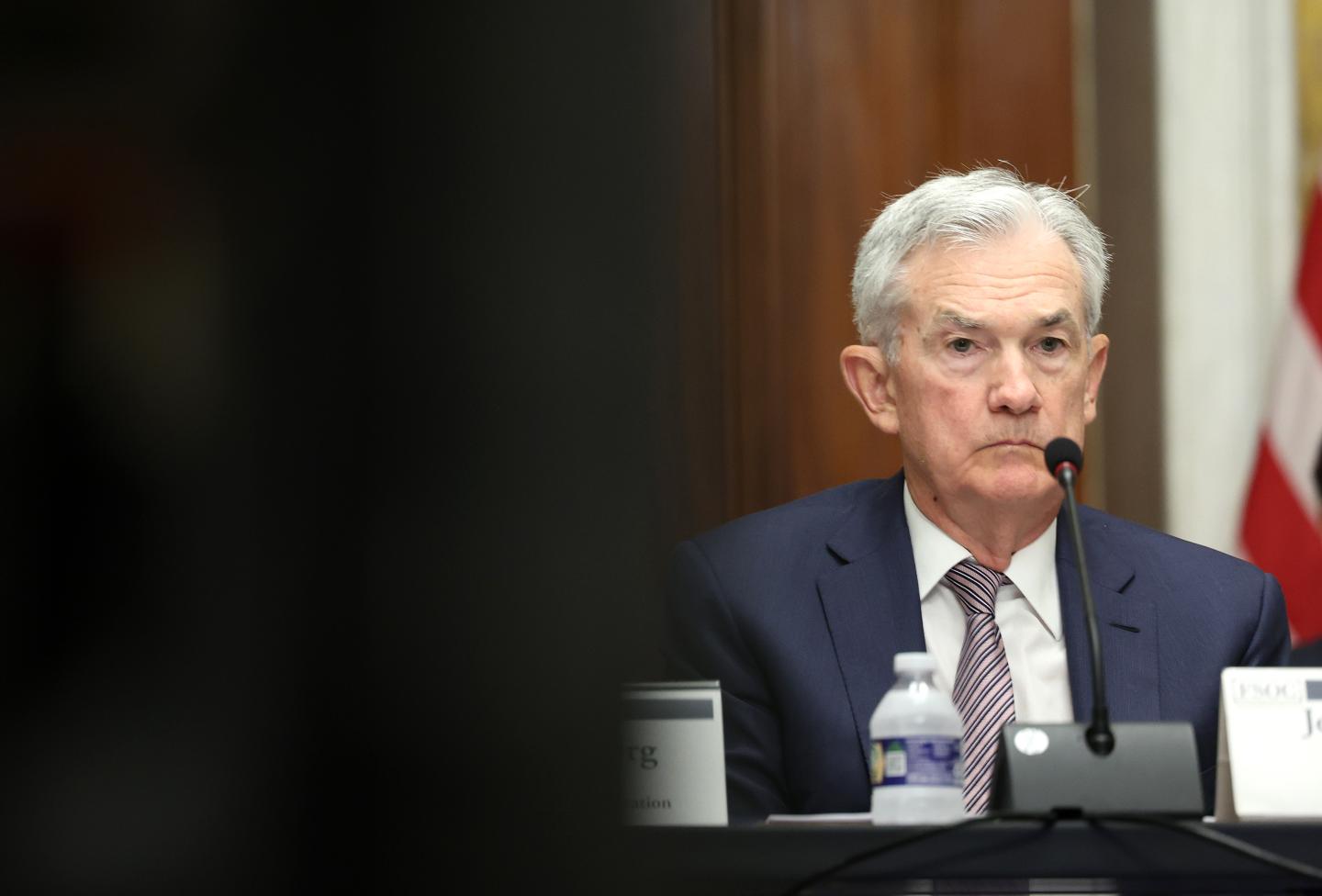
Fed Chairman Jerome Powell has been on the warpath to fight inflation.
Add Fortune on Google for similar content.

Is the Fed winning the battle, but losing the war?

Recommended Video

While the agency’s July rate increase was expected, the hawkish tone that dominated the minutes of its meeting came as a brutal shock that sent share prices reeling and the 10-year Treasury to its highest yield in over two decades.

The reason: The markets believed that the widely expected, 25 basis point rise in July to a 5.25% to 5.50% range, would be the last. Not only did the pause in June encourage that view, but it appeared that by and large, the Fed officials agreed. The “dot plot” that captures the FOMC members’ average forecast of where Fed Funds would finish 2023 put the number at 5.6%. So the July hike reached what looked like the final target.

Not so, the Fed’s now signaling. Its July minutes, released on August 16, strongly suggest more to come. “Most participants continued to see significant upside risks to inflation, which could further require tightening of monetary policy,” stated text from the colloquy. The minutes also reveal much sharper divisions among Fed officials than prevailed at previous meetings. The document disclosed that “a couple of participants” advocated leaving rates unchanged, and that some officials cited the potential damage to the economy and jobs of further increases.

A leading economist says a lofty “real fed funds rate” means the Fed’s already gone too far

Put simply, the Fed’s doves are right. That’s the take from a distinguished monetary economist, Will Luther, professor at Florida Atlantic University. “I would have expected that the Fed’s language around rate hikes would have softened as we got closer to the its goal, but that hasn’t happened,” says Luther. “Their position is that even though we’ve had a string of good inflation reports, continued strong GDP growth and low unemployment suggest that inflation could rebound. The Fed wants to whip it now. If they go too far, the thinking goes, they can quickly loosen policy and minimize the damage.”

Luther maintains that the “real,” or inflation-adjusted Fed Funds rate is a good measure of how restrictive the Central Bank is making monetary policy. If what it costs businesses to borrow for building new plants or finance working capital takes too large a share of the projected revenues they’ll garner from expanding, those enterprises will curb fresh investments and hire fewer people. The same principal applies to consumers on their mortgages and car loans. Put simply, the strongest lever for curbing credit, and hence slamming growth, is fostering and maintaining high real interest rates.

And that’s just what the Fed’s done. Luther explains that the real Fed Funds rate is simply the difference between the current “nominal” number of 5.25% to 5.50%, and the latest month-over-month CPI reading that indicates the current run-rate in prices. The most widely-reported CPI data for July showed prices up 3.2%, and 4.1% excluding food and energy. But that’s a year-over-year reading versus July of 2022. The increase from June to July was much lower, indicating where the trend is moving. The month-over-month gauge showed an annualized increase of 2.0% in the overall price level, and a core rise of just 1.9%.

The real rate is now twice as high as what’s necessary to keep inflation heading downwards

To simplify, Luther uses the 2.0% figure. “That means the current real Fed Funds rate is between 3.25% and 3.50%, the difference between the 2.0% month over month inflation reading and the nominal rate of 5.25% to 5.50%.” Where would the real rate stand if it were set not by the Fed, but by the market? In other words, where would the number settle if determined simply by today’s supply and demand for credit? As Luther points out, the Fed furnishes its own answer. The New York Fed produces of estimates the “natural” real rate of interest. The most recent are 0.58% and 1.14%. “That’s the range where monetary policy is neither too tight nor too loose,” says Luther. If the real Fed Funds rate were in that vicinity, inflation would stay where it is now.

Of course, the Fed wants keep taming year-over-year price increases, so a real rate higher than, say, 1.14% is necessary to get there. But how much higher? “Anything above 1.14% is restrictive,” says Luther. “But a real rate of 3.25% to 3.5% is severely restrictive, and far too high. My estimate is that a real Fed Funds rate of 1.5% to 2.0% would be sufficient to get the Fed to its 2% year over year goal.” In effect, Luther maintains that the today’s number is as much as twice as high as is needed to win the battle.

The Fed’s mistake: They keep raising rates when falling inflation is already doing the job

For Luther, the Fed has misfired in continuing to tighten when falling inflation was swelling the number that matters most in curbing credit and slaying the beast: the real Fed Funds rate. “If the Fed hadn’t raised in July, the real rate would have risen because the CPI was trending downwards,” he says. “But instead, the Fed’s been doubling down by ratcheting up even as inflation keeps falling. So two forces are pushing up the real rate. That accounts for why it’s risen so fast and to such excessive heights.”

As the July minutes showed, the Fed is now prepared to keep hiking. “That’s a mistake,” says Luther. “If they just left rates where they are now, the real rate will continue rising as inflation falls. But if the Fed raises another 25 basis points in September, the real rate would go 3.5% to 3.75% or even higher.”

Luther reckons that at the current levels, the 3%-plus real rates are bound to put the brakes on capital investment and consumer spending. The Fed Funds trajectory exerts a powerful influence on the longer-term yields that in turn, encourage or discourage new investment. In mid-August, the real rate on the 10-year Treasury hit 2%, the highest level by far since the Great Financial Crisis, and more than double the average over the past 15 years. If the Fed keeps hiking, borrowing costs on both near-in essentials such as lines of credit and big-ticket, multi-year investments for the likes of factories or fabs with get even costlier.

“The Fed’s actions that have swelled real rates make it much more likely we’ll have a credit squeeze that causes a recession,” declares Luther. He recalls a comment where Austan Goolsbee, president of the Chicago Fed, compared achieving a soft landing for the economy to safely landing an airplane. “The idea was that when you come in for the final stretch, you need to keep up the nose cone up and in the right position to avoid diving into the ground,” he says. “The Fed did a good job getting this close to the destination. Now, they’re risking an unnecessary crash landing.”

In the July minutes, the Fed’s staff raised the odds of a soft landing, and issued a new forecast predicting no recession for this year. Those tidings come just when the Fed’s taking its eye off the real-interest rate altimeter that’s flashing red. The markets may see the dangers of the Fed’s flight plan better than the Fed itself. And that’s why you hear those clicks as they fasten their seatbelts.

About the Author
Shawn Tully
By Shawn TullySenior Editor-at-Large

Shawn Tully is a senior editor-at-large at Fortune, covering the biggest trends in business, aviation, politics, and leadership.

See full bioRight Arrow Button Icon
Add Fortune on Google for similar content.

Latest in Finance

Finance
Lorem ipsum dolor sit amet, consectetur adipiscing elit, sed do eiusmod tempor incididunt ut labore et dolore magna aliqua. Ut enim ad minim veniam
By Fortune Editors
October 20, 2025
Finance
Lorem ipsum dolor sit amet, consectetur adipiscing elit, sed do eiusmod tempor incididunt ut labore et dolore magna aliqua. Ut enim ad minim veniam
By Fortune Editors
October 20, 2025
Finance
Lorem ipsum dolor sit amet, consectetur adipiscing elit, sed do eiusmod tempor incididunt ut labore et dolore magna aliqua. Ut enim ad minim veniam
By Fortune Editors
October 20, 2025
Finance
Lorem ipsum dolor sit amet, consectetur adipiscing elit, sed do eiusmod tempor incididunt ut labore et dolore magna aliqua. Ut enim ad minim veniam
By Fortune Editors
October 20, 2025
Finance
Lorem ipsum dolor sit amet, consectetur adipiscing elit, sed do eiusmod tempor incididunt ut labore et dolore magna aliqua. Ut enim ad minim veniam
By Fortune Editors
October 20, 2025
Finance
Lorem ipsum dolor sit amet, consectetur adipiscing elit, sed do eiusmod tempor incididunt ut labore et dolore magna aliqua. Ut enim ad minim veniam
By Fortune Editors
October 20, 2025

Most Popular

Finance
Lorem ipsum dolor sit amet, consectetur adipiscing elit, sed do eiusmod tempor incididunt ut labore et dolore magna aliqua. Ut enim ad minim veniam
By Fortune Editors
October 20, 2025
Finance
Lorem ipsum dolor sit amet, consectetur adipiscing elit, sed do eiusmod tempor incididunt ut labore et dolore magna aliqua. Ut enim ad minim veniam
By Fortune Editors
October 20, 2025
Finance
Lorem ipsum dolor sit amet, consectetur adipiscing elit, sed do eiusmod tempor incididunt ut labore et dolore magna aliqua. Ut enim ad minim veniam
By Fortune Editors
October 20, 2025
Finance
Lorem ipsum dolor sit amet, consectetur adipiscing elit, sed do eiusmod tempor incididunt ut labore et dolore magna aliqua. Ut enim ad minim veniam
By Fortune Editors
October 20, 2025
Finance
Lorem ipsum dolor sit amet, consectetur adipiscing elit, sed do eiusmod tempor incididunt ut labore et dolore magna aliqua. Ut enim ad minim veniam
By Fortune Editors
October 20, 2025
Finance
Lorem ipsum dolor sit amet, consectetur adipiscing elit, sed do eiusmod tempor incididunt ut labore et dolore magna aliqua. Ut enim ad minim veniam
By Fortune Editors
October 20, 2025
Fortune Secondary Logo
Rankings
  • 100 Best Companies
  • Fortune 500
  • Global 500
  • Fortune 500 Europe
  • Most Powerful Women
  • World's Most Admired Companies
  • See All Rankings
  • Lists Calendar
Sections
  • Finance
  • Fortune Crypto
  • Features
  • Leadership
  • Health
  • Commentary
  • Success
  • Retail
  • Mpw
  • Tech
  • Lifestyle
  • CEO Initiative
  • Asia
  • Politics
  • Conferences
  • Europe
  • Newsletters
  • Personal Finance
  • Environment
  • Magazine
  • Education
Customer Support
  • Frequently Asked Questions
  • Customer Service Portal
  • Privacy Policy
  • Terms Of Use
  • Single Issues For Purchase
  • International Print
Commercial Services
  • Advertising
  • Fortune Brand Studio
  • Fortune Analytics
  • Fortune Conferences
  • Business Development
  • Group Subscriptions
About Us
  • About Us
  • Press Center
  • Work At Fortune
  • Terms And Conditions
  • Site Map
  • About Us
  • Press Center
  • Work At Fortune
  • Terms And Conditions
  • Site Map
  • Facebook icon
  • Twitter icon
  • LinkedIn icon
  • Instagram icon
  • Pinterest icon

Latest in Finance

Michael Burry just shorted Caterpillar’s 172% AI rally. One analyst says his bet won’t even matter
Investingstock prices
Michael Burry just shorted Caterpillar’s 172% AI rally. One analyst says his bet won’t even matter
By Marco Quiroz-GutierrezJuly 2, 2026
2 hours ago
U.S. Treasury Secretary Scott Bessent
EconomyDebt
AI’s $2.2 trillion deficit fix is already half fake, economists say
By Tristan BoveJuly 2, 2026
3 hours ago
s
Personal FinanceSports
The sports economy is unaffordable at the bar, let alone the stadium
By Catherina GioinoJuly 2, 2026
3 hours ago
sb
North AmericaU.S. Department of the Treasury
Scott Bessent goes after the top Mexican cartel’s new billion-dollar business: gas stations
By Fatima Hussein and The Associated PressJuly 2, 2026
4 hours ago
eggs
LawAntitrust
Egg companies made $1.22 billion in profit off a $6 carton — now they’re buying their way out of a price-fixing case with 53 million donated eggs
By Wyatte Grantham-Philips and The Associated PressJuly 2, 2026
4 hours ago
Vladimir Putin
EconomyRussia
Russia’s economy is ‘sputtering,’ and Putin’s wartime spending model has pushed the country to an ‘economic, political, and military abyss’
By Tristan BoveJuly 2, 2026
5 hours ago

Most Popular

As Big Tech showers employees with perks to win the talent war, Nvidia built a nearly $5 trillion company by making people pay for their own lunch
Big Tech
As Big Tech showers employees with perks to win the talent war, Nvidia built a nearly $5 trillion company by making people pay for their own lunch
By Marco Quiroz-GutierrezJuly 1, 2026
2 days ago
MacKenzie Scott alone accounted for one-third of America's $19.2 billion in megagifts last year
Success
MacKenzie Scott alone accounted for one-third of America's $19.2 billion in megagifts last year
By Sydney LakeJune 25, 2026
8 days ago
Current price of oil as of July 1, 2026
Personal Finance
Current price of oil as of July 1, 2026
By Joseph HostetlerJuly 1, 2026
1 day ago
Trump got a $78K pension from the Screen Actors Guild in 2025 because he appeared in Home Alone 2 in 1992
Politics
Trump got a $78K pension from the Screen Actors Guild in 2025 because he appeared in Home Alone 2 in 1992
By Sasha RogelbergJuly 1, 2026
1 day ago
Today, Emily Blunt is worth $80 million thanks to her Hollywood career—but she actually wanted to be a UN Spanish translator on $80K
Success
Today, Emily Blunt is worth $80 million thanks to her Hollywood career—but she actually wanted to be a UN Spanish translator on $80K
By Orianna Rosa RoyleJuly 2, 2026
15 hours ago
CEO of $248 billion cybersecurity company says workers are about to face a ‘Darwinian moment’ thanks to AI: Evolve or get cut
Success
CEO of $248 billion cybersecurity company says workers are about to face a ‘Darwinian moment’ thanks to AI: Evolve or get cut
By Emma BurleighJuly 1, 2026
1 day ago

© 2026 Fortune Media IP Limited. All Rights Reserved. Use of this site constitutes acceptance of our Terms of Use and Privacy Policy | CA Notice at Collection and Privacy Notice | Do Not Sell/Share My Personal Information
FORTUNE is a trademark of Fortune Media IP Limited, registered in the U.S. and other countries. FORTUNE may receive compensation for some links to products and services on this website. Offers may be subject to change without notice.