
Meta (formerly Facebook) has unveiled its plan to open access to the code behind its latest and greatest A.I. technology, LLaMa 2. This means that developers and software enthusiasts from every corner of the globe can freely access and leverage Meta’s advanced A.I. capabilities—but with an interesting caveat.
In the fine print of the commercial terms, Meta stipulates that companies with 700 million monthly active users (MAU) or more must request a license from Meta. The oddly specific threshold would seem to make Meta’s snazzy, new A.I. technology off-limits to a few notable competitors in the social media sector. Snapchat, hit 750 million MAU users earlier this year. Insider Intelligence projected TikTok will have 834.3 million MAU worldwide this year, and the popular Chinese social media and chat app WeChat hit 700 million MAU in 2016.
“That clause seems to be a way to prevent their large competitors in big tech from using Meta’s creation for their benefit,” Gartner analyst Rajesh Kandaswamy told Fortune, adding that Meta certainly encouraged this model to be used widely, “but not to aid its competitors in a fashion that affects its own business.”
Snap released its own A.I. chatbot, dubbed My AI, to users earlier this year. But the bot is based on technology developed by OpenAI, the company behind ChatGPT. And TikTok parent company ByteDance is no stranger to A.I., with its video-recommendation algorithm considered the key to the social media app’s popularity.
Meta’s move to lock out rivals is not entirely surprising, given the company’s history as a fierce competitor and the current industry-wide arms race to amass A.I. technology. But the little-noticed clause tucked away in the LLaMa 2 terms offered an ironic off note to the altruistic tone with which Meta trumpeted the open source news on Tuesday.
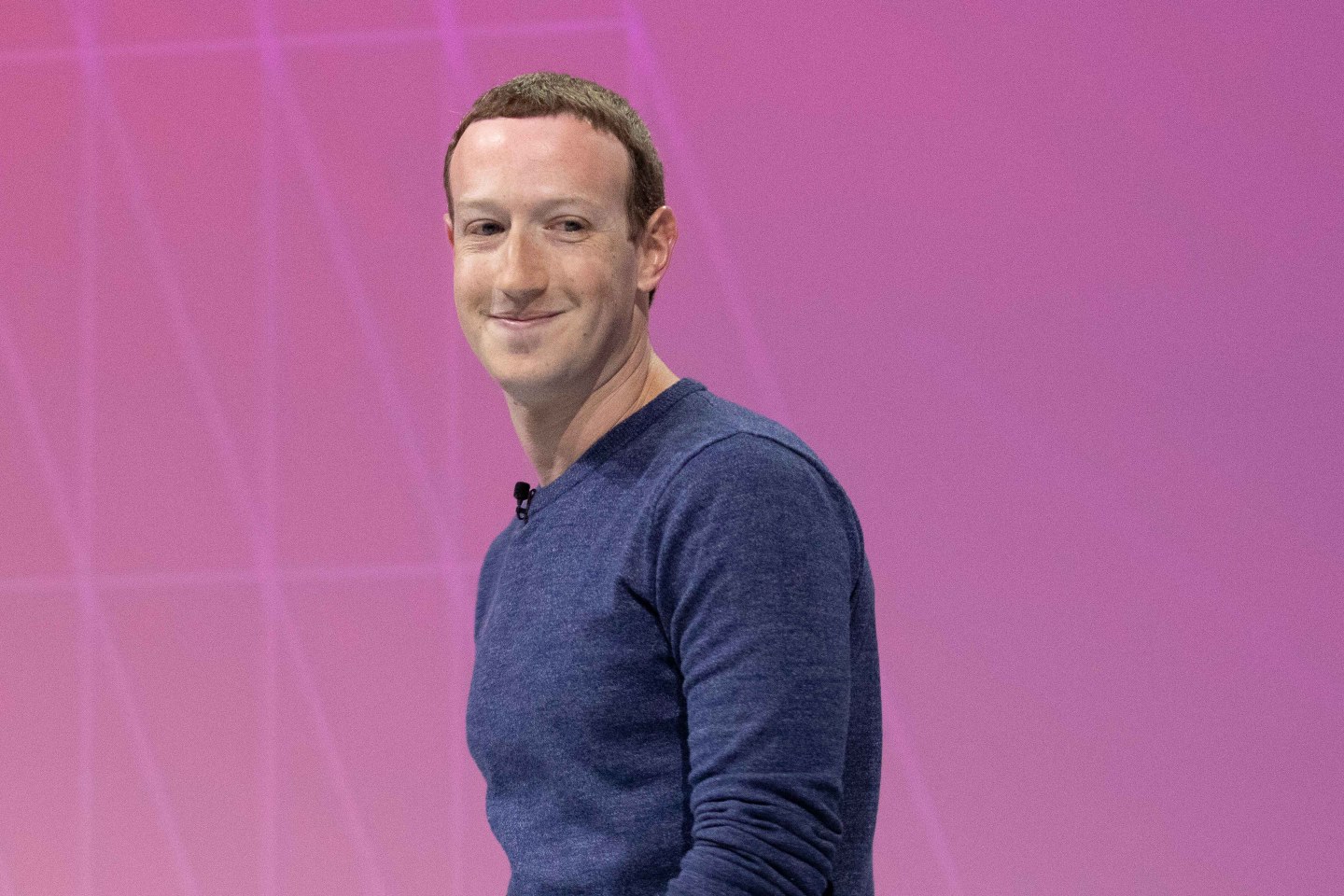
“Open source drives innovation because it enables many more developers to build with new technology,” Facebook CEO Mark Zuckerberg said in Tuesday’s announcement.
According to LLaMa 2 community license agreement, any organization whose number of monthly active users was greater than 700 million in the calendar month before the software’s release—in other words, in June—must seek and receive a license from Meta. Another clause in LLaMa 2’s commercial terms also mentions users can’t use it to improve other large language models besides Llama 2.
“I think they did some competitive research and they wanted to do a little bit of control on who and what the model is used for,” said Nathan Lambert, a research scientist at Hugging Face.
“It is not a fully open source system, but it is a far more open release of a state-of-the-art language model than we have been seeing in the last few years,” Lambert told Fortune. “And because of that, I think it’s one of the biggest moments in A.I. for the year to kind of balance the open versus closed debate.”
A Meta spokesperson declined to comment.
There has been considerable debate surrounding the definition and interpretation of “open source” software. While open source experts argue that any clauses that limit how the software is used defies the very definition of open source, its becoming increasingly common for software created by some corporate entities to come with certain restrictions about who can use code and how, while still making that source code available to the public for no cost. In the case of A.I. tools, many argue that licensing restrictions can help prevent the technology from being misused by bad actors.
Amidst the fierce A.I. rivalry with powerhouses like Google, Microsoft, and OpenAI, Meta’s decision to open source this technology shows its determination to stay in the race. Unlike Meta, these companies have chosen to keep their advancements locked away due to safety concerns, and some critics believe this is also a way to prevent competition. Ironically, Meta’s “open” model seems to have taken competition into account.
“It would be extremely exciting to see machine learning products hit that scale to the point where this license is extremely impactful,” Lambert said, adding that ChatGPT only recently hit 100 million MAU.
Nick Clegg, Meta’s President of Global Public Policy, argued against the concentration of foundational technology within a handful of corporate giants, and emphasized that the historical track record reveals strategic advantages for companies that embrace the release of open-source software, in a piece with The Financial Times. With a clause like this, it’s clear that corporate giants are definitely in Meta’s sights.
“Meta wants to become the default provider. By open sourcing a capable model, they make it harder for Google or OpenAI to compete on price,” senior Forrester analyst Andrew Cornwall told Fortune. “Meta appears to be providing the foundation models that enable research and commercial use out of the box, with no need to hunt down illicit models.”
Meta announced partnerships with companies such as Spotify, LG, and Qualcomm in Tuesday’s LLaMa 2 announcement. “This [clause] encourages cooperation from current and future partners that are too big to sue or buy,” Cornwall said.
Do you have insight to share? Got a tip? Contact Kylie Robison at kylie.robison@fortune.com, through secure messaging app Signal at 415-735-6829, or via Twitter DM.