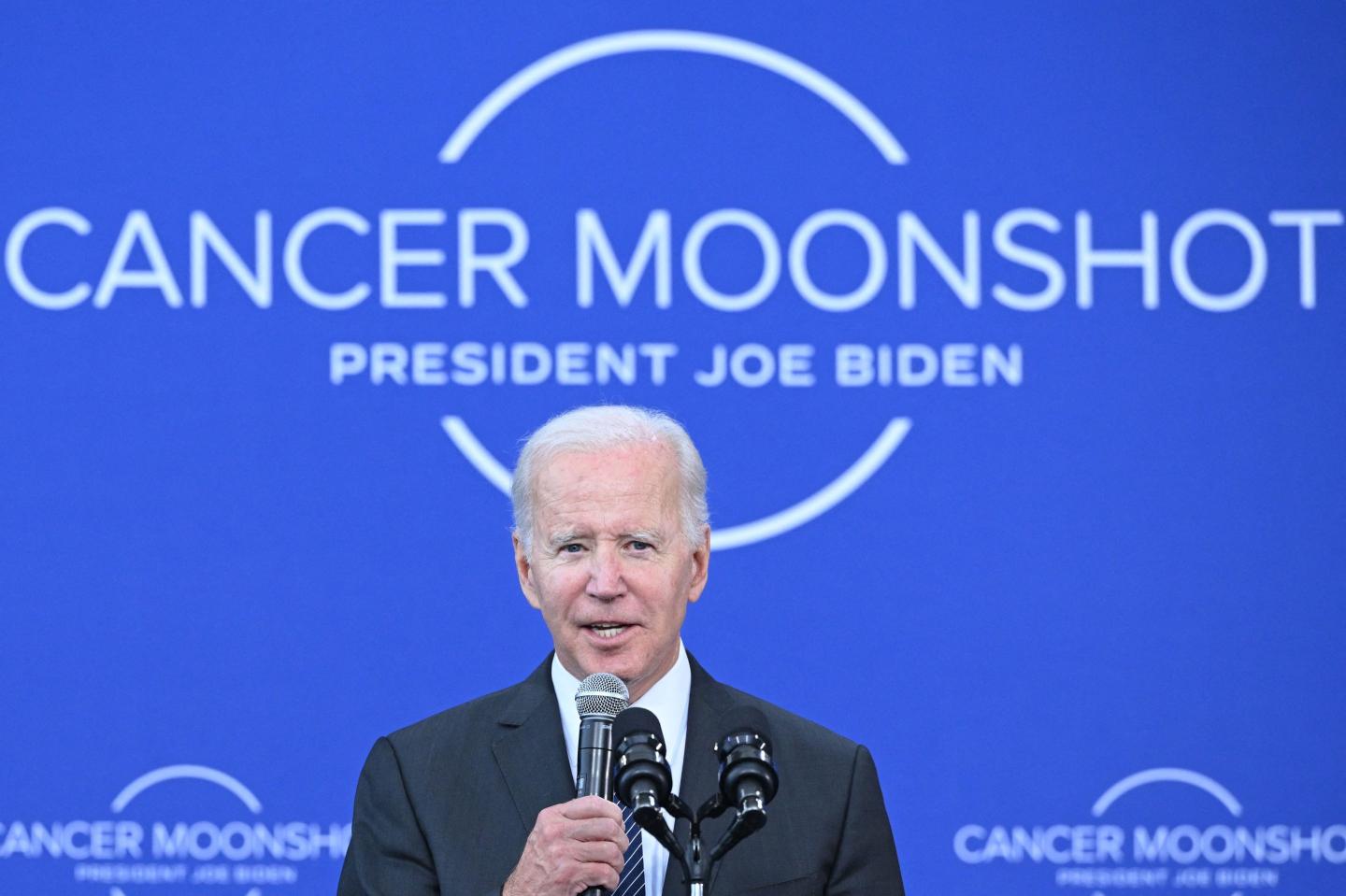
In February, President Biden reignited his Cancer Moonshot with two visionary goals: To cut the death rate from cancer by at least 50% over the next 25 years, and to “improve the experience of people and their families living with and surviving cancer.” As an oncologist and a primary care physician who’ve both worked in the cancer field for decades (one of whom is also a cancer survivor), we know that the second aim, which might seem more mundane and less technically audacious, will likely be just as difficult to achieve as the first. And its impact on the Moonshot’s ultimate success will be more important than many realize.
There’s no question that cancer warrants its own moonshot. As the second-leading cause of death in the U.S., cancer’s lethality is matched by its complexity. Cancer is not one disease but a family of diseases. Each form requires different treatments and medicines and involves different timelines and prognoses. The good news is that we’re already making great progress in developing effective therapeutics and new drugs that are measurably improving outcomes. Mortality rates have dropped significantly over the past three decades. If the trend continues, the overall rate will decline by 47% by 2047.
This is the strength of American medicine. We’re proficient at inventing and leveraging advanced technologies and harnessing vast resources in pursuit of scientific breakthroughs, especially during crises or because of urgent need. The rapid development of mRNA vaccines during the COVID-19 pandemic is a case in point. But any medical victory over cancer will be greatly diminished if we do not also achieve commensurate improvements in access, experience, and quality of life for cancer patients and survivors.
On that front, American medicine has much further to go. In fact, in many areas, the experience of cancer care is actually getting worse, intensifying the physical, emotional, and financial suffering of patients and families. This is especially true for people who already face socio-economic disparities and barriers to care and who may, as a result, experience delays in screening, difficulty securing stable housing or even paying for medicine, and lack of access to nutritious food, among other challenges. How is it that we can “go to the moon” with miraculous new cancer drugs and therapeutics but we still can’t ensure a patient can access a bus fare or an Uber ride to get to their chemotherapy appointment? The disparity between the bold vision of the Cancer Moonshot and its lived reality can be depressingly stark.
For the Cancer Moonshot to fully achieve its aims, we must put as much emphasis on the more mundane nuts-and-bolts of care delivery and patient support as we do on technical and medical breakthroughs. In our view, those efforts should target four areas:
Accelerated access to lifesaving, life-changing care
Early detection is one of the best ways to increase cancer survival, but the impact is diminished if that doesn’t also lead to early treatment.
Too many patients must wait an extended time for a first appointment with an oncologist, intensifying the stress and burden they already feel and likely worsening their condition and prognosis. People living in areas without ready access to testing and care, such as in vast regions of rural America, are particularly vulnerable.
Enhanced collaboration and information sharing
The American healthcare system is notoriously fragmented–something readily apparent to anyone who has ever had to bring a bag of medicines to an appointment to show a doctor what they’re taking or fill out the same form countless times.
For a cancer patient, this isn’t just an occasional frustration but a mounting burden and health risk. Multiple weekly oncology appointments are often the norm, and patients with comorbid conditions like diabetes or heart disease must also include their primary care doctors in the mix. Every new interaction with the healthcare system–from trips to the emergency department, visits with specialists, more tests, and added prescriptions–compounds the effort required by the patient and the likelihood that something important will be miscommunicated or lost in the shuffle.
Better care coordination is critical for improving experience and outcomes. Care teams must be able to share information easily, flag concerns or symptoms knowing they’ll be addressed, and gain ready access to patient-reported outcomes. This will facilitate a better care journey overall with better outcomes while reducing unnecessary hospitalizations, treatments, and suffering.
Expanded social support
Data has shown us that zip code can be a better predictor of health than genetic code. For cancer patients who live in the “wrong” zip code, adverse socio-economic and environmental conditions can increase their susceptibility to the disease in the first place, compound their existing comorbid health challenges, impede their ability to practice or adopt healthy lifestyles, and create large and small barriers to access to care.
Oncologists and care teams know that people in those circumstances often need individualized assistance to stick to their care plan and benefit from all the medical advances that have been made possible today. Sometimes, it’s as simple as arranging for transportation, delivering meals, providing a refrigerator, or ensuring that someone can check in. The massive challenge the Moonshot must overcome is providing such individualized support at scale while freeing care teams to provide the actual life-saving care.
Reduced financial toxicity
Many cancer drugs are expensive and involve high out-of-pocket costs for the patient. Patients undergoing cancer care may find it difficult to continue working and earning a living. One-quarter see their savings wiped out. Three-quarters have bills in collections, face tax liens and mortgage foreclosure, or experience other financial setbacks. Many are forced to make difficult choices about where they live, what they eat, how they’ll pay for childcare, and whether they can continue treatment. Ultimately, financial problems can become as big or bigger than the illness itself, and continue to diminish a person’s quality of life and financial security long into survivorship. We must find new ways to flag and address the financial toxicity of cancer treatment just as we have learned to act quickly to address the adverse effects of a cancer drug or the acute symptoms that can suddenly arise and threaten a patient’s health and prognosis.
In the original Moonshot, President Kennedy declared that “…this nation should commit itself to achieving the goal, before this decade is out, of landing a man on the moon and returning him safely to the earth.” This was a bold vision that served to organize resources and accelerate technological advances. But the engineers and administrators at NASA who executed that vision understood that the technical wonders of space travel could only be achieved by paying attention to every last detail of engineering, systems, and processes, no matter how small or mundane.
To ensure the Cancer Moonshot realizes its vision, we must apply a similar level of attention to the systems and processes surrounding care delivery and support. Cancer is an intensely personal disease that affects people differently depending on their circumstances and needs and where they are on their cancer journey. Care teams engage with their patients on a very human level and must often go to great lengths to overcome simple barriers to better care.
Our years of caring for cancer patients and also undergoing treatment have informed our belief that the quality of an individual’s cancer care experience cannot be secondary or less important than the drugs and therapies they are prescribed. If we overlook the daily challenges that cancer patients face in accessing and managing their care, and the challenges care teams face in treating patients who need more support, we will fail to benefit fully from the breakthroughs in medicine, technology, and therapeutics the Cancer Moonshot will no doubt accelerate.
Bobby Green, M.D., is the co-founder, president, and chief medical officer at Thyme Care. Brad Diephuis, M.D., is the chief business officer at Thyme Care.
The opinions expressed in Fortune.com commentary pieces are solely the views of their authors and do not necessarily reflect the opinions and beliefs of Fortune.
More must-read commentary published by Fortune:
- The forced return to the office is the definition of insanity
- The Supreme Court can end affirmative action–but it can’t reverse the course of history
- True believers, profiteers, and curious creators: Meet the 5 schools of thought that dominate the A.I. debate
- A year after Roe v. Wade was overturned, an unworkable patchwork of state laws leaves corporate America more vulnerable to government overreach