Wall Street analysts and investment strategists love to use “recession indicators.” These simple statistics that serve as evidence of (potential) impending economic disaster can be invaluable tools for managing risk. Just look at one of the most famous of them all: the yield curve. Since 1969, a yield curve inversion has preceded every U.S. recession.
The yield curve is a graphical representation of the relationship between the yields of related bonds—most commonly the U.S. 10-year Treasury and two-year Treasury. Typically, shorter-term bonds have lower yields than longer-term bonds because investors are taking more risk by locking up their money for longer. This relationship is represented by an upward sloping curve. But sometimes that yield curve can invert, meaning long-term bond yields drop below short-term bond yields.
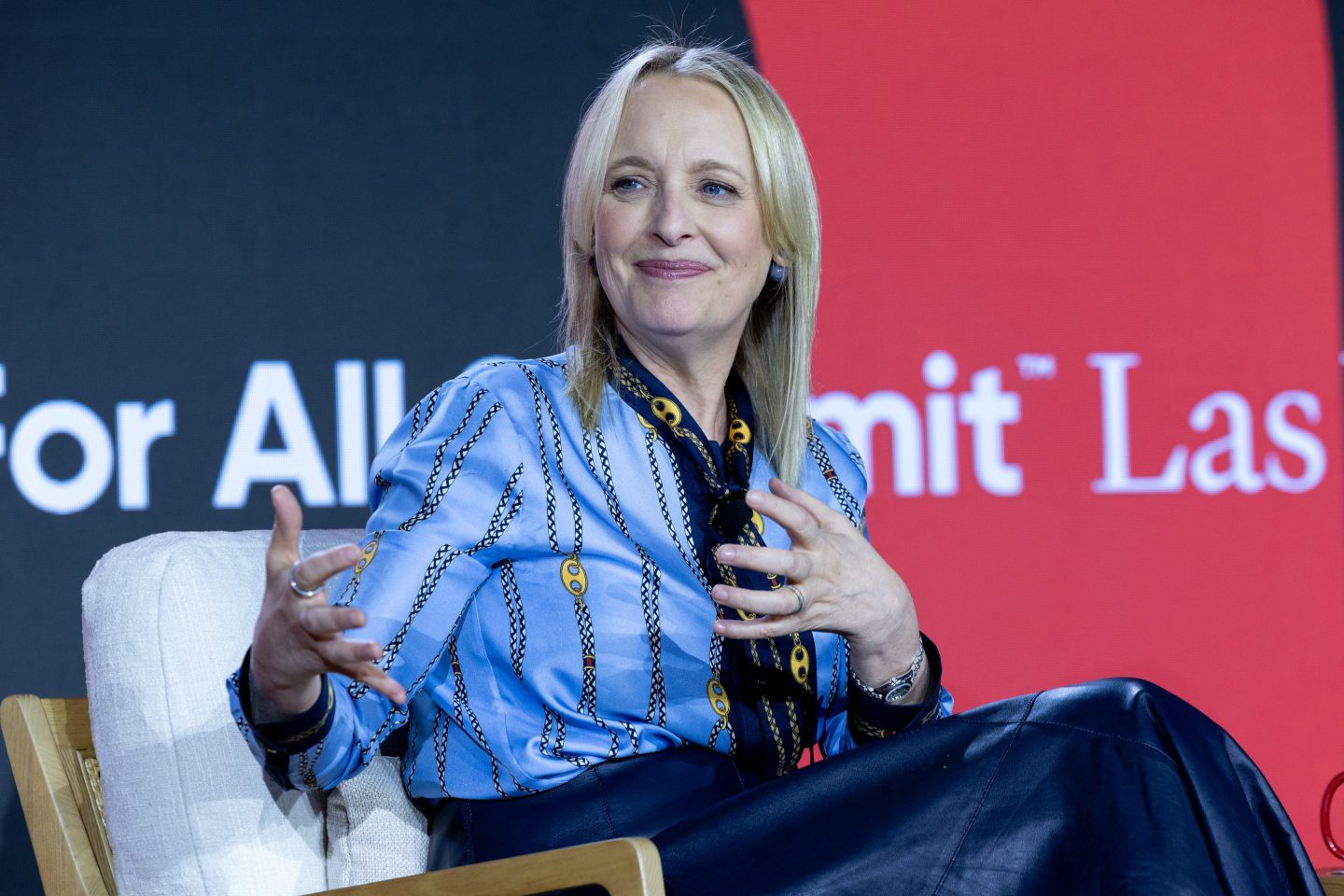
Megan Horneman, chief investment officer at Verdence Capital Advisors, warned Monday that even after nearly a year, investors shouldn’t be “complacent” about this “historical recession indicator.”
“Historically, after the yield curve inverts, it takes ~15 months for the economy to officially enter a recession,” the Wall Street veteran explained in her Weekly Investment Insights research note on Monday. “Applying this same time frame to the current inversion (roughly one year ago), the economy could enter a recession in October of this year.”
Horneman, who spent more than a decade at Deutsche Bank before moving to Verdence, pointed to the yield curve inversion and “many other economic signals” as evidence that a recession in the second half of this year is now all but “unavoidable.”
The thing is, although every recession since 1969 has been preceded by a yield curve inversion, not every yield curve inversion has preceded a recession. The past six of them have all correctly predicted economic downturns, with a crucial exception: A brief inversion in March 2022 after Russia’s invasion of Ukraine spooked investors.
So what is the yield curve, why is it so scary, and what does Horneman see in the signals?
Reading the tea leaves
An inverted yield curve typically indicates that investors are moving money away from short-term bonds and into long-term bonds because they expect that a near-term decline in economic activity will force the Federal Reserve to cut interest rates. Essentially, it’s a sign that the market is becoming increasingly pessimistic about the economy’s prospects. And that’s exactly what happened on July 5, 2022, the Treasury yield curve (the difference between the yield of a 10-year Treasury and a two-year Treasury) inverted—and it’s remained that way ever since.
In addition to this signal of weak market confidence, Horneman noted that the Conference Board’s Leading Economic Index (LEI)—which uses data including building permits, average weekly hours worked, manufacturers’ new orders, and more to get a picture of the health of the economy—sank to its lowest level since July 2020 in May and has now fallen for 14 straight months.
On top of that, despite year-over-year inflation falling from its four-decade high of 9.1% in June 2022 to just 4% this May, Federal Reserve Chairman Jerome Powell delivered hawkish comments during his semiannual testimony on Capitol Hill last week, promising to continue his inflation fight. “Inflation pressures continue to run high, and the process of getting inflation back down to 2% has a long way to go,” he said, referencing the central bank’s 2% inflation target.
Horneman said the comments are evidence of two more rate hikes on the way this year, and argued “history is not on our side” when it comes to avoiding a recession during a period of rising interest rates. “History tells us that most Fed tightening cycles do not end in a soft landing. As can be seen in the table, over the past 11 tightening cycles, all but three resulted in an economic recession,” she explained in a June 20 note.
A warning sign for markets?
Recessions are never good news for stocks. They slow economic growth and increase unemployment, which hurts corporate earnings. And Horneman warned Monday that, on top of that, this year’s market rally was an anomaly compared with the historical trend, which could mean there’s “additional downside” ahead.
Historically, after the yield curve falls to its lowest level, the S&P 500 has posted an average gain of just 4.4% in the following 12 months. But the blue-chip index is already up nearly 9% in just the few months since the yield curve reached its lowest level (–108 basis points) on March 8.
“Equity valuations continue to rise on the optimism that the Fed may be near the end of their tightening cycle,” Horneman wrote. “However, it is also important to remember that equity markets historically do not bottom until we are within a recession.”
The CIO went on to argue that the first half stock market rally this year is not “sustainable” and said she expects to see a “10% to 15% decline when investors become realistic with the interest rate, economic and earnings environment.”