• Home
  • Latest
  • Fortune 500
  • Finance
  • Tech
  • Leadership
  • Lifestyle
  • Rankings
  • Multimedia

Trendingnow

1

Jeff Bezos wants the bottom half of earners to pay zero income tax—he says nurses making just $75K should save $12K a year

2

The river that supplies 40 million Americans is down to 23% — and about to make a $25 million bet on one fish

3

Jamie Dimon said the American Dream was slipping away. JPMorgan just put $40 million on the table to fix it

1

Jeff Bezos wants the bottom half of earners to pay zero income tax—he says nurses making just $75K should save $12K a year

2

The river that supplies 40 million Americans is down to 23% — and about to make a $25 million bet on one fish

3

Jamie Dimon said the American Dream was slipping away. JPMorgan just put $40 million on the table to fix it
LifestyleHolidays

One of the 182,566 people freed on the first Juneteenth was Joshua Houston, the enslaved servant of the famous general. This is his story.

By
Jeffrey L. Littlejohn
,
Zachary Montz
Zachary Montz
, and
The Conversation
The Conversation
Down Arrow Button Icon
By
Jeffrey L. Littlejohn
,
Zachary Montz
Zachary Montz
, and
The Conversation
The Conversation
Down Arrow Button Icon
June 18, 2023, 8:51 PM ET
Sam Houston
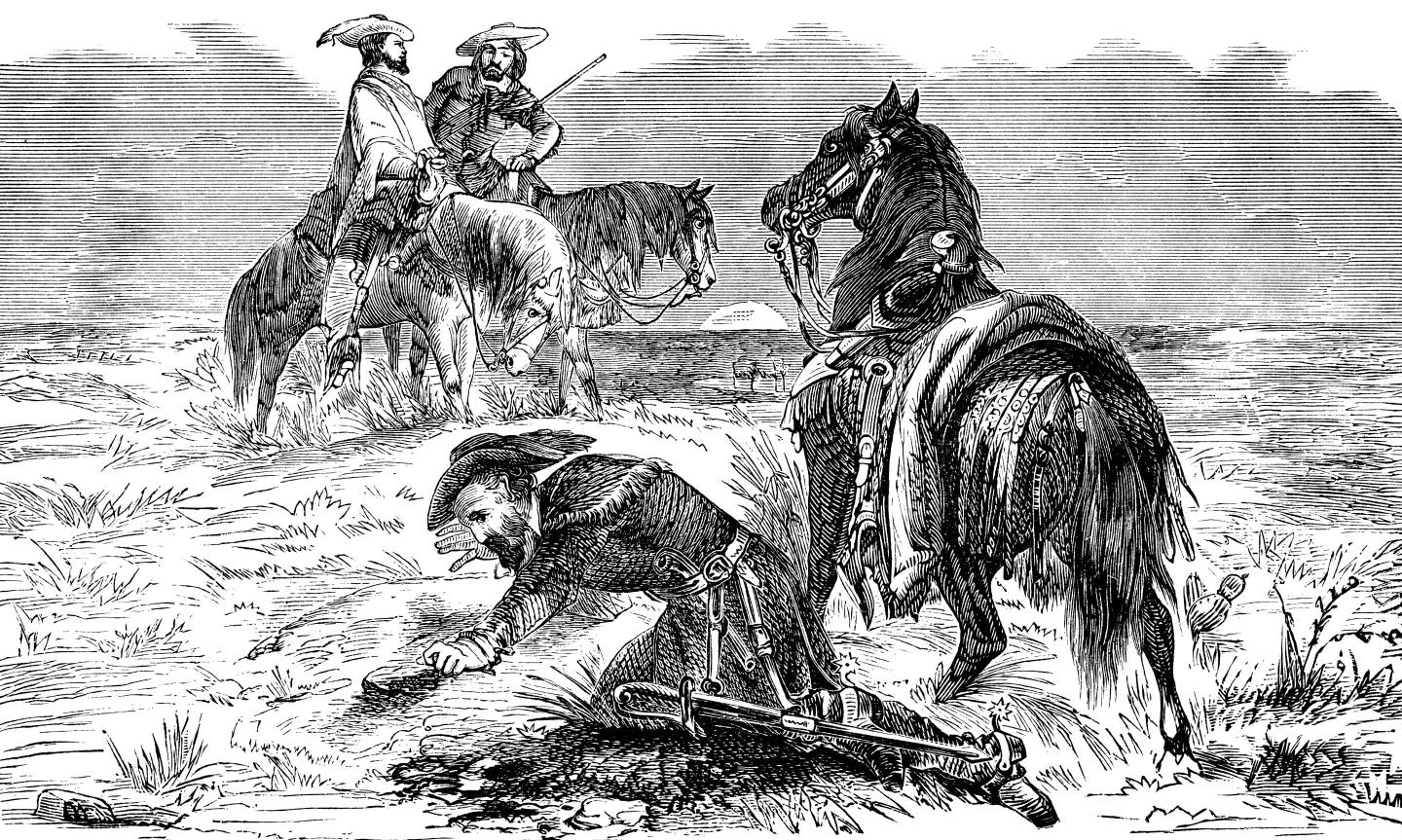
Antique engraving of Gen. Sam Houston listening to the sound of battle.Getty Images

The news was startling.

On June 19, 1865, two months after the U.S. Civil War ended, Union Gen. Gordon Granger walked onto the balcony at Ashton Villa in Galveston, Texas, and announced to the people of the state that “all slaves are free.”

As local plantation owners lamented the loss of their most valuable property, Black Texans celebrated Granger’s Juneteenth announcement with singing, dancing and feasting. The 182,566 enslaved African Americans in Texas had finally won their freedom.

One of them was Joshua Houston.

He had long served as the enslaved servant of Gen. Sam Houston, the most well-known military and political leader in Texas.

Joshua Houston lived about 120 miles north of Galveston when he learned of Granger’s proclamation.

It was read aloud at the local Methodist Church in Huntsville, Texas, by Union Gen. Edgar M. Gregory, the assistant commissioner for the Freedmen’s Bureau in Texas.

If Juneteenth meant anything, it meant at least that Joshua Houston and his family were free.

But there was more too.

The promise of freedom meant that more work needed to be done. Families needed to be reunited. Land needed to be secured. Children needed to be educated.

Indeed, the radical promise of Juneteenth is embodied in the community activism of Joshua Houston and the educational career of his son Samuel Walker Houston.

The violent white reaction to Black political power

Within a year of Granger’s proclamation, Houston had established a blacksmith shop near the Huntsville town square and moved his family into a two-story house on the adjoining lot.

He helped found the Union Church, the first Black-owned institution in the city, as well as a freedmen’s school to begin educating African American children.

In 1878 and 1882, a Republican coalition of Black and white voters opposed to conservative Democratic rule elected Houston as the county’s first Black county commissioner, a powerful position in local governance.

Despite this dramatic turn of events, Houston’s political story was hardly unique.

In the two decades following emancipation, 52 Black men served in the state Legislature or the state’s constitutional conventions.

But that number had fallen to two by 1882.

Opposition to Black freedom had been a powerful force in the state’s political culture since emancipation.

Armstead Barrett, a former slave in Huntsville, recalled in 1937 that an enraged white man had reacted to Granger’s Juneteenth order by riding past a celebrating Black woman and murdering her with his sword.

In 1871, the violence continued when the white citizens of Huntsville stormed the county courthouse and aided the escape of three men who had lynched freedman Sam Jenkins.

Later, in the 1880s, attacks on Black elected officials, their white political allies and Black voters escalated dramatically.

In the early 1900s, changes in state election laws, including the introduction of the poll tax, effectively disenfranchised most Black voters and many poor whites as well. Voter participation dropped from roughly 85% at the high tide of Texas populism in 1896 to roughly 35% when the poll tax became effective in 1904.

As a result, Robert Lloyd Smith was the last Black legislator for nearly 70 years when he finished his term in 1897.

That wall of white supremacy at the state Capitol would not crack again until 1966, when federal voting rights legislation and Supreme Court rulings nullified schemes to deny African Americans the ballot.

These changes enabled the election of Black officials such as Barbara Jordan, the first African American woman to serve in the Texas Senate.

Like father, like son

On an unknown date, a few years after Juneteenth, Joshua Houston’s son Samuel Walker Houston was born free in the bright light of Reconstruction.

Although he spent his adulthood in some of the darkest years of Jim Crow, he continued his father’s work as an educator and community leader. Following a short stint at Atlanta University in Georgia and Howard University in Washington, D.C., Samuel Walker Houston returned to Huntsville and founded a school in the nearby Galilee community.

Houston’s school was named for him and served as one of the first county training schools for African Americans in Texas. It enrolled students at every level, from first grade through high school, and provided a curriculum based on Booker T. Washington’s Tuskegee model of vocational training.

Young women at Houston’s school received training in homemaking, sewing and cooking, while young men learned carpentry, woodworking and mathematics.

By 1922, enrollment at the school had grown to 400 students, and it was recognized by contemporaries as the leading school of East Texas. In the 1930s, Houston’s school was absorbed into Huntsville’s school district, and he became the director of Black education in the county.

Houston encouraged a practical education for Black Texans, but he also believed that young Texans of all races needed to learn an account of history that differed from the white supremacist narrative that dominated Southern history.

Toward this end, he joined with Joseph Clark and Ramsey Woods, two white professors who pioneered race relations courses at Sam Houston State Teachers College. Together, the group led the Texas Commission on Interracial Cooperation’s effort to evaluate Texas public school textbooks during the 1930s.

In an analysis of racial attitudes in state-endorsed textbooks, they found that 74% of books presented a racist view of the past and of Black Americans. Most excluded the scientific, literary and civic contributions of Black people, while mentioning their economic contributions only in the period of slavery before the Civil War.

Instead, the group argued, books designed for both Black and white Texans needed to take the “opportunity … to do simple justice” by including Black history and the “struggle for the exercise” of equal civil, political and legal rights.

White Texans refused to adopt a textbook in the 1930s that taught the fundamental equality of the races, or portrayed Reconstruction, as it is now widely understood, as a missed opportunity to establish a more just and egalitarian Texas.

But Houston and his white counterparts were motivated by the conviction that progress, both for African Americans and for Texas, required a more honest and progressive account of the state and its history.

An ongoing battle for equality

Today’s legislative efforts in Texas and elsewhere to restrict the teaching of systemic racism in public schools ignore the lessons and realities represented by Joshua and Samuel Walker Houston’s lives.

The argument used for supporting such restrictions is that “divisive concepts” like the history of racism may make some students feel uncomfortable or guilty.

That sort of thinking echoes the same justification provided by Texas lawmakers in 1873, when many argued that the state’s schools must be segregated to ensure “the peace, harmony and success of the schools and the good of the whole.”

But the opposite is true.

In reality, the prohibition on teaching the darker chapters of our past creates a segregated history.

Instead, as Samuel Walker Houston recognized, young Texans must have a more honest account of the past and of one another to progress into a unified and egalitarian society.

Texas history is both the story of people who dedicated their lives to the work of advancing freedom and the story of powerful people and forces that stood against it.

One cannot be understood without the other.

Americans cannot appreciate the accomplishments of Joshua and Samuel Walker Houston without examining the vicious realities of Jim Crow society.

The lesson of their lives, and of the Juneteenth holiday, is that freedom is a precious thing that requires constant work to make real.

Jeffrey L. Littlejohn is Professor of History, Sam Houston State University and Zachary Montz is Lecturer, History Department, Sam Houston State University.

This article is republished from The Conversation under a Creative Commons license. Read the original article.

About the Authors
By Jeffrey L. Littlejohn
See full bioRight Arrow Button Icon
By Zachary Montz
See full bioRight Arrow Button Icon
By The Conversation
See full bioRight Arrow Button Icon

Latest in Lifestyle

Finance
Lorem ipsum dolor sit amet, consectetur adipiscing elit, sed do eiusmod tempor incididunt ut labore et dolore magna aliqua. Ut enim ad minim veniam
By Fortune Editors
October 20, 2025
Finance
Lorem ipsum dolor sit amet, consectetur adipiscing elit, sed do eiusmod tempor incididunt ut labore et dolore magna aliqua. Ut enim ad minim veniam
By Fortune Editors
October 20, 2025
Finance
Lorem ipsum dolor sit amet, consectetur adipiscing elit, sed do eiusmod tempor incididunt ut labore et dolore magna aliqua. Ut enim ad minim veniam
By Fortune Editors
October 20, 2025
Finance
Lorem ipsum dolor sit amet, consectetur adipiscing elit, sed do eiusmod tempor incididunt ut labore et dolore magna aliqua. Ut enim ad minim veniam
By Fortune Editors
October 20, 2025
Finance
Lorem ipsum dolor sit amet, consectetur adipiscing elit, sed do eiusmod tempor incididunt ut labore et dolore magna aliqua. Ut enim ad minim veniam
By Fortune Editors
October 20, 2025
Finance
Lorem ipsum dolor sit amet, consectetur adipiscing elit, sed do eiusmod tempor incididunt ut labore et dolore magna aliqua. Ut enim ad minim veniam
By Fortune Editors
October 20, 2025

Most Popular

Finance
Lorem ipsum dolor sit amet, consectetur adipiscing elit, sed do eiusmod tempor incididunt ut labore et dolore magna aliqua. Ut enim ad minim veniam
By Fortune Editors
October 20, 2025
Finance
Lorem ipsum dolor sit amet, consectetur adipiscing elit, sed do eiusmod tempor incididunt ut labore et dolore magna aliqua. Ut enim ad minim veniam
By Fortune Editors
October 20, 2025
Finance
Lorem ipsum dolor sit amet, consectetur adipiscing elit, sed do eiusmod tempor incididunt ut labore et dolore magna aliqua. Ut enim ad minim veniam
By Fortune Editors
October 20, 2025
Finance
Lorem ipsum dolor sit amet, consectetur adipiscing elit, sed do eiusmod tempor incididunt ut labore et dolore magna aliqua. Ut enim ad minim veniam
By Fortune Editors
October 20, 2025
Finance
Lorem ipsum dolor sit amet, consectetur adipiscing elit, sed do eiusmod tempor incididunt ut labore et dolore magna aliqua. Ut enim ad minim veniam
By Fortune Editors
October 20, 2025
Finance
Lorem ipsum dolor sit amet, consectetur adipiscing elit, sed do eiusmod tempor incididunt ut labore et dolore magna aliqua. Ut enim ad minim veniam
By Fortune Editors
October 20, 2025
Fortune Secondary Logo
Rankings
  • 100 Best Companies
  • Fortune 500
  • Global 500
  • Fortune 500 Europe
  • Most Powerful Women
  • World's Most Admired Companies
  • See All Rankings
  • Lists Calendar
Sections
  • Finance
  • Fortune Crypto
  • Features
  • Leadership
  • Health
  • Commentary
  • Success
  • Retail
  • Mpw
  • Tech
  • Lifestyle
  • CEO Initiative
  • Asia
  • Politics
  • Conferences
  • Europe
  • Newsletters
  • Personal Finance
  • Environment
  • Magazine
  • Education
Customer Support
  • Frequently Asked Questions
  • Customer Service Portal
  • Privacy Policy
  • Terms Of Use
  • Single Issues For Purchase
  • International Print
Commercial Services
  • Advertising
  • Fortune Brand Studio
  • Fortune Analytics
  • Fortune Conferences
  • Business Development
  • Group Subscriptions
About Us
  • About Us
  • Press Center
  • Work At Fortune
  • Terms And Conditions
  • Site Map
  • About Us
  • Press Center
  • Work At Fortune
  • Terms And Conditions
  • Site Map
  • Facebook icon
  • Twitter icon
  • LinkedIn icon
  • Instagram icon
  • Pinterest icon

Latest in Lifestyle

The 5 Best B12 Supplements of 2026: RD Approved
HealthDietary Supplements
The 5 Best B12 Supplements of 2026: RD Approved
By Emily PharesMay 28, 2026
8 hours ago
suerken
CommentaryRestaurants
Wendy’s U.S. President: the CEO burger battles exposed a truth every brand leader needs to hear
By Pete SuerkenMay 28, 2026
9 hours ago
Independent book stores are growing as people look for community in local spaces
Retailbooks
Independent book stores are growing as people look for community in local spaces
By The Associated Press and Hillel ItalieMay 28, 2026
10 hours ago
The CDC said 8% of the country lacked health insurance in 2025, and it may rise this year
HealthHealth
The CDC said 8% of the country lacked health insurance in 2025, and it may rise this year
By The Associated Press, Mike Stobbe and Ali SwensonMay 28, 2026
10 hours ago
aca
HealthHealth Insurance
America’s uninsured rate held at 8% in 2025. That’s about to change
By Mike Stobbe, Ali Swenson and The Associated PressMay 28, 2026
11 hours ago
phone
InvestingMarketing
Gen Z’s Joe Camel moment: how prediction markets learned to speak in memes
By Kaitlyn Huamani, Nick Lichtenberg and The Associated PressMay 28, 2026
11 hours ago

Most Popular

Jeff Bezos wants the bottom half of earners to pay zero income tax—he says nurses making just $75K should save $12K a year
Success
Jeff Bezos wants the bottom half of earners to pay zero income tax—he says nurses making just $75K should save $12K a year
By Preston ForeMay 21, 2026
7 days ago
The river that supplies 40 million Americans is down to 23% — and about to make a $25 million bet on one fish
Environment
The river that supplies 40 million Americans is down to 23% — and about to make a $25 million bet on one fish
By Dorany Pineda, Brittany Peterson and The Associated PressMay 27, 2026
1 day ago
Jamie Dimon said the American Dream was slipping away. JPMorgan just put $40 million on the table to fix it
Banking
Jamie Dimon said the American Dream was slipping away. JPMorgan just put $40 million on the table to fix it
By Nick LichtenbergMay 27, 2026
1 day ago
Even if every California billionaire left tomorrow, it would take 25 years for the state to lose as much as it stands to gain from proposed wealth tax
Economy
Even if every California billionaire left tomorrow, it would take 25 years for the state to lose as much as it stands to gain from proposed wealth tax
By Tristan BoveMay 27, 2026
1 day ago
Techlash grows in education: 'My daughter went to middle school and was sent home with a screen addiction in her backpack'
North America
Techlash grows in education: 'My daughter went to middle school and was sent home with a screen addiction in her backpack'
By Jocelyn Gecker and The Associated PressMay 26, 2026
2 days ago
Nvidia CEO Jensen Huang admits he criticizes everything his 42,000-plus employees show him: ‘You can’t go a day without some criticism’
Success
Nvidia CEO Jensen Huang admits he criticizes everything his 42,000-plus employees show him: ‘You can’t go a day without some criticism’
By Preston ForeMay 26, 2026
2 days ago

© 2026 Fortune Media IP Limited. All Rights Reserved. Use of this site constitutes acceptance of our Terms of Use and Privacy Policy | CA Notice at Collection and Privacy Notice | Do Not Sell/Share My Personal Information
FORTUNE is a trademark of Fortune Media IP Limited, registered in the U.S. and other countries. FORTUNE may receive compensation for some links to products and services on this website. Offers may be subject to change without notice.