• Home
  • Latest
  • Fortune 500
  • Finance
  • Tech
  • Leadership
  • Lifestyle
  • Rankings
  • Multimedia
CommentarySemiconductors

We need more powerful processors for the A.I. revolution. Too bad the chip industry is not keeping up

By
Rakesh Kumar
Rakesh Kumar
Down Arrow Button Icon
By
Rakesh Kumar
Rakesh Kumar
Down Arrow Button Icon
June 12, 2023, 8:30 PM ET
Updated June 14, 2023, 1:31 PM ET
Rakesh Kumar, author of "Reluctant Technophiles," argues that the chip industry is surprisingly bad at innovating—meaning that we aren't getting more computing power right as we need it for A.I.
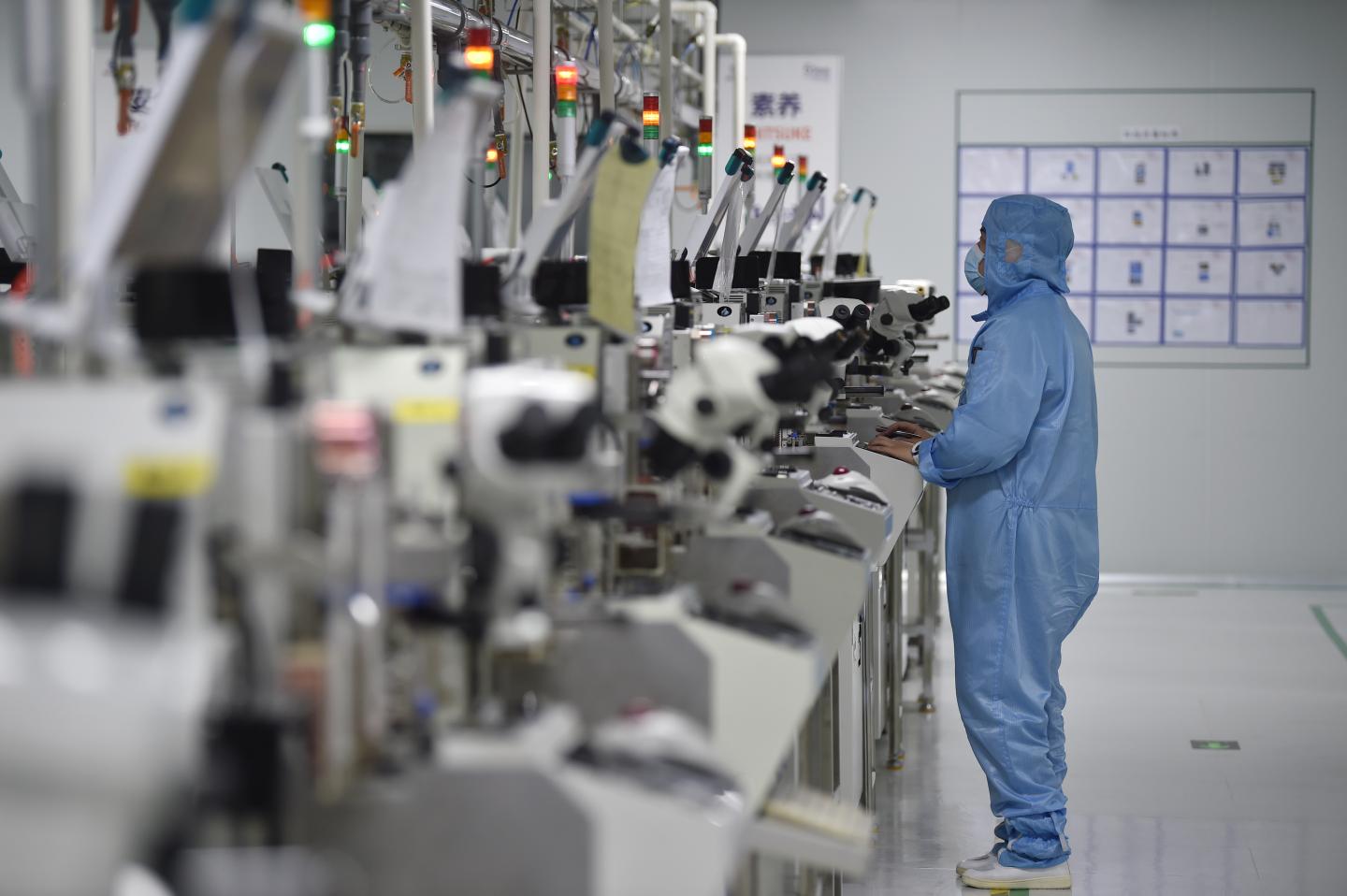
Rakesh Kumar, author of "Reluctant Technophiles," argues that the chip industry is surprisingly bad at innovating—meaning that we aren't getting more computing power right as we need it for A.I. VCG—VCG via Getty Images

Everyone is talking about chips again, thanks to A.I and a rosy forecast from Nvidia. The news drove investors to flock to A.I.-related stocks to the tune of $300 billion in added value last month.

But all this optimism shouldn’t distract us from one of the chip industry’s key problems: Chips have stopped providing real jumps in computing power, right as we see an explosion of power-hungry applications like generative A.I.

Historically, the computing power of chips has doubled every two years in what became to be known as “Moore’s Law.” But we haven’t seen that jump in performance for a while. Now, a microprocessor’s performance increases by only about 10-15% each year—and the actual increase in speed for a given software application is often much smaller. And the process of rearchitecting software for these chips can be expensive and buggy.

This slowdown could not have come at a worse time. Chips are simply not able to keep up with some of the most computation-intensive applications yet seen. The size of models used for tasks like computer vision, natural language processing, and speech processing has increased by 15 times in just two years, an order of magnitude higher than the increase in computer power in chips over the same period. The most advanced machine learning models, like those that power GPT-4 and ChatGPT, have increased by 75 times, again much more than the power of the graphics processing units (GPUs) that underlie them.

The gap between what’s needed and what’s provided can only be filled by more chips. And that’s making computing expensive for everyone. It’s now so expensive to build advanced machine learning models that they are now the exclusive domain of rich, powerful corporations.

Why are chips lagging so far behind?

There are technical challenges. It’s hard to make chips smaller than they already are—transistors, at their thinnest dimension, are only a few atoms thick.

But it’s a partial explanation at best. Chips haven’t kept up with the needs of contemporary applications for quite some time—and even on the best of days, improvements in chip speed have lagged improvements in software algorithms.

A better reason is that the chip industry has not been all that innovative, especially recently. Microprocessors have worked in more or less the same way for 40 years, even as devices get smaller. We haven’t changed how we use computer memory in decades. And the GPUs that power advanced machine learning also haven’t changed much in the past 10 years.

Slowing miniaturization is exposing the lack of disruptive ideas in the industry. No chip company appears in recent lists of innovative companies. And the unchanging ranks at the top of the industry suggest an oligopoly.

Innovation needs an ecosystem where companies, typically startups, want to experiment in the hopes of a breakout success.

The chip industry doesn’t have many of those experiments.

First, the cost of experimentation is extremely high. It often takes $10-30 million just to get the first product, and another $70-100 million to scale up. These extraordinarily large sums of money discourage risk-taking, entrepreneurship, and funding. As a result, not many chip startups are formed, and the few that get funding come from teams of seasoned chip veterans. This recipe leads to incrementalism, not disruption.

Second, the gestation period for new ideas is too long. It typically takes a few years before the first product sample is created and it may take just as long again to see revenue. This long period, again, discourages both innovators and investors that typically prefer to “fail fast”.

Third, the chip industry is too consolidated, dropping from 160 companies in 2010 to 97 in 2020. A lack of buyers constrains the size of exits, further discouraging investors.

Chips attract less than 1% of total U.S. venture capital investment, despite the emergence of A.I., the Internet of Things, electric cars, and 5G.

Finally, the chip industry may not be attracting talent. Today’s STEM graduates see better prospects in industries with much faster growth (including, perhaps ironically, A.I.). This chip industry also has a branding problem—even chip industry executives agree that the sector has a weak brand. Young employees and future innovators want to tinker with software more than struggle with new hardware.

The U.S. government must use its CHIPS Act funding as a lever to make the chip industry more welcoming to innovation.

To bring down the cost and time needed for a new idea, the government should require recipients of government money to allocate money to more agile methods of hardware design, open-source tools, and open standards. It should require recipients to make commonly-used hardware components widely accessible at a low cost, so that other companies can combine them with innovative components to create new hardware platforms cheaply and quickly.

Academic CHIPS Act beneficiaries should be required to modernize chip design curriculums to emphasize accessibility and impact. 

The government should allocate some National Science and Technology Council funding to develop a shared, subsidized infrastructure for design and fabrication with mature, trailing technologies to reduce the cost of producing proof-of-concept hardware.

And, finally, it can encourage the passage of right-to-repair legislation to help stimulate a culture of tinkering with hardware.

The chip industry has managed to mask its struggle with disruptive innovation for some time. And as miniaturization comes to a close, or at least loses its effectiveness, it’s time to address the innovation head on. Technological progress—literally—depends on it.

Rakesh Kumar is a Professor in the Electrical and Computer Engineering department at the University of Illinois and author of Reluctant Technophiles: India’s Complicated Relationship with Technology.

The opinions expressed in Fortune.com Commentary pieces are solely the views of their authors, and do not reflect the opinions and beliefs of Fortune.

Correction, June 15, 2023: An earlier version of this article misstated the length of time that the industry has relied on current frameworks for computer processors.

Join us at the Fortune Workplace Innovation Summit May 19–20, 2026, in Atlanta. The next era of workplace innovation is here—and the old playbook is being rewritten. At this exclusive, high-energy event, the world’s most innovative leaders will convene to explore how AI, humanity, and strategy converge to redefine, again, the future of work. Register now.
About the Author
By Rakesh Kumar
See full bioRight Arrow Button Icon

Latest in Commentary

Finance
Lorem ipsum dolor sit amet, consectetur adipiscing elit, sed do eiusmod tempor incididunt ut labore et dolore magna aliqua. Ut enim ad minim veniam
By Fortune Editors
October 20, 2025
Finance
Lorem ipsum dolor sit amet, consectetur adipiscing elit, sed do eiusmod tempor incididunt ut labore et dolore magna aliqua. Ut enim ad minim veniam
By Fortune Editors
October 20, 2025
Finance
Lorem ipsum dolor sit amet, consectetur adipiscing elit, sed do eiusmod tempor incididunt ut labore et dolore magna aliqua. Ut enim ad minim veniam
By Fortune Editors
October 20, 2025
Finance
Lorem ipsum dolor sit amet, consectetur adipiscing elit, sed do eiusmod tempor incididunt ut labore et dolore magna aliqua. Ut enim ad minim veniam
By Fortune Editors
October 20, 2025
Finance
Lorem ipsum dolor sit amet, consectetur adipiscing elit, sed do eiusmod tempor incididunt ut labore et dolore magna aliqua. Ut enim ad minim veniam
By Fortune Editors
October 20, 2025
Finance
Lorem ipsum dolor sit amet, consectetur adipiscing elit, sed do eiusmod tempor incididunt ut labore et dolore magna aliqua. Ut enim ad minim veniam
By Fortune Editors
October 20, 2025

Most Popular

Finance
Lorem ipsum dolor sit amet, consectetur adipiscing elit, sed do eiusmod tempor incididunt ut labore et dolore magna aliqua. Ut enim ad minim veniam
By Fortune Editors
October 20, 2025
Finance
Lorem ipsum dolor sit amet, consectetur adipiscing elit, sed do eiusmod tempor incididunt ut labore et dolore magna aliqua. Ut enim ad minim veniam
By Fortune Editors
October 20, 2025
Finance
Lorem ipsum dolor sit amet, consectetur adipiscing elit, sed do eiusmod tempor incididunt ut labore et dolore magna aliqua. Ut enim ad minim veniam
By Fortune Editors
October 20, 2025
Finance
Lorem ipsum dolor sit amet, consectetur adipiscing elit, sed do eiusmod tempor incididunt ut labore et dolore magna aliqua. Ut enim ad minim veniam
By Fortune Editors
October 20, 2025
Finance
Lorem ipsum dolor sit amet, consectetur adipiscing elit, sed do eiusmod tempor incididunt ut labore et dolore magna aliqua. Ut enim ad minim veniam
By Fortune Editors
October 20, 2025
Finance
Lorem ipsum dolor sit amet, consectetur adipiscing elit, sed do eiusmod tempor incididunt ut labore et dolore magna aliqua. Ut enim ad minim veniam
By Fortune Editors
October 20, 2025
Fortune Secondary Logo
Rankings
  • 100 Best Companies
  • Fortune 500
  • Global 500
  • Fortune 500 Europe
  • Most Powerful Women
  • World's Most Admired Companies
  • See All Rankings
  • Lists Calendar
Sections
  • Finance
  • Fortune Crypto
  • Features
  • Leadership
  • Health
  • Commentary
  • Success
  • Retail
  • Mpw
  • Tech
  • Lifestyle
  • CEO Initiative
  • Asia
  • Politics
  • Conferences
  • Europe
  • Newsletters
  • Personal Finance
  • Environment
  • Magazine
  • Education
Customer Support
  • Frequently Asked Questions
  • Customer Service Portal
  • Privacy Policy
  • Terms Of Use
  • Single Issues For Purchase
  • International Print
Commercial Services
  • Advertising
  • Fortune Brand Studio
  • Fortune Analytics
  • Fortune Conferences
  • Business Development
  • Group Subscriptions
About Us
  • About Us
  • Press Center
  • Work At Fortune
  • Terms And Conditions
  • Site Map
  • About Us
  • Press Center
  • Work At Fortune
  • Terms And Conditions
  • Site Map
  • Facebook icon
  • Twitter icon
  • LinkedIn icon
  • Instagram icon
  • Pinterest icon

Latest in Commentary

reed
CommentaryRetirement
Tim Cook and Reed Hastings just showed every CEO how to leave gracefully
By Paul HardartMay 9, 2026
2 hours ago
golf
Commentarybooks
How playing golf alone can make you better at your job
By Gary BelskyMay 8, 2026
23 hours ago
naomi
Commentarymental health
Naomi Osaka: the things I didn’t do to succeed
By Naomi OsakaMay 8, 2026
1 day ago
amanda
Commentarybatteries
Why energy storage is moving beyond the capex debate
By Amanda SimonianMay 7, 2026
2 days ago
trump
CommentaryMedicare
Auto-enrollment in Medicare Advantage isn’t a nudge. It’s a trap
By Brian KeyserMay 7, 2026
2 days ago
nyse
CommentaryAI agents
Your trusted advocate or your rebellious Frankenstein: how you deploy agentic AI determines which one you get
By Jeffrey Sonnenfeld, Stephen Henriques, Yevheniia Podurets and Jasmine GarryMay 7, 2026
2 days ago

Most Popular

California farmers must destroy 420,000 peach trees after Del Monte closes its canneries and cancels more than $550 million in long-term contracts
North America
California farmers must destroy 420,000 peach trees after Del Monte closes its canneries and cancels more than $550 million in long-term contracts
By Sasha RogelbergMay 7, 2026
2 days ago
'Blue dot fever' plagues musicians like Post Malone, Meghan Trainor, and Zayn as a growing list of artists cancel tours due to lagging ticket sales
Arts & Entertainment
'Blue dot fever' plagues musicians like Post Malone, Meghan Trainor, and Zayn as a growing list of artists cancel tours due to lagging ticket sales
By Dave Lozo and Morning BrewMay 7, 2026
2 days ago
A Michigan farm town voted down plans for a giant OpenAI-Oracle data center. Weeks later, construction began
Magazine
A Michigan farm town voted down plans for a giant OpenAI-Oracle data center. Weeks later, construction began
By Sharon GoldmanMay 6, 2026
3 days ago
Current price of oil as of May 8, 2026
Personal Finance
Current price of oil as of May 8, 2026
By Joseph HostetlerMay 8, 2026
22 hours ago
U.S. Treasury will have to borrow $2 trillion this year just to continue functioning—more than $166 billion every month
Economy
U.S. Treasury will have to borrow $2 trillion this year just to continue functioning—more than $166 billion every month
By Eleanor PringleMay 7, 2026
2 days ago
Airbnb CEO Brian Chesky warns two types of people won’t survive the AI era: ‘pure people managers’ and workers who resist change
Success
Airbnb CEO Brian Chesky warns two types of people won’t survive the AI era: ‘pure people managers’ and workers who resist change
By Emma BurleighMay 7, 2026
2 days ago

© 2026 Fortune Media IP Limited. All Rights Reserved. Use of this site constitutes acceptance of our Terms of Use and Privacy Policy | CA Notice at Collection and Privacy Notice | Do Not Sell/Share My Personal Information
FORTUNE is a trademark of Fortune Media IP Limited, registered in the U.S. and other countries. FORTUNE may receive compensation for some links to products and services on this website. Offers may be subject to change without notice.