• Home
  • Latest
  • Fortune 500
  • Finance
  • Tech
  • Leadership
  • Lifestyle
  • Rankings
  • Multimedia
EnvironmentEnvironment

Mother nature has 8 ‘planetary boundaries’ that humans must maintain for civilization to operate and we’ve already violated 7 of them

By
Eric Roston
Eric Roston
and
Bloomberg
Bloomberg
Down Arrow Button Icon
By
Eric Roston
Eric Roston
and
Bloomberg
Bloomberg
Down Arrow Button Icon
May 31, 2023, 6:12 PM ET
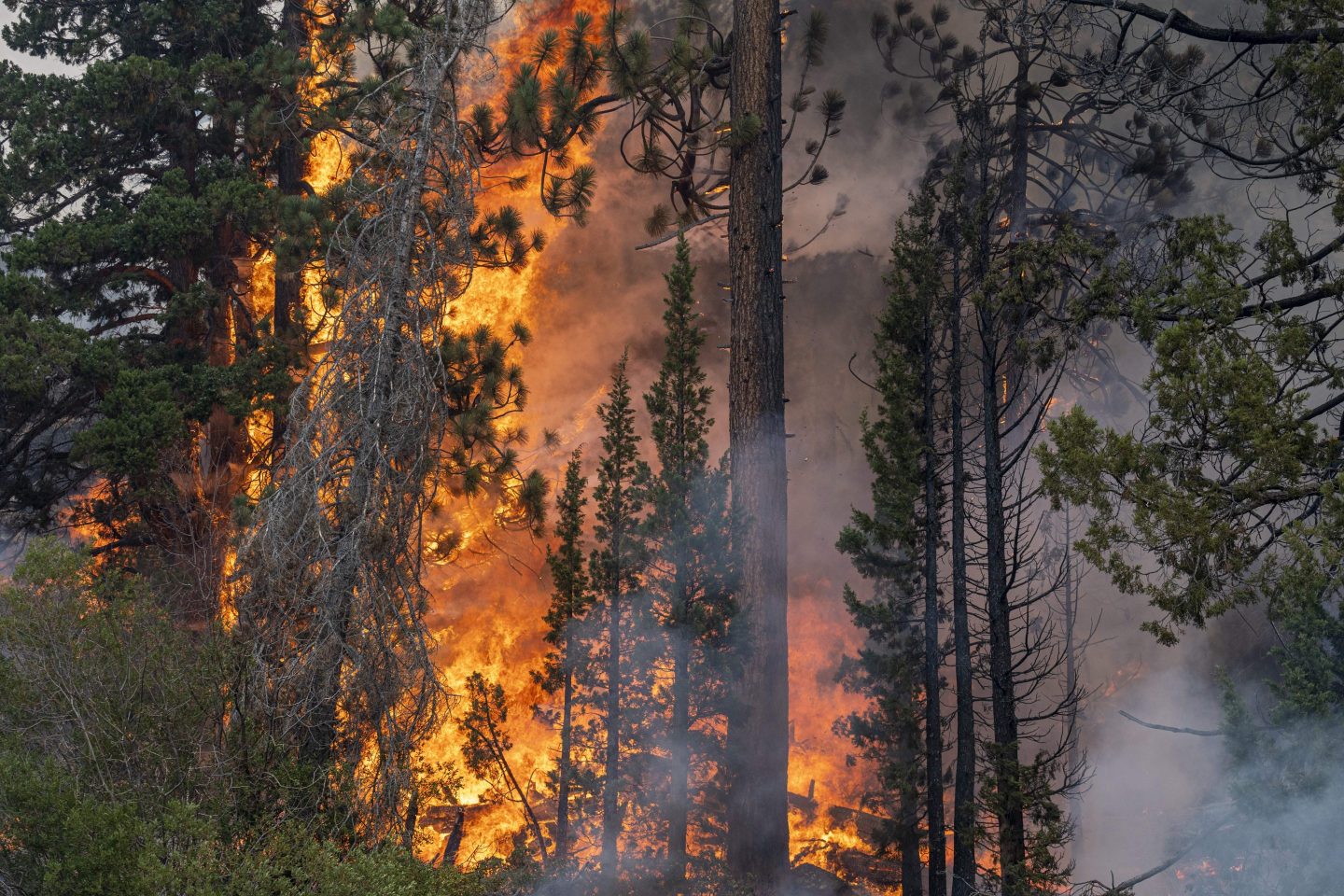
Trees on fire in a forest in California, U.S.
Trees on fire in a forest in California, U.S. David Paul Morris—Bloomberg/Getty Images

A team of Earth scientists first introduced the concept “planetary boundaries” almost 15 years ago to identify major Earth systems that were at risk of instability because of human activity. They looked at systems including the climate, biodiversity and fresh water to determine the limits of what they called a “safe operating space” for civilization. But they stopped short of analyzing how busting past these limits might harm people, particularly the poor and vulnerable. 

Recommended Video

A major update, published today in the journal Nature, does just that, describing just how much punishment nature can absorb before turning on us. Seven of the eight global boundaries have already been surpassed by humans, the authors find. 

The researchers offer their new work in the hope that business and governments will develop tools to align their practices with science-set thresholds. 

“We simply need to have science-based targets well beyond climate for all the planetary boundaries, in order to have a stable and resilient Earth system — and also to handle the climate crisis,” said Johan Rockström, director of the Potsdam Institute for Climate Impact Research in Germany and a co-author of the new and original works. 

The new analysis also includes criteria for justice, along three dimensions — affecting the many millions of people at risk today, the billions coming in the future and for the world’s countless species and ecosystems. 

For some Earth systems, like the climate, this fairness analysis requires more stringent limits than geophysical-stability factors alone would. The 1.5C warming limit enshrined in the Paris Agreement, already on life support, is too high given humanitarian concerns, the authors write, evidenced by tens of millions of people now exposed to dangerous heat.

The world has warmed 1.2C since industrialization. By 1.5C, the scientists find, more than 200 million people — mostly poor, vulnerable and marginalized communities — can be expected to face unprecedented heat. Shrinking the global average temperature increase below 1C is their target, but because that’s not possible on a visible time scale, countries will have to deal with the consequences. And that means “adaptations and compensations to reduce sensitivity to harm and vulnerability will be necessary.” The authors call for international compensation for poorer countries’ climate-related “loss and damage,” as agreed to at last year’s UN climate talks. 

The scale of effort required to meet these challenges is unprecedented. “Nothing less than a just global transformation across all ESBs [Earth system boundaries] is required to ensure human well-being,” they write. Energy, food, cities and other sectors require rebooted politics, economics and technology. “It requires a leap in our understanding of how justice, economics, technology and global cooperation can be furthered in the service of a safe and just future.” 

The 51 authors are associated with the Earth Commission, a group of natural and social scientists co-founded by Rockström to generate science that can inform organizations, such as the Science Based Targets Network, that develop guidance for companies and cities. The paper strives to quantify planet-scale changes that “are mostly driven by social and economic systems run on unsustainable resource extraction and consumption.” 

The new work builds not only on previous planetary-boundaries research, but other assessments of social vulnerability to systemic change, including the UN Sustainable Development Goals. A key breakthrough in this paper, the authors write, is the translation of social justice considerations into the same units of measurement as the Earth systems, such as degrees Celsius for temperature or cubic kilometers for water use. 

For instance, nitrogen and phosphorus from farms spill into waterways and cause oxygen-less “dead zones” in rivers and seas, with consequences for drinking water too in some areas. The global limit for excessive nitrogen is 119 million metric tons a year and 10 million for phosphorus, according to the paper. 

To address air pollution, the targets the scientists set are to minimize the difference in the concentration of aerosols between the Northern and Southern Hemispheres, and an upper bound for harmful small particle pollution. Aerosols from both natural and human sources, from volcanoes to tailpipes, cause illness and premature death around the world. 

They also suggest two biodiversity metrics to limit the destruction of species and ecosystems. The first defines the fraction of natural ecosystems that should be preserved: 50% to 60%, higher than the status quo of 45% to 50%. To make sure human-touched areas continue to perform key roles, the authors say 20% to 25% of every square kilometer of urban, agricultural and other land altered by people should retain elements of natural ecosystems. To prevent freshwater biodiversity loss, the scientists recommend that rivers and streams deviate no more than 20% from natural monthly flows. 

The focus on the human toll of a changing planet helps make the new analysis more concrete than previous iterations of planetary boundaries research, said Kim Cobb, who is director of the Institute at Brown University for Environment and Society and was not involved with the study. While there may still be scientific uncertainties about elements of these systems, “we don’t really have any uncertainties about the disproportionate impacts of climate change on the most vulnerable,” she said. “And so that’s something that I think should ground us in decision-making today.” 

Essentially, the authors are trying to do for all of the Earth system what’s already happened for climate change: Generate scientific baselines that standard-setting organizations and governments can use to help companies, cities and others ensure their operations don’t contribute to further systemic environmental change or human harm. The boundaries may include, but are not the same as “tipping points,” or thresholds beyond which the planet perpetuates change with or without human input. 

“The ultimate definition of justice today is the right of every human being, particularly future generations, to have a stable planet — to be born on a planet which is at least as livable as the planet where his or her parents were born,” Rockström said. 

Join us at the Fortune Workplace Innovation Summit May 19–20, 2026, in Atlanta. The next era of workplace innovation is here—and the old playbook is being rewritten. At this exclusive, high-energy event, the world’s most innovative leaders will convene to explore how AI, humanity, and strategy converge to redefine, again, the future of work. Register now.
About the Authors
By Eric Roston
See full bioRight Arrow Button Icon
By Bloomberg
See full bioRight Arrow Button Icon

Latest in Environment

Finance
Lorem ipsum dolor sit amet, consectetur adipiscing elit, sed do eiusmod tempor incididunt ut labore et dolore magna aliqua. Ut enim ad minim veniam
By Fortune Editors
October 20, 2025
Finance
Lorem ipsum dolor sit amet, consectetur adipiscing elit, sed do eiusmod tempor incididunt ut labore et dolore magna aliqua. Ut enim ad minim veniam
By Fortune Editors
October 20, 2025
Finance
Lorem ipsum dolor sit amet, consectetur adipiscing elit, sed do eiusmod tempor incididunt ut labore et dolore magna aliqua. Ut enim ad minim veniam
By Fortune Editors
October 20, 2025
Finance
Lorem ipsum dolor sit amet, consectetur adipiscing elit, sed do eiusmod tempor incididunt ut labore et dolore magna aliqua. Ut enim ad minim veniam
By Fortune Editors
October 20, 2025
Finance
Lorem ipsum dolor sit amet, consectetur adipiscing elit, sed do eiusmod tempor incididunt ut labore et dolore magna aliqua. Ut enim ad minim veniam
By Fortune Editors
October 20, 2025
Finance
Lorem ipsum dolor sit amet, consectetur adipiscing elit, sed do eiusmod tempor incididunt ut labore et dolore magna aliqua. Ut enim ad minim veniam
By Fortune Editors
October 20, 2025

Most Popular

Finance
Lorem ipsum dolor sit amet, consectetur adipiscing elit, sed do eiusmod tempor incididunt ut labore et dolore magna aliqua. Ut enim ad minim veniam
By Fortune Editors
October 20, 2025
Finance
Lorem ipsum dolor sit amet, consectetur adipiscing elit, sed do eiusmod tempor incididunt ut labore et dolore magna aliqua. Ut enim ad minim veniam
By Fortune Editors
October 20, 2025
Finance
Lorem ipsum dolor sit amet, consectetur adipiscing elit, sed do eiusmod tempor incididunt ut labore et dolore magna aliqua. Ut enim ad minim veniam
By Fortune Editors
October 20, 2025
Finance
Lorem ipsum dolor sit amet, consectetur adipiscing elit, sed do eiusmod tempor incididunt ut labore et dolore magna aliqua. Ut enim ad minim veniam
By Fortune Editors
October 20, 2025
Finance
Lorem ipsum dolor sit amet, consectetur adipiscing elit, sed do eiusmod tempor incididunt ut labore et dolore magna aliqua. Ut enim ad minim veniam
By Fortune Editors
October 20, 2025
Finance
Lorem ipsum dolor sit amet, consectetur adipiscing elit, sed do eiusmod tempor incididunt ut labore et dolore magna aliqua. Ut enim ad minim veniam
By Fortune Editors
October 20, 2025
Rankings
  • 100 Best Companies
  • Fortune 500
  • Global 500
  • Fortune 500 Europe
  • Most Powerful Women
  • Future 50
  • World’s Most Admired Companies
  • See All Rankings
Sections
  • Finance
  • Leadership
  • Success
  • Tech
  • Asia
  • Europe
  • Environment
  • Fortune Crypto
  • Health
  • Retail
  • Lifestyle
  • Politics
  • Newsletters
  • Magazine
  • Features
  • Commentary
  • Mpw
  • CEO Initiative
  • Conferences
  • Personal Finance
  • Education
Customer Support
  • Frequently Asked Questions
  • Customer Service Portal
  • Privacy Policy
  • Terms Of Use
  • Single Issues For Purchase
  • International Print
Commercial Services
  • Advertising
  • Fortune Brand Studio
  • Fortune Analytics
  • Fortune Conferences
  • Business Development
About Us
  • About Us
  • Editorial Calendar
  • Press Center
  • Work At Fortune
  • Diversity And Inclusion
  • Terms And Conditions
  • Site Map
  • Facebook icon
  • Twitter icon
  • LinkedIn icon
  • Instagram icon
  • Pinterest icon

Most Popular

placeholder alt text
Big Tech
The Chan Zuckerberg Initiative cut 70 jobs as the Meta CEO’s philanthropy goes all in on mission to 'cure or prevent all disease'
By Sydney LakeFebruary 1, 2026
19 hours ago
placeholder alt text
Future of Work
Ford CEO has 5,000 open mechanic jobs with up to 6-figure salaries from the shortage of manually skilled workers: 'We are in trouble in our country'
By Marco Quiroz-GutierrezJanuary 31, 2026
2 days ago
placeholder alt text
Economy
'I just don't have a good feeling about this': Top economist Claudia Sahm says the economy quietly shifted and everyone's now looking at the wrong alarm
By Eleanor PringleJanuary 31, 2026
2 days ago
placeholder alt text
Success
U.S. Olympic gold medalist went from $200,000-a-year sponsorship at 20 years old to $12-an-hour internship by 30
By Orianna Rosa RoyleFebruary 1, 2026
14 hours ago
placeholder alt text
Success
Ryan Serhant starts work at 4:30 a.m.—he says most people don’t achieve their dreams because ‘what they really want is just to be lazy’
By Preston ForeJanuary 31, 2026
2 days ago
placeholder alt text
Energy
Top energy expert says probability the U.S. will attack Iran soon is 75% as risk of major disruption to oil supply is priced in — 'this one is real'
By Jason MaFebruary 1, 2026
9 hours ago

© 2026 Fortune Media IP Limited. All Rights Reserved. Use of this site constitutes acceptance of our Terms of Use and Privacy Policy | CA Notice at Collection and Privacy Notice | Do Not Sell/Share My Personal Information
FORTUNE is a trademark of Fortune Media IP Limited, registered in the U.S. and other countries. FORTUNE may receive compensation for some links to products and services on this website. Offers may be subject to change without notice.


Latest in Environment

Donald Trump with a frown.
Politicsmining
3 big hurdles undermine Trump’s plan to extract Greenland’s mineral wealth—and America’s fraying relationship with Europe is one of them
By Tristan BoveJanuary 30, 2026
2 days ago
EnvironmentInsurance
Asia is one of the world’s least insured places, even as it’s battered by climate change and natural disasters
By Angelica AngJanuary 29, 2026
3 days ago
africa
Environmentclimate change
Climate change mans Southern Africa got a year’s worth of rain in just 10 days, killing over 100 people
By Nick Lichtenberg, Mogomotsi Magome and The Associated PressJanuary 29, 2026
4 days ago
EnvironmentAviation
Asia is the ‘next big frontier’ for sustainable aviation fuel as governments push green mandates
By Angelica AngJanuary 28, 2026
5 days ago
sf
LawSan Francisco
Mountain lion saunters through San Francisco’s posh Pacific Heights neighborhood before capture
By Olga R. Rodriguez, Haven Daley and The Associated PressJanuary 27, 2026
5 days ago
economy
EnvironmentWeather and forecasting
The billion-dollar storm? Economists debate how much activity Winter Storm Fern laid waste to
By Seth Borenstein and The Associated PressJanuary 26, 2026
6 days ago