• Home
  • Latest
  • Fortune 500
  • Finance
  • Tech
  • Leadership
  • Lifestyle
  • Rankings
  • Multimedia
Retail
Europe

Plastics are in our air, food, and water. A reckoning is coming–and smart businesses can see it

By
Paul Polman
Paul Polman
Down Arrow Button Icon
May 24, 2023, 6:13 AM ET
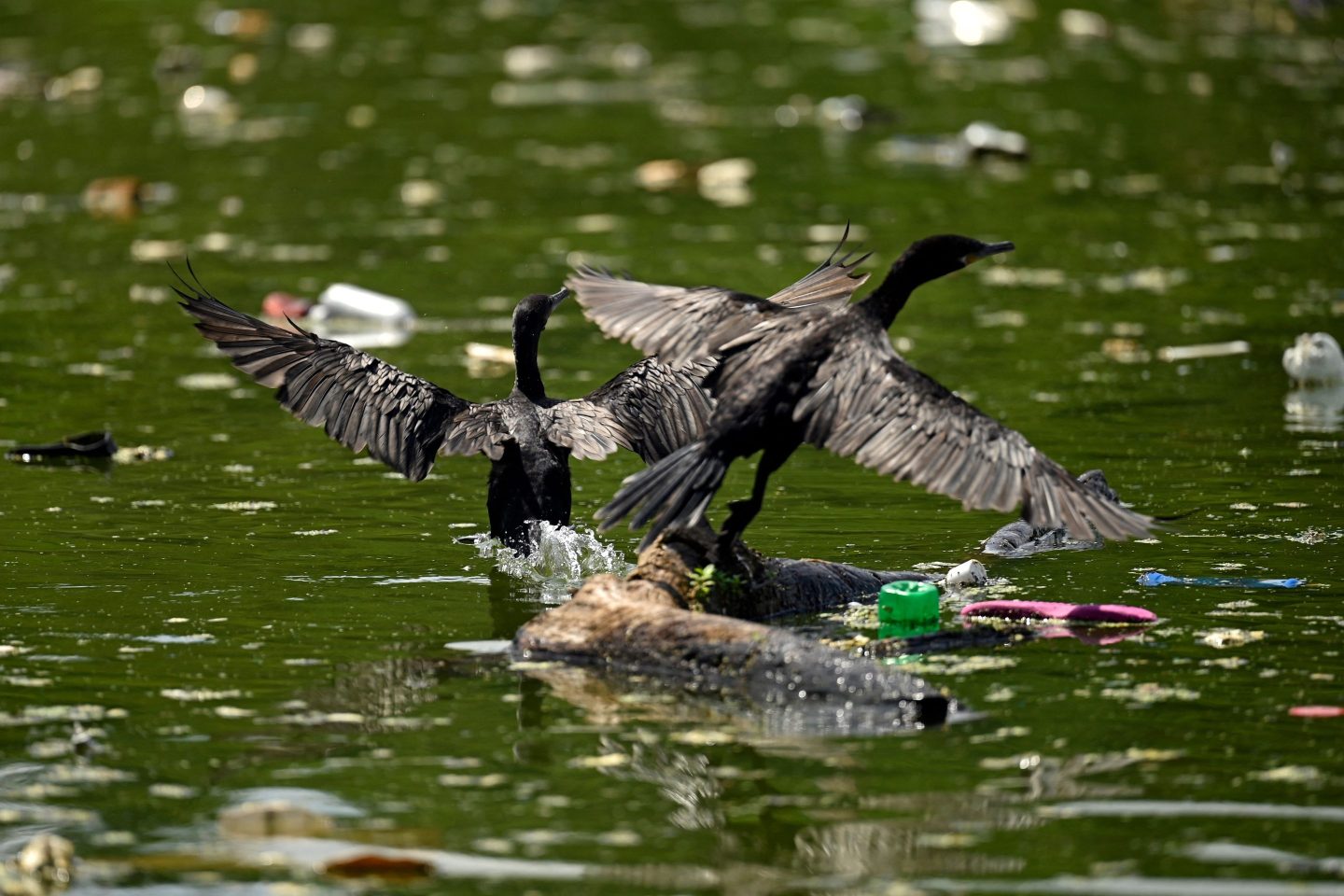
The mass of plastics on Earth is over double the mass of living animals–and plastic waste is set to treble by 2060.
The mass of plastics on Earth is over double the mass of living animals–and plastic waste is set to treble by 2060.Marvin Recinos—AFP/Getty Images

Next week, negotiators will meet in Paris to discuss a global plastics treaty. Governments are aiming to agree on a common approach by the end of next year. In the world of multilateral agreements, this is a diplomatic sprint. Environmental campaigners believe this can be a game-changing step in the fight against plastic pollution.

We don’t have much detail yet, just a broad consensus that something must be done. Since the Second World War, humanity’s dependence on plastics has exploded, especially in recent decades. The private sector has largely failed to take responsibility for the unintended damage, and regulation has not kept up.

The result is a plastic waste crisis of exponential proportions. The mass of plastics on our Earth is over double the mass of living animals–and plastic waste is set to treble by 2060. Globally, only 9% is successfully recycled. The rest is mostly incinerated or ends up as landfill, or pollution in our oceans and environment. 

It’s also a climate change problem: Hydrocarbons are the main ingredient in virgin plastic, producing emissions the size of a small country in the production stage alone.

We are only beginning to understand the harmful impacts of plastics on human health. Over 13,000 chemicals are used to create plastic, and many are either known to be toxic or remain untested. The World Wildlife Fund calculates that we’re each eating up to one credit card’s worth of microplastic every week. Terrifyingly, nano-plastics can enter human tissue from our air, food, and drink.

So yes, something must be done urgently–but the effectiveness of the treaty will greatly depend on how business now moves.

Predictably, some companies are lobbying hard to undermine the talks, led by petrochemicals and fossil fuels. It’s no secret that, as our societies embrace renewable energy more wholeheartedly, many in fossil fuels see the fast-growing plastics sector as a lifeboat. 

More encouraging, however, is the emerging coalition of companies calling for a tougher set of legally binding regulations–global rules to reduce plastic use, end plastic pollution, and enable a circular economy for the plastic we still need. 

The Business Coalition for a Global Plastics Treaty includes retail giants such as Unilever, Pepsico, Walmart, and others, as well as dozens of plastic producers, investors, and NGOs. These businesses see which way the regulatory winds are blowing. Many already have to comply with an EU-wide ban on common single-use plastics, such as cutlery and straws. Now Brussels wants to go further, reducing total packaging waste across its 27 members, partly because the bloc has fewer places to send its rubbish as more countries restrict waste imports.

For the plastic we continue to use–which will continue to have an important place in our homes and economies, just not in our streets, seas, atmosphere, or bodies–the companies want governments to strengthen so-called “Extended Producer Responsibility.” It would require businesses to fund the collection and safe treatment of their packaging and other short-lived products. In return, states need to put the necessary infrastructure in place.

It’s a refreshing break from the short-sighted corporate lobbying we often see against environmental regulation. The clear call to reduce total new plastic production is novel–and vital. It comes after recent years taught us two valuable lessons: We cannot recycle our way out of this problem–and we cannot continue to ask consumers to fix it for us. 

In my 10 years running Unilever, we were one of the first multinationals to move on plastics. Early on, we eliminated all harmful PVC as well as plastic scrub beads. We set aggressive targets, including to make all of our plastic packaging recyclable, reusable, or compostable, even though many said it’s impossible. During my tenure, we managed to reduce packaging waste per consumer by a third. 

We also made mistakes. We underestimated the challenge of shifting our customers to using refills for products such as detergent and shampoo, which in many cases proved difficult to sell and harder to recycle. We overestimated the speed and success with which recycling systems would be put in place. We sold products in sachets because they’re more affordable for people on lower incomes, and we believed they could be carefully dealt with afterward. But despite our best efforts, and lord knows we tried, packaging this small and with such little value has proved impossible to collect at scale, let alone recycle. We need to get rid of harmful sachets for good.

The treaty is a rare chance to start getting on top of the plastics crisis before it overwhelms us. If more CEOs join the push, it will give governments confidence that, if they show ambition and can collaborate on scaling up the best solutions, many in industry stand with them. 

And if the environmental and ethical incentives weren’t enough, the business case should be. The international landscape for plastics regulation is a mess. Different countries are doing wildly different things. Some are implementing bans, while others are levying taxes. We see different approaches to collection, sorting, and disposal. And some countries are doing nothing at all. This fragmentation heaps complexity and expense onto companies, and ultimately consumers.

You can’t fix a plastics crisis with a regulatory mess. Nor can we build sustainable growth on the “take, make, waste” model of consumption that we have normalized in recent years. An effective and enforceable set of global rules and responsibilities will be vastly better for everyone. Today business leaders have the opportunity to shape these very rules. If we miss it, our plastics problems will get even worse, governments will be scrambling for a solution, and business likely won’t get the chance to shape it.

Paul Polman is a business leader and campaigner, and the author of Net Positive: how courageous companies thrive by giving more than they take.

The opinions expressed in Fortune.com commentary pieces are solely the views of their authors and do not necessarily reflect the opinions and beliefs of Fortune.

More must-read commentary published by Fortune:

  • Stanford researchers scoured every reputable study for the link between video games and gun violence that politicians point to. Here’s what the review found
  • Is it smart to be a ‘stupid genius’ like Elon Musk?
  • Why there will be no winners in the never-ending war between Disney and DeSantis
  • America had the debate about paying its debt after the Revolution and the Civil War. Here’s why we reached the same conclusion twice

Join us at the Fortune Workplace Innovation Summit May 19–20, 2026, in Atlanta. The next era of workplace innovation is here—and the old playbook is being rewritten. At this exclusive, high-energy event, the world’s most innovative leaders will convene to explore how AI, humanity, and strategy converge to redefine, again, the future of work. Register now.
About the Author
By Paul Polman
See full bioRight Arrow Button Icon

Latest in

Finance
Lorem ipsum dolor sit amet, consectetur adipiscing elit, sed do eiusmod tempor incididunt ut labore et dolore magna aliqua. Ut enim ad minim veniam
By Fortune Editors
October 20, 2025
Finance
Lorem ipsum dolor sit amet, consectetur adipiscing elit, sed do eiusmod tempor incididunt ut labore et dolore magna aliqua. Ut enim ad minim veniam
By Fortune Editors
October 20, 2025
Finance
Lorem ipsum dolor sit amet, consectetur adipiscing elit, sed do eiusmod tempor incididunt ut labore et dolore magna aliqua. Ut enim ad minim veniam
By Fortune Editors
October 20, 2025
Finance
Lorem ipsum dolor sit amet, consectetur adipiscing elit, sed do eiusmod tempor incididunt ut labore et dolore magna aliqua. Ut enim ad minim veniam
By Fortune Editors
October 20, 2025
Finance
Lorem ipsum dolor sit amet, consectetur adipiscing elit, sed do eiusmod tempor incididunt ut labore et dolore magna aliqua. Ut enim ad minim veniam
By Fortune Editors
October 20, 2025
Finance
Lorem ipsum dolor sit amet, consectetur adipiscing elit, sed do eiusmod tempor incididunt ut labore et dolore magna aliqua. Ut enim ad minim veniam
By Fortune Editors
October 20, 2025

Most Popular

Finance
Lorem ipsum dolor sit amet, consectetur adipiscing elit, sed do eiusmod tempor incididunt ut labore et dolore magna aliqua. Ut enim ad minim veniam
By Fortune Editors
October 20, 2025
Finance
Lorem ipsum dolor sit amet, consectetur adipiscing elit, sed do eiusmod tempor incididunt ut labore et dolore magna aliqua. Ut enim ad minim veniam
By Fortune Editors
October 20, 2025
Finance
Lorem ipsum dolor sit amet, consectetur adipiscing elit, sed do eiusmod tempor incididunt ut labore et dolore magna aliqua. Ut enim ad minim veniam
By Fortune Editors
October 20, 2025
Finance
Lorem ipsum dolor sit amet, consectetur adipiscing elit, sed do eiusmod tempor incididunt ut labore et dolore magna aliqua. Ut enim ad minim veniam
By Fortune Editors
October 20, 2025
Finance
Lorem ipsum dolor sit amet, consectetur adipiscing elit, sed do eiusmod tempor incididunt ut labore et dolore magna aliqua. Ut enim ad minim veniam
By Fortune Editors
October 20, 2025
Finance
Lorem ipsum dolor sit amet, consectetur adipiscing elit, sed do eiusmod tempor incididunt ut labore et dolore magna aliqua. Ut enim ad minim veniam
By Fortune Editors
October 20, 2025
Rankings
  • 100 Best Companies
  • Fortune 500
  • Global 500
  • Fortune 500 Europe
  • Most Powerful Women
  • Future 50
  • World’s Most Admired Companies
  • See All Rankings
Sections
  • Finance
  • Leadership
  • Success
  • Tech
  • Asia
  • Europe
  • Environment
  • Fortune Crypto
  • Health
  • Retail
  • Lifestyle
  • Politics
  • Newsletters
  • Magazine
  • Features
  • Commentary
  • Mpw
  • CEO Initiative
  • Conferences
  • Personal Finance
  • Education
Customer Support
  • Frequently Asked Questions
  • Customer Service Portal
  • Privacy Policy
  • Terms Of Use
  • Single Issues For Purchase
  • International Print
Commercial Services
  • Advertising
  • Fortune Brand Studio
  • Fortune Analytics
  • Fortune Conferences
  • Business Development
About Us
  • About Us
  • Editorial Calendar
  • Press Center
  • Work At Fortune
  • Diversity And Inclusion
  • Terms And Conditions
  • Site Map

Latest in

Stephen Greene works a street corner hoping to land a job as a laborer or carpenter on June 3, 2011 in Pompano Beach, Florida.
EconomyJobs
Unemployment hits 4-year high as frozen jobs data shows recession risks getting ‘uncomfortably high,’ top economist Mark Zandi says
By Eva RoytburgDecember 16, 2025
14 minutes ago
InnovationTesla
An MIT roboticist who cofounded bankrupt Roomba maker iRobot says Elon Musk’s vision of humanoid robot assistants is ‘pure fantasy thinking’
By Marco Quiroz-GutierrezDecember 16, 2025
22 minutes ago
Personal Financegold prices
Current price of gold as of December 16, 2025
By Danny BakstDecember 16, 2025
38 minutes ago
TD Jakes
CommentaryReligion
To heal a divided nation, America’s next chapter must rediscover a common unity
By T.D. JakesDecember 16, 2025
48 minutes ago
a blue coinbase sign
CryptoCryptocurrency
The generational gap in crypto investment ‘has never been more marked’, says VP at Coinbase
By Carlos GarciaDecember 16, 2025
53 minutes ago
Price of platinum for December 16, 2025
Personal Financemoney management
Current price of platinum as of Tuesday, December 16, 2025
By Joseph HostetlerDecember 16, 2025
58 minutes ago

Most Popular

placeholder alt text
Success
'I had to take 60 meetings': Jeff Bezos says 'the hardest thing I've ever done' was raising the first million dollars of seed capital for Amazon
By Dave SmithDecember 15, 2025
21 hours ago
placeholder alt text
Success
Meetings are not work, says Southwest Airlines CEO—and he’s taking action, by blocking his calendar every afternoon from Wednesday to Friday 
By Preston ForeDecember 15, 2025
23 hours ago
placeholder alt text
Success
Sorry, six-figure earners: Elon Musk says that money will 'disappear' in the future as AI makes work (and salaries) irrelevant
By Orianna Rosa RoyleDecember 15, 2025
1 day ago
placeholder alt text
Personal Finance
Current price of silver as of Monday, December 15, 2025
By Joseph HostetlerDecember 15, 2025
1 day ago
placeholder alt text
AI
Deloitte's CTO on a stunning AI transformation stat: Companies are spending 93% on tech and only 7% on people
By Nick LichtenbergDecember 15, 2025
1 day ago
placeholder alt text
North America
Ford writes down $19.5 billion as it pivots electric Lighting line of vehicles
By Sasha RogelbergDecember 15, 2025
17 hours ago

© 2025 Fortune Media IP Limited. All Rights Reserved. Use of this site constitutes acceptance of our Terms of Use and Privacy Policy | CA Notice at Collection and Privacy Notice | Do Not Sell/Share My Personal Information
FORTUNE is a trademark of Fortune Media IP Limited, registered in the U.S. and other countries. FORTUNE may receive compensation for some links to products and services on this website. Offers may be subject to change without notice.