• Home
  • Latest
  • Fortune 500
  • Finance
  • Tech
  • Leadership
  • Lifestyle
  • Rankings
  • Multimedia

Trendingnow

1

Jeff Bezos wants the bottom half of earners to pay zero income tax—he says nurses making just $75K should save $12K a year

2

Indeed chief economist says we’re entering an era of ‘great mismatch’ thanks to a generational imbalance of workers

3

Despite a $500 million net worth, Shaq just finished his fourth degree. He warns graduates: 'Your character will take you further than your resume'

1

Jeff Bezos wants the bottom half of earners to pay zero income tax—he says nurses making just $75K should save $12K a year

2

Indeed chief economist says we’re entering an era of ‘great mismatch’ thanks to a generational imbalance of workers

3

Despite a $500 million net worth, Shaq just finished his fourth degree. He warns graduates: 'Your character will take you further than your resume'
PoliticsCongress

A brief history of debt ceiling crises as the country struggles to raise the limit for the 79th time since 1917

By
Raymond Scheppach
Raymond Scheppach
and
The Conversation
The Conversation
Down Arrow Button Icon
By
Raymond Scheppach
Raymond Scheppach
and
The Conversation
The Conversation
Down Arrow Button Icon
May 12, 2023, 11:49 AM ET
Joe Biden
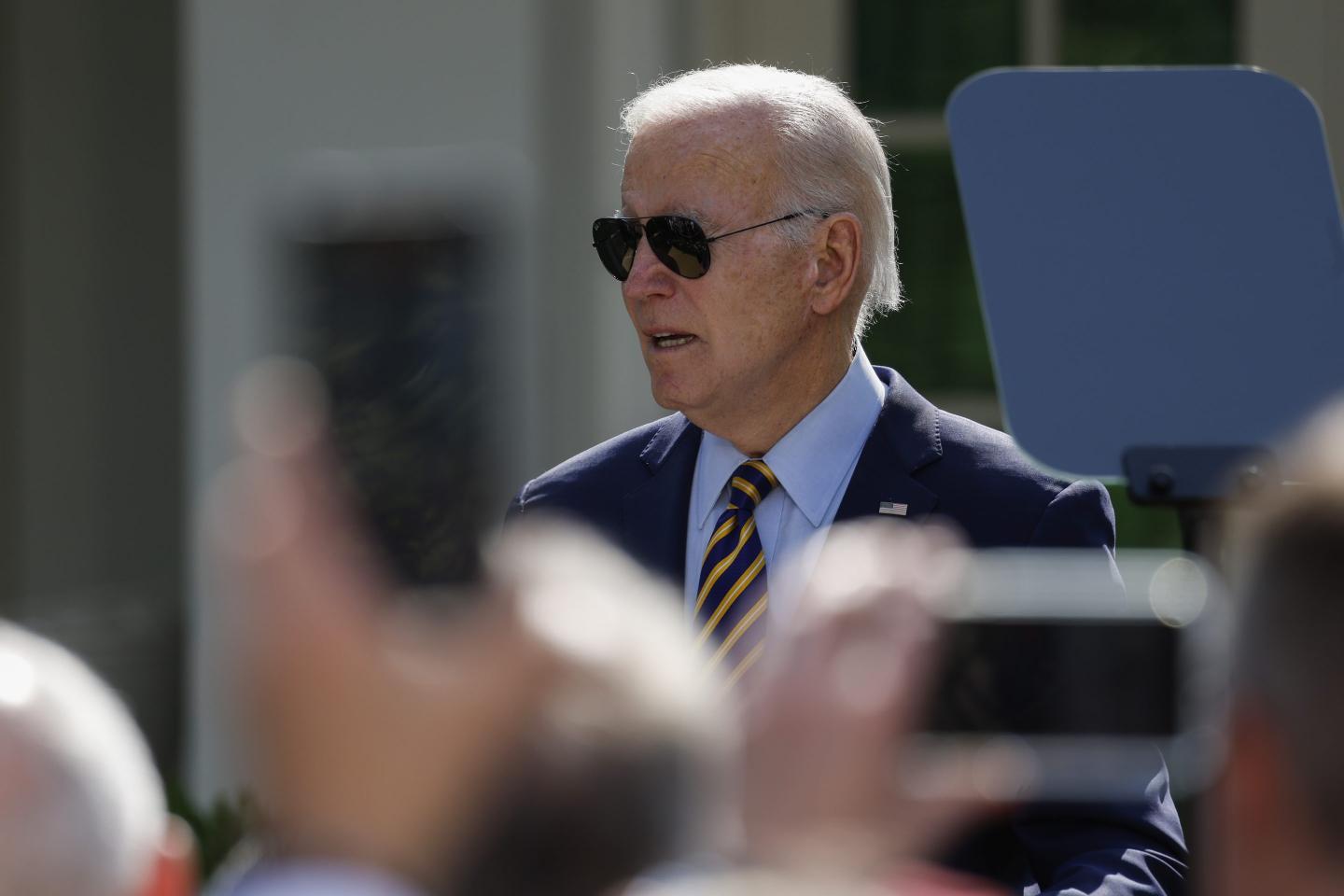
President Joe Biden delivers remarks in the Rose Garden of the White House on May 11, 2023 in Washington, DC.Anna Moneymaker/Getty Images

There have been numerous fiscal crises in the United States where Congress has either failed to pass a budget on time or there were doubts that the federal debt ceiling would be raised, which could cause the U.S. to default on its debt.

Recommended Video

These two kinds of crises can sometimes play out at the same time. A federal budget was not adopted in time, for example, and there were threats of not increasing the debt ceiling.

I worked as the deputy director of the Congressional Budget Office and the executive director of the National Governors Association, and I witnessed firsthand much of the wrangling in Congress during these crises.

Since 1976, there have been 22 shutdowns of the federal government due to lack of a federal budget.

While these were very disruptive and damaged the economy and employment, they pale in comparison to the potential effects of failing to lift the debt ceiling, which could be catastrophic. It could bring down the entire international financial system. This in turn could devastate the world gross domestic product and create mass unemployment.

Fortunately, the U.S. has never experienced a default. The debt ceiling has been raised 78 times since 1917 and currently stands at $31.4 trillion.

Here are three debt-limit crises I watched play out – which not only had economic consequences, but political ones as well.

1995: A GOP revolution – and blunder

Often, a debt-limit crisis is preceded by an election that produces a major shift in who controls Congress. In the 1994 midterm election, during President Bill Clinton’s first term, the Republicans gained eight Senate seats and 54 seats in the House, flipping both chambers. The election was seen as a Republican revolution. Bob Dole became the majority leader in the Senate, and Newt Gingrich became the speaker of the House.

GOP lawmakers pledged to pass a balanced budget as part of what they named their “Contract with America.” House Republicans sent Clinton a budget that cut spending on domestic programs, which he vetoed. This in turn led to a five-day shutdown of the federal government.

Gingrich then threatened not to increase the debt limit. A Washington Post story described the House leader’s actions as “House Speaker Newt Gingrich (R-Ga.) threatened yesterday to take the government into default for the first time in history unless President Clinton bows to Republican demands for a balanced budget.” Clinton responded to the latest GOP budget offer with a second veto, which led to a longer government shutdown of 21 days.

In the end, the Republicans passed a budget offered by Clinton and also lifted the debt ceiling.

There were unique aspects to this standoff. Dole was not interested in continuing the negotiation, as he was running for president. Gingrich made comments about being snubbed by the president while traveling with him on Air Force One, and the press had a field day with those comments, linking the shutdown to the snub. Polling increasingly showed that the Republicans were getting blamed for the shutdown – a 1995 ABC poll indicated 46% blamed the Republicans and only 27% blamed the Democrats.

2011: Budget reductions and reforms, with a side of financial chaos

As in 1995, the 2011 crisis happened after an election and a major power shift on Capitol Hill.

The election of 2010, in the middle of President Barack Obama’s first term, saw the Republicans gain seven Senate seats, but not yet a majority, and a net gain of 63 House seats, making the GOP the majority. The House then demanded that Obama negotiate a deficit reduction package in exchange for raising the debt ceiling.

As the deadline for increasing the debt limit approached, both the U.S. domestic and even international financial markets became chaotic. The S&P 500 fell by 17% and bond rates spiked. On Aug. 5, 2011, the Standard and Poor’s rating agency reduced the rating for long-term U.S government debt, which could result in higher interest rates on that debt.

On July 31, 2011, only two days before the U.S. government ran out of money, an agreement was reached between Congress and Obama that, once enacted, became the Budget Control Act of 2011. It reduced spending over the following 10 years by US$917 billion and authorized raising the debt ceiling to $2.1 trillion.

The act also included several budget reforms – a concession to Republicans by Obama and the Democrats – including creating a congressional joint select committee to make recommendations on deficit reduction. It also included an automatic provision to cut the budget should Congress fail to act.

2013: ‘We got nothing’

In January 2013, the debt ceiling that was established in 2011 was hit and the Treasury Department began extraordinary actions to continue funding necessary spending.

This included not paying into retirement funds of federal workers and borrowing from trust funds such as Social Security.

Treasury told Congress that those extraordinary measures to avoid default would be exhausted by mid-October 2013, and the debt limit would be reached then, meaning the U.S. could not borrow any more money to pay its bills.

At the same time, Republicans, who controlled the House, had demanded budget cuts as well as policy changes. They wanted Obama to eliminate the funding for his Affordable Care Act, which was considered his major legislative achievement.

The government was shut down once more, for 16 days. Again, public support for the Republican approach began to erode. That led the GOP to capitulate and adopt a budget that did not include significant cuts, and raised the debt ceiling, all in a vote the day before the government was slated to run out of money.

“We got nothing,” said conservative Republican Rep. Thomas Massie from Kentucky.

Risks to both sides

It is difficult to predict how the 2023 potential crisis over the debt limit will be resolved – each crisis is unique and depends on the specific leaders on both sides as well as how the public reacts to the crisis.

History indicates there are substantial risks to both parties as well as their respective leaders as the nation heads for the early June showdown. The 1995 crisis did not benefit Republicans, and some even argue it contributed to Clinton winning reelection.

In 2011, I would argue that the Republicans gained substantial budget reduction and budget reform concessions from Democrats. But lack of support for the Republican position in 2013 saw them concede.

The 2023 crisis that is unfolding is like 1995 and 2011 in that it was preceded by an election that flipped the House majority. But it differs substantially in the size of that majority. With only a four-seat majority, the risks to the Republican leadership are high.

If this standoff is long and financial markets react as they did in earlier crises, the stakes for the two parties and their respective two leaders are huge and will grow over time. This could well affect President Joe Biden’s reelection and the longevity of the current Speaker of the House, Kevin McCarthy.

Raymond Scheppach is Professor of Public Policy, University of Virginia.

This article is republished from The Conversation under a Creative Commons license. Read the original article.

Subscribe to Fortune Gulf Brief. Every Tuesday, this new newsletter will deliver clear-eyed, authoritative intelligence on the deals, decisions, policies, and power shifts shaping one of the world’s most consequential regions, written for the people who need to act on it. Sign up here.
About the Authors
By Raymond Scheppach
See full bioRight Arrow Button Icon
By The Conversation
See full bioRight Arrow Button Icon

Latest in Politics

Finance
Lorem ipsum dolor sit amet, consectetur adipiscing elit, sed do eiusmod tempor incididunt ut labore et dolore magna aliqua. Ut enim ad minim veniam
By Fortune Editors
October 20, 2025
Finance
Lorem ipsum dolor sit amet, consectetur adipiscing elit, sed do eiusmod tempor incididunt ut labore et dolore magna aliqua. Ut enim ad minim veniam
By Fortune Editors
October 20, 2025
Finance
Lorem ipsum dolor sit amet, consectetur adipiscing elit, sed do eiusmod tempor incididunt ut labore et dolore magna aliqua. Ut enim ad minim veniam
By Fortune Editors
October 20, 2025
Finance
Lorem ipsum dolor sit amet, consectetur adipiscing elit, sed do eiusmod tempor incididunt ut labore et dolore magna aliqua. Ut enim ad minim veniam
By Fortune Editors
October 20, 2025
Finance
Lorem ipsum dolor sit amet, consectetur adipiscing elit, sed do eiusmod tempor incididunt ut labore et dolore magna aliqua. Ut enim ad minim veniam
By Fortune Editors
October 20, 2025
Finance
Lorem ipsum dolor sit amet, consectetur adipiscing elit, sed do eiusmod tempor incididunt ut labore et dolore magna aliqua. Ut enim ad minim veniam
By Fortune Editors
October 20, 2025

Most Popular

Finance
Lorem ipsum dolor sit amet, consectetur adipiscing elit, sed do eiusmod tempor incididunt ut labore et dolore magna aliqua. Ut enim ad minim veniam
By Fortune Editors
October 20, 2025
Finance
Lorem ipsum dolor sit amet, consectetur adipiscing elit, sed do eiusmod tempor incididunt ut labore et dolore magna aliqua. Ut enim ad minim veniam
By Fortune Editors
October 20, 2025
Finance
Lorem ipsum dolor sit amet, consectetur adipiscing elit, sed do eiusmod tempor incididunt ut labore et dolore magna aliqua. Ut enim ad minim veniam
By Fortune Editors
October 20, 2025
Finance
Lorem ipsum dolor sit amet, consectetur adipiscing elit, sed do eiusmod tempor incididunt ut labore et dolore magna aliqua. Ut enim ad minim veniam
By Fortune Editors
October 20, 2025
Finance
Lorem ipsum dolor sit amet, consectetur adipiscing elit, sed do eiusmod tempor incididunt ut labore et dolore magna aliqua. Ut enim ad minim veniam
By Fortune Editors
October 20, 2025
Finance
Lorem ipsum dolor sit amet, consectetur adipiscing elit, sed do eiusmod tempor incididunt ut labore et dolore magna aliqua. Ut enim ad minim veniam
By Fortune Editors
October 20, 2025
Fortune Secondary Logo
Rankings
  • 100 Best Companies
  • Fortune 500
  • Global 500
  • Fortune 500 Europe
  • Most Powerful Women
  • World's Most Admired Companies
  • See All Rankings
  • Lists Calendar
Sections
  • Finance
  • Fortune Crypto
  • Features
  • Leadership
  • Health
  • Commentary
  • Success
  • Retail
  • Mpw
  • Tech
  • Lifestyle
  • CEO Initiative
  • Asia
  • Politics
  • Conferences
  • Europe
  • Newsletters
  • Personal Finance
  • Environment
  • Magazine
  • Education
Customer Support
  • Frequently Asked Questions
  • Customer Service Portal
  • Privacy Policy
  • Terms Of Use
  • Single Issues For Purchase
  • International Print
Commercial Services
  • Advertising
  • Fortune Brand Studio
  • Fortune Analytics
  • Fortune Conferences
  • Business Development
  • Group Subscriptions
About Us
  • About Us
  • Press Center
  • Work At Fortune
  • Terms And Conditions
  • Site Map
  • About Us
  • Press Center
  • Work At Fortune
  • Terms And Conditions
  • Site Map
  • Facebook icon
  • Twitter icon
  • LinkedIn icon
  • Instagram icon
  • Pinterest icon

Latest in Politics

Trump AI and crpto czar David Sacks sits next to Meta CEO Mark Zuckerberg at a dinner table in the White House as Zuckerberg turns to Sacks and says something.
AIAmerican Politics
Tech billionaires convinced Trump to back off an AI executive order. But much of MAGA favors AI regulation
By Jeremy KahnMay 22, 2026
17 hours ago
f
PoliticsCongress
‘You kind of ruined it with your trans obsession’: House points fingers as Smithsonian Women’s museum funding fails
By Lisa Mascaro and The Associated PressMay 22, 2026
22 hours ago
kirk
North AmericaSocial Media
Fired bird conservationist settles with state of Florida over Charlie Kirk dispute for $485,000
By Hannah Schoenbaum and The Associated PressMay 22, 2026
22 hours ago
pizza
PoliticsRestaurants
‘Earth-shaking event for New York pizza’ looms as flour ban hits 80% of crusts citywide
By Jake Offenhartz and The Associated PressMay 22, 2026
23 hours ago
cox
CommentarySuccession
McKinsey studied 200 family business successions. The biggest problem wasn’t the heir — it was the outgoing CEO
By Acha Leke and Chaitali MukherjeeMay 22, 2026
1 day ago
zohran
PoliticsWorld Cup
Mamdani’s campaign for cheap World Cup tickets delivers 1,000 for city of 8 million
By The Associated PressMay 21, 2026
2 days ago

Most Popular

Jeff Bezos wants the bottom half of earners to pay zero income tax—he says nurses making just $75K should save $12K a year
Success
Jeff Bezos wants the bottom half of earners to pay zero income tax—he says nurses making just $75K should save $12K a year
By Preston ForeMay 21, 2026
2 days ago
Indeed chief economist says we’re entering an era of ‘great mismatch’ thanks to a generational imbalance of workers
Success
Indeed chief economist says we’re entering an era of ‘great mismatch’ thanks to a generational imbalance of workers
By Emma BurleighMay 22, 2026
22 hours ago
Despite a $500 million net worth, Shaq just finished his fourth degree. He warns graduates: 'Your character will take you further than your resume'
Success
Despite a $500 million net worth, Shaq just finished his fourth degree. He warns graduates: 'Your character will take you further than your resume'
By Preston ForeMay 20, 2026
3 days ago
Bolt CEO says he let go of his entire HR team for creating problems that didn’t exist: ‘Those problems disappeared when I let them go’ 
Workplace Culture
Bolt CEO says he let go of his entire HR team for creating problems that didn’t exist: ‘Those problems disappeared when I let them go’ 
By Preston ForeMay 19, 2026
4 days ago
Microsoft reports are exposing AI's real cost problem: Using the tech is more expensive than paying human employees
AI
Microsoft reports are exposing AI's real cost problem: Using the tech is more expensive than paying human employees
By Jake AngeloMay 22, 2026
20 hours ago
Apple’s Steve Wozniak says he cofounded the tech giant after 5 rejections from HP—not to ‘make money.’ For years, his paycheck was just $50
Success
Apple’s Steve Wozniak says he cofounded the tech giant after 5 rejections from HP—not to ‘make money.’ For years, his paycheck was just $50
By Preston ForeMay 22, 2026
22 hours ago

© 2026 Fortune Media IP Limited. All Rights Reserved. Use of this site constitutes acceptance of our Terms of Use and Privacy Policy | CA Notice at Collection and Privacy Notice | Do Not Sell/Share My Personal Information
FORTUNE is a trademark of Fortune Media IP Limited, registered in the U.S. and other countries. FORTUNE may receive compensation for some links to products and services on this website. Offers may be subject to change without notice.