• Home
  • Latest
  • Fortune 500
  • Finance
  • Tech
  • Leadership
  • Lifestyle
  • Rankings
  • Multimedia
PoliticsEspionage
Europe

Tinker, tailor, soldier, journalist? A media historian looks back at the blurry lines between espionage and reportage.

By
Bill Kovarik
Bill Kovarik
and
The Conversation
The Conversation
Down Arrow Button Icon
By
Bill Kovarik
Bill Kovarik
and
The Conversation
The Conversation
Down Arrow Button Icon
April 6, 2023, 1:30 PM ET
Vladimir Putin
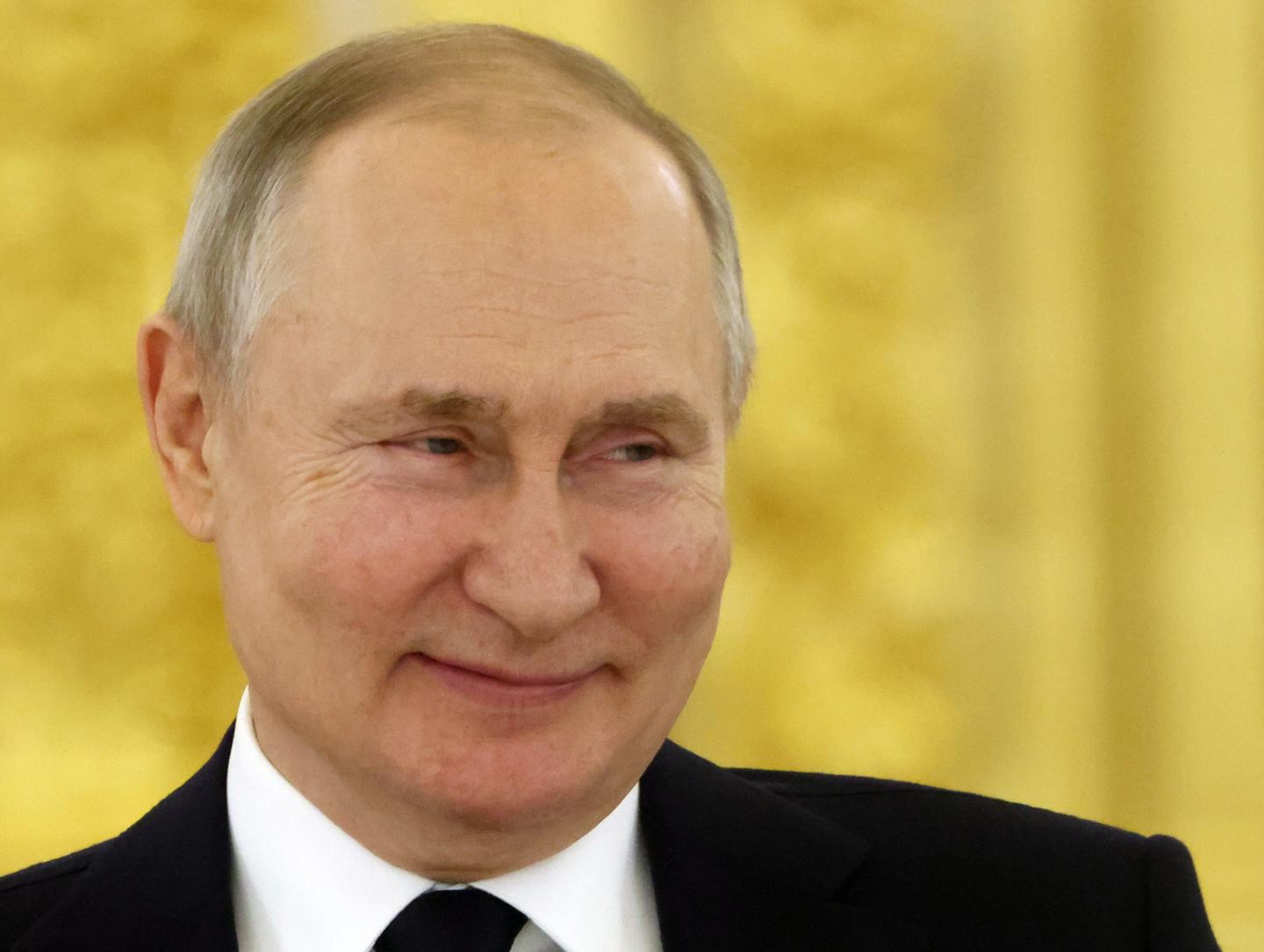
Russian President Vladimir Putin is reviving multiple Cold War traditions.Contributor/Getty Images

The detention of Wall Street Journal reporter Evan Gershkovich in Russia on espionage charges marks an unusual throwback to the old Soviet tactics for handling foreign correspondents.

Authorities in Vladimir Putin’s Russia have increasingly used criminal charges against their own journalists as part of a “increasing crackdown on free and independent media,” as Jodie Ginsberg, the president of the Committee to Protect Journalists, has put it. But prosecutions of international journalists in Russia are still rare enough.

Indeed, media historians like myself have to reach back decades to recall similar incidents. History shows that when they do occur, arrests of foreign journalists over espionage charges tend to provoke a diplomatic tempest.

Tinker, tailor, soldier, journalist?

Take, for example, the Prague “show trial” of Associated Press reporter William Oatis at the height of the Cold War in 1951. The prosecution of Oatis on spying charges was choreographed to suit the Soviet authorities, but the only real issue was that Oatis talked with Czechs and didn’t get government permission first.

“Reporting is not espionage,” The New York Times said in an editorial at the time. “[Oatis] was doing what all good newspaper men do in countries whose governments have not chosen to crawl back into the dark recesses of pre-historic barbarism.”

The case became a cause celebre from 1951 to 1953, and led to years of travel and trade embargoes between the U.S. and Czechoslovakia, which was then strictly controlled by the Soviet Union.

When Oatis was finally released in 1953, the journalist emerged weak and tubercular, describing his prison experience as akin to being “buried alive.” Still he carried on reporting, returning to the U.S. to cover the United Nations for decades before retiring.

Oatis’ case was perhaps the most famous during the Cold War, but it was far from the only one. Other American journalists who were arrested in Soviet sweeps of countries behind the Iron Curtain included Oatis’ fellow Associated Press reporters Leonard Kirschen – arrested in 1950 in Romania and held in jail for a decade – and Endre Marton, who was arrested in Hungary in 1955 along with his wife, Ilona Marton, who worked for United Press. They were released in 1956 and smuggled out of the country and into the U.S. the following year. Dozens of reporters from other agencies and other Western countries were also expelled from Eastern Europe around this time.

The risks of reporting

Of course, arrest wasn’t the only way to silence a reporter. Then – as now – there’s a risk of violence and death.

Dozens of journalists were killed around the world’s hot conflicts in every year of the Cold War. With the fall of the Soviet Union in the 1990s, attacks on journalists slowed down. Nonetheless, the global death toll since 1992 stands at over 2,190, according to the Committee to Protect Journalists. And in nearly 8 out of 10 cases, the murderers go free. Of those deaths, at least 12 have involved journalists covering the war in Ukraine, according to a March 2023 report by the human rights organization Council of Europe.

As part of its crackdown on free and independent media, Russia’s forces have been particularly hostile to journalists on the front lines of Ukraine, the Council of Europe report noted. Meanwhile, data from the Committee to Protect Journalists suggest an uptick in the number of Russian journalists being held behind bars. Of the 19 currently imprisoned, half were picked up by authorities after the invasion of Ukraine.

Journalists working in hostile nations or in war zones do so knowing the risk that death or imprisonment may be used as diplomatic leverage or as a warning to other journalists. It is part of the job.

Cover stories

Yet not all reporters or editors are innocent observers. It is true that over the years, American journalists have indeed worked with, or even for, the U.S. government or intelligence services. Several hundred, at least, worked closely with the CIA and other intelligence agencies during World War II and through the course of the Cold War, according to evidence that emerged during the Watergate era.

For many, the collaboration had laudable aims. American journalist Virginia Hall used her credentials as a New York Post reporter to help the French resistance in World War II, guiding downed Allied airmen to safety in neutral countries and arranging weapons drops.

Her story was told in the book “A Woman of No Importance.” The Norwegian journalist Erling Espeland did similar work in World War II.

In some cases, like that of The New York Times’ Donald A. Allan, American journalists transitioned from World War II reporting into work for intelligence agencies with relative ease. Allan quit the New York Times in 1952 and supposedly went to work for CBS and United Press. But later, he said that was nothing more than a cover for his work with the CIA.

In 1975, the U.S. and Russia signed the Helsinki Final Act, starting a process of detente and trade normalization, including guarantees of press freedom. Still, Western journalists were routinely harassed and detained in the Cold War Soviet Union. In a case that resonates with that of Gershkovich’s, in 1986 Nicholas Daniloff, the Moscow correspondent for U.S. News & World Report, was arrested and detained on charges of espionage. He was later allowed to leave the Soviet Union.

A totalitarian tool

Most journalists today would reject the practice of being entangled with the work of the intelligence services. In 1996, Society of Professional Journalists President G. Kelly Hawes rejected the use of American journalism as a cover for intelligence.

“The public shouldn’t have to fear speaking to the press, and journalists shouldn’t have to fear for their safety,” she said. “Our integrity is compromised and our lives are endangered. That is wrong.” And to be clear, Gershkovich and The Wall Street Journal have denied the espionage claims.

But to officials in an authoritarian government like that of Russia, journalists are not much different from spies. It is, after all, a reporter’s job to uncover uncomfortable truths, often hidden from the wider world.

Seen in that light, slapping a charge of espionage on a journalist is one of the more Orwellian tools in the authoritarian playbook.

Bill Kovarik is Professor of Communication, Radford University.

This article is republished from The Conversation under a Creative Commons license. Read the original article.

The Fortune 500 Innovation Forum will convene Fortune 500 executives, U.S. policy officials, top founders, and thought leaders to help define what’s next for the American economy, Nov. 16-17 in Detroit. Apply here.
About the Authors
By Bill Kovarik
See full bioRight Arrow Button Icon
By The Conversation
See full bioRight Arrow Button Icon

Latest in Politics

Finance
Lorem ipsum dolor sit amet, consectetur adipiscing elit, sed do eiusmod tempor incididunt ut labore et dolore magna aliqua. Ut enim ad minim veniam
By Fortune Editors
October 20, 2025
Finance
Lorem ipsum dolor sit amet, consectetur adipiscing elit, sed do eiusmod tempor incididunt ut labore et dolore magna aliqua. Ut enim ad minim veniam
By Fortune Editors
October 20, 2025
Finance
Lorem ipsum dolor sit amet, consectetur adipiscing elit, sed do eiusmod tempor incididunt ut labore et dolore magna aliqua. Ut enim ad minim veniam
By Fortune Editors
October 20, 2025
Finance
Lorem ipsum dolor sit amet, consectetur adipiscing elit, sed do eiusmod tempor incididunt ut labore et dolore magna aliqua. Ut enim ad minim veniam
By Fortune Editors
October 20, 2025
Finance
Lorem ipsum dolor sit amet, consectetur adipiscing elit, sed do eiusmod tempor incididunt ut labore et dolore magna aliqua. Ut enim ad minim veniam
By Fortune Editors
October 20, 2025
Finance
Lorem ipsum dolor sit amet, consectetur adipiscing elit, sed do eiusmod tempor incididunt ut labore et dolore magna aliqua. Ut enim ad minim veniam
By Fortune Editors
October 20, 2025

Most Popular

Finance
Lorem ipsum dolor sit amet, consectetur adipiscing elit, sed do eiusmod tempor incididunt ut labore et dolore magna aliqua. Ut enim ad minim veniam
By Fortune Editors
October 20, 2025
Finance
Lorem ipsum dolor sit amet, consectetur adipiscing elit, sed do eiusmod tempor incididunt ut labore et dolore magna aliqua. Ut enim ad minim veniam
By Fortune Editors
October 20, 2025
Finance
Lorem ipsum dolor sit amet, consectetur adipiscing elit, sed do eiusmod tempor incididunt ut labore et dolore magna aliqua. Ut enim ad minim veniam
By Fortune Editors
October 20, 2025
Finance
Lorem ipsum dolor sit amet, consectetur adipiscing elit, sed do eiusmod tempor incididunt ut labore et dolore magna aliqua. Ut enim ad minim veniam
By Fortune Editors
October 20, 2025
Finance
Lorem ipsum dolor sit amet, consectetur adipiscing elit, sed do eiusmod tempor incididunt ut labore et dolore magna aliqua. Ut enim ad minim veniam
By Fortune Editors
October 20, 2025
Finance
Lorem ipsum dolor sit amet, consectetur adipiscing elit, sed do eiusmod tempor incididunt ut labore et dolore magna aliqua. Ut enim ad minim veniam
By Fortune Editors
October 20, 2025
Fortune Secondary Logo
Rankings
  • 100 Best Companies
  • Fortune 500
  • Global 500
  • Fortune 500 Europe
  • Most Powerful Women
  • Future 50
  • World’s Most Admired Companies
  • See All Rankings
Sections
  • Finance
  • Fortune Crypto
  • Features
  • Leadership
  • Health
  • Commentary
  • Success
  • Retail
  • Mpw
  • Tech
  • Lifestyle
  • CEO Initiative
  • Asia
  • Politics
  • Conferences
  • Europe
  • Newsletters
  • Personal Finance
  • Environment
  • Magazine
  • Education
Customer Support
  • Frequently Asked Questions
  • Customer Service Portal
  • Privacy Policy
  • Terms Of Use
  • Single Issues For Purchase
  • International Print
Commercial Services
  • Advertising
  • Fortune Brand Studio
  • Fortune Analytics
  • Fortune Conferences
  • Business Development
  • Group Subscriptions
About Us
  • About Us
  • Editorial Calendar
  • Press Center
  • Work At Fortune
  • Diversity And Inclusion
  • Terms And Conditions
  • Site Map
  • About Us
  • Editorial Calendar
  • Press Center
  • Work At Fortune
  • Diversity And Inclusion
  • Terms And Conditions
  • Site Map
  • Facebook icon
  • Twitter icon
  • LinkedIn icon
  • Instagram icon
  • Pinterest icon

Latest in Politics

mamdani
PoliticsNew York City
At first meeting of Obama, Mamdani, they read to preschoolers and led a singalong
By Scott Bauer and The Associated PressApril 20, 2026
2 hours ago
Kevin Warsh, former governor of the US Federal Reserve, during the International Monetary Fund (IMF) and World Bank Spring meetings at the IMF headquarters in Washington, DC, US, on Friday, April 25, 2025.
EconomyKevin Warsh
It’s crunch time for Kevin Warsh: Here’s how he might begin selling the idea of rate cuts—it requires some complex economic gymnastics
By Eleanor PringleApril 20, 2026
2 hours ago
Kalshi’s fight over sports betting is hurtling towards the Supreme Court—and the future of gambling is at stake
LawKalshi
Kalshi’s fight over sports betting is hurtling towards the Supreme Court—and the future of gambling is at stake
By Jeff John RobertsApril 20, 2026
9 hours ago
Starting Monday, businesses can claim refunds for Trump’s unconstitutional tariffs. But it will take 60-90 days to get paid
LawTariffs
Starting Monday, businesses can claim refunds for Trump’s unconstitutional tariffs. But it will take 60-90 days to get paid
By Mae Anderson and The Associated PressApril 19, 2026
16 hours ago
Feds arrest a Los Angeles woman at LAX on suspicion of helping Iran traffic weapons to Sudan
LawCrime
Feds arrest a Los Angeles woman at LAX on suspicion of helping Iran traffic weapons to Sudan
By The Associated PressApril 19, 2026
16 hours ago
Markets shudder as Strait of Hormuz starts resembling a combat zone. ‘We’re prepared to subject you to disabling fire’
EnergyIran
Markets shudder as Strait of Hormuz starts resembling a combat zone. ‘We’re prepared to subject you to disabling fire’
By Jason MaApril 19, 2026
16 hours ago

Most Popular

Thousands of CEOs admit AI had no impact on employment or productivity—and it has economists resurrecting a paradox from 40 years ago
AI
Thousands of CEOs admit AI had no impact on employment or productivity—and it has economists resurrecting a paradox from 40 years ago
By Sasha RogelbergApril 19, 2026
1 day ago
Markets shudder as Strait of Hormuz starts resembling a combat zone. 'We're prepared to subject you to disabling fire'
Energy
Markets shudder as Strait of Hormuz starts resembling a combat zone. 'We're prepared to subject you to disabling fire'
By Jason MaApril 19, 2026
16 hours ago
Elon Musk bans résumés and cover letters in hiring for his chip team. These are the 3 bullet points he’s looking for instead
Future of Work
Elon Musk bans résumés and cover letters in hiring for his chip team. These are the 3 bullet points he’s looking for instead
By Jake AngeloApril 19, 2026
1 day ago
The explosion of U.S. debt is wiping out the 'safety premium' of Treasury bonds, and time is running out for an orderly fiscal solution, IMF warns
Economy
The explosion of U.S. debt is wiping out the 'safety premium' of Treasury bonds, and time is running out for an orderly fiscal solution, IMF warns
By Jason MaApril 19, 2026
20 hours ago
'We should absolutely be concerned about non-college-educated men today': higher rents, living at home, falling out of the labor market
Economy
'We should absolutely be concerned about non-college-educated men today': higher rents, living at home, falling out of the labor market
By Catherina GioinoApril 18, 2026
2 days ago
The $6 billion Vatican Bank was beset by scandals, disastrous investments—and ties to the Mafia. How Pope Francis tried to fix it
Banking
The $6 billion Vatican Bank was beset by scandals, disastrous investments—and ties to the Mafia. How Pope Francis tried to fix it
By Marco Quiroz-GutierrezApril 18, 2026
2 days ago

© 2026 Fortune Media IP Limited. All Rights Reserved. Use of this site constitutes acceptance of our Terms of Use and Privacy Policy | CA Notice at Collection and Privacy Notice | Do Not Sell/Share My Personal Information
FORTUNE is a trademark of Fortune Media IP Limited, registered in the U.S. and other countries. FORTUNE may receive compensation for some links to products and services on this website. Offers may be subject to change without notice.