• Home
  • Latest
  • Fortune 500
  • Finance
  • Tech
  • Leadership
  • Lifestyle
  • Rankings
  • Multimedia
SuccessSports

Baseball’s new shot clock is either a brazen sellout or remarkable piece of ignorance, says the philosopher who wrote ‘Infinite Baseball’

By
Alva Noë
Alva Noë
and
The Conversation
The Conversation
Down Arrow Button Icon
By
Alva Noë
Alva Noë
and
The Conversation
The Conversation
Down Arrow Button Icon
March 31, 2023, 11:58 AM ET

Baseball moves very fast. That’s how it seems to me, anyway.

Just try coaching a Little League game; decisions pile up like branches on a tree, as tactical and strategic considerations multiply.

And as a player, when it’s time to act, you need to do so before you even get to the “t” in “think,” as a coach I know used to say.

That’s why it’s hard for me to shake the worry that the executives who restlessly tinker with the rules in an effort to speed up the game are doing so less as its reliable custodians and more as marketers.

Why else would they have adopted the new pitch clock rule?

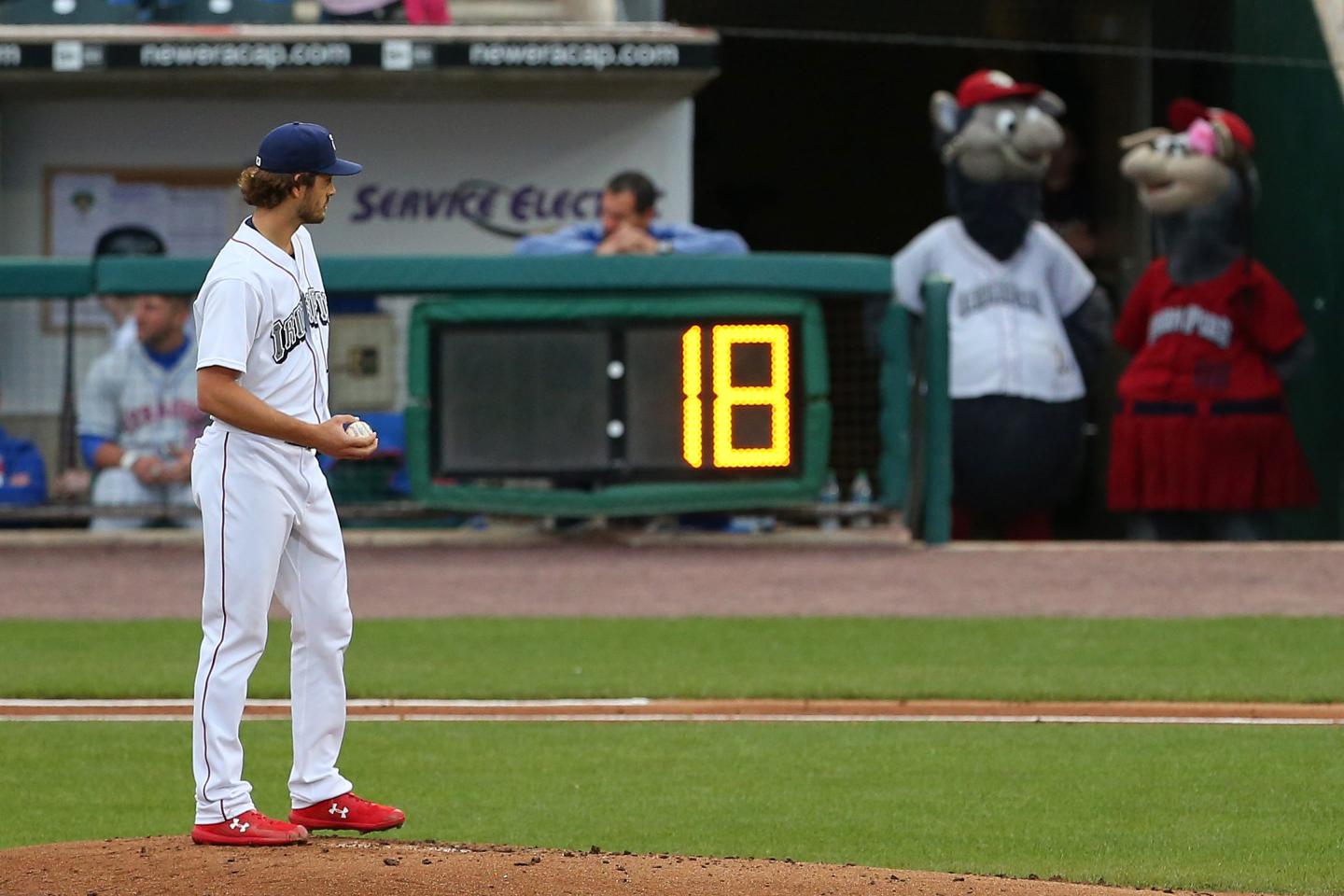
Beginning this season in Major League Baseball, pitchers will have 15 seconds to throw when the bases are empty and 20 seconds when there’s a runner on base. Hitters need to be in the box, looking at the pitcher, with eight seconds left on the clock. Violators will be punished by automatic balls or strikes. There are new time limits on managers’ deliberations on whether to challenge calls on the field, too.

But to me, the idea that you need to get things to move faster because it might seem to you – or to potential customers – as if nothing is going on is either a brazen sellout or a remarkable piece of ignorance.

During these purported empty spaces of inaction, the game’s drama is actually unfurling right there in front of you. As I explain in my book “Infinite Baseball,” you just have to know what to look for.

Seeing the game better

Every plate appearance – that willful and wily exchange between batter and pitcher – unfolds at the center of attention of every player and spectator.

Hitters develop ways of excelling – or, I should say, coping – and to some extent their strategy consists in scratching out seconds and milliseconds to collect their thoughts, to read the signals, to settle themselves in the box by breathing in, breathing out.

Pitchers, meanwhile, work to control the rhythm and keep the hitters off guard by concealing what’s coming next.

The scrutiny can be vicious. Twelve-year-old baseball players routinely burst into tears when they have struck out or grounded out yet again.

Professional baseball players, no less than their younger counterparts, need tactical guidance and emotional support. The manager is cool in the dugout, surrounded by consiglieri, and in constant contact with coaches on the first and third baselines, who, for their part, are talking to the players.

It’s not rocket science, to be sure; but there is a lot to think about – whether to take a pitch, or fake bunt, or run on contact, or hold, or steal, or sacrifice, and on and on, with answers depending on the situation that itself varies pitch to pitch. Players need all the help they can get.

Clock time is not the only time. Pitches and plate appearances and outs and innings are another way to mark time, the way time in tennis is counted in service games, sets and match points.

In my view, baseball’s problem is not that it is too slow. It’s that it’s too fast. There’s a lot of action; it’s just that novice fans may not have the eyes to see it.

That’s what baseball should be helping viewers do: Slow the game down so they can see it better; or rather, teach them to see it better.

Baseball is an opportunity to learn to see, to notice the detail, to pay attention and uncover the decisions that inform everything that happens on the field. Fielders shift their positions, batters adjust their stances, catchers vary the target they provide, runners shorten or extend their leads.

It all carries information.

The game only shows up if you do

But baseball executives who sell the game, and are willing to sell it out, do so by making the game itself expendable. Your typical MLB game is drowned out in distracting bright lights, ear-splitting music, sideline games and giveaways. Roving cameras encourage fans to dance for the public or make out with the person next to them.

Fun is good, and I enjoy the carnival atmosphere, too. (Although if it’s a circus you want, you might prefer the Savannah Bananas, a wildly popular minor league team whose players wear kilts and who have adopted a rule calling a home run an out if a fan catches the ball.) And I don’t begrudge baseball’s entrepreneurs their payday. But no wonder the game seems boring beside all that. The game shows up only if you do.

The problem is not change. Imagine if baseball had never evolved from its past incarnations – the dead ball era when home runs were a rarity, segregated leagues and no free agency. And baseball responded to the remarkable 1968 season, known as “the year of the pitcher,” by actually lowering the pitcher’s mound to shift advantage back to batters.

Baseball, like the law – and like society itself – evolves.

Actually, there is another respect in which baseball is like the law. In baseball, the events on the field of play matter less than the assignments of responsibility and the judgments of praise – and blameworthiness.

Real baseball is in the scorebook, for it is there that hits are sorted from physically indiscernible patterns of action that count as fielder’s choices, or errors, or sacrifices. It is there that mere runs separate themselves from earned runs, and that stolen bases assert themselves as achievements that don’t come down to mere defensive indifference.

This is why keeping score in baseball is never just marking down what happens, like hatch marks on a prison wall marking the passage of time; it is always, rather, a thoughtful reflection on the meaning of events, and so is more like a daily journal.

And it is baseball’s problems – pertaining not only to the question of who’s winning, but rather who deserves credit or blame for this rapid-fire thing that just happened on the field – that define the game and preoccupy players, coaches and fans.

It is this space, one that is not limited to the physical field of play, that finally defines the national pastime and joins players and fans alike in its preservation and celebration.

I certainly appreciate that shorter games, like shorter books, have a certain attraction. They are less demanding and more user-friendly. And there is no doubt that games in MLB have gotten much longer than they used to be.

But baseball’s executives should avoid ruining the game in order to save it.

Alva Noë is Professor of Philosophy, University of California, Berkeley.

This article is republished from The Conversation under a Creative Commons license. Read the original article.

Subscribe to Well Adjusted, our newsletter full of simple strategies to work smarter and live better, from the Fortune Well team. Sign up today.
About the Authors
By Alva Noë
See full bioRight Arrow Button Icon
By The Conversation
See full bioRight Arrow Button Icon

Latest in Success

Finance
Lorem ipsum dolor sit amet, consectetur adipiscing elit, sed do eiusmod tempor incididunt ut labore et dolore magna aliqua. Ut enim ad minim veniam
By Fortune Editors
October 20, 2025
Finance
Lorem ipsum dolor sit amet, consectetur adipiscing elit, sed do eiusmod tempor incididunt ut labore et dolore magna aliqua. Ut enim ad minim veniam
By Fortune Editors
October 20, 2025
Finance
Lorem ipsum dolor sit amet, consectetur adipiscing elit, sed do eiusmod tempor incididunt ut labore et dolore magna aliqua. Ut enim ad minim veniam
By Fortune Editors
October 20, 2025
Finance
Lorem ipsum dolor sit amet, consectetur adipiscing elit, sed do eiusmod tempor incididunt ut labore et dolore magna aliqua. Ut enim ad minim veniam
By Fortune Editors
October 20, 2025
Finance
Lorem ipsum dolor sit amet, consectetur adipiscing elit, sed do eiusmod tempor incididunt ut labore et dolore magna aliqua. Ut enim ad minim veniam
By Fortune Editors
October 20, 2025
Finance
Lorem ipsum dolor sit amet, consectetur adipiscing elit, sed do eiusmod tempor incididunt ut labore et dolore magna aliqua. Ut enim ad minim veniam
By Fortune Editors
October 20, 2025

Most Popular

Finance
Lorem ipsum dolor sit amet, consectetur adipiscing elit, sed do eiusmod tempor incididunt ut labore et dolore magna aliqua. Ut enim ad minim veniam
By Fortune Editors
October 20, 2025
Finance
Lorem ipsum dolor sit amet, consectetur adipiscing elit, sed do eiusmod tempor incididunt ut labore et dolore magna aliqua. Ut enim ad minim veniam
By Fortune Editors
October 20, 2025
Finance
Lorem ipsum dolor sit amet, consectetur adipiscing elit, sed do eiusmod tempor incididunt ut labore et dolore magna aliqua. Ut enim ad minim veniam
By Fortune Editors
October 20, 2025
Finance
Lorem ipsum dolor sit amet, consectetur adipiscing elit, sed do eiusmod tempor incididunt ut labore et dolore magna aliqua. Ut enim ad minim veniam
By Fortune Editors
October 20, 2025
Finance
Lorem ipsum dolor sit amet, consectetur adipiscing elit, sed do eiusmod tempor incididunt ut labore et dolore magna aliqua. Ut enim ad minim veniam
By Fortune Editors
October 20, 2025
Finance
Lorem ipsum dolor sit amet, consectetur adipiscing elit, sed do eiusmod tempor incididunt ut labore et dolore magna aliqua. Ut enim ad minim veniam
By Fortune Editors
October 20, 2025
Fortune Secondary Logo
Rankings
  • 100 Best Companies
  • Fortune 500
  • Global 500
  • Fortune 500 Europe
  • Most Powerful Women
  • World's Most Admired Companies
  • See All Rankings
  • Lists Calendar
Sections
  • Finance
  • Fortune Crypto
  • Features
  • Leadership
  • Health
  • Commentary
  • Success
  • Retail
  • Mpw
  • Tech
  • Lifestyle
  • CEO Initiative
  • Asia
  • Politics
  • Conferences
  • Europe
  • Newsletters
  • Personal Finance
  • Environment
  • Magazine
  • Education
Customer Support
  • Frequently Asked Questions
  • Customer Service Portal
  • Privacy Policy
  • Terms Of Use
  • Single Issues For Purchase
  • International Print
Commercial Services
  • Advertising
  • Fortune Brand Studio
  • Fortune Analytics
  • Fortune Conferences
  • Business Development
  • Group Subscriptions
About Us
  • About Us
  • Press Center
  • Work At Fortune
  • Terms And Conditions
  • Site Map
  • About Us
  • Press Center
  • Work At Fortune
  • Terms And Conditions
  • Site Map
  • Facebook icon
  • Twitter icon
  • LinkedIn icon
  • Instagram icon
  • Pinterest icon

Latest in Success

Young trade worker learning on job
SuccessHiring
Forget Big Tech: Small businesses will hire nearly 1 million grads in 2026—and some of the hottest roles are gloriously AI-proof
By Emma BurleighMay 1, 2026
11 hours ago
Andrew McAfee
SuccessCareers
MIT AI expert warns automating Gen Z entry-level jobs could backfire—and cost companies their future workforce
By Preston ForeMay 1, 2026
11 hours ago
francis
CommentaryFlorida
Former Miami Mayor Francis Suarez: Why I’m joining Stephen Ross and Ken Griffin in betting big on ambitious business leaders
By Francis SuarezMay 1, 2026
12 hours ago
bessent
Personal FinanceFinancial Literacy
Scott Bessent on financial literacy: ‘it drives me crazy’ to see young men in blue-collar construction jobs playing the lottery
By Fatima Hussein and The Associated PressMay 1, 2026
14 hours ago
Premium card perks are ‘designed to create a win-win-win for everyone’ but customers are paying with heavy annual fees and data
Personal FinancePersonal Finance Evergreen
Premium card perks are ‘designed to create a win-win-win for everyone’ but customers are paying with heavy annual fees and data
By Catherina GioinoApril 30, 2026
1 day ago
Girl reading in a library
SuccessEducation
Public schools in Texas banned cellphones. One district has already seen 200,000 more library books checked out
By Preston ForeApril 30, 2026
1 day ago

Most Popular

Scott Bessent on financial literacy: 'it drives me crazy' to see young men in blue-collar construction jobs playing the lottery
Personal Finance
Scott Bessent on financial literacy: 'it drives me crazy' to see young men in blue-collar construction jobs playing the lottery
By Fatima Hussein and The Associated PressMay 1, 2026
14 hours ago
China dominates the world's lithium supply. The U.S. just found 328 years' worth in its own backyard
North America
China dominates the world's lithium supply. The U.S. just found 328 years' worth in its own backyard
By Jake AngeloApril 30, 2026
1 day ago
The U.S. economy is booming — just not where 50 million Americans live
Commentary
The U.S. economy is booming — just not where 50 million Americans live
By Derek KilmerMay 1, 2026
18 hours ago
Accenture's Julie Sweet blew up 50 years of company history. She says the hardest part is still ahead
Conferences
Accenture's Julie Sweet blew up 50 years of company history. She says the hardest part is still ahead
By Nick LichtenbergApril 29, 2026
3 days ago
Apple cofounder Ronald Wayne—whose stake would be worth up to $400 billion had he not sold it in 1976—says that at 91, he has no regrets
Success
Apple cofounder Ronald Wayne—whose stake would be worth up to $400 billion had he not sold it in 1976—says that at 91, he has no regrets
By Preston ForeApril 27, 2026
4 days ago
Current price of oil as of May 1, 2026
Personal Finance
Current price of oil as of May 1, 2026
By Joseph HostetlerMay 1, 2026
14 hours ago

© 2026 Fortune Media IP Limited. All Rights Reserved. Use of this site constitutes acceptance of our Terms of Use and Privacy Policy | CA Notice at Collection and Privacy Notice | Do Not Sell/Share My Personal Information
FORTUNE is a trademark of Fortune Media IP Limited, registered in the U.S. and other countries. FORTUNE may receive compensation for some links to products and services on this website. Offers may be subject to change without notice.