• Home
  • Latest
  • Fortune 500
  • Finance
  • Tech
  • Leadership
  • Lifestyle
  • Rankings
  • Multimedia

Trendingnow

1

After forcing workers back to the office, Goldman Sachs and JPMorgan Chase are now letting their staff work remotely—but only for the World Cup

2

The Pentagon said Iran War costs $29 billion, but the real cost is closer to $200 billion—and counting

3

Current price of oil as of June 23, 2026

1

After forcing workers back to the office, Goldman Sachs and JPMorgan Chase are now letting their staff work remotely—but only for the World Cup

2

The Pentagon said Iran War costs $29 billion, but the real cost is closer to $200 billion—and counting

3

Current price of oil as of June 23, 2026
PoliticsDonald Trump

Donald Trump can still run for president after his indictment—and even govern from jail

By
Stefanie Lindquist
Stefanie Lindquist
and
The Conversation
The Conversation
Down Arrow Button Icon
By
Stefanie Lindquist
Stefanie Lindquist
and
The Conversation
The Conversation
Down Arrow Button Icon
March 30, 2023, 7:39 PM ET
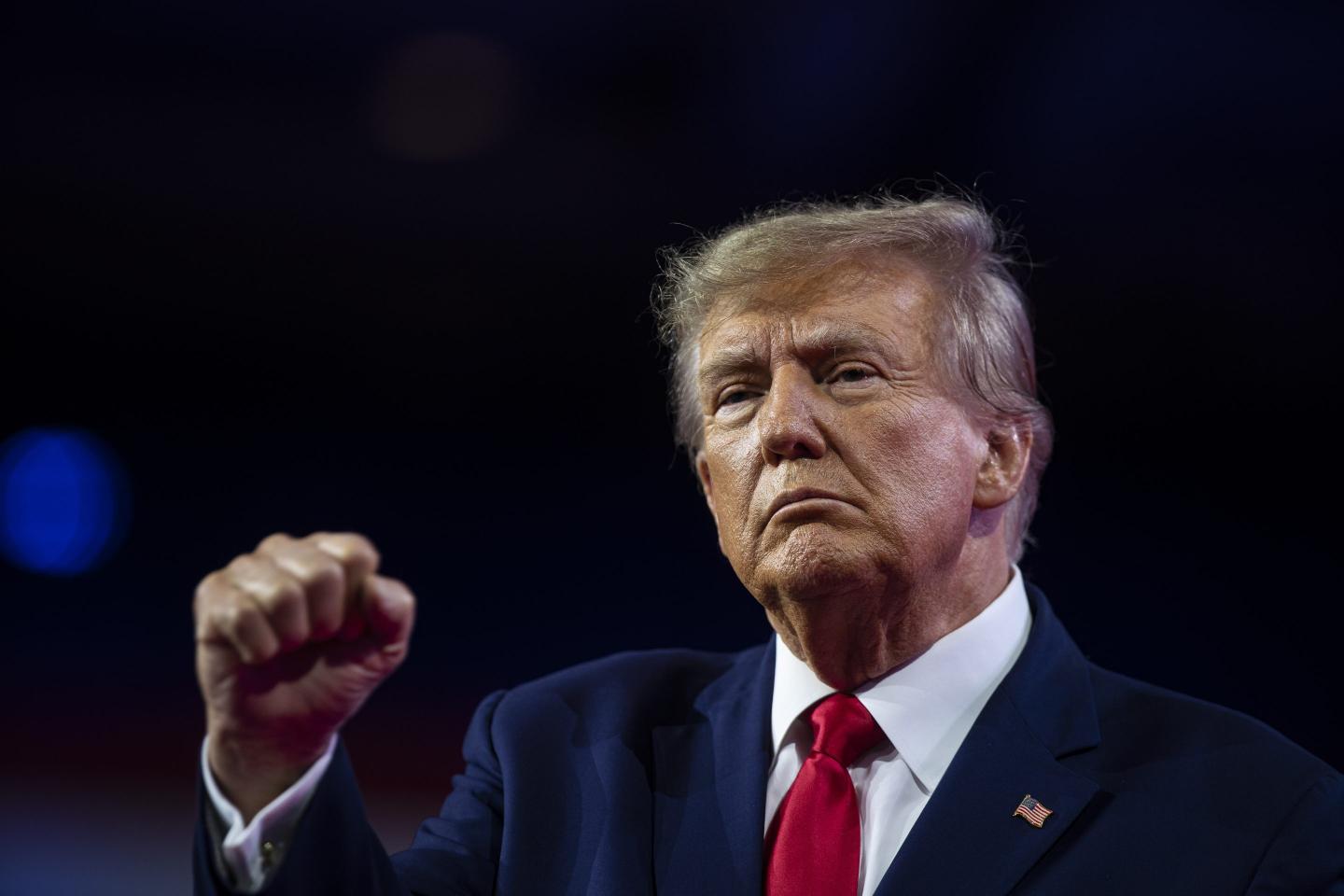
Former President Donald Trump.
Former President Donald Trump. Al Drago—Bloomberg/Getty Images
Add Fortune on Google for similar content.

A Manhattan grand jury has voted to indict former President Donald Trump. The specific state felony charges, reports The New York Times, “remain a mystery” but will be related to the Manhattan district attorney’s investigation of Trump for making hush money payments to a porn star just before the 2016 presidential election.

It’s the first time a U.S. president or former president has been indicted.

At the same time, Trump is expected to continue his campaign for the presidency, seeking to regain in 2024 the position he lost in 2020 to Joe Biden.

What are the consequences of an indictment and potential trial for his campaign and, if his effort is successful, his future presidency?

Article II of the U.S. Constitution sets forth very explicit qualifications for the presidency: The president must be 35 years of age, a U.S. resident for 14 years and a natural-born citizen.

In cases involving analogous qualifications for members of Congress, the Supreme Court has held that such qualifications form a “constitutional ceiling” – prohibiting any additional qualifications to be imposed by any means.

Thus, because the Constitution does not require that the president be free from indictment, conviction or prison, it follows that a person under indictment or in prison may run for the office and may even serve as president.

This is the prevailing legal standard that would apply to former President Trump. The fact of his indictment and potential trial is irrelevant to his qualifications for office under the Constitution.

Nevertheless, there seems no question that indictment, conviction or both – let alone a prison sentence – would significantly compromise a president’s ability to function in office. And the Constitution doesn’t provide an easy answer to the problem posed by such a compromised chief executive.

Governing from jail?

A presidential candidate could be indicted, prosecuted and convicted by either state or federal authorities. Indictment for a state crime may seem less significant than federal charges brought by the Department of Justice.

Ultimately, though, the spectacle of a criminal trial in state or federal court would have a dramatic effect on a presidential campaign and on the credibility of a president, if elected.

All defendants are presumed innocent until proved guilty. But in the case of conviction, incarceration in state or federal prison involves restrictions on liberty that would significantly compromise the president’s ability to lead.

This point – that functioning as president would be difficult while under indictment or after being convicted – was made plain in a 2000 memo written by the Department of Justice. The memo reflected on a 1973 Office of Legal Counsel memo produced during Watergate titled “Amenability of the President, Vice President and other Civil Officers to Federal Criminal Prosecution while in Office.” The background to the 1973 memo was that President Richard Nixon was under investigation for his role in the Watergate break-in and Vice President Spiro Agnew was under grand jury investigation for tax evasion.

These two memos addressed whether a sitting president could, under the Constitution, be indicted while in office. They concluded he could not. But what about a president indicted, convicted, or both, before taking office, as could be the case for Trump?

In evaluating whether a sitting president could be indicted or imprisoned while in office, both the 1973 and 2000 memos outlined the consequences of a pending indictment for the president’s functioning in office. The earlier memo used strong words: “[t]he spectacle of an indicted President still trying to serve as Chief Executive boggles the imagination.”

Even more pointedly, the memos observe that a criminal prosecution against a sitting president could result in “physical interference with the President’s performance of his official duties that it would amount to an incapacitation.”

The memo here refers to the inconvenience of a criminal trial that would significantly detract from the president’s time commitment to his burdensome duties.

But it’s also lawyer’s language to describe a more direct impediment to the president’s ability to govern: He might be in jail.

Core functions affected

According to the 1973 memo, “the President plays an unparalleled role in the execution of the laws, the conduct of foreign relations, and the defense of the Nation.”

Because these core functions require meetings, communications or consultations with the military, foreign leaders and government officials in the U.S. and abroad in ways that cannot be performed while imprisoned, constitutional law scholar Alexander Bickel remarked in 1973 that “obviously the presidency cannot be conducted from jail.”

Modern presidents are peripatetic: They travel nationally and globally on a constant basis to meet with other national leaders and global organizations. They obviously wouldn’t be able to do these things while in prison. Nor could they inspect the aftermath of natural disasters from coast to coast, celebrate national successes and events or address citizens and groups on issues of the day, at least in person.

Moreover, presidents need access to classified information and briefings. But imprisonment would also obviously compromise a president’s ability to access such information, which must often be stored and viewed in a secure room that has been protected against all manner of spying, including blocking radio waves – not something that’s likely available in a prison.

As a result of the president’s varied duties and obligations, the memos concluded that “[t]he physical confinement of the chief executive following a valid conviction would indisputably preclude the executive branch from performing its constitutionally assigned functions.”

Translation: The president couldn’t do his job.

Running from prison

Yet what to do if citizens actually elect an indicted or incarcerated president?

This is not out of the question. At least one incarcerated presidential candidate, Eugene Debs, garnered almost a million votes out of a total 26.2 million cast in the election of 1920.

One potential response is the 25th Amendment, which enables the president’s Cabinet to declare the president “unable to discharge the powers and duties of his office.”

The two Department of Justice memos note, however, that the framers of the 25th Amendment never considered or mentioned incarceration as a basis for the inability to discharge the powers and duties of the office. They write that replacing the president under the 25th Amendment would “give insufficient weight to the people’s considered choice as to whom they wish to serve as their chief executive.”

All this brings to mind Justice Oliver Wendell Holmes’ admonition about the role of the Supreme Court: “If my fellow citizens want to go to Hell I will help them. It’s my job.”

Holmes’ statement came in a letter reflecting on the Sherman Antitrust Act, which he thought was a foolish law. But Holmes was prepared to accept the popular will expressed through democracy and self-determination.

Perhaps the same reflection is apt here: If the people choose a president hobbled by criminal sanctions, that is a form of self-determination too. And one for which the Constitution has no ready solution.

Stefanie Lindquist is Foundation Professor of Law and Political Science at Arizona State University

This article is republished from The Conversation under a Creative Commons license. Read the original article.

Subscribe to Well Adjusted, our newsletter full of simple strategies to work smarter and live better, from the Fortune Well team. Sign up today.
About the Authors
By Stefanie Lindquist
See full bioRight Arrow Button Icon
By The Conversation
See full bioRight Arrow Button Icon
Add Fortune on Google for similar content.

Latest in Politics

Finance
Lorem ipsum dolor sit amet, consectetur adipiscing elit, sed do eiusmod tempor incididunt ut labore et dolore magna aliqua. Ut enim ad minim veniam
By Fortune Editors
October 20, 2025
Finance
Lorem ipsum dolor sit amet, consectetur adipiscing elit, sed do eiusmod tempor incididunt ut labore et dolore magna aliqua. Ut enim ad minim veniam
By Fortune Editors
October 20, 2025
Finance
Lorem ipsum dolor sit amet, consectetur adipiscing elit, sed do eiusmod tempor incididunt ut labore et dolore magna aliqua. Ut enim ad minim veniam
By Fortune Editors
October 20, 2025
Finance
Lorem ipsum dolor sit amet, consectetur adipiscing elit, sed do eiusmod tempor incididunt ut labore et dolore magna aliqua. Ut enim ad minim veniam
By Fortune Editors
October 20, 2025
Finance
Lorem ipsum dolor sit amet, consectetur adipiscing elit, sed do eiusmod tempor incididunt ut labore et dolore magna aliqua. Ut enim ad minim veniam
By Fortune Editors
October 20, 2025
Finance
Lorem ipsum dolor sit amet, consectetur adipiscing elit, sed do eiusmod tempor incididunt ut labore et dolore magna aliqua. Ut enim ad minim veniam
By Fortune Editors
October 20, 2025

Most Popular

Finance
Lorem ipsum dolor sit amet, consectetur adipiscing elit, sed do eiusmod tempor incididunt ut labore et dolore magna aliqua. Ut enim ad minim veniam
By Fortune Editors
October 20, 2025
Finance
Lorem ipsum dolor sit amet, consectetur adipiscing elit, sed do eiusmod tempor incididunt ut labore et dolore magna aliqua. Ut enim ad minim veniam
By Fortune Editors
October 20, 2025
Finance
Lorem ipsum dolor sit amet, consectetur adipiscing elit, sed do eiusmod tempor incididunt ut labore et dolore magna aliqua. Ut enim ad minim veniam
By Fortune Editors
October 20, 2025
Finance
Lorem ipsum dolor sit amet, consectetur adipiscing elit, sed do eiusmod tempor incididunt ut labore et dolore magna aliqua. Ut enim ad minim veniam
By Fortune Editors
October 20, 2025
Finance
Lorem ipsum dolor sit amet, consectetur adipiscing elit, sed do eiusmod tempor incididunt ut labore et dolore magna aliqua. Ut enim ad minim veniam
By Fortune Editors
October 20, 2025
Finance
Lorem ipsum dolor sit amet, consectetur adipiscing elit, sed do eiusmod tempor incididunt ut labore et dolore magna aliqua. Ut enim ad minim veniam
By Fortune Editors
October 20, 2025
Fortune Secondary Logo
Rankings
  • 100 Best Companies
  • Fortune 500
  • Global 500
  • Fortune 500 Europe
  • Most Powerful Women
  • World's Most Admired Companies
  • See All Rankings
  • Lists Calendar
Sections
  • Finance
  • Fortune Crypto
  • Features
  • Leadership
  • Health
  • Commentary
  • Success
  • Retail
  • Mpw
  • Tech
  • Lifestyle
  • CEO Initiative
  • Asia
  • Politics
  • Conferences
  • Europe
  • Newsletters
  • Personal Finance
  • Environment
  • Magazine
  • Education
Customer Support
  • Frequently Asked Questions
  • Customer Service Portal
  • Privacy Policy
  • Terms Of Use
  • Single Issues For Purchase
  • International Print
Commercial Services
  • Advertising
  • Fortune Brand Studio
  • Fortune Analytics
  • Fortune Conferences
  • Business Development
  • Group Subscriptions
About Us
  • About Us
  • Press Center
  • Work At Fortune
  • Terms And Conditions
  • Site Map
  • About Us
  • Press Center
  • Work At Fortune
  • Terms And Conditions
  • Site Map
  • Facebook icon
  • Twitter icon
  • LinkedIn icon
  • Instagram icon
  • Pinterest icon

Latest in Politics

Gaza reshaped New York’s Democratic primaries. Now the party has to figure out what that means.
PoliticsNew York
Gaza reshaped New York’s Democratic primaries. Now the party has to figure out what that means.
By The Associated Press, Steve Peoples and Jake OffenhartzJune 24, 2026
3 hours ago
A team of workers sort aluminum cans near large bales of plastics
LawCalifornia
17 red states sue California over ‘onerous’ recycling law: ‘California is not entitled to pronounce nationwide policies’
By The Associated PressJune 24, 2026
3 hours ago
Mamdani’s picks sweep New York City’s congressional primaries, ousting two incumbents
PoliticsNew York
Mamdani’s picks sweep New York City’s congressional primaries, ousting two incumbents
By The Associated PressJune 24, 2026
3 hours ago
Iran keeps contradicting Trump on whether it agreed to nuclear inspections, but he says there’s no rush anyway
Middle EastIran
Iran keeps contradicting Trump on whether it agreed to nuclear inspections, but he says there’s no rush anyway
By Munir Ahmed, David Rising, Jon Gambrell and The Associated PressJune 24, 2026
3 hours ago
t
PoliticsDonald Trump
Trump holds landmark affordable housing bill hostage over his pet issue: The ‘national emergency’ of voter ID
By Mary Clare Jalonick and The Associated PressJune 24, 2026
4 hours ago
Jack Schlossberg, Kennedy scion and sardonic social media star, loses in bid for New York state assembly
PoliticsPolitics
Jack Schlossberg, Kennedy scion and sardonic social media star, loses in bid for New York state assembly
By The Associated Press, Danny Peltz and Anthony IzaguirreJune 24, 2026
4 hours ago

Most Popular

After forcing workers back to the office, Goldman Sachs and JPMorgan Chase are now letting their staff work remotely—but only for the World Cup
Success
After forcing workers back to the office, Goldman Sachs and JPMorgan Chase are now letting their staff work remotely—but only for the World Cup
By Orianna Rosa RoyleJune 23, 2026
1 day ago
The Pentagon said Iran War costs $29 billion, but the real cost is closer to $200 billion—and counting
Economy
The Pentagon said Iran War costs $29 billion, but the real cost is closer to $200 billion—and counting
By Jacqueline MunisJune 24, 2026
12 hours ago
Current price of oil as of June 23, 2026
Personal Finance
Current price of oil as of June 23, 2026
By Joseph HostetlerJune 23, 2026
1 day ago
Markets tumble worldwide as Fed resets expectations: $400 billion wiped off SpaceX stock
Banking
Markets tumble worldwide as Fed resets expectations: $400 billion wiped off SpaceX stock
By Jim EdwardsJune 23, 2026
1 day ago
Current price of gold as of June 23, 2026
Personal Finance
Current price of gold as of June 23, 2026
By Danny BakstJune 23, 2026
1 day ago
Texas and Charlotte used to build huge McMansions—now they're copying the California design tricks they once mocked
Real Estate
Texas and Charlotte used to build huge McMansions—now they're copying the California design tricks they once mocked
By Sydney LakeJune 22, 2026
2 days ago

© 2026 Fortune Media IP Limited. All Rights Reserved. Use of this site constitutes acceptance of our Terms of Use and Privacy Policy | CA Notice at Collection and Privacy Notice | Do Not Sell/Share My Personal Information
FORTUNE is a trademark of Fortune Media IP Limited, registered in the U.S. and other countries. FORTUNE may receive compensation for some links to products and services on this website. Offers may be subject to change without notice.