• Home
  • News
  • Fortune 500
  • Tech
  • Finance
  • Leadership
  • Lifestyle
  • Rankings
  • Multimedia
Healthembryos

Judge’s use of slavery law to rule that frozen embryos are ‘chattel’ ignites scathing criticism: ‘It’s repulsive’

By
Matthew Barakat
Matthew Barakat
and
The Associated Press
Down Arrow Button Icon
By
Matthew Barakat
Matthew Barakat
and
The Associated Press
Down Arrow Button Icon
March 9, 2023, 6:57 PM ET
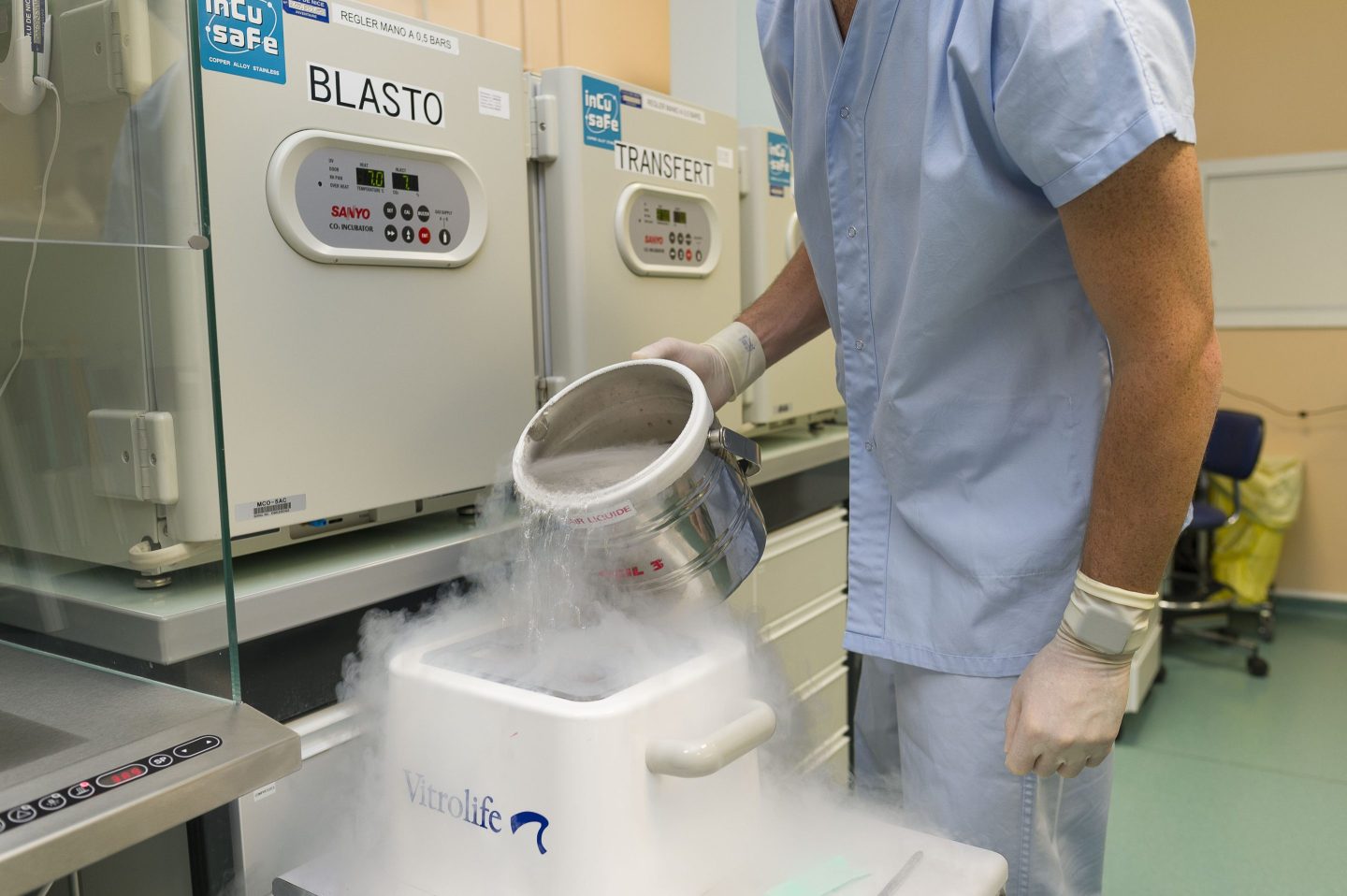
A judge's ruling in a case involving frozen embryos is being criticized.
A judge's ruling in a case involving frozen embryos is being criticized. BSIP/Universal Images Group via Getty Images

Frozen human embryos can legally be considered property, or “chattel,” a Virginia judge has ruled, basing his decision in part on a 19th century law governing the treatment of slaves.

The preliminary opinion by Fairfax County Circuit Court Judge Richard Gardiner – delivered in a long-running dispute between a divorced husband and wife – is being criticized by some for wrongly and unnecessarily delving into a time in Virginia history when it was legally permissible to own human beings.

“It’s repulsive and it’s morally repugnant,” said Susan Crockin, a lawyer and scholar at Georgetown University’s Kennedy Institute of Ethics and an expert in reproductive technology law.

Solomon Ashby, president of the Old Dominion Bar Association, a professional organization made up primarily of African American lawyers, called Gardiner’s ruling troubling.

“I would like to think that the bench and the bar would be seeking more modern precedent,” he said.

Gardiner did not return a call to his chambers Wednesday. His decision, issued last month, is not final: He has not yet ruled on other arguments in the case involving Honeyhline and Jason Heidemann, a divorced couple fighting over two frozen embryos that remain in storage.

Honeyhline Heidemann, 45, wants to use the embryos. Jason Heidemann objects.

Initially, Gardiner sided with Jason Heidemann. The law at the heart of the case governs how to divide “goods and chattels.” The judge ruled that because embryos could not be bought or sold, they couldn’t be considered as such and therefore Honeyhline Heidemann had no recourse under that law to claim custody of them.

But after the ex-wife’s lawyer, Adam Kronfeld, asked the judge to reconsider, Gardiner conducted a deep dive into the history of the law. He found that before the Civil War, it also applied to slaves. The judge then researched old rulings that governed custody disputes involving slaves, and said he found parallels that forced him to reconsider whether the law should apply to embryos.

In a separate part of his opinion, Gardiner also said he erred when he initially concluded that human embryos cannot be sold.

“As there is no prohibition on the sale of human embryos, they may be valued and sold, and thus may be considered ‘goods or chattels,’” he wrote.

Crockin said she’s not aware of any other judge in the U.S. who has concluded that human embryos can be bought and sold. She said the trend, if anything, has been to recognize that embryos have to be treated in a more nuanced way than as mere property.

Ashby said he was baffled that Gardiner felt a need to delve into slavery to answer a question about embryos, even if Virginia case law is thin on how to handle embryo custody questions.

“Hopefully, the jurisprudence will advance in the commonwealth of Virginia such that … we will no longer see slave codes” cited to justify legal rulings, he said.

Neither of the Heidemanns’ lawyers ever raised the slavery issue. They did raise other arguments in support of their cases, however.

Jason Heidemann’s lawyers said allowing his ex-wife to implant the embryos they created when they were married “would force Mr. Heidemann to procreate against his wishes and therefore violate his constitutional right to procreational autonomy.”

Honeyhline Heidemann’s lawyer, Kronfeld, argued that Honeyhline’s right to the embryos outweighs her ex-husband’s objections, partly because he would have no legal obligations to be their parent and partly because she has no other options to conceive biological children after undergoing cancer treatments that made her infertile.

Kronfeld also argued that the initial separation agreement the couple signed in 2018 already treated the embryos as property when they concurred — under a subheading titled “Division of Personal Property” — that the embryos would remain in cryogenic storage until a court ordered otherwise.

Gardiner has not yet ruled on the argument over Jason Heidemann’s procreational autonomy.

Fortune's CFO Daily newsletter is the must-read analysis every finance professional needs to get ahead. Sign up today.


About the Authors
By Matthew Barakat
See full bioRight Arrow Button Icon
By The Associated Press
See full bioRight Arrow Button Icon

Latest in Health

Boston Celtics head coach Joe Mazzulla stands on the court with his arms folded
Workplace CultureLeadership
You don’t need to have fun at work—take it from NBA head coach Joe Mazzulla: ‘Fun is a cop-out sometimes when things aren’t going well’
By Dave SmithDecember 4, 2025
3 hours ago
Bill Gates
HealthGates Foundation
Bill Gates decries ‘significant reversal in child deaths’ as nearly 5 million kids will die before they turn 5 this year
By Nick LichtenbergDecember 4, 2025
9 hours ago
Coca-Cola
LawFood and drink
‘They took food and made it unrecognizable’: San Francisco sues Coca-Cola, Nestle, other major food companies over public health crisis
By Jaimie Ding and The Associated PressDecember 3, 2025
19 hours ago
Workplace CultureSports
Exclusive: Billionaire Michele Kang launches $25 million U.S. Soccer institute that promises to transform the future of women’s sports
By Emma HinchliffeDecember 2, 2025
2 days ago
North Americaphilanthropy
Anonymous $50 million donation helps cover the next 50 years of tuition for medical lab science students at University of Washington
By The Associated PressDecember 2, 2025
2 days ago
Trump
PoliticsWhite House
Trump had MRI on heart and abdomen and it was ‘perfectly normal,’ doctor says
By The Associated PressDecember 2, 2025
2 days ago

Most Popular

placeholder alt text
North America
Jeff Bezos and Lauren Sánchez Bezos commit $102.5 million to organizations combating homelessness across the U.S.: ‘This is just the beginning’
By Sydney LakeDecember 2, 2025
2 days ago
placeholder alt text
Economy
Ford workers told their CEO 'none of the young people want to work here.' So Jim Farley took a page out of the founder's playbook
By Sasha RogelbergNovember 28, 2025
6 days ago
placeholder alt text
North America
Anonymous $50 million donation helps cover the next 50 years of tuition for medical lab science students at University of Washington
By The Associated PressDecember 2, 2025
2 days ago
placeholder alt text
C-Suite
MacKenzie Scott's $19 billion donations have turned philanthropy on its head—why her style of giving actually works
By Sydney LakeDecember 2, 2025
2 days ago
placeholder alt text
Innovation
Google CEO Sundar Pichai says we’re just a decade away from a new normal of extraterrestrial data centers
By Sasha RogelbergDecember 1, 2025
3 days ago
placeholder alt text
Economy
Scott Bessent calls the Giving Pledge well-intentioned but ‘very amorphous,’ growing from ‘a panic among the billionaire class’
By Nick LichtenbergDecember 3, 2025
20 hours ago
Rankings
  • 100 Best Companies
  • Fortune 500
  • Global 500
  • Fortune 500 Europe
  • Most Powerful Women
  • Future 50
  • World’s Most Admired Companies
  • See All Rankings
Sections
  • Finance
  • Leadership
  • Success
  • Tech
  • Asia
  • Europe
  • Environment
  • Fortune Crypto
  • Health
  • Retail
  • Lifestyle
  • Politics
  • Newsletters
  • Magazine
  • Features
  • Commentary
  • Mpw
  • CEO Initiative
  • Conferences
  • Personal Finance
  • Education
Customer Support
  • Frequently Asked Questions
  • Customer Service Portal
  • Privacy Policy
  • Terms Of Use
  • Single Issues For Purchase
  • International Print
Commercial Services
  • Advertising
  • Fortune Brand Studio
  • Fortune Analytics
  • Fortune Conferences
  • Business Development
About Us
  • About Us
  • Editorial Calendar
  • Press Center
  • Work At Fortune
  • Diversity And Inclusion
  • Terms And Conditions
  • Site Map

© 2025 Fortune Media IP Limited. All Rights Reserved. Use of this site constitutes acceptance of our Terms of Use and Privacy Policy | CA Notice at Collection and Privacy Notice | Do Not Sell/Share My Personal Information
FORTUNE is a trademark of Fortune Media IP Limited, registered in the U.S. and other countries. FORTUNE may receive compensation for some links to products and services on this website. Offers may be subject to change without notice.