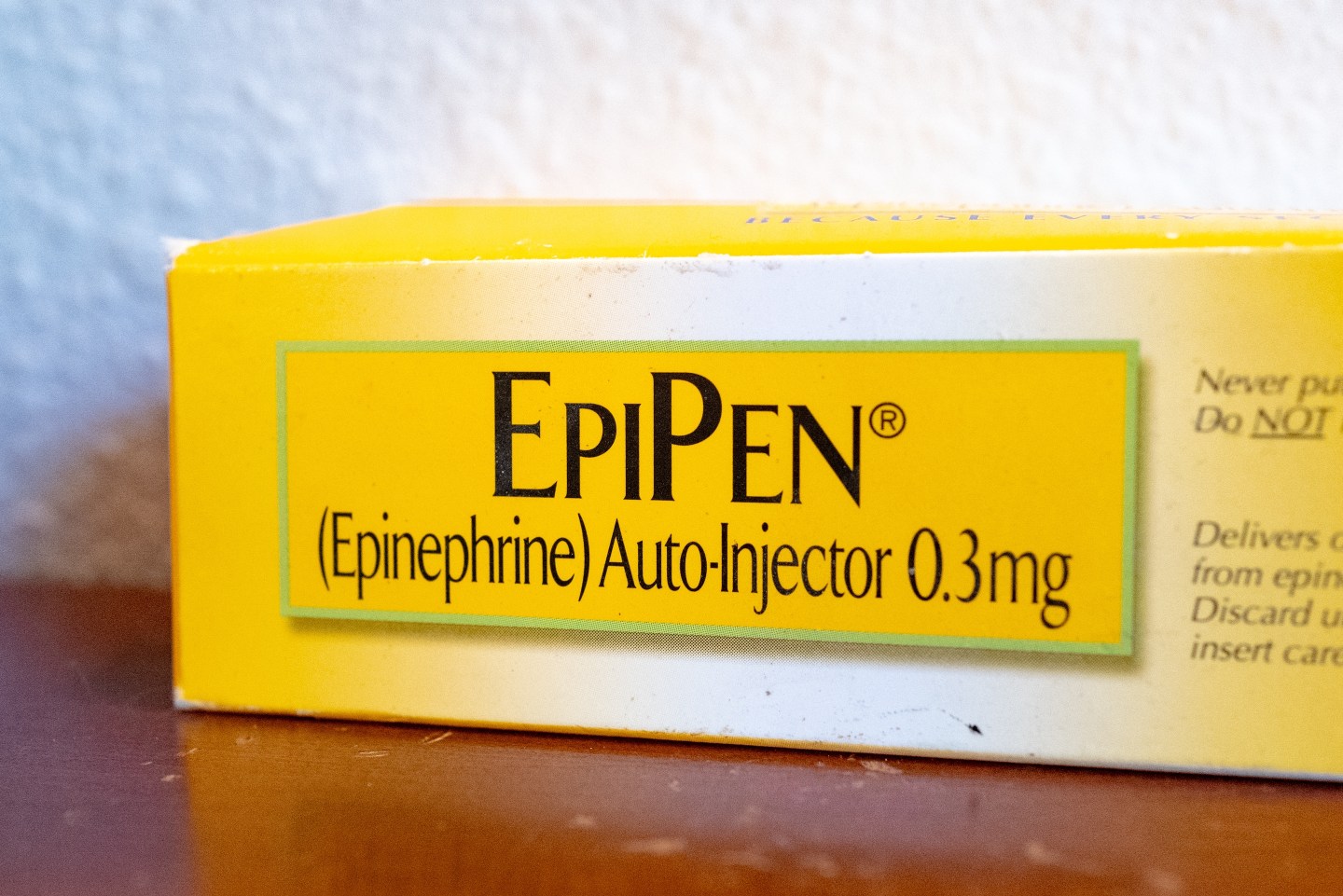
Almost four years after becoming the first state to cap insulin copayments, Colorado may limit what consumers pay for epinephrine autoinjectors, also known as EpiPens, which treat serious allergic reactions.
A proposed state law would cap out-of-pocket copays at $60 for a two-pack of epinephrine autoinjectors. In 2007, the wholesale price of a single EpiPen was about $47. Today, two brand-name autoinjectors cost just under $636 at a Walgreens in Denver, according to GoodRx. At some pharmacies a generic pen sells for $100 to $200, which is still expensive for many people.
The bill is the latest example in a nationwide push by states to address the soaring prices of lifesaving drugs. New Hampshire passed a law in 2020 requiring insurance to cover the autoinjectors, and Rhode Island lawmakers are considering a similar measure this year. No state has capped what consumers pay for EpiPens, though the New Jersey Senate passed a bill in June to do so; that measure is pending in the legislature’s lower house.
The average launch prices of drugs in the United States increased nearly 11% every year from 2008 to 2021, according to a study published last year. Price increases can skyrocket even higher for items such as epinephrine autoinjectors, a market dominated by EpiPen maker Viatris, a global pharmaceutical company.
“If you have very little competition in the market, the way the U.S. drug pricing system works is that the manufacturers get to set the price at which they want to sell the drug, and they can increase it whenever they so choose,” said Erin Taylor, a senior health care policy researcher at Rand Corp., a global policy think tank. “One way to shift costs back to health plans and manufacturers, and to help patients pay less for their drugs, is to apply these caps.”
The Colorado legislation would cap EpiPen copays for both insured and uninsured people starting in 2024. Almost 566,000 Coloradans have life-threatening food allergies, according to the bill. People can also have severe reactions to insect bites, medications, and latex.
“The need for EpiPens doesn’t discriminate based on who you are,” said state Rep. Iman Jodeh, a Democrat who is sponsoring the bill. “This unfortunate trend we were seeing of lifesaving medication being completely unattainable or out of reach for people is something that we are really trying to put an end to.”
In 2019, Colorado became the first state to enact a law that set a $100 limit on monthly copays for insulin, a hormone that regulates the blood sugar of people with diabetes.
Since then, 21 other states, plus Washington, D.C., have implemented laws limiting insulin costs. Congress imposed a $35 insulin copay cap for seniors on Medicare, and, in his recent State of the Union address, President Joe Biden called for expanding this cap to every American.
“Insulin has been the poster child of copay caps,” said Geoffrey Joyce, director of health policy at the University of Southern California Schaeffer Center for Health Policy & Economics.
However, the caps are an imperfect solution to high prescription costs. Decreasing the price of a drug for some insurance members means increasing premiums for others, said Taylor. “A cap doesn’t lower the list price of the drug, so somebody else has to pick up the difference,” she said. Caps also don’t address why drugs are so expensive in the first place.
Drug manufacturers and pharmacy benefit managers, or PBMs—the go-between companies that negotiate with drugmakers on how much insurance plans and consumers will pay for drugs—both play a significant role in drug pricing, Joyce said. Besides pricing their products high enough to ensure a hefty profit, manufacturers often give PBMs a rebate in exchange for having their product included in the PBM’s list of preferred drugs, which influences what consumers buy. Rising rebates demanded by PBMs are associated with increasing prices for prescription drugs, according to a white paper by USC Schaeffer.
“Everybody has their hand in the trough,” said Joyce. In response to broader concerns about the drug pricing system, diabetes activists have been pushing for caps on insulin prices, not just copays.
It’s hard to say whether more states will follow Colorado’s lead and cap out-of-pocket costs for drugs like EpiPens, but there does seem to be a political appetite for controlling specialty drug costs, said Taylor.
“It bothers people fundamentally and ethically that these lifesaving drugs are inaccessible for people,” said Joyce. “People need access to these drugs.”
KHN (Kaiser Health News) is a national newsroom that produces in-depth journalism about health issues. Together with Policy Analysis and Polling, KHN is one of the three major operating programs at KFF (Kaiser Family Foundation). KFF is an endowed nonprofit organization providing information on health issues to the nation.
Learn how to navigate and strengthen trust in your business with The Trust Factor, a weekly newsletter examining what leaders need to succeed. Sign up here.